3Email: yelda.kolgelier[at]adu.edu.tr ORCID https://orcid.org/0000-0002-5927-1636
Лапы и посты: чтение турецкой культуры через рассказы о стамбульских кошках в Instagram**
Озбек Ичтен Дуйгу1 (a), Тюрк Гюль Дилек2 (b), Кёлгелиер Йелда Озлем3 (a)
(a) Университет Айдын Аднан Мендерес. Айдын, Турция
(b) Университет Бандырма Онеди Эйлюль. Балыкесир, Турция
Рукопись получена: 16 августа 2024 | Пересмотрена: 11 октября 2024 | Принята: 18 октября 2024
Аннотация
Это исследование посвящено возросшей популярности турецких кошек в социальных сетях, особенно после пандемии. Основное внимание уделяется гипотезе, что турецкие кошки стали туристической достопримечательностью, вызвав органическое явление «кошачьего туризма» в Турции. Цель исследования — изучить впечатления и мнения международных посетителей о Турции через анализ пользовательского контента в Instagram**, посвящённого истамбульским кошкам в контексте коммуникации. Исследование также направлено на то, чтобы оценить, как отношения между турецким населением и бездомными кошками превратили турецких кошек в культовый образ в глазах путешественников и повлияли на туризм в стране, став уникальной привлекательностью для туристов из-за рубежа. В дополнение к этому, исследование стремится оценить восприятие турецких кошек как важного элемента для туристов через призму международных путешественников. С помощью анализа контента было отобрано 1 393 поста в Instagram** с тегом “Istanbul cats”, а также проанализировано 145 000 комментариев на основе заранее определённых тем и кодов. Исследование показало, что у международных пользователей в основном сформировались положительные чувства и мысли по отношению к стамбульским кошкам, о которых рассказывается в постах Instagram**, что укрепляет их статус как значимого элемента культурного привлечения. Большинство иностранных пользователей выразили желание посетить Турцию или даже переехать туда исключительно из‑за кошек.
** – Социальная сеть, принадлежащая компании “Meta”, которая признана экстремистской на территории Российской Федерации
Ключевые слова
бездомные кошки; турецкие кошки; стамбульские кошки; рассказывание историй; турецкая культура; кошачий туризм; коммуникационные исследования; культурное привлечение; социальные сети; Instagram**; любители кошек
1Email: icten.duygu[at]adu.edu.tr ORCID https://orcid.org/0000-0003-1408-1406
2Email: gturk[at]bandirma.edu.tr ORCID https://orcid.org/0000-0002-8610-7153
3Email: yelda.kolgelier[at]adu.edu.tr ORCID https://orcid.org/0000-0002-5927-1636
Introduction
Human beings have consistently interacted with animals throughout history, integrating them into their daily lives and cultural practices since early hunter-gatherer societies. Animals fulfill essential human needs, such as providing food, clothing, and shelter. Due to their physical strength and the benefits they offer, they have been both revered and associated with malevolence in their interactions with humans (Begiç & Kocabaş Altıntaş, 2024, p. 36). The impact of human-animal interaction on different countries and societies has been varied, leading to two distinct perspectives on the issue. The first perspective, anthropocentrism, posits that humans are central to everything and that the universe exists to serve them. This viewpoint emphasizes the need to protect the environment as it is essential for sustaining and enhancing the quality of human life. (Ürgüplü Korkmaz, 2015, p. xviii). The rise of anthropocentrism and urbanization has led people to adopt a more practical philosophy, distancing themselves fr om the animals they once lived closely with as they asserted their dominance over nature. This shift has resulted in a growing population of “stray animals” – animals without shelter, roaming beyond the confines of their owner’s property, and lacking direct supervision or control from their owners. (Abdulkarim et al., 2021; Aydoğdu & Meral, p. 2131). The second perspective, deep ecology, challenges anthropocentrism and emphasizes the importance of respecting the rights of all living things. It places the environment at the center and argues that humans should not cause harm to any living creature. Deep ecology asserts that it is unacceptable for stray animals, which have inhabited cities long before humans, to be unwanted or excluded by human beings. It contends that cities should not only accommodate inanimate beings and humans but also the animals that have coexisted with humans for centuries. (Ürgüplü, 2013, p. xviii-1). The Turkish approach to animals aligns closely with deep ecology. Throughout Turkish history, from Central Asia to Anatolia, Turkish societies have coexisted with animals, holding a deep-seated respect, compassion, and interest for all creatures, regardless of gender or species. (Şahin, 2018; Hülagü, 2021).
This study examines the relationship of stray cats – known as Istanbul Cats on social media – with Turkish society, how they are reflected on social media through the eyes of tourists visiting Türkiye, and the impressions of their international followers about Türkiye, Turkish people and Turkish stray cats. By analyzing user-generated content on Instagram** focusing on Istanbul cats in the context of communication, the study aims to investigate international visitors’ impressions and opinions about Türkiye and to examine whether this impression leads to their desire to visit Türkiye. It also aims to assess how the relationship between Turkish people and stray cats in Türkiye is transformed into the iconic image of Turkish cats1 in the eyes of travelers/tourists and the impact of Turkish cats on the country’s tourism as a unique cultural attraction for tourists from abroad.
Cats and Stray Cats in Turkish Culture
Cats have held symbolic significance across various cultures throughout history. In ancient Egypt, they were revered and worshipped, while in the Christian world of the Middle Ages, they were often associated with the devil and persecuted alongside women. With their enigmatic nature and diverse attributes such as appearance, color, breed, and lifestyle, cats have played a significant role in Turkish history and culture. Given the rich and diverse heritage of the Turkish people, shaped by interactions with different cultures, civilizations, societies, and religious systems, understanding the importance of cats in this context requires a multifaceted perspective. Pre-Islamic Turks were influenced by their shamanic beliefs and deeply respected nature and all living beings. Some Turkish tribes, living nomadic lifestyles in harmony with nature, believed in their kinship with animals, while others attributed spiritual significance to animals in their cultural practices. (Menekşe, 2022, p. 85; Çatalbaş, 2011, p. 49).
With the introduction of Islam, the affection that Prophet Muhammad had for cats became a noteworthy example for Muslims. The association between Islam and cats can be traced back to the time of the Prophet Muhammad. It is said that Muhammad himself was a cat lover and had a beloved cat named Muezza. There is a well-known story that one day, Muezza was sleeping on the sleeve of Muhammad’s prayer robes. Rather than disturb her, he chose to cut off the sleeve of his robe before going to pray. This story has established a precedent for treating cats, which is still observed today. (Mundy, 2023). However, the centuries-old bond between cats and humans is beyond what faith alone can explain.
The Ottoman Empire deeply appreciated animals, as reflected in their caring and protecting practices. Stray animals were accepted as part of urban life, and special foundations were established to feed them. Wills were also issued to ensure their continued care. Additionally, Ottoman architecture included the construction of “Bird Pavilions” in the most favorable locations to provide bird shelter. Notably, the world’s first animal hospital, “Guraba-hane-i Laklakan,” was founded in Bursa to care for injured migratory birds, particularly those on the stork migration route. (Sungurbey, 1993; Ürgüplü, 2013, p. 60). During that era, travelers were not mere observers of this compassion; they chronicled the affection and care directed mainly toward cats, dogs, and birds in their literary works. (Akbulut, 2023, p. 89). In Turkish culture, the feeding of wild birds by placing them on barges full of grain, the protection and feeding of stray cats and dogs by the public (by buying liver from liver shops, bread from bakeries, or by establishing foundations that provide food), the provision of straw for female dogs that have puppies to lie on and old boxes for shelter, and the purchase and release of cage birds are examples frequently cited (Turkish Museums, 2022). Among the animals mentioned, cats have been Turks’ closest companions from the past to the present.
In ancient days, urban centers grappled with the pervasive issue of rats, mice, and other vermin. The presence of open waste pits, widespread carcasses, and limited storage options facilitated the spread of disease by these pests, as they infiltrated food stores and left their feces behind. Keeping cats helped citizens protect their food supplies, resulting in reduced losses and minimized disease outbreaks. Additionally, scholars in society faced challenges due to rats and mice. Before the advent of the printing press, rare and invaluable paper books were at risk, as these rodents used them for sustenance and nesting material. This led to significant damage in libraries and educational institutions. Teachers and librarians thus relied on cats to safeguard these precious books. This bond between scholars and cats is often portrayed in depictions of Arabic scholars, accompanied by feline guardians preserving their knowledge (Travel Atelier, 2024).
Cats have been cherished and safeguarded for centuries in Türkiye, enjoying their freedom in the company of humans, which provides a comfortable living space for felines. As a result, stray cats in Türkiye have become accustomed to urban life and living harmoniously with humans (Çelik Sezer & Özçetin, 2016). Today, in numerous Turkish households, stray cats that have been adopted are treated with reverence and compassion. The ones that continue to live on the streets receive essential sustenance in the form of food and water as a gesture of love and respect. This demonstrates the widespread societal commitment of most Turkish people to the welfare of stray animals in Türkiye. The affection also captivates the interest of international tourists visiting the country, who then engage with it through social media platforms.
Popular Cultural Attractions for Tourists as Storytellers: Stray Cats
Stray cats are a significant cause for concern and are often a source of complaints in many countries. They are not confined to an owner’s property and lack direct supervision, which can lead to inadequate access to food, water, and shelter, as well as injuries and diseases from interactions with vehicles, other animals, and humans. Additionally, people’s indifference and lack of love and interaction contribute to the challenges associated with managing stray cats. (Matter & Daniels, 2000; Slater, 2002; Slater, 2007; Lord, 2008). Despite the challenges, Türkiye has been able to mitigate some of these concerns, at least it can be said that there are values and thoughts that contain a positive approach to cats in Islam and Turkish culture. Cats freely roam the streets of Türkiye, particularly in Istanbul. For instance, it’s not uncommon to find hotels in Istanbul named after cats or to see cats lounging alongside humans in Cihangir, resting on awnings, or casually strolling from one shop to the next (Laeeq, 2018). For example, as seen in Figure 1, Tombili was a well-known cat in Kadıköy. He became famous for his distinctive sitting style, close relationships with local shopkeepers, and his air of nonchalance. He was memorialized with a statue in the very place he lived after his passing in 2016.
|
|
|
Figure 1. Tombili, one of Kadıköy’s famous cats, and the statue erected wh ere he lived after his death |

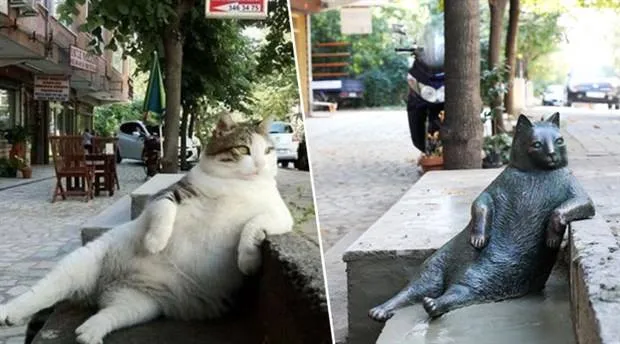
Turkish culture also embraces cats, as they are often depicted in food and clothing designs, symbolizing their cherished presence. Urban residents leave out food and water for these feline friends, allowing them to rest on their doorsteps and taking on responsibility for their well-being. In many ways, cats represent the opulent and indulgent lifestyle that the Turkish people adore (Laeeq, 2018). Moreover, this storytelling can take on a transnational character by reaching millions of users worldwide through social media. In this context, with storytelling that transcends borders, stray cats are not only the inhabitants of the city but also social media phenomena and can sometimes become a touristic attraction of Türkiye.
Before discussing stray cats as a part of local culture, it is necessary to focus on the concept of storytelling. A story portrays various elements’ existence, functionality, and prospects in conjunction with and independent of each other. It represents objects and actions that aid in comprehending the world (Saydam, 2024, p. 10-11). This portrayal is instrumental in deciphering the events that impact human beings. Traditional storytelling involves open and direct two-way communication between the narrator and the audience, allowing interaction among those present (Barel, Gurwicz & Packer, 2024, p. 15). The interaction mentioned is one of the critical elements of empathy and persuasion. Successful interaction with the audience can help build strong and lasting relationships. Likewise, compelling storytelling engages the target audience and creates an emotional connection.
In which media would storytelling be suitable for disseminating cultural values? The response to this query encompasses all media, including social media, which is extensively utilized and provides an ideal platform for crafting and disseminating new stories. Fr om the first story told throughout human history, stories have transcended traditional boundaries and evolved to reach a wider audience. The first storytelling festival took place in 1973 in Jonesborough, Tennessee, with tellers from diverse backgrounds (Stone, 1998, p. 622). The event marked a pivotal moment, expanding the reach of storytelling. The enduring nature of storytelling has remained intact despite evolving forms of expression and has extended its influence into the digital realm. ‟Stories can be of different forms: educational, emotional, motivating, influential, or comic. It helps organizations create leads to connections to influence and gauge the crowd’s attention” (Joshi et al., 2022, p. 10). The primary consideration here lies not within the medium through which the story is conveyed, but rather within the establishment of a meaningful connection with the intended audience.
Today, both mass media and technology advancements have obliterated geographical barriers, enabling stories from various industries, such as films, series, advertisements, and performing arts, to connect with a global audience through online platforms. According to Nixon (2023, p. 205), with the rise of the Web, social networks, mobile and digital photography, a destination’s image is being less and less determined by the destination’s own marketing and more by traveler user-generated content posted and consumed globally on platforms such as Facebook** and Instagram**. Kimmel and Kitchen point out that engagement with the target audience through social media cannot succeed if the message is merely cursory or sporadic (2014, p. 16). At this point, well-crafted stories should consistently resonate with the target audience. For instance, Joshi et al. (2022, p. 11) highlight that storytelling in marketing communication has existed for a while – advertisers are aware of its advantages in creating an emotional connection with consumers, building customer engagement, increasing brand recall value, etc. This effort is achieved through various means. In our case, stray cats are considered to be a cultural attraction that supports Turkish cultural values by being the subject of social media posts that organically disseminate destination branding messages for travelers – in other words, modern storytellers. Tourists, as the target audience, visit Türkiye and spend time with cats, subsequently sharing this experience on social media. As a result, they organically contribute to WOM efforts. Whether the interaction occurs face-to-face or online, the essence of WOM is that communication occurs among peers who do not expect to receive compensation for the communication (Kang, Hong & Hubbard, 2020, p. 48). Thus, disseminating the message through traditional media or online channels facilitates its rapid transmission among similar groups characterized by considerable persuasive influence.
Stray Cats as a Cultural Attraction in Istanbul
Cultural attractions and tourism have a symbiotic relationship, wh ere each enhances and supports the other. Tourism, which constitutes a significant economic value for countries, causes various concerns with the dangers it creates in social and environmental dimensions (Dilek, 2017, p. 4–16). Severe changes in the tourist profile and the saturation of some types in the tourism sector also play a role in this concern. Accordingly, tourists’ preferences have become increasingly polarized; their search and desire for innovation and diversity, comfort, and adventure have increased, and “3E (exciting-entertainment-educational) criteria have tended to dominate in product development instead of ‘3S (sea-sand-sun)’ (Ulusoy, 2015, p.79). The commodification of animals in recreational activities within the scope of the “excitement and entertainment” criterion has added a new one to the ethical debates on issues such as food, fur/teeth/skin trade, medical and cosmetic product experiments. Therefore, the use of animals for tourism purposes has started to be mentioned more and more day by day due to their place in the tourism sector and the contribution of the tourist-animal relationship to touristic activities (Dilek & Küçükaltan, 2017, p. 4). This situation has led to the inclusion of domestic and wild animals in tourism activities in different ways, which has paved the way for the neglect of their welfare / rights fr om time to time and their being seen as “commodities” and has opened the moral responsibility of tourism to discussion (Aslım et al., 2020, p. 124). On the other hand, it is noteworthy that many tourists, who take advantage of the opportunities offered to them by many tourism businesses that disregard this responsibility, do not avoid being involved in tourism activities based on the use of animals just because they love animals, without knowing that there is great suffering behind it. Thus, even tourists who care about animal rights and welfare participate in tourism activities wh ere animals are used, unwittingly participating in this commercial relationship established based on demand and supporting this cycle, thus ensuring the continuation of the paradox (Yenişehirlioğlu & Cihangir, 2021, p. 3885).
However, Istanbul cats, the subject of this study, fall far outside the ethical debates on animal use. Even though they are not consciously used in tourism activities, Istanbul cats stand out with their structure that can turn into an organic subject in the narration of urban stories through the bond they establish with tourists visiting touristic locations and city residents (Figure 2). To summarize, the role of Istanbul cats in the promotion of cities that complement storytelling, which is emphasized throughout the study and spontaneously transforms into a touristic attraction, is independent of the ethical concerns focused on animal use.
|
|
|
|
Figure 2. Cats resting in cafés |
|

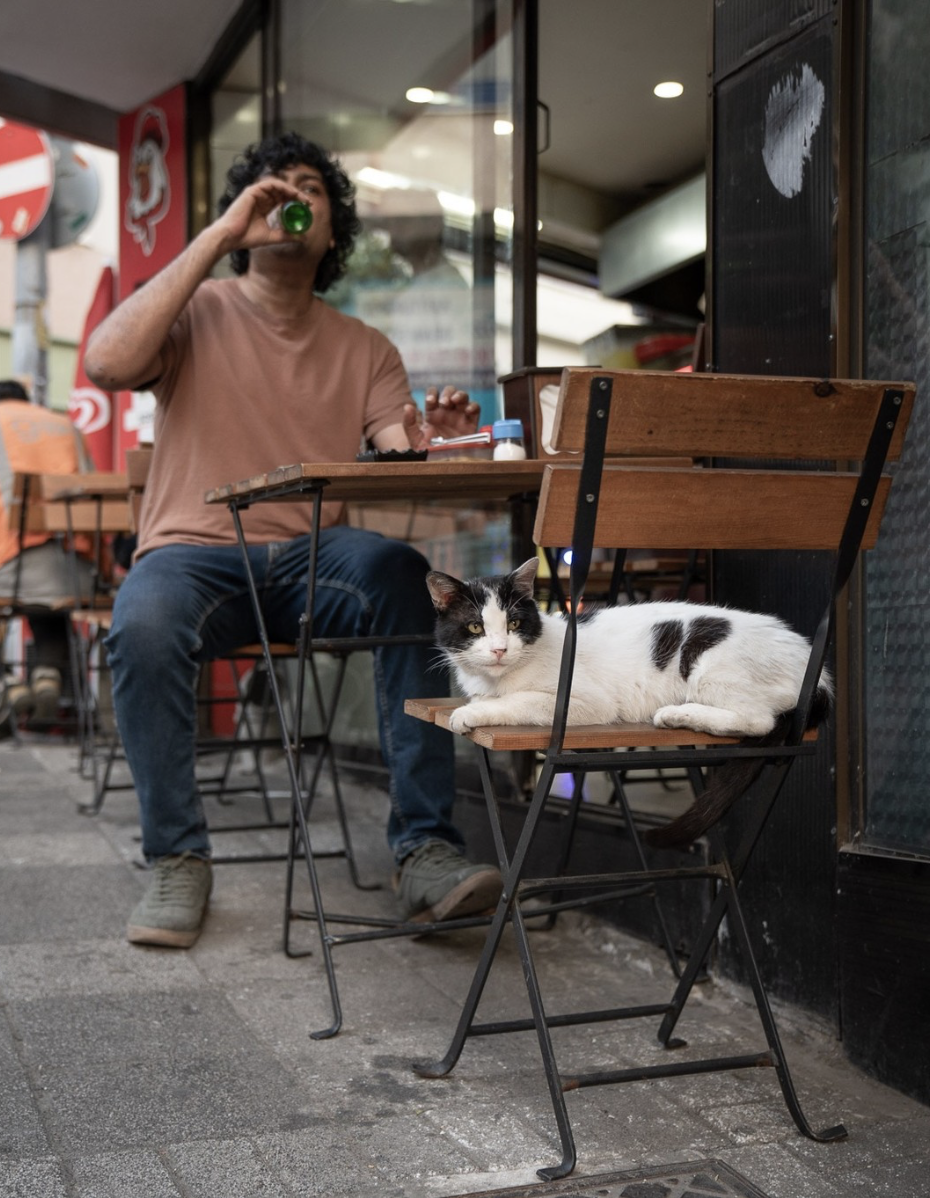
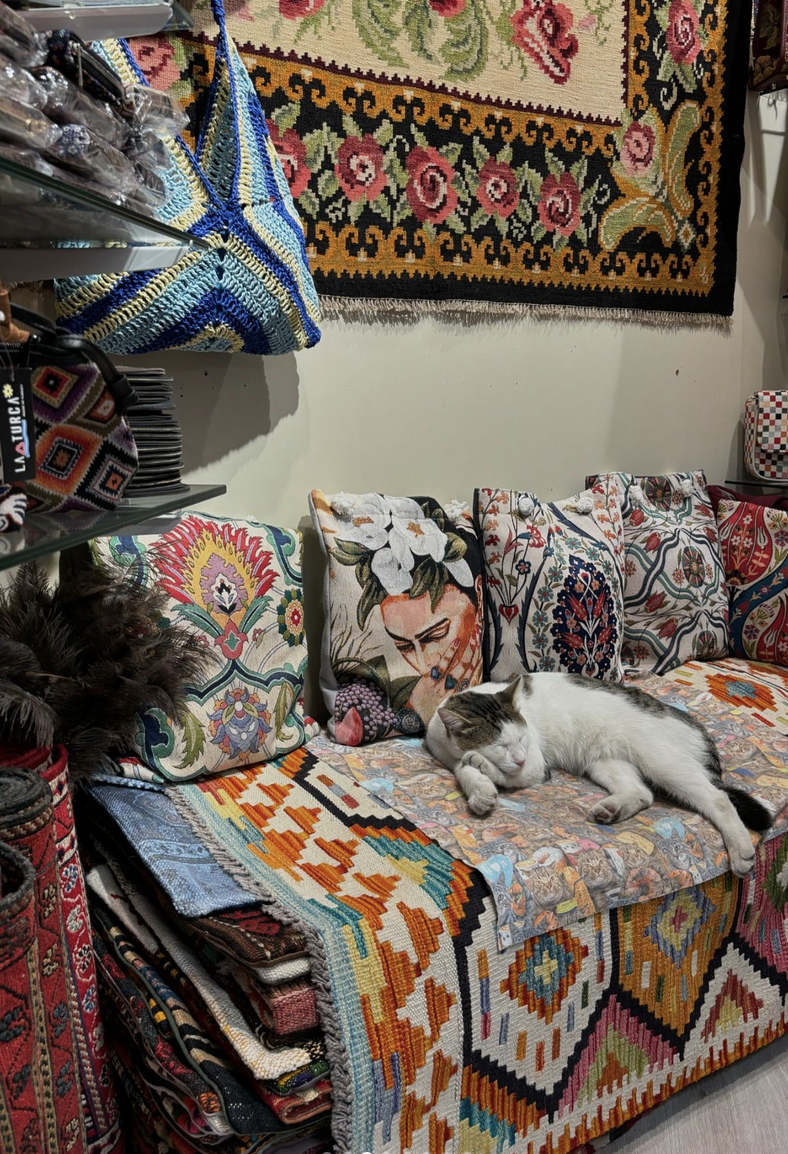

It is noteworthy that stray cats, like other cultural attractions, are utilized in country promotional activities and effectively attract tourists. For example, Japan promotes itself with animal-themed attractions such as rabbit cafes in Tokyo, pets roaming around Nara, the snow monkeys of Jigokudani bathing in hot springs, and “Cat Islands (Neko-Shima)” (Bilgi Vitrini, 2021). However, research indicates that organic word-of-mouth communication (WOM) has a more significant impact on shaping a destination’s image than meticulously planned marketing strategies. Similarly, Mariani, Felice, and Mura (2016, p. 322) summarize that ‟social media sites facilitate user-generated content such as blogs, photos, videos, wikis, or reviews and are widely used by online travelers, thereby marking a shift toward users rather than organizations taking charge of the Internet content. Sometimes user-generated content and online reviews might even challenge the authority of established Destination Management Organizations (DMOs) and conventional advertisements, by undermining their reputation”. Travelers, who concurrently function as storytellers, engage in the generation of new narratives through the production of content, which subsequently contributes to the visual branding process. An excellent example of this phenomenon is the rise of “cat tourism,” which has become synonymous with Türkiye, particularly Istanbul. Türkiye has garnered global attention for its fondness for cats without a deliberate national promotion or marketing strategy. The streets of Istanbul, teeming with stray cats, have captured tourists’ fascination and played a significant role in promoting the country. Notably, the stray cats, estimated to exceed 200,000, have become the primary focus of social media influencers, effectively serving as unofficial ambassadors for Türkiye and Istanbul, especially among cat enthusiasts. European social media influencers consistently feature cats in their posts fr om Istanbul, and the cat-related content garners widespread acclaim from millions of users. Additionally, visitors to Türkiye showcase the genuine care and love extended to the cats in Istanbul through their social media accounts, often sharing videos of well-cared-for felines. (Oda TV, 2023). The Ministry of Culture and Tourism has opened a special section on its website, www.goturkiye.com, dedicated to the cats that roam the streets of Istanbul. Moreover, Ceyda Torun directed a documentary, namely ‟Kedi” (The Cat), which tells the story from the eyes of seven Istanbul cats in 20162. The section states, “Every visitor who wanders around any neighborhood of Istanbul for 10 minutes will come to the same conclusion: Istanbul belongs to cats.” This initiative showcases the tourism effect of social media posts featuring stray cats, which open the doors to a completely different world for potential visitors. Cats on the streets, cities, and regions of Türkiye capture attention. Turks’ loving approach to cats adds to the country’s touristic appeal and contributes to achieving tourism targets. (Halk TV, 2024). In Turkish culture, cats are deeply cherished and celebrated for their presence in urban environments. Unlike many other countries, Türkiye emphasizes the role of stray cats, recognizing their contribution to the aesthetic and cultural appeal of city life. This unique cultural appreciation extends to the tourism sector, wh ere the presence of stray cats adds a distinctive and endearing charm to Türkiye, making it a compelling destination for cat enthusiasts and tourists alike.
Methodology
The Internet and access to online tools that enable individuals to engage, share, and spread their ideas have leveled the playing field. They now have the power to create something fr om nothing and reach out to the world through a story (Jiwa, 2013, p. 163). Instagram** is considered one of the most preferred applications in this crowded arena. Instagram**, which features user engagement and content sharing as a natural characteristic, is a highly effective digital communication platform wh ere users share posts to express themselves. Groups that come together based on friends or specific common interests in daily life communicate, share mutual posts, and report their status. With these features, wh ere visual sharing is more intense, Instagram** is one of the channels of daily life’s hot interpersonal communication flow on the digital platform (Yeygel Çakır, 2020, p. 230–231).
It is the audience who make the story, not the storyteller. The storyteller can only guide them (Barel, Gurwicz & Packer, 2024, p. 17). The stories conveyed by the storyteller gain meaning if only they can create interaction with the target audience. In this context, as much as the posts uploaded by Instagram** users, the comments made as a result of the interaction of the posts gain importance.
As a methodology, content analysis allows researchers to quantify content – whether it is the content of participant responses or the content of media texts (Davis & Lachlan, 2017, p. 222). Its applications can include the careful examination of face-to-face human interactions; the analysis of character portrayals in media venues ranging fr om novels to online videos; the computer-driven analysis of word usage in news media and political speeches, advertising, and blogs; the examination of interactive content such as video gaming and social media exchanges; and so much more (Neuendorf, 2017, p. 19). Hence, the most appropriate course of action for this study would be to utilize the content analysis method, which involves systematically categorizing and interpreting data to provide valuable insights.
Results
This study analyzes the hashtags “#catsofistanbul, #istanbulcats, #turkishcats, #catsofTürkiye, #istanbulstraycats, #istanbulcatslife, “#citycatsofistanbul, #istanbulunkedileri, #istanbulkitties, #meowistanbul, and #istanbulcatslove,” which include videos and photos of stray cats in Türkiye, famous as Istanbul cats. Although more than 10,000 posts were tagged in the analyzed hashtags, it was observed that only the last 28 posts were published by Instagram**. The posts that received the most comments under these tags and the accounts that shared the most posts were selected, and the comments on the posts were collected as data. In total, 1393 posts and 248,483 comments were analyzed. The languages of the posts were translated by Instagram**, and the posts that Instagram** could not translate, comments made by Turks, and those containing only emoji were excluded fr om the coding. The remaining 145,751 comments were included in the analysis, and 10,093 codes were analyzed using the content analysis method within the framework of the themes and codes determined by the Maxqda program.
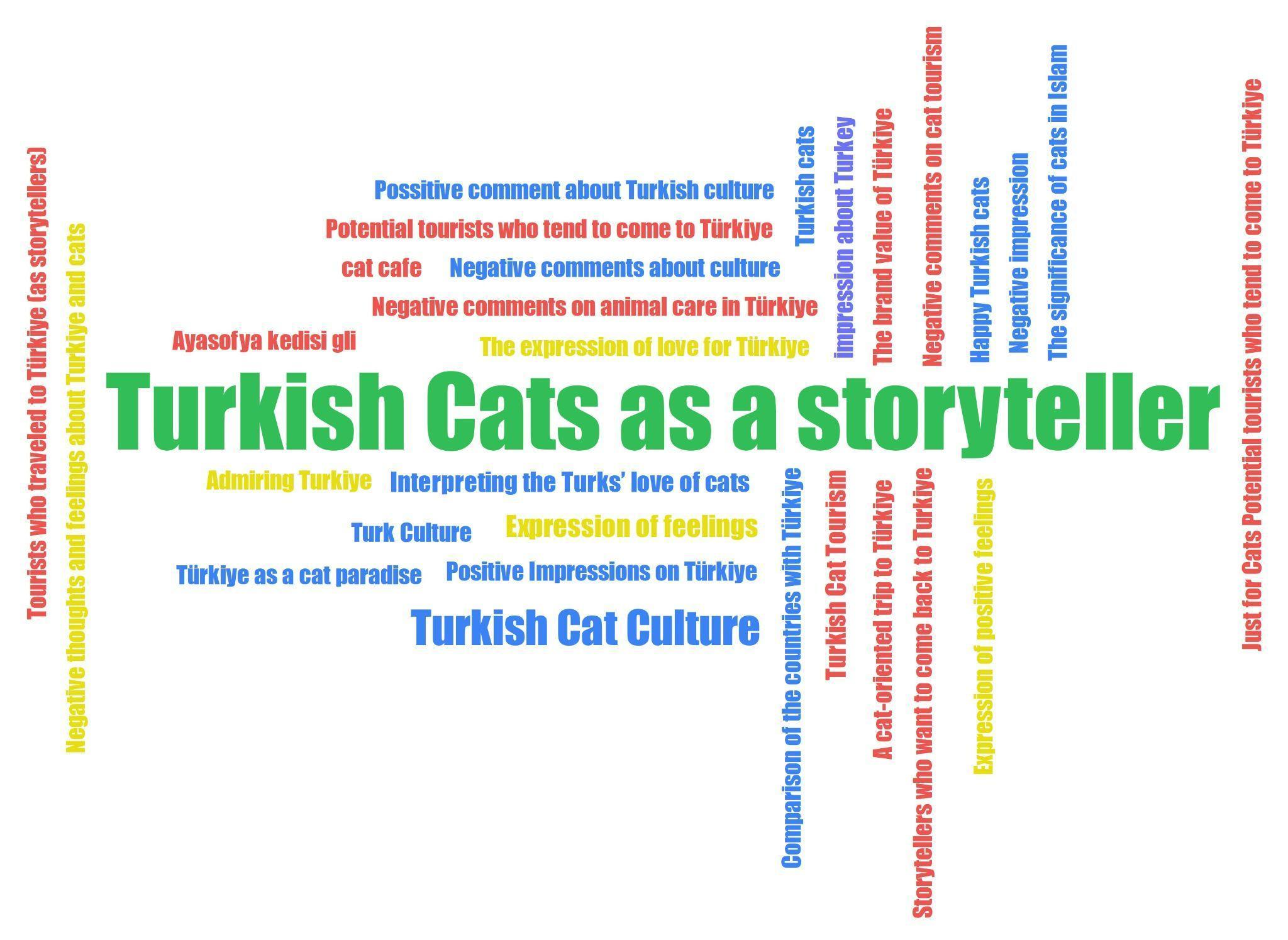
In this study, the codebook was developed through an inductive process. The analysis involved a comprehensive evaluation of both quantitative and qualitative data. As seen in Figure 3, the main theme identified in the study and emerged from the comments is ‘Turkish Cats as Storytellers’, and the sub-themes are ‘Expression of Emotions’, ‘Turkish Cat Tourism’, and ‘Turkish Cat Culture’. Based on these themes, a primary theme, three sub-themes, and 24 codes and sub-codes were established, as illustrated in Figure 4. Besides, the diagrams in Figure 5 depict the hierarchical organization and arrangement among themes, sub-themes, codes, and sub-codes, demonstrating how they are interconnected and related.
|
|
|
Figure 3. Code cloud of the themes
|
|
|
|
Figure 4. Theme and code model
|
|
|
|
Figure 5. Hierarchical code model
|


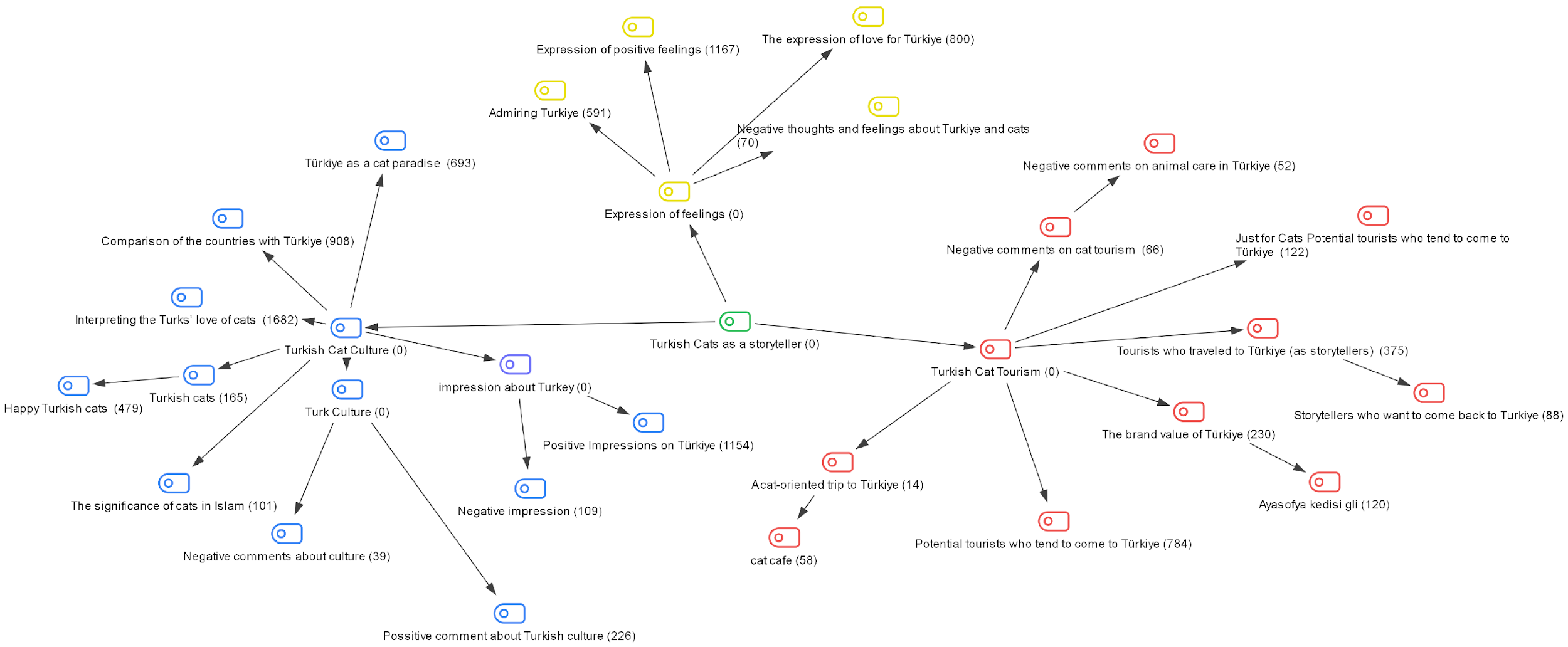


The graph below, the Matrix Portrait in Figure 6, displays the sections referenced in the text, color-coded according to the theme. White areas signify sections that are either out of scope or not coded. It is noticeable that the segment related to Turkish Cat Culture, highlighted in blue, has attracted more comments.
The results section thoroughly examines the different elements that emerged while analyzing themes, codes, subcodes, and models. This thorough exploration delves into the intricacies and nuances of the observed elements, offering a comprehensive understanding of their implications.
One of the most significant findings from the analysis of ten thousand comments is that emojis are predominantly used in expressions. Notably, the Turkish flag and heart were used in 60 percent of the emojis excluded from coding. Apart from these, most comments contain applause, laughter, cats, waving, hearts, faces with hearts, and cats with heart eyes emojis. The comments made by Turks include observations about the country, expressions of love, and responses to negative comments from international users.
|
|
|
Figure 6. Matrix portrait |


Quantitative Analysis of Codes
The research findings revealed that the highest theme identified was “Turkish Cat Culture,” the most prevalent code was “Interpreting Turks’ love of cats,” as indicated in Tables 1 and 2, which contain numerical data and percentages relating to the coding.
|
Table 1. Sub-theme statistics |
||
|
Categories |
Themes |
Percent (%) |
|
Turkish Cat Culture |
5.556 |
55,04 |
|
Expression of Feelings |
2.628 |
26,03 |
|
Turkish Cat Tourism |
1.909 |
18,9 |
|
Total |
10.093 |
100 |
In analyzing the code statistics about different themes, it is evident that the highest number of comments were related to the cultural and religious aspects influencing Turks’ affection for cats. Users associated this fondness with Turkish culture. On the other hand, the theme of visiting Türkiye for cats received the fewest comments.
|
Table 2. Statistics of codes and sub-codes |
|
|


Table 2 shows the statistics related to the codes and sub-codes. The frequency numbers, percentages, and valid percentages of the codes are given in the table. In Table 3, the keywords determined for the themes, codes, and sub-codes are listed as follows:
|
Table 3. The keywords for the themes, codes, and sub-codes |
||
|
Expression of Feelings |
Admiring Türkiye |
– incredible – awesome – jealous – if only example – what a wonderful country/society/ people/city |
|
The expression of positive feelings |
– made me feel pleasant/confident/ happy/comfortable – feeling – good feeling |
|
|
The expression of love for Türkiye |
– I love/ loved – that's why – for this reason |
|
|
Negative thoughts and feelings |
– made me feel bad/annoyed/sad/ angry/upset/not good/ – for PR |
|
|
Turkish Cat Culture |
Comparisons of the other countries with Türkiye |
– If only Türkiye was like a model – course of education – should learn – example |
|
Interpreting the Turks’ love of cats |
– Turkish people – People/society – love of cats – caring for cats |
|
|
The significance of cats in Islam |
– Muhammad – Islam |
|
|
Turkish culture |
Positive comments about Turkish culture: – Ottoman – culture – kind – merciful |
|
|
Negative comments about Turkish culture: 1. vegan/vegetarian 2. sacrifice/festival 3. cow/sheep 4. Kurd 5. Armenian genocide 6. regime 7. dictator |
||
|
Turkish cats |
– Turkish cats – Istanbul cats – Turkish stray cats |
|
|
Happy Turkish cats – healthy – happy – comfortable – safe – peaceful |
||
|
Türkiye as a cat paradise |
– cat paradise – everywhere/ cats everywhere – king paradise – capital city – cats rule the city |
|
|
Impressions about Türkiye |
Positive impressions: – excellent – how magnificent – how marvelous – how beautiful – marvelous country/society/city |
|
|
Negative impressions: – cats not neutered – too many – sick – uncontrolled breeding
|
||
|
Turkish Cat Tourism |
A cat-oriented trip to Türkiye |
– cat trip – flight – trip – tour – cat tour |
|
Cat Cafe – cat café – café – Starbucks – Catbucks – starcat |
||
|
Just for cats |
– only for cats/ only/ for cats – to feed – to love/ to pet – to care for |
|
|
Potential tourists who tend to come to Türkiye |
– dream place – move/ I can't wait to move – travel – visit – list – migrate – go |
|
|
Tourists who traveled to Türkiye as a storyteller |
– I went/ I've traveled/we visited – I'm there/I'm here/ I was here/I've been – we're going – we lived – last time I saw – long time |
|
|
Storytellers who want to come back to Türkiye – come again – go again – travel again |
||
|
The brand value of Türkiye |
– ordinary/normal – only in Türkiye/only in Istanbul – as expected – say without saying – catistanbul – catstanbul |
|
|
Hagia Sophia Cat Gli – Gli |
||
|
Negative comments on cat tourism |
– allergy – odor – feces/poop – hygiene – fleas |
|
|
Negative comments on animal care in Türkiye |
– abuse – sterilization – sick – injured – throw stones – kill – medical care |
|
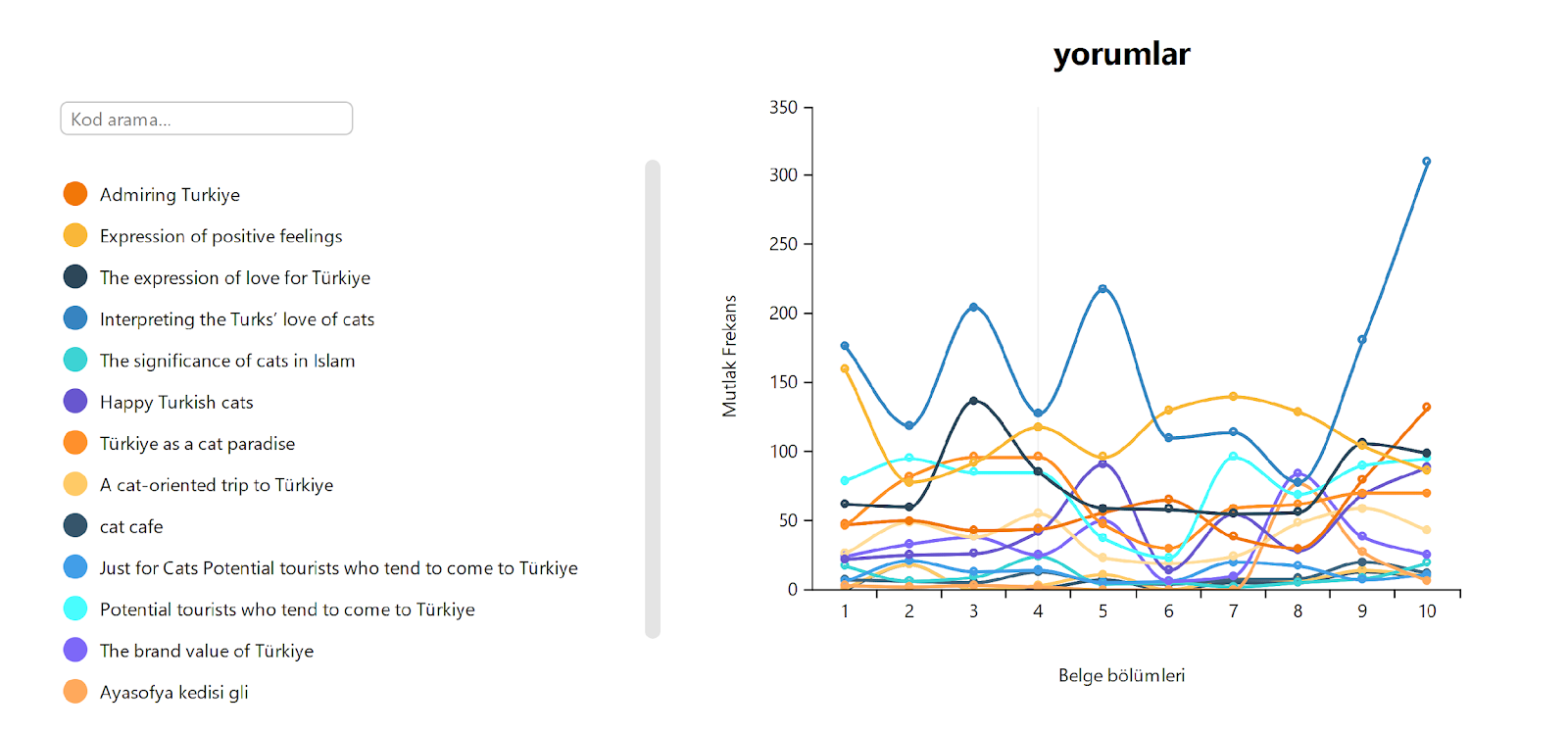
In Table 3 and Figure 7, most comments revolved around Turks’ love for cats and their interactions with them. Further analysis showed that the most prevalent comments focused on Turks’ love for cats, while the least common were negative views regarding Turkish culture.
|
|
|
Figure 7. Code trends |

According to Figure 8, the theme “Turkish Cat Tourism” and the code “Cat Tourism” attracted the fewest comments.
|
|
|
Figure 8. Theme and code percentage statistics
|
|
Table 4. Code statistics |
|
|

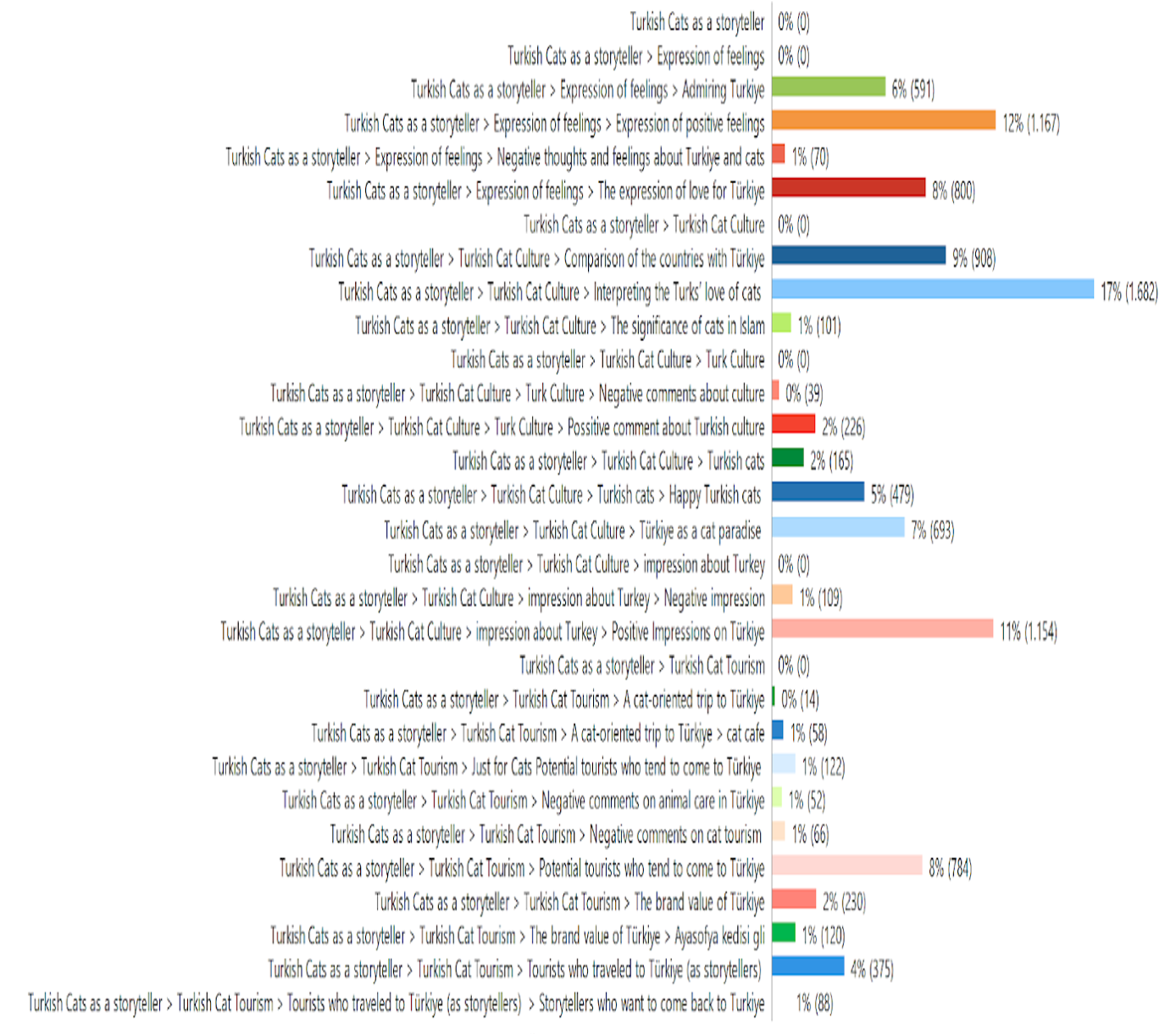


As shown in Table 4, the last part of the quantitative analysis, cat tourism received the fewest comments. Given the study’s application of a mixed-method approach, the subsequent section entails the inclusion of qualitative analysis.
Qualitative Analysis of Codes
The study revealed that users made comments from a wide range of countries, including Japan, Iran, South America, Sydney, the United States of America, India, Brazil, Morocco, Greece, Argentina, Uzbekistan, the United Kingdom, Azerbaijan, France, Malaysia, Finland, Scotland, Austria, Italy, Spain, Russia, Mexico, Peru, China, Dubai, Germany, Portugal, Iran, Bulgaria, Puerto Rico, Jordan, Indonesia, Kazakhstan, Africa, Chile, Korea, Crimea, Philippine Netherlands, Colombia, Tatarstan.
In recent years, Turkish cats have gained significant popularity, particularly since 2021 and the onset of the pandemic. Interestingly, it has been observed that users engage more with the posts of international users who have traveled to Türkiye or live in Türkiye compared to pages created by Turks focusing on Istanbul cats or Turkish cats. Interactions with Turkish users primarily focus on the cats’ cuteness. At the same time, international posts delve into various themes such as the Turks’ relationship with cats, their love and respect for cats, the value attributed to cats in Turkish culture and Islam, comparisons between Türkiye and their own countries in terms of the treatment of stray animals, as well as impressions of Türkiye overall.
International users are often impressed by the sight of stray cats in Türkiye because it is rare to see stray animals freely roaming the streets in other countries. These cats’ comfort, sociability, and friendliness fascinate tourists and potential tourists. Thousands of comments have been made about this phenomenon, including sentiments like “It’s better to be a cat in Türkiye than a woman in Kazakhstan” and “I want to be born as a cat in Türkiye in my next life.” Some have even humorously suggested, “Let’s send all the cats in the world to Türkiye.”
A few comments are seen in Figure 9 below.
|
|
|
|
|
Figure 9. Comments from Instagram** users |




Istanbul Cats has evolved into a “Turkish Cats” brand among international users. Therefore, the theme was categorized as Turkish cats. The study reveals that comments from international users about Türkiye, Turks, and Turkish cats encompass both positive and negative feedback.
|
Table 5. Variable Statistics |
|
|
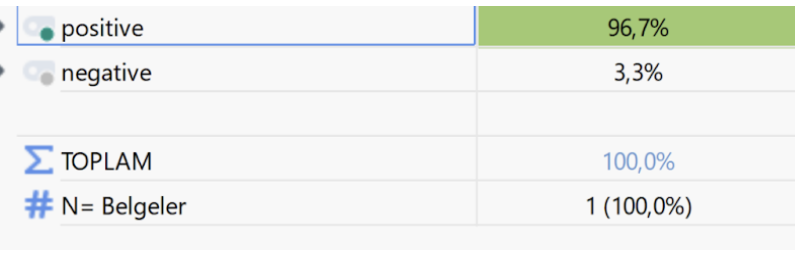

In Table 5, 96.7 percent of the codes are covered by positive comments, while negative comments cover 3.3 percent. The negative comments in Table 5 include codes such as “negative thoughts and feelings,” “negative comments about culture,” “negative comments on cat tourism,” “negative comments on animal care in Türkiye,” and “negative impression,” which are also shown in Figure 10.
|
|
|
Figure 10. Negative variable model
|
|
|
|
Figure 11. Positive variable model
|


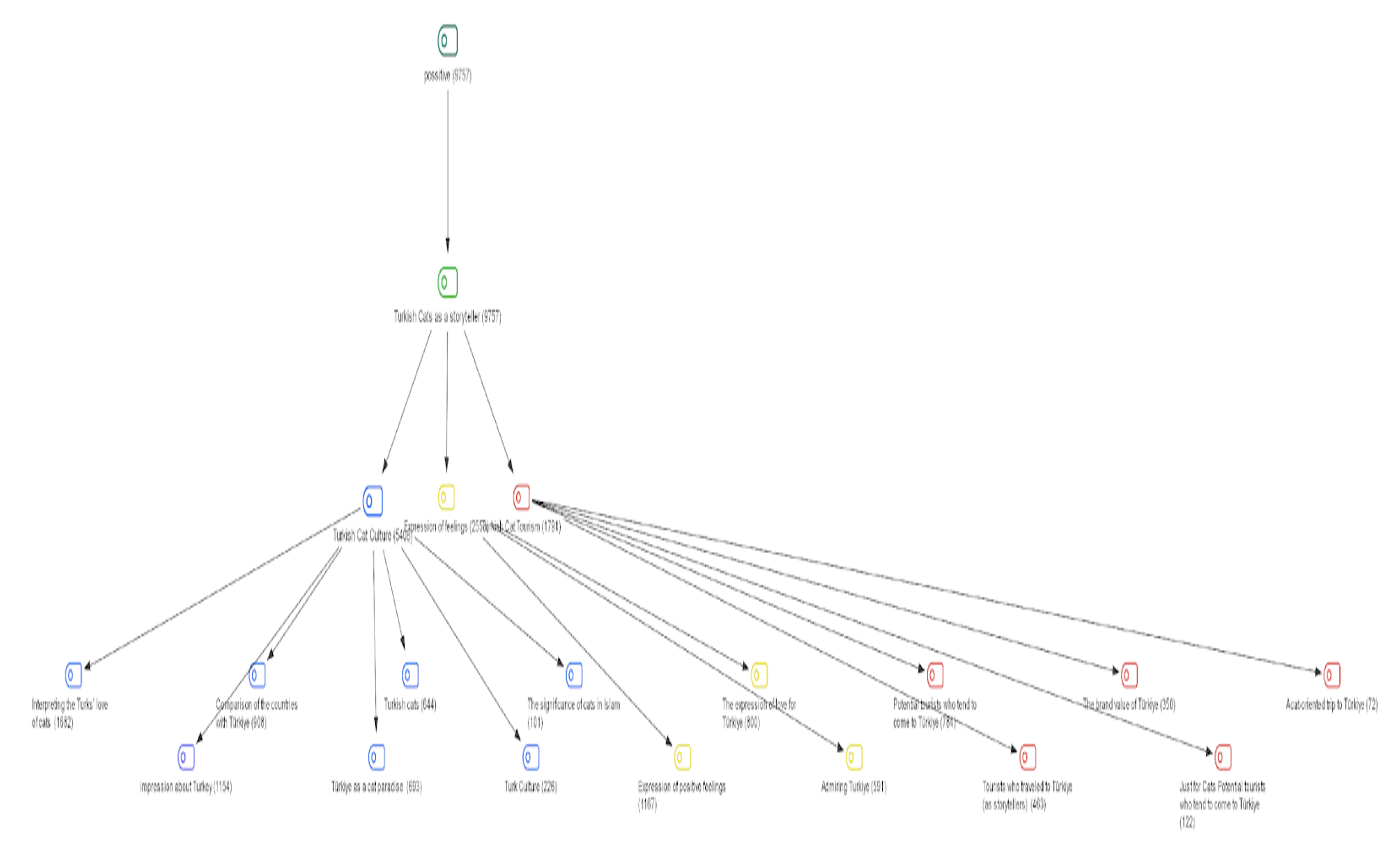

In Figure 11, it is revealed that positive comments make up 96.7 percent of all comments. This indicates that international users perceive the relationship between Turks and their cats very positively. Both negative and positive comments suggest that the general impression of ‟Turks’ love for cats”, ‟their relationship with cats”, and the positive emotions arising from these impressions are predominant.
|
Table 6. Theme and code distribution according to variables |
|
|

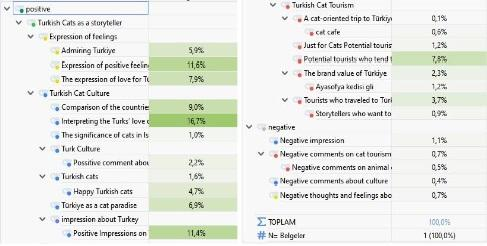
In Table 6, it is noticeable that positive comments are quite intense and almost all themes and codes from Turkish culture, cat tourism, animal care to the impression of Türkiye are evaluated positively by international users.
The qualitative analysis of the comments from international users, evaluated based on themes and codes, yields the following insights:
1. Expression of feelings: International users often conveyed their positive or negative emotions and opinions in their posts about Turkish cats. The coding identified four categories based on recurring topics in the comments under this theme.
a) Admiring Türkiye: The predominant comments expressed were admiration for the Turks’ love of cats in Türkiye. The feelings and thoughts shared about this admiration can be summarized as follows:
-
The comments express admiration and envy for the way animals, especially cats, are treated in Türkiye, particularly in Istanbul.
-
Many express a sense of longing and envy, wishing to firsthand experience Türkiye’s cat-centric culture.
-
There is ample appreciation for the care, compassion, and freedom given to stray cats in Türkiye, with a hope for other countries to follow suit.
-
The prevalence of cats in public spaces such as shops, cafes, and transportation hubs, as well as the comfort and trust they exhibit.
-
Recognition of the efforts by local authorities and citizens in providing food, shelter, and veterinary care for stray cats.
-
A generally kind, patient, and appreciative attitude toward cats among the Turkish people.
-
Commenters frequently express a desire for their own countries, especially Japan, to become as animal-friendly as Türkiye.
|
|
|
|
|
|
|
|
|
Figure 12. Turkish Cats lounging in cozy cafes and strolling through boutique shops |

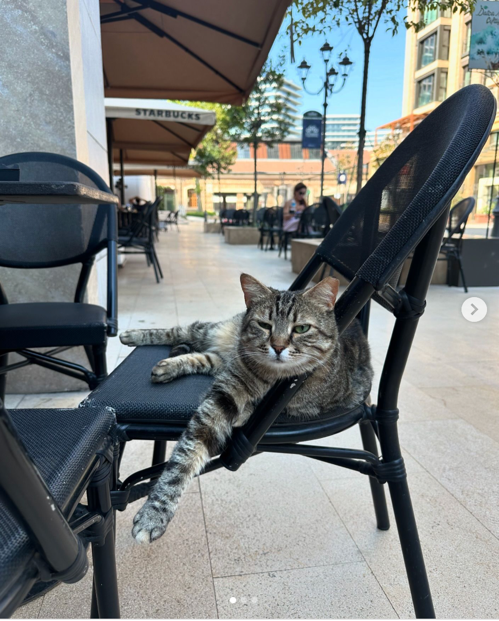

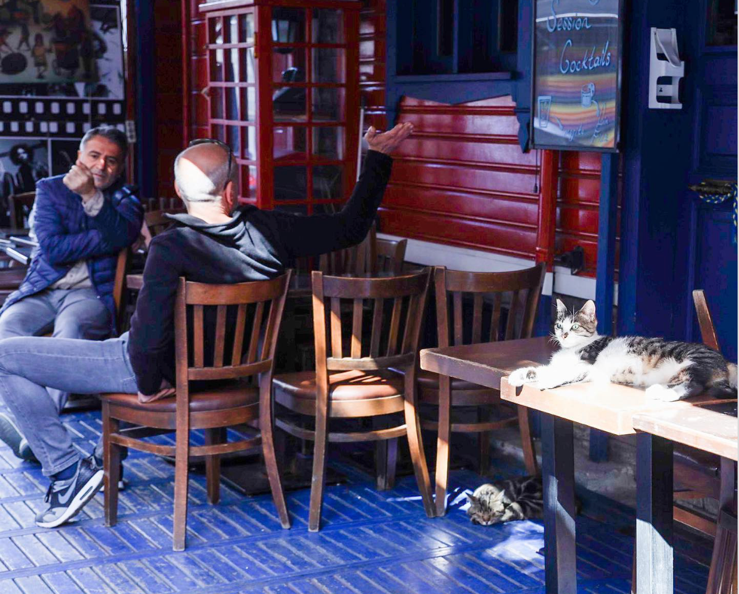

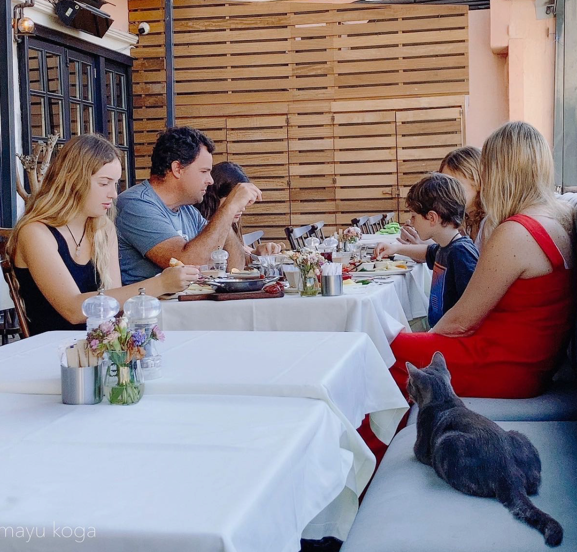

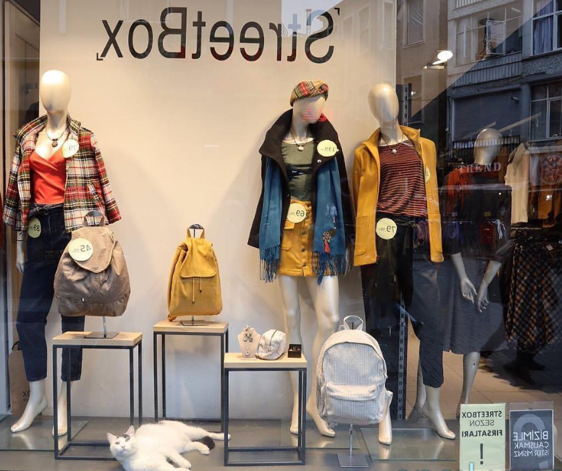
b) Expression of positive feelings: Turkish people’s affection for cats and their interactions with them have gained positive attention from international users. The coding of the comments in which users expressed their feelings can be summarized as follows.
-
Turkish cats are portrayed as calm, relaxed, and comfortable in their environment, indicating a high level of trust and safety.
-
The images and videos show cats freely roaming and interacting with people in public spaces, suggesting a strong bond and acceptance between the cats and the local community.
-
There is a recurring theme of the cats being ‘blessed’ and the people being ‘blessed’ for their kindness and compassion towards the animals.
-
The overall sentiment is one of warmth, contentment, and a deep appreciation for the harmonious coexistence between the cats and the human population in Türkiye.
|
|
|
|
Figure 13. Turkish Cats in metro |
|

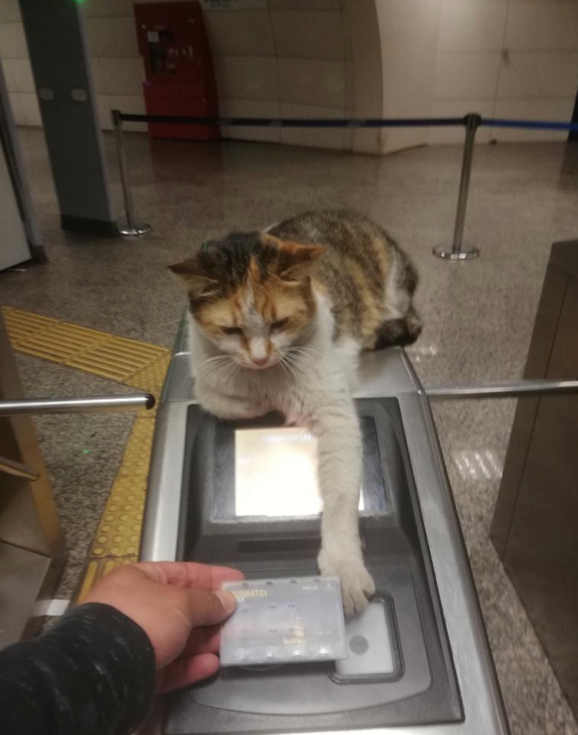
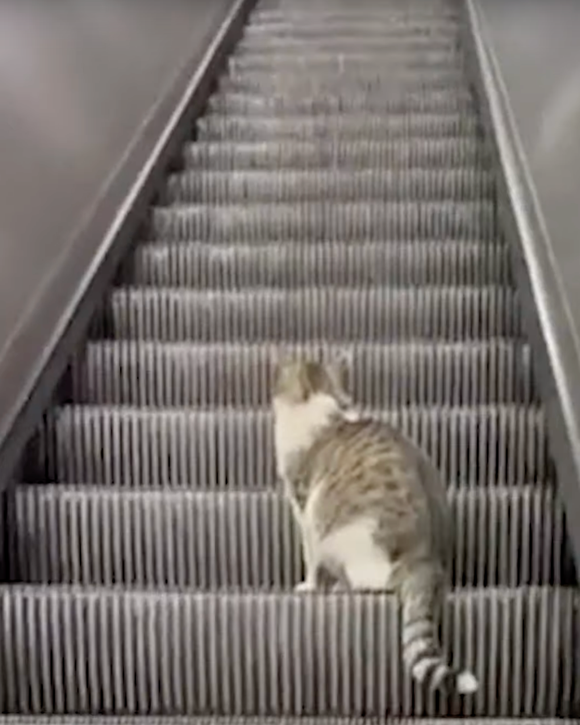

c) The expression of love for Türkiye: International users often express their love for Türkiye, particularly for Istanbul, due to the kind treatment of stray cats by the Turkish people. The love mentioned is summarized below.
-
The comments express deep love and admiration for Türkiye, especially the city of Istanbul, due to the Turkish people’s kind, respectful, and compassionate treatment of stray cats.
-
Numerous commenters praise the Turkish culture and society for their respect, care, and affection towards cats, which is seen as a model for the rest of the world.
-
Commenters highlight specific examples that demonstrate the Turkish people’s dedication to feeding, sheltering, and providing veterinary care for stray cats, which is highly appreciated.
-
The comments express a feeling of amazement and joy when observing cats freely roaming the streets, being welcomed in shops and restaurants, and living peacefully alongside the human population.
-
The overall sentiment is one of deep fondness and respect for Türkiye, its culture, and its people, primarily driven by the nation’s exceptional treatment and care for its feline residents.
d) Negative thoughts and feelings: International users not only expressed positive feelings about cat culture but also a small number of negative feelings and thoughts were summarized as follows:
-
Many negative sentiments were expressed about the treatment of stray cats in Türkiye, with concerns about cruelty, neglect, lack of care, suffering from hunger, disease, and abuse by some people.
-
Calls for more spay/neuter programs, shelters, and humane population control measures to improve the situation for stray cats.
2. Turkish Cat Culture: International users attributed Türkiye’s love and behavior towards cats to Turkish culture and the Islamic faith. Based on these opinions, seven codes and five sub-codes were created under this sub-theme, depending on the content of the comments.
a) Comparison of the other countries with Türkiye: International users, especially the Japanese, envy the love, compassion, and behavior of Turks towards stray cats, compare them with their own countries, and want their countries to take Türkiye as an example and model for cats.
-
Turkish cats are seen as subjects of storytelling and companions in Turkish culture, with people caring for and coexisting with stray cats.
-
Compared to other countries wh ere cats are often considered pests and mistreated, Türkiye is described as a much more animal-friendly country, wh ere cats are welcomed and cared for by the public.
-
Many commenters expressed a desire for their own countries to learn fr om Türkiye’s compassionate approach to stray animals and adopt similar practices of feeding, sheltering, and respecting cats and other creatures.
-
Many wish their own countries would emulate Türkiye’s model of animal welfare and highlight Türkiye as a positive role model for how a society can embrace and care for its stray animal population.
b. Interpreting the Turks’ love of cats: International users express the love, compassion, and behavior of Turks towards stray cats with appreciation, love, and respect.
-
Turkish cats are highly valued and respected in Turkish culture, with many Turks caring for and feeding stray cats.
-
Cats are welcomed and cared for in public spaces like cafes, shops, and parks, with Turks providing food, water, and shelter for them.
-
Turks see cats as part of the community and treat them with the same respect and affection as they do other people.
-
This animal-friendly culture is seen as a reflection of the Turkish people’s values of hospitality, compassion, and respect for all life.
c. The significance of cats in Islam: International users attribute the love, compassion, and behavior of Turks towards stray cats to the value given to animals by Islam and the Prophet Muhammad’s love for cats. The content of the comments can be summarized as follows:
-
Cats are highly respected in Islam and are allowed to enter mosques, wh ere they can freely roam and even pray alongside worshippers.
-
Cats are considered sacred in many ancient civilizations, and Turks have a deep love and respect for them.
-
The reason for the reverence towards cats in Türkiye is believed to be the Prophet Muhammad’s love and respect for them, which has influenced Muslim attitudes.
-
Islam teaches its followers to love and care for all of God’s creations, including animals, and this is reflected in the way cats are treated in Türkiye.
d. Turkish Culture: Many people believe that the Turks’ affection for cats is a result of Turkish culture. While some comments commend Turkish culture for its treatment of cats, others criticize it for its treatment of minorities, different behavior towards tourists and some criticism of the political regime. This can be categorized into two subcodes: negative and positive comments about Turkish culture.
i. Positive comments about Turkish culture: Users praise Turkish culture by considering Turks’ love for cats and their behavior towards cats. Comments can be summarized as follows:
-
Turkish culture has great respect and love for cats and animals.
-
Cats have a long history and are an important part of Turkish culture, emphasizing that Turkish people are kind and sensitive towards the weak, helpless, and vulnerable animals.
-
Turkish culture is exemplary in terms of animal love and respect and can be a model for other countries.
ii. Negative comments about Turkish culture: In the analyses made in the comments related to culture, it was observed that there were no negative evaluations about Turkish culture with the theme of cats, but there were comments criticizing the approach of Turks towards minorities and tourists.
iii. Turkish Cats: International visitors appreciate that Turkish cats are free to roam and are well-regarded by the Turkish people. When international users label the stray cats in Türkiye as “strays,” Turkish users are quick to correct them, stating that these cats are actually cared for by the Turkish community. This code has one subcode.
-
Cats in Türkiye seem very happy and relaxed.
-
Street cats and dogs are healthy, well-groomed, and friendly.
-
Cats trust people and feel safe.
-
Cats in Türkiye “live like kings”; they are highly valued.
-
Türkiye is seen as the happiest country in the world for cats.
e. Happy Turkish Cats: International users envy Turkish cats for being free, happy, healthy, relaxed, and friendly. The following is a summary of the comments:
-
Turkish cats are very happy and relaxed, often seen napping comfortably in public spaces without fear.
-
Cats in Türkiye are well-fed, healthy, and treated with great care and affection by the people.
-
Cats are free to roam the streets and interact with humans, who provide them with food and shelter.
-
Cats in Istanbul and across Türkiye appear to live very content, stress-free lives, able to rest and relax without worry.
f. Türkiye as a cat paradise: International users describe Türkiye as a cat paradise, cat capital, and cat kingdom because Turkish cats can go in and out everywhere and are free and happy. The comments on this code can be summarized as follows:
-
Turkish cities, especially Istanbul, are known for having large populations of stray cats that are well-cared for by the local people.
-
Cats are everywhere in Türkiye – on the streets, in shops, cafes, and even in government buildings. They are accepted as part of the urban landscape.
-
Türkiye is often called a “cat paradise” or “cat heaven” due to the abundance of cats and the compassionate treatment they receive fr om the locals.
-
Overall, the cat-friendly environment in Türkiye is highly praised and viewed as an example of how animals should be treated with kindness and respect in urban areas.
g. Impression about Türkiye: Tourists visiting Türkiye or international users who saw posts about Turkish cats on social media had positive and negative impressions of Türkiye’s love for cats.
i. Positive impression of Türkiye: Users’ positive impressions of Turkish people’s love for cats include cats being happy, healthy, and free and local governments providing services for their feeding, sheltering, and medical care.
-
Visitors are impressed by the large number of cats in Türkiye, especially in Istanbul, and how well they are cared for by the local people.
-
The Turkish people are described as very kind, caring, and respectful towards the cats, treating them like family members.
-
The local municipalities and residents make efforts to feed, shelter, and care for stray cats, showing their compassion for animals.
-
Istanbul is seen as a “cat city” wh ere the felines are allowed to roam freely and are protected by the community.
-
Veterinarians in Istanbul are available 24/7, specifically for cats, and there are also cat ambulances.
-
Overall, Türkiye and Turkish people are praised for their animal-friendly culture and the special status they give to cats in their cities.
ii. Negative impression of Türkiye: A small number of users believe that due to the large population of cats, they may not receive adequate nutrition and medical care, which could lead to illness.
-
Some social media users express concern about the treatment of stray cats and dogs in Türkiye, describing instances of abuse, neglect, and lack of veterinary care.
-
There is a perceived need for spay/neuter programs and shelters to control the stray animal population and provide better living conditions.
-
Some users claim the government and local authorities are not doing enough to address the issue, with stray animals reportedly suffering fr om hunger, illness, and violence.
3. Turkish Cat Tourism: It is frequently seen in the comments that users want to visit or live in Türkiye because of their admiration for Turks’ love of cats and the fact that there are cats everywhere. This sub-theme, which was created based on these comments, has seven codes and three sub-codes.
a. A cat-oriented trip to Türkiye: The code with the fewest comments includes a visit to Türkiye, requested by Japanese users from the administrators, who are also Japanese like themselves and share the ‘feline tourism’ trend in their own country.
-
It is emphasized that every café in Türkiye is like a cat café, and cats are everywhere.
-
It is stated that Starbucks has also become a cat cafe in Türkiye.
-
Some people are very positive about the cat cafe culture in Türkiye, while others say that they would like to have a normal cup of tea, but everywhere, it is like a cat cafe.
i. Cat cafe: The sub-code with the fewest comments refers to remarks from Japanese users about ‘cat café’- themed places in Japan. Japanese users like these places for cat cafes because cats have free access to cafes and restaurants in Türkiye and even refer to Istanbul as a giant cat cafe.
-
Many cafes in Türkiye seem to have cats, creating a cat cafe-like atmosphere.
-
Some people express a desire to visit Türkiye.
-
Starbucks locations in Türkiye are noted for having cats, almost becoming cat cafes themselves.
-
The presence of cats in public spaces, including cafes, is widely appreciated.
-
There is an interest in having more spaces that cater to both people and cats, such as cat restaurants.
-
Japanese users are especially surprised to see cats roaming freely in all restaurants and cafes in Türkiye and ask if it is a cat cafe, referring to the cat-themed cafes used consciously in their own countries.
b. Just for cats: International users have made many comments stating that they would like to come to Türkiye only for cats. Comments can be listed as follows.
-
Turkish cities, especially Istanbul, are popular destinations for tourists who are passionate about cats. Many people express a strong desire to visit Türkiye solely to see and interact with the numerous stray cats that live on the streets.
-
The kindness and care that Turkish people show towards cats is a major draw for these “cat tourists.” They appreciate the country’s reputation for being animal-friendly, particularly towards the feline population.
-
Exploring Istanbul’s cat cafes, feeding the street cats, and simply spending time with the city’s beloved feline residents are often cited as the main reasons for wishing to travel to Türkiye. Cats are considered a vital part of cultural experience.
-
Some potential tourists even consider moving to Türkiye permanently to live among and care for the cats daily. The cats are viewed as a source of joy and comfort and a vital factor in the Turkish way of life.
-
Overall, the stray cats of Türkiye, especially in Istanbul, are a major tourist attraction and a significant factor in people’s desire to visit the country, often overshadowing other cultural and historical draws.
c. Potential tourists who tend to come to Türkiye: Apart from the comments in which international users stated that they wanted to go to Türkiye only for cats, many general comments include the desire to come and move to Türkiye. Comments can be listed below:
-
Turkish cats are beloved by the people and seen as part of the community in Türkiye, especially in Istanbul. Tourists are drawn to the country to interact with and care for the many street cats.
-
Potential tourists are eager to visit Türkiye, especially Istanbul, to see and interact with the friendly street cats. Many desire to move to Türkiye, even to be surrounded by the cats.
-
Türkiye’s compassionate treatment of animals, especially cats, is a major potential tourist attraction. Many view Türkiye as an animal-friendly paradise and aspire to live there to care for the cats.
d. Tourists who traveled to Türkiye as storytellers: Tourists who have visited Türkiye or are currently in Türkiye often note the special relationship between Turks and cats. They share their experiences and stories about the place of cats in Turkish culture, which in turn helps attract more tourists to Türkiye. Some of the comments include:
-
Turkish cats are seen as one of Istanbul’s symbols, with many tourists reporting seeing large numbers of cats throughout the city, especially in historical and tourist areas.
-
Tourists who have visited Türkiye often comment on the high level of care and respect shown by the Turkish people towards stray cats and dogs. Many describe seeing cats being fed, provided with shelters, and treated with kindness.
-
Visitors are often surprised and delighted by the prevalence of cats in Istanbul. Some even plan trips specifically to interact with and photograph the city’s feline residents. The cats are seen as an integral part of Istanbul’s character and charm.
-
Overall, the presence and treatment of cats in Türkiye, especially in Istanbul, are major attractions for many tourists and leave them with positive impressions about the country and its people.
i. Storytellers who want to come back to Türkiye: The comments within the code represent the thoughts of individuals who have visited Türkiye, interacted with cats, and wished to relive or miss that experience. Summarized details are listed below:
-
Tourists who have visited Türkiye express their fondness for the country and its people, especially the cats they encountered.
-
Many of them miss the cats and the overall atmosphere of Istanbul and eagerly anticipate returning to the city.
-
Some tourists have already revisited Türkiye and plan to do so again, drawn by the warm hospitality and the delightful feline companions they discovered there.
-
Türkiye is described as a “cat and dog paradise,” with tourists expressing their joy at being able to interact with the friendly animals during their visits.
-
The desire to reconnect with the cats of Istanbul and experience the city’s unique charm is a common theme among tourists who have traveled to Türkiye.
e. The brand value of Türkiye: It has been observed that Turkish cats are now recognized by international users, and in any cat video, it is understood whether the cat is in Türkiye or not. In this context, Turkish cats have become a brand. This code has one subcode due to comments focusing specifically on the cat named Gli.
-
Türkiye’s love and interest in cats is known worldwide. Cats are a natural part of daily life in Türkiye.
-
People observe that cats in Türkiye roam freely everywhere, live intertwined with people, and are loved and protected by people.
-
In Türkiye, cats can be seen in shops, cafes, mosques, parks, and on the streets. People adopt and care for cats.
-
Istanbul, the biggest city of Türkiye, is also known as “Catstanbul” and is known as the city of cats.
-
The presence of cats in Türkiye and their intertwined life with humans is considered normal and even expected.
-
Türkiye’s love and interest in cats are seen as prominent features of the country, unlike other countries.
|
|
|
Figure 14. Gli, the famous cat of Hagia Sophia |

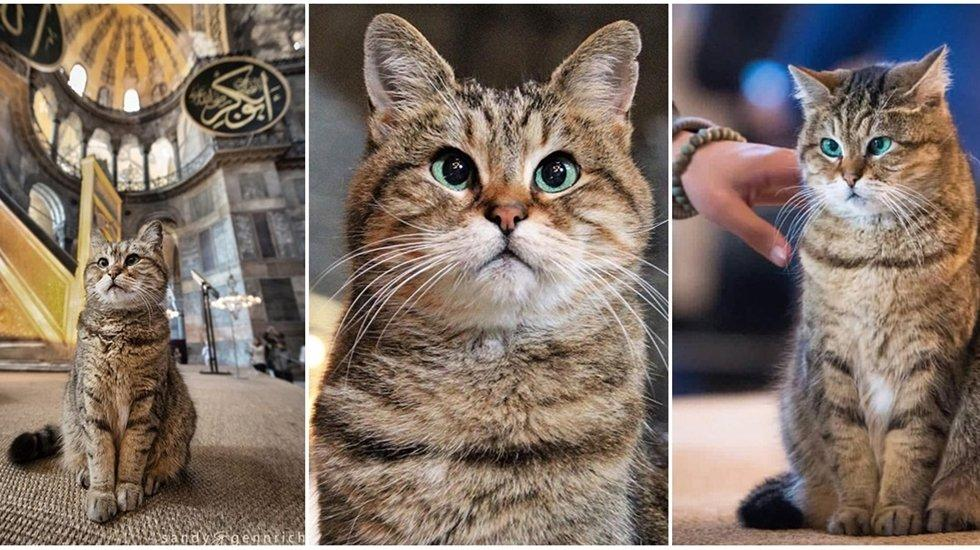
i. Hagia Sophia cats and Gli: The Hagia Sophia cat Gli is well-known among tourists and was popular among international visitors long before Turkish cats became a brand. Famous for Barack Obama’s visit, Gli has earned the title of “the most photographed cat in the world,” with approximately 3.5 million tourists visiting him annually. (Haber Türk, 2020). Figure 14 shows Gli at Hagia Sophia.
-
Messages shared about Gli, Türkiye’s famous Hagia Sophia cat, depict Gli as an adorable feline that has stolen the hearts of many.
-
Users state that they often visit Gli, have special moments with him, and miss him very much.
-
Even after Gli's death, people continue to keep his memory alive and remember other cats in Hagia Sophia with love.
f. Negative comments on cat tourism: It was observed that a small number of users made comments that they would not or could not travel to Türkiye for reasons such as hygiene and allergies.
-
Users state that allergy sufferers cannot come to the country.
-
They think the whole place might smell of cat urine.
-
People who are uncomfortable with cats everywhere, especially in cafes and restaurants, state that they will not come to Türkiye for hygiene reasons.
-
They are worried that cat poop can be everywhere.
g. Negative comments on animal care in Türkiye: It is seen that a small number of users have thoughts and impressions that stray animals are mistreated in Türkiye, that the cat population is increasing uncontrollably because they are not sterilized, and that the state has a negative attitude towards animals. Summaries of the comments are given below.
-
There are widespread concerns about the mistreatment and abuse of stray cats and dogs in Türkiye.
-
Many commenters express outrage at the lack of animal welfare protections in Türkiye, with animals often being killed or neglected by authorities and the public.
-
There are calls for the Turkish government and local authorities to implement better programs for spaying/neutering, sheltering, and caring for stray animals to address the growing population and prevent further abuse.
-
Some commenters note that while there are efforts to feed and care for stray animals in tourist areas, the situation is much worse in other parts of the country, with animals facing “hell on the streets”.
In this study, it has been observed that Turkish street cats have evolved into a brand and are now considered a crucial element of Turkish culture. International users who recognize the reverence given to cats in Turkish culture and Islamic tradition admire and envy the close relationship between Turks and cats. They are astonished by the freedom, happiness, comfort, and good health of cats in Türkiye, freely moving in and out of various spaces. Many express a desire to visit or even move to Türkiye just to experience this unique dynamic. They often compare Türkiye to their own countries, wh ere cats do not experience the same freedom, and suggest that Türkiye sets a good example with regard to animal treatment. While the general impression of animals in Türkiye is positive, a small percentage holds a negative impression due to concerns about hygiene, uncontrolled cat breeding, and allergies.
|
|
|
Figure 15. Gli posing for a tourist during a tourist visit to Hagia Sophia |

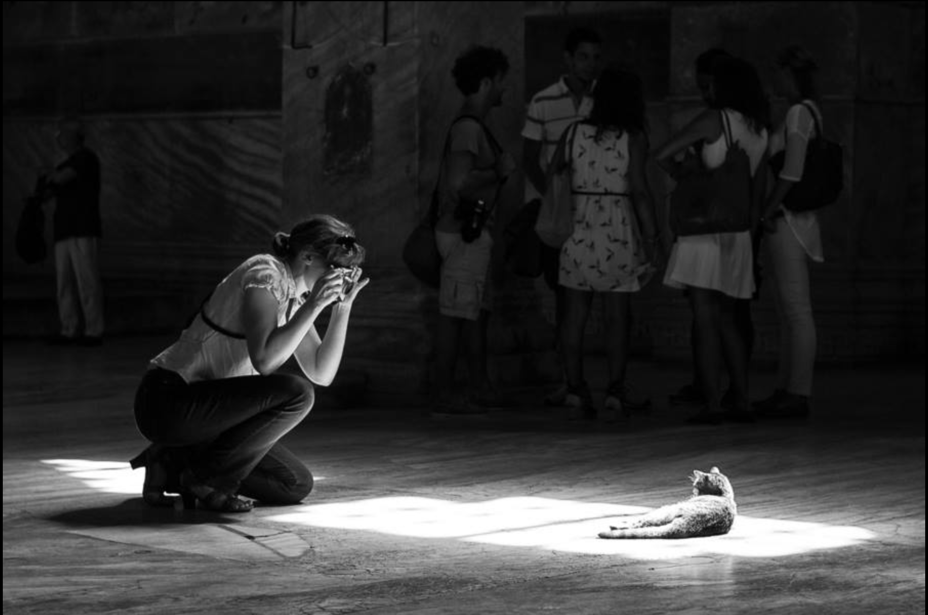
The presence of Turkish cats, often referred to as “Istanbul cats,” has become synonymous with Türkiye. Tourists quickly recognize these cats in posts about Türkiye, and they inspire international users to visit the country. Turkish cats are seen as ambassadors of Turkish culture, adding to the allure of Türkiye as a tourist destination. They have even become a new attraction for tourists who were previously drawn to Türkiye for its history, culture, natural beauty, and culinary delights. Additionally, tourists who interact with Turkish cats and share their experiences on social media play a significant role in promoting Turkish culture. Their posts are found to be more effective in attracting potential tourists compared to those made by locals, as they showcase a genuine connection between Turks and cats. Overall, Turkish cats and tourists contribute to presenting Turkish culture and the nation’s affection for animals, thereby enhancing Türkiye’s appeal as a tourist destination and increasing tourist traffic.
Discussion and Conclusion
Cats hold special cultural significance in Türkiye, symbolizing various meanings across different traditions. Their comfortable lives, intertwined with urban life, not only captivate the locals but also attract visitors who witness this unique aspect of Turkish culture through online videos. In some cases, these glimpses of cat life shared through social media inspire people to explore Türkiye firsthand, making it a compelling destination shaped by its feline inhabitants.
This study examines the relationship of stray cats, known as Istanbul Cats on social media, with Turkish society, how they are reflected on social media through the eyes of tourists visiting Turkey, and the impressions of their international followers about Turkey, Turkish people and Turkish stray cats. By analyzing user-generated content on Instagram** focusing on Istanbul cats in the context of communication, the study aims to investigate international visitors’ impressions and opinions about Turkey and whether this impression leads to their desire to visit Turkey.
In the analysis conducted using 24 codes and sub-codes derived from user comments, it was found that Turkish cats serve as a cultural attraction element, drawing tourists to Türkiye. International users’ comments on Instagram** posts featuring Turkish cats indicated that these feline figures play a significant role in capturing the interest of tourists.
It was seen that most of the comments of international users were about Turks’ love and compassion for cats. The least comments are comments from Japanese people about “cat/catting” tourism in their country and a request from a Japanese page administrator and tourists like themselves to organize a feline tour to Türkiye. In Japan, cat hotels, cat cafes, and other cat-oriented cultural attractions serve cat tourism in a planned way. However, in Türkiye, there are no such planned and conscious places and tourism activities as cats can freely enter everywhere. Even online courses are launched in Japan to improve cat tourism. For instance, Hokkaido Summer Institute launched an online course called “Feline Tourism: The Wonders of Traveling to Cats, Traveling for Cats, Cats that are Traveling, and Cat Hospitality” in 2021. This course is based on the idea that cats play an important role in human society and that this extends to the tourism industry (HSI Report, 2021).
On the contrary, cats engage with tourists organically and authentically that fosters a genuine connection that resonates across social media platforms. This interaction significantly enhances Türkiye’s positive brand perception and strengthens its appeal to visitors worldwide. Hence, it is believed that assessing the demand for cat tourism and cat cafes, particularly from Japanese tourists, will be beneficial for effectively managing Turkish cat tourism and incorporating it into a marketing strategy and tourism PR.
The comments prominently feature two variables: negative and positive. The positive variable accounts for 96.7% of all 19 codes, while the negative variable only represents five codes, making up 3.3% of all comments. The comments generally express positive sentiments and impressions about Turks and their affectionate behavior towards cats. Furthermore, international users admire the Turkish approach to cats, often expressing their desire for their own countries to emulate Türkiye’s model in handling stray animals. Negative comments, on the other hand, which represent a fewer percentage, include unfavorable sentiments and opinions about how Turks interact with animals (such as caring for cats while sacrificing cows and sheep during religious festivals, legislation regarding dogs, etc.), worries about allergies and sanitation stemming from the free-roaming Turkish cat population, adverse views on the health, care, and nutrition of cats due to their large numbers, as well as concerns about animal rights.
Upon analyzing the various themes and codes, it becomes apparent that the distinct storytellers emerge as tourists who visit Türkiye and interact with Turkish cats while sharing their experiences and impressions of Turkish culture. Within this framework, tourists are pivotal in inspiring other international individuals to consider visiting Türkiye by engaging in WOM through their posts about Türkiye and Turkish cats. This organically emerging situation in Türkiye is not a planned tourism or marketing activity. On the contrary, it is a spontaneous contribution to destination branding as a result of the posts made by cat lovers.
Turkish people’s fondness for cats has gained global popularity through social media, particularly during the pandemic, and Turkish cats have become synonymous with “Istanbul cats.” As a result, tourists visiting Türkiye and encountering Turkish cats are introduced to Turkish culture, effectively positioning Türkiye as a hub for organic cat tourism through storytelling.
This study explores the hypothesis that ‘Turkish stray cats’, popularized on social media especially after the pandemic and branded as Istanbul cats, have turned into a tourist magnet as a cultural attraction element, sparking an organic cat tourism phenomenon in Türkiye. The study investigated international visitors’ impressions and opinions about Türkiye by analyzing user-generated content on Instagram** focusing on Istanbul cats in a communication context. It is concluded that the popularization of Istanbul cats by international users and sharing them with their followers creates a touristic mobility by arousing curiosity about Turkish people, Turkish culture and Türkiye. As a result of the tourists visiting Türkiye sharing the stray cats in Türkiye on their social media accounts, the cats of Istanbul created positive emotions and thoughts in other international users, and they expressed that they would like to come to Türkiye to see the cats and even live in Türkiye. Therefore, as a result of the findings obtained in line with the aim of the study, it is possible to say that Istanbul cats have a positive impact on Turkish culture and tourism in an organic way.
However, since this article focuses not directly on tourism, determining whether tourists visiting Türkiye come to see cats or not is the subject of a different research. Also, it is recommended to explore how the legislation concerning stray dogs implemented in July 2024 will affect Türkiye’s image among international users for further research.
Acknowledgments
We would like to express our gratitude to our cats for enriching our lives with pure love, to all stray animals struggling to survive, and to all creatures that contribute to making the world habitable.
References | Список литературы
Abdulkarim, A., Goriman Khan, M. A. K. B., & Aklilu, E. (2021). Stray Animal Population Control: Methods, Public Health Concern, Ethics, and Animal Welfare Issues. World’s Veterinary Journal, 11(3), 319–326. https://doi.org/10.54203/scil.2021.wvj44
Akbulut, U. (2023). A Scene that Surprises Westerners in Istanbul: Animal-Loving Turks. Turcology Research, 76(1), 89–99. https://doi.org/10.5152/JTRI.2023.2241130 (In Turkish)
Anonymous. (2013). The Hagia Sophia Cat. Tumblr. https://hagiasophiacat.tumblr.com/image/157066402005
Anonymous. (2016, October 3). 4 Ekim’de Kadıköy Ziverbey’de açılışı yapılacak Kedi Tombili Heykeli’nden ilk görüntüler [On October 4, the first images from the “Cat Tombili Statue” to be inaugurated in Kadıköy Ziverbey]. 140 Journos. https://140journos.com/4-ekimde-kadıköy-ziverbey-de-açılışı-yapılacak-kedi-tombili-heykeli-nden-i̇lk-görüntüler-2c3fcb8d3aee (In Turkish)
Anonymous. (2020a). All you need to know about Istanbul’s friendly cats. Türkiye Sustainable. https://goturkiye.com/all-you-need-to-know-about-istanbuls-friendly-cats
Anonymous. (2020b, July 16). 16 yıldır Ayasofya’da yaşayan kedinin durumu merak konusu [After 16 years of living in Hagia Sophia, the cat’s condition is a matter of curiosity]. Haber Türk. https://www.haberturk.com/16-yildir-ayasofya-da-yasayan-kedinin-durumu-merak-konusu-2746478?page=2 (In Turkish)
Anonymous. (2021a, August). HSI report: Feline tourism. Hokkaido University. https://www.global.hokudai.ac.jp/blog/hsi-report-feline-tourism/
Anonymous. (2021b, December 7). Japonya’da kedi adaları neden var? [Why are there cat islands in Japan?]. Bilgi Vitrini. https://bilgivitrini.com/japonyada-neden-kedi-adalari-var/ (In Turkish)
Anonymous. (2022, August). Tarihle iç içe yaşayan kediler [Cats living in history]. Turkish Museums. https://www.turkishmuseums.com/blog/detail/tarihle-ic-ice-yasayan-kediler/10063/1 (In Turkish)
Anonymous. (2023, July 4). İstanbul’un kedileri dünyada meşhur oldu, turistler elleriyle böyle beslediler [Istanbul’s cats have become famous worldwide, tourists fed them by hand]. Oda TV. https://www.odatv.com/guncel/istanbulun-kedileri-dunyada-meshur-oldu-turistler-elleriyle-boyle-beslediler-59536012 (In Turkish)
Anonymous. (2024a). MEOWZA! Why are There So Many Cats in Istanbul? Travel Atelier. https://travelatelier.com/blog/meowza-why-are-there-so-many-cats-in-istanbul/
Anonymous. (2024b, June 25). Türkiye’nin kedi aşkı dünya gündeninde! Yeni turizm elçisi olarak kabul ediliyor [Türkiye’s Cat Love on the World Agenda! Türkiye Accepted as New Tourism Ambassador]. Halk TV. https://halktv.com.tr/ekonomi/turkiyenin-kedi-aski-dunya-gundeminde-yeni-turizm-elcisi-olarak-kabul-ediliyor-846404h (In Turkish)
Aslım, G., Yı̇ğı̇t, A., Sı̇nmez, Ç. Ç., & Yaşar, A. (2020). Türkiye’de yunus parkları üzerine bir değerlendirme* [An evaluation on dolphin parks in Türkiye]. Veterinary Journal of Mehmet Akif Ersoy University, 5(3), 124–130. https://doi.org/10.24880/maeuvfd.757892 (In Turkish)
Aydoğdu, M., & Meral, O. (2019). Controlling the breeding of stray dogs and establishing a legal infrastructure for this purpose. Dokuz Eylül Üniversitesi Hukuk Fakültesi Dergisi, 21, 49-59. (In Turkish).
Barel, A., Gurwicz, R., & Packer, S. (2024). Uygulamalı hikaye anlatıcılığı [The world is storytelling] (A. C. Akkoyunlu, Trans.). İletişim Yayınları.
Bay Stanton. (2024, October 4). We are in Istanbul!! What an amazing place…full of color, culture and Cats!!! It’s true cats are everywhere and they join you for meals in the cafes! This is my kind of place! Instagram**. https://www.Instagram.com/p/DAs58ELp4Xe/
Begiç, H. N., & Kocabaş Altıntaş, B. (2024). Evcil hayvan giyim ve aksesuar tasarımları [Clothing design for pets]. Hars Akademi, 7(1), 36-45. (In Turkish).
Çatalbaş, R. (2011). Türklerde hayvan sembolizmi ve din ilişkisi [Animal symbolism and religion in Turks]. Turan Stratejik Araştırmalar Merkezi Dergisi, 3(12), 49-60. (In Turkish).
Çelik Sezer, İ., & Özçetin, S. T. (2016, June). Evcil kedi ırkları [Domestic cat breeds]. https://bilimteknik.tubitak.gov.tr/sites/default/files/posterler/evcil_kediler.pdf
Chinesewhiskers. (2024, September 16). #hellokedi #citycatsofistanbul #IstanbulCats #CatsofIstanbul #IstanbulKitties #IstanbulStrayCats #CatsofTurkey #CatsInIstanbul #Meowstanbul #IstanbulCatsLife #TurkishCats #IstanbulCatLove #Catsagram #CatLovers #CatsOfTheDay #Catstagram #MeowMonday #Caturday #KittyLove #CatLife #chinesewhiskers. Instagram**. https://www.Instagram.com/p/C_-Et8jIB9S/?igsh=MTloNWJpbHh6eTJzNQ%3D%3D
Davis, C. S., & Lachlan, K. A. (2017). Straight talk about communication research methods. Kendall Hunt Publishing Company.
Dilek, S. E. (2017). Hayvanlar üzerinden yaratılan turistik ürün çeşitleri [Types of touristic products created through animals]. In E. Küçükaltan Günlü & S. E. Dilek (Eds.), Metalaşan Turizm Metalaştırılan Hayvanlar [Commodified Tourism Commodified Animals] (pp. 4–16). Nobel Yayınları. (In Turkish).
Dilek, S. E., & Günlü Küçükaltan, E. (2018). Hayvan odaklı turizm faaliyetlerine meta eleştirel bakış: Türkiye örneği [A meta critical review of animal-based tourism activities: Case of Türkiye]. Anatolia: Turizm Araştırmaları Dergisi, 29(1), 1990-2018. (In Turkish).
Haber Report [@HaberReport]. (2022, November 24). Vezneciler metro durağının dünyaca ünlü kedisi Metro Minnağı; bir şahsın bilinçli olarak, sahibi olduğu pitbull cinsi köpeği saldırtmasının ardından bugün yaşam mücadelesini kaybetti. [The world-famous cat of the Vezneciler metro stop, Metro Minnağı, lost his battle for life today after a person deliberately attacked his own pitbull]. X. https://x.com/HaberReport/status/1595774764966092801
Hülagü, M. (2021, September). Türk insanının hayvan sevgisi [Turkish people’s love for animals]. Super Haber. https://www.superhaber.com/turk-insaninin-hayvan-sevgisi-makale-359493 (In Turkish)
Istanbulkittens. (2024, July 22). Monday cat. Instagram**. https://www.Instagram.com/p/C9t2I52I0MZ/?igsh=Zmw0cW9meDl3Mmlx
Jiwa, B. (2013). The fortune cookie principle: The 20 keys to a great brand story and why your business needs one. The Story of Telling Press.
Joshi, S., Domb, M., Chanda, B., & Bais, A. (2022). Evaluating the Impact of Storytelling Ads on Consumer Purchase Intention. Journal of Service Science and Management, 15(1), 10–22. https://doi.org/10.4236/jssm.2022.151002
Kang, J., Hong, S., & Hubbard, G. T. (2020). The role of storytelling in advertising: Consumer emotion, narrative engagement level, and word‐of‐mouth intention. Journal of Consumer Behaviour, 19(1), 47–56. https://doi.org/10.1002/cb.1793
Kimmel, A. J., & Kitchen, P. J. (2014). WOM and social media: Presaging future directions for research and practice. Journal of Marketing Communications, 20(1–2), 5–20. https://doi.org/10.1080/13527266.2013.797730
Laeeq, H. (2018, March). Türkiye neden kedilere takıntılı?[Why Turkey is obsessed with cats]. Gazete Duvar. https://www.gazeteduvar.com.tr/hayat/2018/03/07/turkiye-neden-kedilere-takintili (In Turkish)
Lord, L. K. (2008). Attitudes toward and perceptions of free-roaming cats among individuals living in Ohio. Journal of the American Veterinary Medical Association, 232(8), 1159–1167. https://doi.org/10.2460/javma.232.8.1159
Macpherson, C. N. L., Meslin, F. X., & Wandeler, A. I. (Eds.). (2000). Dogs, zoonoses and public health (1st ed.). CABI Publishing. https://doi.org/10.1079/9780851994369.0017
Mariani, M. M., Di Felice, M., & Mura, M. (2016). Facebook** as a destination marketing tool: Evidence from Italian regional Destination Management Organizations. Tourism Management, 54, 321‑343. https://doi.org/10.1016/j.tourman.2015.12.008
Menekşe, M. (2022). Osmanlı medeniyetinde hayvan sevgisinin mesleğe dönüşümü: Mancacılık. [The transformation of animal love into a profession in Ottoman civilization: Mancacılık]. SDU Faculty of Arts and Sciences, Journal of Social Sciences, 55, 84-101. (In Turkish).
Mundy, C. (2023). A Guide to the Friendly Cats of Istanbul. Everywhere She Travels. https://everywhereshetravels.com/turkeys-soul-the-cats-of-istanbul/#comments
Nekoyama02. (2023a, May 1). There are cats everywhere in Turkey, but there are cats here too! And they’re not chased away! I was impressed. Maybe they’re for sale? Instagram**. https://www.Instagram.com/p/CdAz8nvJpn0/?igsh=NWQyczlrOTA2NGZr (In Japanese)
Nekoyama02. (2023b, May 3). The preparations are almost complete, so the old man and his cats are relaxing for a while until opening time. Today is a holiday, so it’s going to be busy. I hope the customers give us lots of delicious food. I hope the customers pet us a lot. I hope the customers have comfortable knees. Instagram**. https://www.Instagram.com/p/Crx4pJYJQ_v/?igsh=MTVjbDhpbGRqNGJxeQ%3D%3D (In Japanese)
Nekoyama02. (2023c, August 15). I’m waiting for you to notice. Then we’ll talk. Instagram**. https://www.Instagram.com/p/Cv9kyZNpKAd/?igsh=MThkZjM0dmZkc3hqNA%3D%3D (In Japanese)
Neuendorf, K. A. (2017). The content analysis guidebook. SAGE Publications, Inc. https://doi.org/10.4135/9781071802878
Nixon, L. (2023). How do destinations relate to one another? A study of destination visual branding on Instagram**. Information and Communication Technologies in Tourism 2023: Proceedings of the ENTER 2023 E-Tourism Conference, 18–20. https://doi.org/10.1007/978-3-031-25752-0_23
Oda TV Resmi. (2023, October 3). Küçük kedi yürüyen merdivenleri kullanıp arkadaşıyla buluştu. [Little cat uses escalators to meet his friend]. YouTube. https://www.youtube.com/shorts/qKtMoCb0Ybk (In Turkish)
Şahin, A. (2018, June 17). Geçmişten günümüze Türk toplumunda hayvan hakları. [Animal rights in Turkish society from past to present]. TRT Haber. https://www.trthaber.com/haber/yasam/gecmisten-gunumuze-turk-toplumunda-hayvan-haklari-370350.html (In Turkish)
Saydam, M. B. (2024). Psikomitoloji – Kavramlar, kuramlar [Psychomythology – Concepts, theories]. In M. B. Saydam & H. Kızıltan (Eds.), Psikomitoloji: İnsanı öykülerinde aramak 1 [Psychomythology: Finding the human in stories 1] (pp. 10–47). Minotor Kitap. (In Turkish).
Slater, M. R. (2002). Community approaches to feral cats: Problems, alternatives & recommendations. The Humane Society Press.
Slater, M. R. (2007). The welfare of feral cats. In I. Rochlitz (Ed.), The welfare of cats (pp. 141–175). Springer. https://doi.org/10.1007/978-1-4020-3227-1_6
Stone, K. (1998). Storytelling. In M. E. Brown & B. A. Rosenberg (Eds.), Encyclopedia of folklore and literature (pp. 621–623). ABC-CLIO, Inc.
Sungurbey, İ. (1999). Hayvan hakları [Animal rights] (2nd ed.). İstanbul Üniversitesi Basımevi. (In Turkish).
Torun, C. (2016). Kedi [The Cat]. YouTube. https://www.youtube.com/watch?v=PpG0z-npFIY (In Turkish)
Ulusoy, H. (2015). Muğla av turizminin kırsal turizm açısından kırsal kalkınma üzerindeki etkisinin irdelenmesi [Examination of the effects on rural development in terms of rural tourism of hunting tourism]. Türk Bilimsel Derlemeler Dergisi, 8(2), 74-80. (In Turkish).
Ürgüplü, G. (2013). Derin ekoloji bağlamında kentte sokak hayvanlarıyla birlikte yaşamak olgusunun incelenmesi [Examining the phenomenon of living with stray animals in the city in the context of deep ecology] [Unpublished Doctoral Thesis]. İstanbul Teknik Üniversitesi. (In Turkish).
Ürgüplü Korkmaz, G. (2015, May 25). Derin ekoloji bağlamında kentte sokak hayvanlarıyla birlikte yaşamak olgusunun incelenmesi [Examining the phenomenon of living with stray animals in the city in the context of deep ecology]. Türkiye Sağlıklı Kentler Birliği. https://www.skb.gov.tr/derin-ekoloji-baglaminda-kentte-sokak-hayvanlariyla-birlikte-yasamak-olgusunun-incelenmesi/ (In Turkish)
Yeni̇şehi̇rli̇oğlu, E., & Ci̇hangi̇r, E. (2021). Turizm Endüstrisinde Hayvan Kullanımı: Yıkıcı-Yıkıcı Olmayan Temas Temelli Yaklaşım [Animal use in the tourism industry: Non-destructive contact-based approach]. OPUS International Journal of Society Researches, 18(41), 3885–3917. https://doi.org/10.26466/opus.925503 (In Turkish)
Yeygel Çakır, S. (2020). Dijital çağda pazarlama iletişimi. [Marketing communication in the digital age]. Nobel Yayın. (In Turkish).
** – A social network owned by “Meta”, which is recognized as extremist in Russia
1Despite the absence of a specific feline genre like ‟Turkish cats”, cats living in Türkiye are referred to as Turkish cats on Instagram**. For this reason, cats living in Türkiye will be denoted as Turkish cats throughout the text.