4Email: megat[at]upm.edu.my ORCID https://orcid.org/0000-0003-0065-9983
В поисках «секретного свитка» в мире китайского у‑ся: переосмысление этоса фильма «Крадущийся тигр, затаившийся дракон»
Сыцзе Мао1, Вэй Чоу Оу2, Чиат Лу Фун3, & Ясин Мегат Аль-Имран4
Университет Путра Малайзия. Куала-Лумпур, Малайзия
Рукопись получена: 8 января 2025 | Пересмотрена: 19 февраля 2025 | Принята: 3 марта 2025
Аннотация
У-ся — эпический жанр, возникший в традиционной китайской литературе, который на протяжении почти века эволюции кинематографа вдохновлял мейнстримное мировое кино. Темнеменее, он нередко кажется далёким и загадочным для определённой аудитории главным образом потому, что его действие разворачивается в воображаемом древнекитайском мире, основанном на рыцарских и праведных идеалах. Таким образом, перед режиссёрами стоит задача — стратегически визуализировать мир у-ся и воплотить вселенную цзянху вубедительно аутентичном образе древнего Китая.
Опираясь на концепцию этоса Аристотеля, данное исследование выстраивает концептуальную модель, основанную на понятиях «у», «ся» и «цзянху», рассматривая кино как намеренно организованную форму риторики. Посредством микроанализа аудиовизуальных элементов, сособым вниманием к фильму «Крадущийся тигр, затаившийся дракон» (2000), это исследование стремится раскрыть «Секретный свиток», связанный с созданием фильмов у-ся, освещая стратегические кинематографические методы, формирующие этос китайских боевых искусств. Полученные результаты предлагают парадигматический подход к кинопроизводству у-ся — подход, который не только использует аудиовизуальные элементы для выполнения повествовательной функции, но и органично сочетает их с китайской эстетикой и культурными традициями. Разъясняя сложное взаимодействие аудиовизуальных компонентов, это исследование способствует более глубокому пониманию культурных и риторических факторов, влияющих навосприятие современного китайского зрителя. Кроме того, интегрируя классическую риторическую теорию с современным анализом кино, работа предлагает надёжную основу дляизучения устойчивого влияния повествования у-ся в кинематографическом ландшафте, воплощённом в значимом фильме этого жанра.
Ключевые слова
фильм; саундтрек к фильму; аудиовизуальный; у-ся; мир боевых искусств; этос; «Крадущийся тигр, затаившийся дракон»
1Email: gs58236[at]student.upm.edu.my ORCID https://orcid.org/0009-0009-6904-0370
2Email: chowwei[at]upm.edu.my ORCID https://orcid.org/0000-0002-2360-5083
3Email: lfc[at]upm.edu.my ORCID https://orcid.org/0000-0002-0387-1173
4Email: megat[at]upm.edu.my ORCID https://orcid.org/0000-0003-0065-9983
Introduction
Wuxia
Wuxia [武侠] is a distinguished genre of Chinese fiction that revolves around theexploits of martial artists in ancient China. Towards the end of the 1950s, JinYong [金庸], Gu Long [古龙], and Liang Yusheng [梁羽生] emerged as representatives of Chinese martial arts novels, igniting a fervour for this genre (Jia, 2005, p. 75; Chen, 2005, p. 99; Wu, 2012, p. 64). They authored numerous exemplary novels including “The Legend of the Condor Heroes” [射雕英雄传], “The Return of theCondor Heroes” [神雕侠侣], “Heaven Sword and Dragon Sabre” [倚天屠龙记], “The Legendary Twins” [绝代双骄], “The Bride with White Hair” [白发魔女传], “Seven Swords of Mount Heaven” [七剑下天山]. While it is fundamentally anchored in historical fantasy literature, its widespread appeal has transcended to various artistic mediums, including Chinese opera, manhua [漫画, Chinese comics], television dramas, films, and video games. The term wuxia, a compound of two Chinese characters, encapsulates a significant cultural concept: wu [武] signifies martial arts, while xia [侠] connotes the ‘knight-errant’, a figure emblematic of unbridled heroism and the quintessential virtues of honour, loyalty, and a commitment tojustice (Wang, 2023, p. 14). Predominantly hailing from humble origins, these warrior figures are typically depicted as commoners who uphold chivalric moral values that emphasize punishing evil, upholding goodness, and administering justice. As David Bordwell (n.d.) put it, “The hero fought for yi [义], or righteousness—not for rights in the abstract, or for society as a whole, but for fairness in a particular situation—usually, seeking retribution for a past wrong.” Teo (2009, p. 5) adds that “the nature of wuxia is more abstract and philosophical in terms of its application of concepts such as chivalry, altruism, justice and righteousness”.
Another generic convention of the wuxia model is the notion of jianghu [江湖]. Although the word literally means “rivers and lakes,” it does not refer literally toaphysical place, but rather to an abstract realm. It is the societal milieu wherein martial arts heroes navigate, engage, and form connections with one another (Campbell, 2016, p. 23). The term jianghu alludes to the domain inhabited by mythological heroes, governed by a code of honour and righteous merit. In martial arts films, jianghu represents any locale where warriors convene, often situated far from the imperial court’s reach (Deppman, 2017, p. 18). Such places include, but are not limited to, inns, taverns, and country stores, as well as natural settings like bamboo forests, woodlands, and deserts, serving as the backdrop for the narrative and interactions of these heroes.
In this context, wuxia is taking various kinds of “knight-errant” as the protagonists who are skilled in martial arts. The stories depicted in literature or films focus on their journey inside, within or through jianghu, a metaphorical world of conflict and brotherhood, and their upholding of chivalrous values as they confront adversaries and injustices.
Wuxia in Chinese Cinema
Wuxia, characterized by its distinctive storytelling, holds a revered position in the Chinese film and television industry, enjoying sustained popularity among Chinese audiences globally. Within the scholarly discourse on the Chinese cinema, the term shenguai wuxia pian [神怪武侠片], which is translated literally asthe “gods and demons [神怪shenguai] martial chivalry (wuxia) film,” is commonly cited as the antecedent to contemporary wuxia films. These films, while devoid of gods and monsters, are imbued with portrayals of ancient chivalry (Jia, 2005, p. 44). The initial masterpieces of the genre emerged with the film series “The Burning of the Red Lotus Temple” [火烧红莲寺] (1928–1931), Over time, the term shenguai was progressively phased out, leaving wuxia as the sole descriptor. This term now precisely defines the genre known as wuxia film1 which is a Chinese film genre that is set in a bygone era, traditionally valorise the quest for chivalry and justice, and often mixing in elements of magic and superstition (Campbell, 2016, p. 21). AsHongKong film director, producer and film writer Ronny Yu stated, “wuxia films are not grounded in reality. They are like “The Lord of the Rings trilogy” (2001‑2003), where there is fantasy and magic and people can fly, can fight in trees, inthe middle of lakes and all” (Faraci, 2006).
Wuxia cinema is frequently misunderstood as synonymous with kung fu and broader martial arts films, though there is shared content among these categories. To delineate, the martial arts film is an overarching genre that encompasses narratives featuring combat sequences, showcasing a wide array of fighting styles including, but not limited to, Chinese kung fu, Korean mixed martial arts, Japanese jujutsu, and martial traditions from Thailand and other Asian countries. In contrast, kung fu and wuxia are genres with more culturally specific and narratively rich connotations within the milieu of Chinese cinema (Yang, 2010, p. 22). Within this domain, wuxia, and kung fu are often considered distinct subgenres under theexpansive martial arts film category (Teo, 2009, p. 2). Wuxia transcends mere genre classification, evolving into a cultural movement that has deeply resonated with national sentiment, symbolizing the ‘Sinicization’ of Chinese cinema initsformative years (Tsui, 2012). While kung fu films are set against contemporary backdrops, accentuating martial arts pedagogy and prowess, wuxia films often prioritize narratives of chivalry and the pursuit of justice, upholding a traditional ethos (Teo, 2009, p. 4).
At the dawn of the 21st century, the wuxia film genre expanded beyond theconfines of mainland China, emerging as a strategic tool for Chinese directors to penetrate the international film market. “Crouching Tiger, Hidden Dragon” [卧虎藏龙] (2000) epitomizes this trend. This wuxia film2 narrates a tale of entangled honour and vendetta arising from the theft of the Green Destiny Sword, ultimately unravelling as a multifaceted romantic tragedy. The film was pivotal in introducing the previously little-known world of Chinese wuxia to the Western audience, particularly through the captivating charm of its combat scenes, sparking aninterest in the wuxia genre in the film industry at the time. It imbued with oriental mysticism and Chinese philosophy, and received global attention with four Academy Awards, including the category of Best Foreign Language Film. Tan Dun3 [谭盾], the original composer for “Crouching Tiger, Hidden Dragon” and an eminent Chinese composer and conductor, consistently incorporates a balance of Eastern and Western cultural elements into his compositions as “world music”, forthisencompasses a collection of sounds that resonate with global audiences (Yu, 2021, p.1).
The academic interest in Chinese wuxia film “Crouching Tiger, Hidden Dragon” has been robust within the film studies community. However, the auditory dimension in film often appears to be neglected. Despite the prowess of film scholars in utilizing cinema to discuss broader cultural themes, such as society, politics, and gender, the auditory aspects remain underexplored. Lidan Hu (2022) discusses Jia Zhangke’s [贾樟柯] feminist appropriation of wuxia, elucidating how heharnesses the archetype of the legendary female knight-errant to revitalize thegenre; Junchen Zhang (2020) reconstructs “Crouching Tiger, Hidden Dragon” from cognitive, translational, and cultural recontextualization perspectives. Nevertheless, when addressing the auditory dimension, film scholars either regard music as merely an element of the film “text” or, more commonly, prioritize the visual over the audio (Audissino, 2017, p. 25). This is not to suggest that musicologists are better equipped to address these issues. Although they possess authoritative expertise within the musical domain, they may deem films as an entity of technical intricacies. The possibly superficial understanding in film media attained by musicologists mirrors that of film scholars’ typical understanding in music (Audissino, 2017, p. 5). This leads musicologists, when studying films, to focus primarily on the film score. For example, Yi Wang (2017) in her research conducts a microanalysis of film scores composed by Tan Dun for three wuxia films aiming to provide insightful musical analysis to summarize and elucidate Tan Dun’s compositional style. Films, inherently a complex domain, represent a multidisciplinary and composite subject. Thus, both musicologists and film scholars require a broader, more complementary method, which is the approach this study adopts to analyse a film for both its visual and musical appeals through it.
In addition, rhetoric as a field of inquiry has likewise occupied a marginal position. Aristotle defines rhetoric as “the faculty of observing in any given case theavailable means of persuasion” (Aristotle, 2006, p. 1355b). In recent years, rhetorical research has expanded from a traditional linguistic focus into the realm of film media. As a discipline centred on argumentation and persuasion, rhetoric has become increasingly relevant to film analysis (Perez, 2019, p. xix; Zhang, 2020, p.1197). Film rhetoric, in particular, reveals how film languages are reframed and presented as credible commitments in popular cinematic contexts (Kelly, 2016, p.18). Wuxia, as a genre built around the jianghu world and the spirit of chivalry, often presents a world that appears distant and enigmatic to contemporary audience. Through the audiovisual strategies of film rhetoric, however, creators can render this otherwise elusive worldview and value system tangible on the big screen, thus forging an immersive viewing experience that fosters emotional resonance and cultural identification with the wuxia ethos. Furthermore, these rhetorical strategies enable deeper inquiry into the evolution of this film genre and dissemination in the modern cultural context, offering fresh insights for both the creation and critique of wuxia cinema.
Objective and Methodology
The objective of this study is to explore the “secret manual”4 [秘籍] of wuxia, metaphorically positioned in this article to denote the constitutive elements asmanifested in the music scores of contemporary Chinese wuxia films and their moving images from the rhetorical perspective. Specifically, it endeavours toidentify the ethos, one of the rhetorical techniques, employed within the wuxia film, shedding light on how film producer actualizes the wuxia spirit through thestrategic use of cinematography and film music. To this end, “Crouching Tiger, Hidden Dragon” is selected as a case study, in which audiovisual clips serve asprimary data sources, in order to illuminate the ethos of the martial arts world that denotes an important cultural attribute in modern Chinese films. This film is not yet too dated to be qualified as an exemplifier to materialize the ethos on wuxia—from the conventional imagination to the trailblazing ground breakers ahead of their time—especially in evoking traditional styles or referencing known sources tomake sense of this specific atmosphere. It is noteworthy that the data source of music used for the analysis is based on the original soundtrack as heard during theplayback, when dealing with how each piece of music directly connects todesignated scenes in the film. Music from the soundtrack album is not used because of music editing that have combined music from different scenes into asingle track.
This study is underpinned by Aristotle’s rhetorical triangle. Aristotle has posited three “technical” pisteis— “persuaders” or “means of persuasion”—as key toengaging an audience: persuasion arises from the character (êthos) of thespeaker, the emotional state (pathos) of the audience, and the argument (logos) itself. When applied to the medium of film, this theory can be extended to view thefilm itself as a speaker—a framework that helps to illuminate how films use language, symbols, and images to shape meaning and foster comprehension.
This article focuses specifically on ethos, not out of disregard for pathos or logos, but rather because the unique cultural and aesthetic features of wuxia cinema make ethos particularly revealing of its core spirit. In contrast to directly mobilising audience emotions [pathos] or guiding them through rational logic [logos], ethos places more emphasis on “who I am” which emphasises the study of ontology. In classical rhetoric, whenever the speaker’s manner of delivery establishes trustworthiness, moral persuasion operates through character (Aristotle, 1991, p. 38). It centres on the reliability of the author, creator, or speaker, underscoring credibility and authority in influencing an audience. From a wuxia perspective, thefilm genre encompasses not only intense martial combat, but also a diverse jianghu world, coupled with values such as loyalty [忠], responsibility [义], and camaraderie [情].
Therefore, a foundational conceptual framework encompassing wu, xia, and jianghu is provided (Figure 1). The authors consider the conception of wu, xia, and jianghu as crucial components within a wuxia work, as they essentially form theindispensable spirit of wuxia. The following instances of wuxia work (Figure 2) have potentially explained this notion: in “Kill Bill, Volume 1”5 (2003), the sword-fighting revengeful battle between two female characters, the Bride and O-ren Ishii, fully demonstrates their choreography for wu or martial arts prowess while they settled their ‘jianghu business’ which stems from the honour or xia within each of them; in “Flying Swords of Dragon Gate” [龙门飞甲] (2011), the jianghu contains of wandering swordsmen, treasure hunters and bureaucrats whose conscience are tested for the justice or xia while the choreography for wu projects every conflict during the battle between good and evil among them. Without this context, a film might lose its definition of wuxia and it can simply be generally regarded asa“costume drama”.
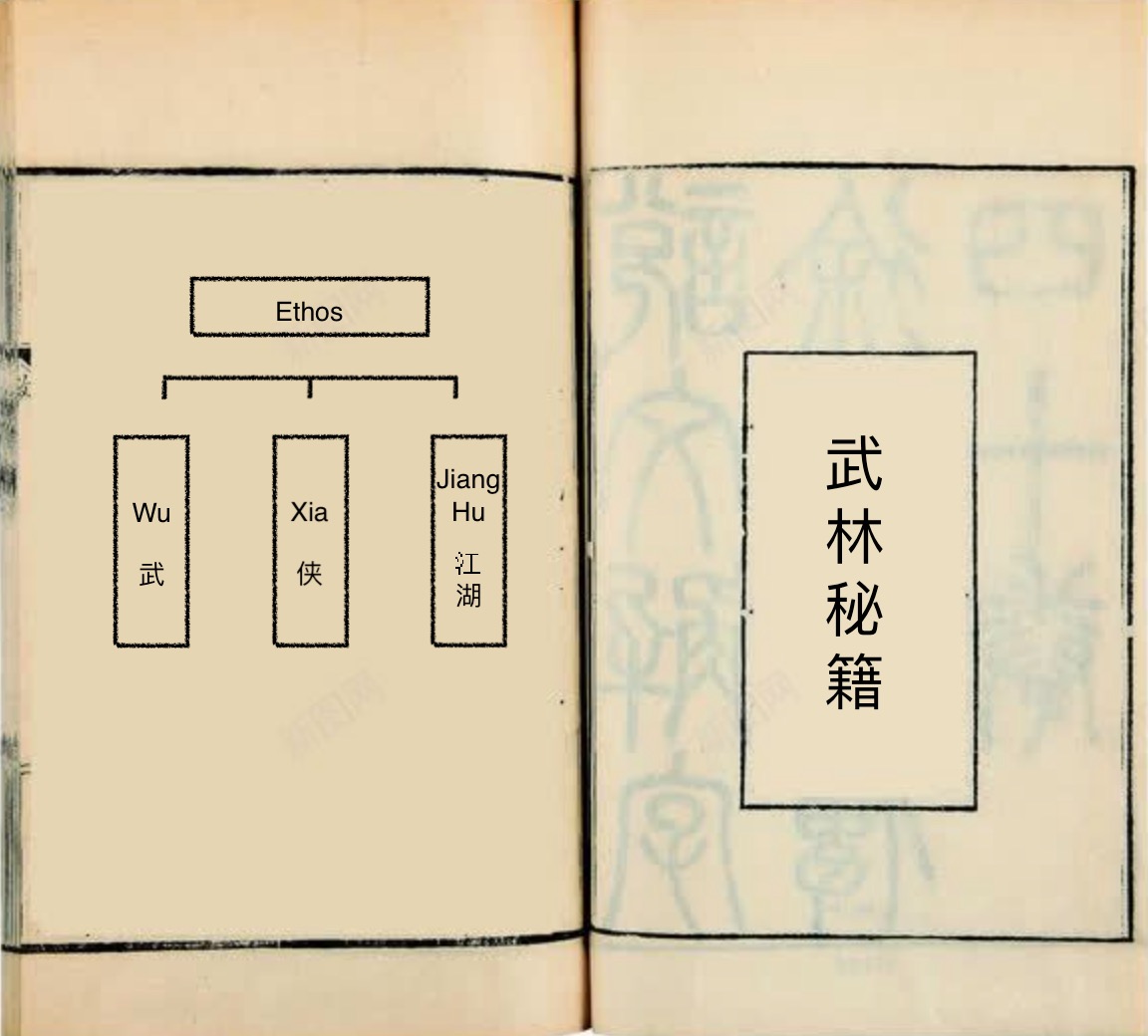
Figure 1. A conceptual framework focusing in wu, xia and jianghu to explore the audiovisual elements of wuxia films (illustration by Mao Sijie).
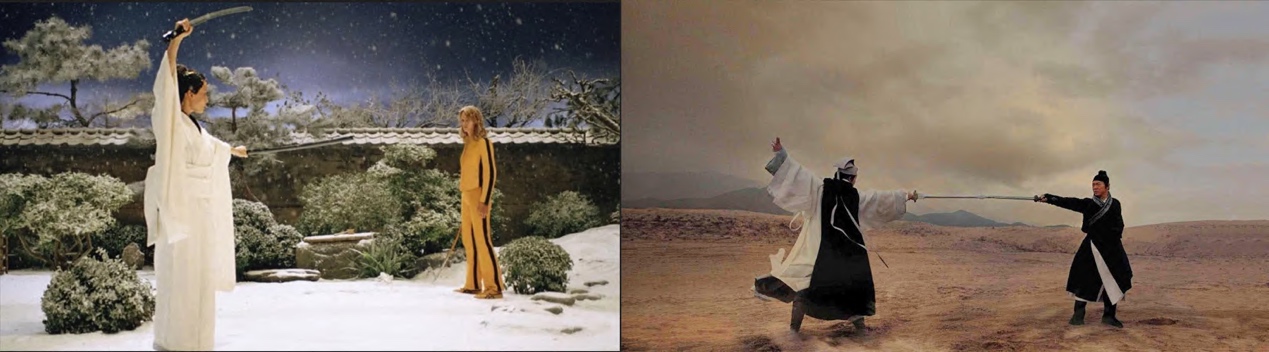
Figure 2. Battling scenes in “Kill Bill, Volume 1” (source: Miramax Film, 2003) and “Flying Swords of Dragon Gate” (source: Variance Films, 2012).
This paper offers a microanalysis of the wuxia’s audiovisual elements, specifically applied to scrutinize, and identify all audiovisual clips from “Crouching Tiger, Hidden Dragon”. Microanalysis emphasizes finding the exact beginning and end of an event by looking for specific boundaries and what marks the boundary or event. Once the boundaries are found, the stages of the event are found through repeated observation (Erickson, 1992, p. 215). In this study, this method was first used tolocate the start and end points of all segments in the film “Crouching Tiger, Hidden Dragon” that contains music scores, and therefore 28 distinctive film clips are ultimately identified as the focus of inspection. Each clip was then examined interms of narrative story, characters, and the specific “wuxia setting”, enabling clear categorisation within a conceptual framework. For instance, in Clip 5, Jen Yu [玉娇龙] sneaks in the Governor’s estate at night in disguise to steal a precious sword. She is discovered and engages in a combat with Yu Shu Lien [俞秀莲] who rushes in to protect the asset. Here, both Jen and Shu Lien are all exemplars of thexia, while their interaction displays martial arts [wu]. So, this clip is then classified under both “xia” and “wu” categories as well. However, this battle takes place atthe Governor’s residence which is tied to official authority; this clip does not qualify to be classified under “jianghu”, which is defined where a realm is distanced from government and the imperial court.
The analytical method operates in units by minute, involving frame-by-frame scrutiny of visuals, characters, and actions, as well as a thorough evaluation of musical elements including melody, harmony, instrumentation, rhythm, tempo, timbre, and performance techniques. Ultimately, through comparative and synthetic evaluation of these shared film clips, the analysis seeks to uncover thecommon rhetorical strategies. Particularly, this study employs Erickson’s five stages6 of microanalysis to investigate the film clips in the process as summarised inthe following:
-
Watch the entire film at regular speed.
-
Determine where each piece of music score begins and ends, leading to the identification of 28 distinctive film clips.
-
Correlate these film clips with the dedicated conceptual framework (Table 1), noting the scenes showcasing each ethos of wu (martial arts), xia (the role of the knight-errant, such as Li Mu Bai [李慕白] portrayed by Chow Yun-Fat [周润发], Shu Lien by Michelle Yeoh [杨紫琼], and Jen7 by Zhang Ziyi [章子怡])8, and jianghu (deserts, inns, and bamboo forests), according to the narrative in the film.
-
Analyse audiovisual elements from each film clip; this involves frame-by-frame scrutiny of visuals, characters, and actions, as well as a thorough evaluation of musical elements including melody, harmony, instrumentation, rhythm, tempo, timbre, and performance techniques.
-
Compare and synthesise the film clips of the same category, such as those related to martial arts [wu], to uncover both common techniques and distinctive operation.
| Clips | Timecode in Film | Ethos | ||
|---|---|---|---|---|
| Wu | Xia | Jianghu | ||
| 1 | 00:00:12–00:02:03 | ✓ | ||
| 2 | 00:02:24–00:04:50 | ✓ | ||
| 3 | 00:04:51–00:06:20 | ✓ | ||
| 4 | 00:11:07–00:11:35 | ✓ | ||
| 5 | 00:14:51–00:20:56 | ✓ | ✓ | |
| 6 | 00:23:28–00:23:42 | ✓ | ||
| 7 | 00:27:28–00:28:57 | ✓ | ✓ | |
| 8 | 00:33:13–00:38:51 | ✓ | ✓ | |
| 9 | 00:42:08–00:42:55 | ✓ | ||
| 10 | 00:43:18–00:46:50 | ✓ | ✓ | |
| 11 | 00:48:42–00:52:03 | ✓ | ||
| 12 | 00:52:48–00:56:10 | ✓ | ✓ | ✓ |
| 13 | 00:57:22–00:59:34 | ✓ | ✓ | |
| 14 | 01:01:56–01:02:35 | ✓ | ✓ | |
| 15 | 01:07:39–01:09:18 | ✓ | ||
| 16 | 01:09:34–01:12:26 | ✓ | ✓ | |
| 17 | 01:13:09–01:13:56 | ✓ | ||
| 18 | 01:14:00–01:16:17 | ✓ | ||
| 19 | 01:16:17–01:16:29 | ✓ | ✓ | |
| 20 | 01:17:55–01:18:29 | ✓ | ✓ | |
| 21 | 01:23:16–01:24:51 | ✓ | ✓ | ✓ |
| 22 | 01:26:00–01:27:40 | ✓ | ||
| 23 | 01:30:13–01:34:35 | ✓ | ✓ | |
| 24 | 01:34:50–01:39:08 | ✓ | ✓ | ✓ |
| 25 | 01:43:45–01:44:12 | ✓ | ✓ | |
| 26 | 01:44:12–01:47:30 | ✓ | ||
| 27 | 01:48:53–01:56:28 | ✓ | ||
| 28 | 01:48:53–01:56:28 | ✓ | ||
It is important to note again that the focus of this study is on a single work, namely, “Crouching Tiger, Hidden Dragon”. The data derived from this individual project possess inherent limitations and do not fully represent the “secrets manual” of films from all eras. Furthermore, this research is confined to an in-depth analysis of a contemporary Chinese wuxia film. The main discussion does not extend to film genres other than wuxia or martial arts films, or films produced outside the greater China.
The Ethos of Wu in Audiovisual Context
Director Ang Lee presents eight martial arts scenes in “Crouching Tiger, Hidden Dragon”, specifically: Clip 5 (00:14:51–00:20:56), Clip 8 (00:33:13–00:38:51), Clip 10 (00:43:18–00:46:50), Clip 12 (00:52:48–00:56:10), Clip 21 (01:23:16–01:24:51), Clip 23 (01:30:13–01:34:35), Clip 24 (01:34:50–01:39:08), and Clip 25 (01:43:45–01:44:12). The film features an array of fighting scenes, each accompanied by the filmmakers’ meticulously crafted unique creations. This deliberate design allows for a nuanced visual and musical contrast across the different fighting sequences.
The Visuals
In Chinese wuxia cinema, wu does not only drive the narrative but also serves as a key storytelling mechanism. The fight sequences in this film genre resembles astylized performance more than a depiction of actual combat, imbued with elements of artifice and aesthetic refinement, prioritizing performativity, and visual appeal. Consequently, despite utilizing violence to advance the narrative, Chinese wuxia films possess a distinct allure, setting them apart from Hollywood action films with often graphically violent representations. Jia Leilei (2005, p. 14) refers tothe martial arts sequences in wuxia films as wuwu [武舞 — literally ‘martial arts and dance’, implying that fight scenes resemble dance in wuxia film]. He contends, “Chinese wuxia films are a genre based on wuxia literature, blending dance-like Chinese martial arts techniques (performances) with dramatized and patterned narrative plots.” The fight scenes in “Crouching Tiger, Hidden Dragon” epitomise this poetic and artistic expression. A notable instance is noted in Clip 24, where director Ang Lee frames the action within an expansive, dense bamboo forest (Figure 3). Here, the characters glide above the bamboo canopy, their movements executed with balletic elegance, foregrounding the understated romantic undercurrent between Li Mu Bai and Jen Yu. Such artistry has earned “Crouching Tiger, Hidden Dragon” accolades, including being hailed by The Globe and Mail asa“balletic martial arts film” (Lacey, 2000).
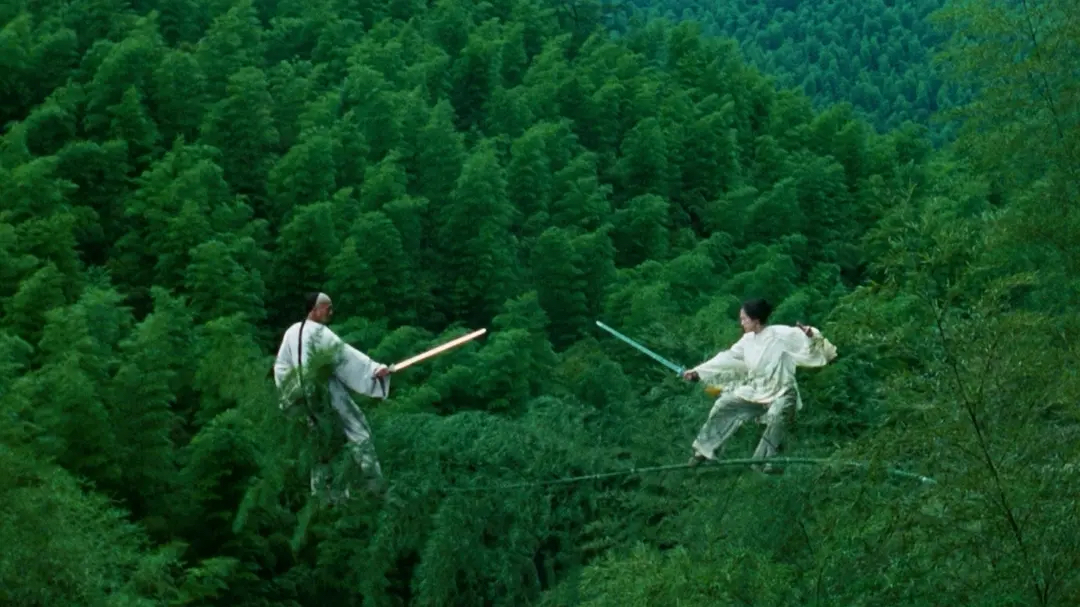
Figure 3. A still (01:36:59) from Clip 24 in “Crouching Tiger, Hidden Dragon”, with Jen on the right and Li on the left
In addition, the film methodically portrays qinggong [轻功], a significant technique originating from wuxia literary imagination that symbolizes agility and martial prowess in combat scenes. It is visually manifested in the film, often associated with characters such as swordsmen and escorts to showcase their agility and martial prowess. Many films showcase qinggong only briefly, creating a fleeting, fantastical visual impression, such as in “The Swordsman” [笑傲江湖] (1990) and “The Legend of the Swordsman” [笑傲江湖II东方不败] (1992). These shots usually last only a few seconds, barely allowing viewers to register the mechanics before the characters vanish. By contrast, Lee’s approach in Crouching Tiger, Hidden Dragon deliberately captures the processes of initiation, flight, and landing. Heavoids showing characters simply flying off in a blur; instead, the film carefully unfolds the logical sequence of take-off–airborne motion–touchdown. Martial arts choreographer Yuen Woo Ping has noted, “Executing qinggong does not mean flying endlessly like Superman; there are always points of departure and landing (Zhang, 2012, p. 333).” In Clip 5, during the rooftop battle between Jen and Shu Lien (Figure 4), they do not merely leap into the air but utilize eaves and walls to propel themselves. When they bound onto rooftops or chase each other between them, thecamera typically follows their midair movement, offering medium or long shots of graceful arcs carved across the night sky. Through wirework and the subtle use of deceleration or slow motion, viewers can clearly sense the characters pausing momentarily in midair, as though truly harnessing their inner energy to “hover” foran instant.
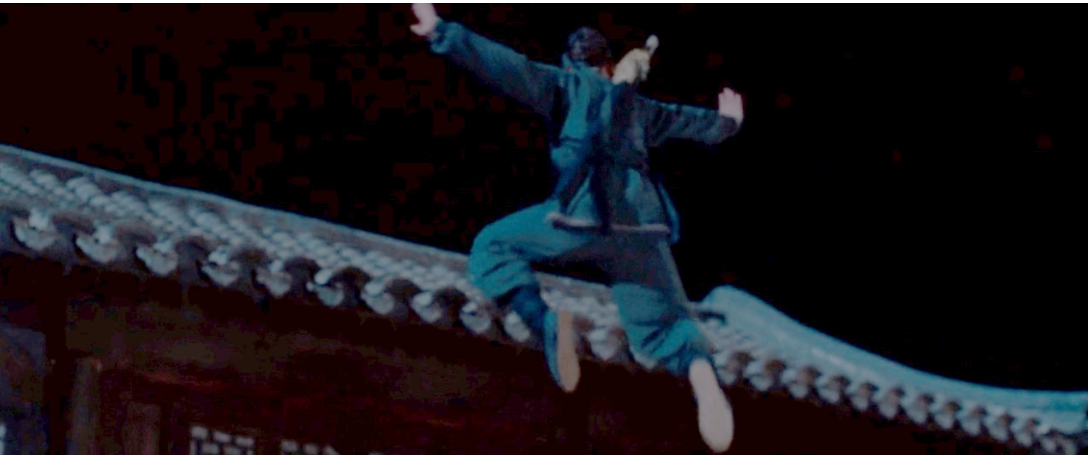
Figure 4. A still (00:18:59) from Clip 5 in Crouching Tiger, Hidden Dragon, with Jen Yu’s double using qinggong
In the realm of wuxia world, which predominantly set during the era of cold weapons, the absence of firearms and artillery largely ensures the fairness of duels, where warriors rely solely on their martial skills to achieve victory and earn respect. These characters not only exhibit exceptional physical abilities but also wield specialized Eighteen Arms of Wushu—such as swords, spears and axes—which dazzle the viewers. In Clip 23, the courtyard fight scene between Jen and Shu Lien occurs in a constricted space, intensifying their rival confrontation. Jen attempts to leave with Li’s Green Destiny Sword, facing opposition from Shu Lien. In this scene, Shu Lien engages in an extended duel with Jen, skilfully switching between numerous weapons to counter the legendary Green Destiny Sword (Figure 5). The sequence of switching from dual swords to spears and maces accelerates their fight, heightening the suspense of their power relation within the confined courtyard, utilizing a variety of ancient Chinese weapons to advance the film’s martial arts narrative. In this sense, wuxia films can be viewed as a sort of military museum showcasing ancient Chinese weaponry.
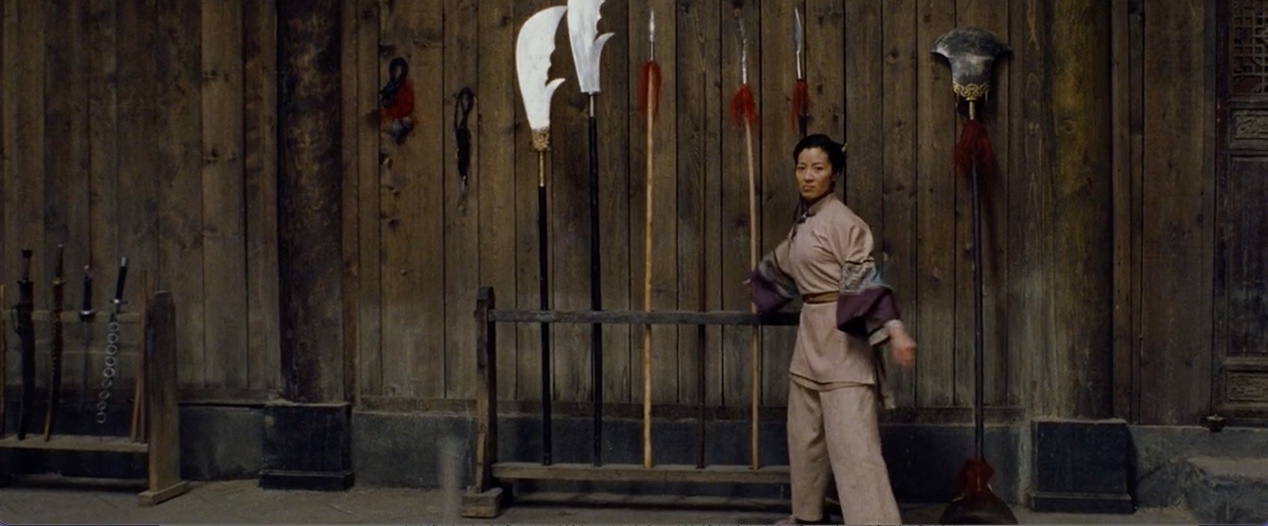
Figure 5. A still (01:31:09) from Clip 23 in “Crouching Tiger, Hidden Dragon”, featuring Shu Lien skillfully switches between weapons of Eighteen Arms of Wushu
The Film Score
To complement different visual presentations of wu, composer Tan Dun employs varied scoring strategies. In traditional fight sequences, Chinese percussion instruments, including nan bangzi [南梆子, or southern wood block], clapper drum [拍鼓], bass drum [低音鼓], Chinese drum [中国鼓], and tambourine [手鼓] dominate the orchestration. For example, in Clip 5, when the masked protagonist Jen covertly steals the legendary Green Destiny sword, she is discovered byShuLien, leading to a chase across rooftops and through narrow alleys. Atthispoint, the strategic deployment of traditional percussive elements—specifically, the nan bangzi, clapper drum, and bass drum—acoustically mirrors theunyielding chase and the fierce skirmish that unfolds. The foundational rhythm of the nan bangzi is enriched by the polyphonic interplay of the clapper and bass drums, layering the composition to augment and fortify the rhythmic texture, thusparalleling the escalating drama of the chase and combat. In addition tothefrequent use of percussion, brass instruments also feature in the orchestral arrangement. In a bid to enhance the combative sequences featuring Inspector Tsai [蔡九], a provincial police investigator, his daughter May [蔡香妹], the nefarious JadeFox, Li, and Jen, composer Tan skilfully integrates Chinese drums with brass instruments in the Clip 8. This blend accentuates the ferocity of the skirmishes. Melodically, the composition is anchored by a static motif on the string instruments, over which the brass section executes glissandi that evoke the sonority of thezhaojun [招军, an archaic Chinese brass aerophone]. This orchestration is further intensified by the robust beats of the Chinese drum.
From the perspective of tempo and rhythm, the music in the traditional fight scenes is arranged in response to the visual tension. First, the rhythm is dense and the tempo rapid, mirroring the steadily intensifying suspense of the visual narrative. This is evident in Clip 23, where Shu Lien attempts to overcome Jen, who has stolen the Green Destiny sword (Figure 6). As the action progresses, the music’s complexity and urgency increase, accelerating from an initial 119 beats per minute to a climax of 162 beats per minute. This peak occurs precisely when Shu Lien’s blade reaches Jen’s throat, culminating in the score’s most potent moment before its resolution. This structure embodies the quintessential jijifeng [急急风 literally speedy wind] motif found in Chinese opera music, characterized by a gradual acceleration from a slow beginning. In addition, the rhythm exhibits a polyrhythmic style, exemplified by the use of different percussion instruments performing two simultaneous but contrasting rhythmic patterns. This approach aligns with another structure described in the Peking Opera repertoire as jinda manchang [緊打慢唱 literally hasty strokes with slow singing]. In Clip 12, this technique is exemplified through the depiction of Luo Xiaohu leading the assault down the hill towards thecaravan. The accompanying score features a polyphonic texture with two contrasting musical lines: a rapid, repetitive rhythmic figure on the pipa [琵琶], setagainst elongated, sinuous phrases from the violin, articulated at a more languid pace. This interplay of the pipa’s brisk tempo with the violin’s expansive melodic contours creates a striking auditory parallel to the jinda manchang style.
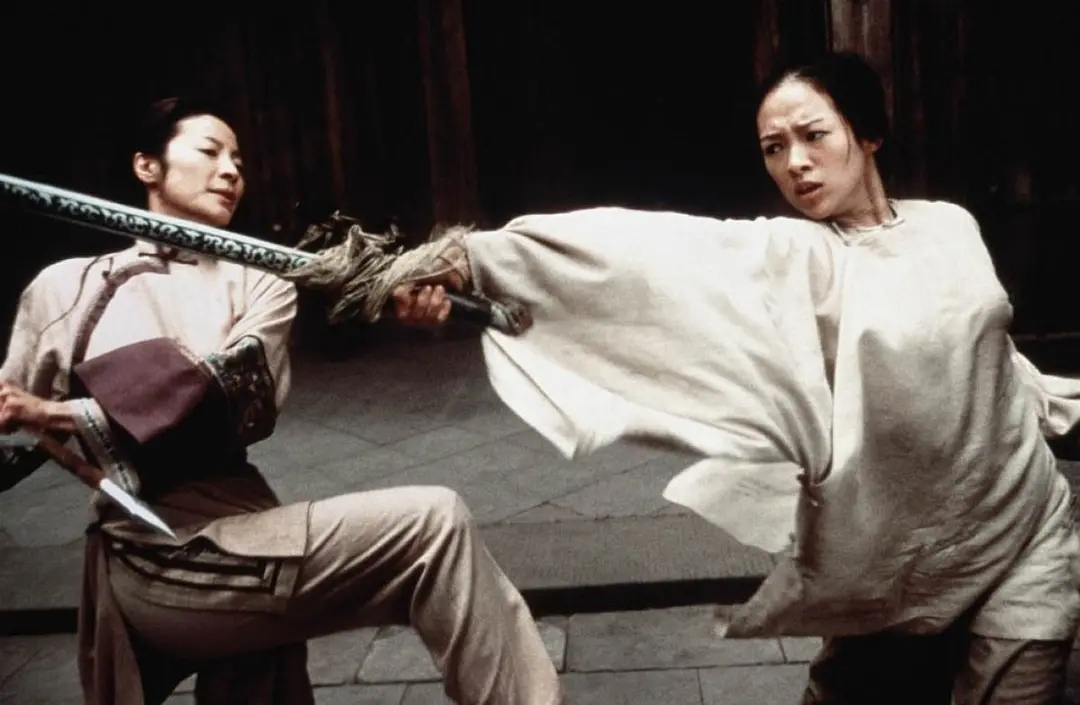
Figure 6. A still (01:32:00) from Clip 23 in Crouching Tiger, Hidden Dragon, with Jen on the right and Shu Lien on the left
Considering the distinctive wuwu aesthetic of Chinese wuxia films, itisevident that alongside the vigorous martial arts sequences, the balletic martial arts portrayals occupy a unique niche. Diverging from the gritty realism of traditional martial arts depictions, Clip 24 in “Crouching Tiger, Hidden Dragon” adopts achoreographic approach to its cinematography (Figure 3). The combat sequences set within the bamboo forest are not only visually stunning but also artistically crafted to probe the psychological depths of the characters within a highly stylized milieu. Tan’s soundtrack for such sequences diverges markedly from the music accompanying the more verisimilar combat scenes, which are characterized by tense and rapid percussive beats. In these more poetically rendered slow-motion scenes, the leisurely, lyrical compositions better underscore the heightened sense of drama. Specifically, during the bamboo forest duel between Li and Jen, theongoing music enhances the immersive experience of the forest environment. The scoring of this scene with the Chinese traditional wind instrument, bawu [巴乌],noted for its plaintive tones and rhythmic vitality, synergizes with the visual narrative to effectively conjure the enigmatic ambiance of the jianghu.
The Ethos of Xia in Audiovisual Context
If wu represent the physical technique in wuxia films, then the spirit of xia constitutes the foundational ethos of the genre. The narratives of Chinese martial arts films predominantly revolve around ancient heroes performing righteous deeds in the wuxia world, with the ultimate psychological underpinning often being thespirit of chivalry. Therefore, it can be said that wuxia films essentially transplant and explore China’s orthodox ethical views and moral philosophy as a whole. Theheroes of wuxia often associate with humble origins; being typically commoners, they uphold moral codes, oppose aggressive warfare, and engage only in defensive wars.
The Visuals
In “Crouching Tiger, Hidden Dragon”, the characters Li, Shu Lien, and Jen are all exemplars of the xia. The distinction lies in the philosophical underpinnings of their chivalry: Li and Shu Lien represent the xia as informed by Confucian ideals, which emphasize propriety and moral rectitude, while Jen embodies a xia driven by sincere emotion and innate disposition. The portrayal of Li immediately commands a presence imbued with a masculine and virtuous chivalry. His relationship with Shu Lien is bound with consistent mutual understanding and respect, grounded inacompanionship spanning over a decade. Yet, a line remains uncrossed between them, rooted in a binding social code; their restraint stems from the fact that ShuLien’s late husband was once Li’s sworn brother. Bound by traditional Confucian doctrines just as Li and Shu Lien is equally constrained, unable to express hidden sentiments that lie beyond the confines of established decorum. This is symbolically represented in their first appearances: Li steps over the precisely arranged courtyard of Yu House, entering through the door frame, with the framed composition suggesting that the greater the hero, the more rules they must follow. When Shu Lien appears and meets Li, the characters for liyue [礼乐, literally ritual and music]9 are conspicuously displayed in the background, defining her identity within theconfines of these traditional values.
Jen, within the xia archetype, represents its most unadulterated essence, one of profound emotion and inherent instinct. Her solo commitment in the theft of thesword driven by curiosity and her skirmish with Luo in the vast desert, exude araw and vigorous vitality. These choices, driven more by sentiment than logic, contrast with the calculated rationality of Li. Her actions are reminiscent of thespontaneous heroism of the heroes of Mount Liang [梁山好汉]10, who would rise in protest upon witnessing injustice, indifferent to whether they could triumph or not, resolved to engage first and find pleasure in the endeavour. Like the characters Ah Fei in “The Sentimental Swordsman” [多情剑客无情剑] (1977) and Guo Furong [郭芙蓉] in “My Own Swordsman” [武林外传] (2011), she shares a shallow involvement yet a stubborn defiance, possessing her own vision of the wuxia world.
The Film Score
From a musical point of view, the cello serves as a symbol for Li and is consistently featured throughout his appearances in the film. Its broad and limitless tones are reflective of his character. The cello’s mournful, languid, and profound main theme encapsulates the restraint of Li’s emotions within the confines of ethical and ceremonial norms. The instrument’s expansive soundscapes resonate with the audience, conveying a profound sense of sorrow and lamentation. From the outset of the film, Clip 1, the tremulous, weighty melody of the cello foreshadows Li’s imminent presence. Notably, the cello adopts playing techniques reminiscent of the erhu [二胡], a traditional Chinese instrument. Performance of Yo-Yo Ma11 [马友友] is laden with intricate methods such as glissando, spiccato, which weave Li and Shu Lien’s emotional nuances together and imbue the score with a distinctly Chinese timbre.
Shu Lien, much like Li, is portrayed as constrained by the Chinese traditional moral and ceremonial doctrine, embodying the “Three Obediences and Four Virtues”12 [三从四德, a dogma of behaviours practiced by women in ancient China]. Despite her martial prowess, Shu Lien radiates the subtle grace characteristic of Chinese womanhood, an aesthetic echoed through the melodious strains of theerhu, an instrument endemic to the folk tradition of Southern China. The erhu’s silken and fluid tones resonate with Shu Lien s persona, reflecting her intricate thoughts and the complex interplay of emotions concerning the jianghu, official matters, and private sentiments. In Clip 25, Li falls victim to the Jade Fox’s stealthy assault, Shu Lien’s despair is palpable as she cradles the fading Li, whispering inalow, tremulous voice. The sequence commences with the melancholic timbre of the erhu, instilling from the onset the elegiac essence of their romance. The ensuing emotive exchange between the resonant cello and the erhu articulates the protagonists’ profound attachment and deep-seated emotion, suffused with elements of resignation and grief. The narrative arc culminates in Li’s rueful admission of a life squandered, intertwining with Shu Lien’s desolate tears, synergizing with themusical accompaniment to evoke a profound sense of lamentation. Asthenarrative draws to its close with Li’s departure, the cello’s presence wanes, symbolizing his final exit, while the film’s visual perspective ascends, casting the tale into a realm of inexorable melancholy.
Jen, the progeny of the influential officials, finds herself constrained bytheconventional expectations of calligraphy and feminine crafts. Yet, her spirit aspires to the liberty celebrated in wuxia literature. In this vein, pipa aptly encapsulates her untamed spirit, reminiscent of a wild horse breaking free from its reins. Clip 12, which chronicles Jen’s encounter with Luo Xiaohu amidst a horse thief skirmish in the Gobi Desert of Xinjiang [新疆, an autonomous region of China, located inthe northwest of the country at the crossroads of Central Asia and East Asia], predominantly features the pipa, evoking the musical essence of the Xinjiang. Thesetting of the Gobi Desert, with its rugged desert charm, diverges dramatically from the serene bamboo forests of the Southern China depicted in the film. Thepipa’s robust and unrestrained sound not only heralds Jen’s entrance but also mirrors her animated disposition, as effervescent and fervent as the instrument’s resonant tones.
The Ethos of Jianghu in Audiovisual Context
The jianghu, as a unique cultural zone, stands as a vital component of Chinese wuxia cinema. Echoing the sentiments of Jia (2007, p. 71), the essence of martial arts is inextricably linked to the jianghu: “Without the jianghu, what can we discuss about wuxia?”13 In “Crouching Tiger, Hidden Dragon”, the jianghu is distinctly represented by a series of physical environments: deserts, bamboo forests, and inns, which are common environments in Chinese martial arts films. These physical scenes have a total of 9 clips in this film. Specifically, the narrative unfolds within the desert landscape across five clips: Clip 7 (00:27:28–00:28:57), Clip 12 (00:52:48–00:56:10), Clip 13 (00:57:22–00:59:34), Clip 14 (01:01:56–01:02:35), and Clip 16 (01:09:34–01:12:26). The bamboo forest serves as the backdrop for three Clips: Clip 19 (01:16:17–01:16:29), Clip 20 (01:17:55–01:18:29), and Clip 24 (01:34:50–01:39:08). Lastly, the inn setting is featured in Clip 21 (01:23:16–01:24:51).
The Visuals
Throughout the traditional wuxia novels and films, the desert, part of typical jianghu as particularly portrayed in contemporary wuxia saga (Chan, 2012, p. 99), is often portrayed as a realm of danger. Beneath the veil of the swirling sands, itisasanctuary for outlaws and a place of self-exile for swordmen away from thecities. In wuxia cinema, deserts often set a desolate and grandiose atmosphere. For instance, in “Ashes of Time”14 [东邪西毒] (1994), the desert prefigures the gloomy fate of its heroes, while in “New Dragon Gate Inn” [新龙门客栈] (1992), it serves asthe backdrop for a deadly fight between forces of good and evil, culminating inthe inn’s destruction amidst the sandy expanse. However, in “Crouching Tiger, Hidden Dragon”, the desert (Figure 7) becomes the romantic setting where thebandit Luo and Jen meet and fall in love, symbolizing Jen’s longing for a free and unbounded life beyond strict moral codes. This scene transcends its visual representation, playing a critical role in the film’s narrative and emotional expression. InClip 12, the desert scenes, interspersed with Jen’s flashbacks, highlight her initial encounter with Luo as they fight from horseback to the ground over a comb—amoment that sparks their romance. Their relationship, as intense and fervent asthe red sand, stands in stark contrast to the arranged marriage she faces at her parents’ behest, underscoring her yearning for unrestrained, passionate love. Astheir fleeting love perishes, it fades away like certain entanglement inthejianghu buried under the quicksand.
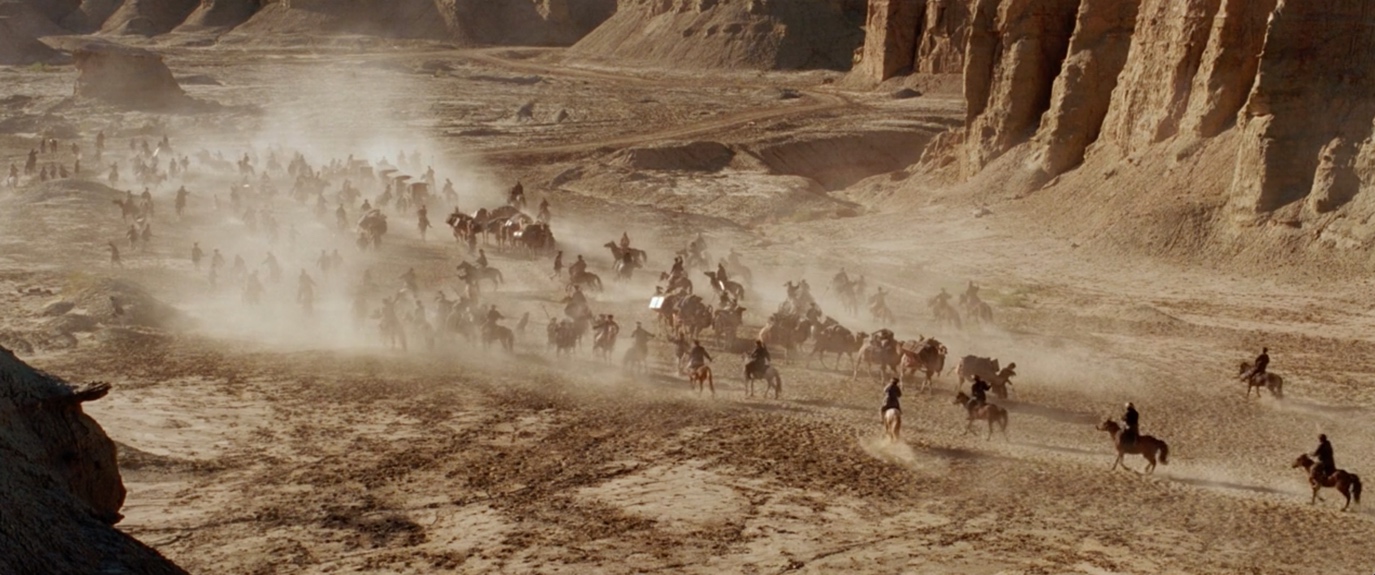
Figure 7. A still (00:54:32) from Clip 12 in “Crouching Tiger, Hidden Dragon” depicting Jen’s bridal caravan under attack by bandits in the desert.
The bamboo forest, a seminal setting within the martial arts film genre, was first iconized as the ‘hippodrome’ of wuxia in “A Touch of Zen” [侠女] (1970) (Jia, 2005, pp. 206–208). As a partially enclosed space, the bamboo forest is adeptly used to evoke a sense of tension and oppression that transcends the screen. Bamboo embodies freshness and grace, mirroring the noble qualities of resilience and integrity, much like a gentleman of refined elegance. It withstands the harshness of wind and rain yet maintains its dignity, aligning with the inner personality that martial artists aspire to and the indomitable spirit central to Chinese wuxia. In “House of Flying Daggers” [十面埋伏] (2004), director Zhang Yimou [张艺谋] has even transformed a fight scene in a bamboo forest into a sophisticated maze of entrapment made with bamboo tubes. In the bamboo grove of “Crouching Tiger, Hidden Dragon”, the ethereal green of the bamboo lends a serene and transcendent atmosphere, enhancing the lightness and freedom of the characters’ movements. Thebamboo’s varying shades, both bright and dark, create a dynamic visual akin toa rich Chinese painting (Figure 8).
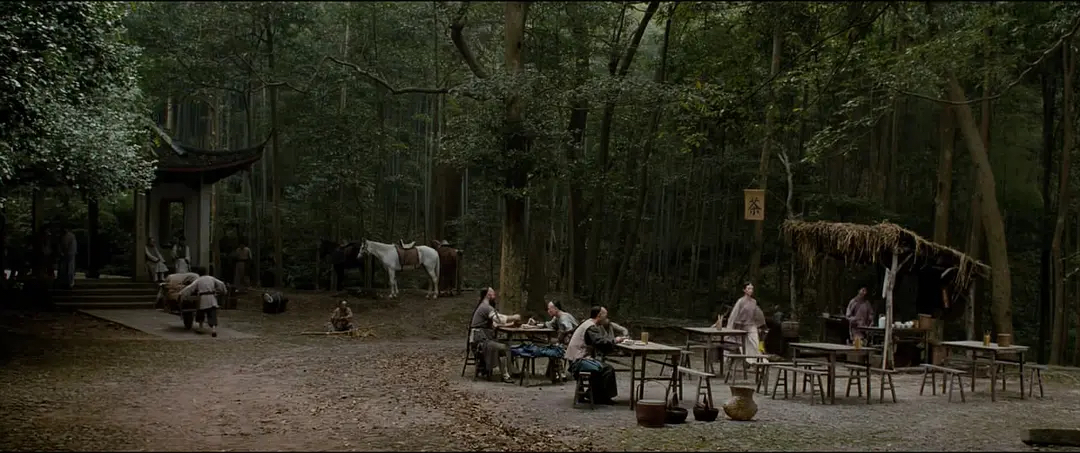
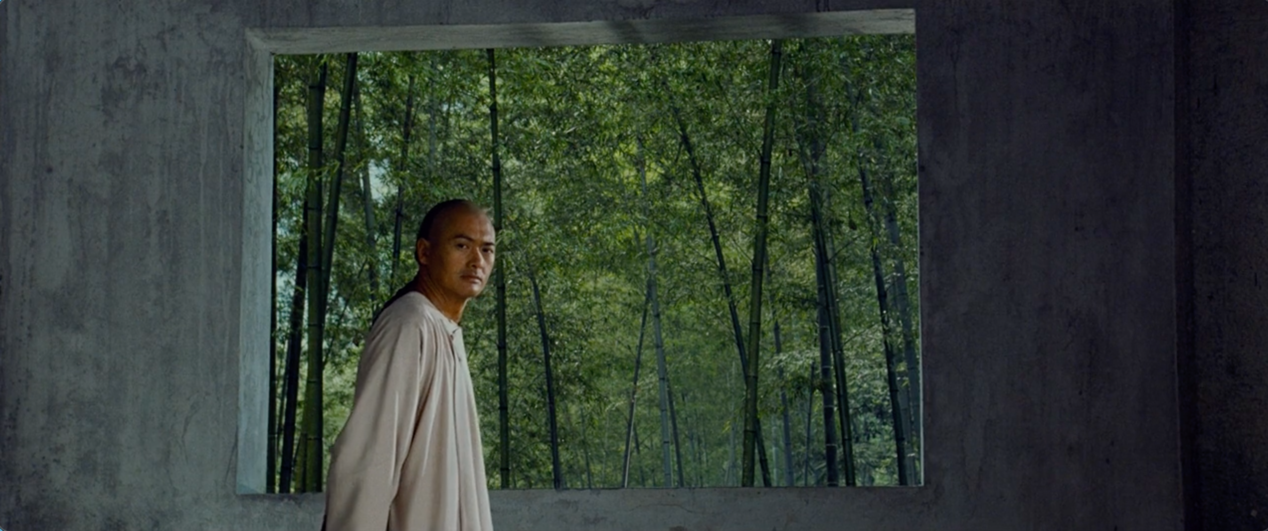
Figure 8. Stills in “Crouching Tiger, Hidden Dragon”, where a rest area (top, 01:16:26) is from Clip 19 and a pavilion (bottom, 01:18:14) is from Clip 20.
In the traditional sense, an inn, a common place of dramatic interaction between wuxia characters as illustrated in classics such as “Dragon Inn” [龙门客栈] (1967) and “Flying Swords of Dragon Gate” (2011), have become a fixed creative spacein wuxia films and television dramas. These settings provide a backdrop forthevisceral struggles of the jianghu. Their structural design, typically featuring two levels, offers a theatrical stage for the heroic displays of agility and acrobatics. In this film, with the assistance of martial arts choreographer Yuen Woo Ping, Clip21 congregates various martial arts masters from the jianghu in an inn to challenge Jen (Figure 9). Her rebellious and fiery temperament is vividly portrayed through a classic martial art move, the ‘leap from the ground,’ capturing the essence of her unbridled spirit. After subduing the martial arts masters, Jen mysteriously disappears, signifying that the inn is merely a stage in her journey through thejianghu. In wuxia films, inns often evolve into venues such as taverns, teahouses, and restaurants. While these settings may appear ordinary, they are often filled with traps and hidden dangers. For example, the banquet Zhao Tianba [赵天霸] sets for Wong Fei-hung [黄飞鸿] in the movie “Once Upon a Time in China” [黄飞鸿] (1991) is clearly a deadly trap, demonstrating that such locations are more than they seem, serving as arenas of intrigue and combat for “jianghu businesses.”
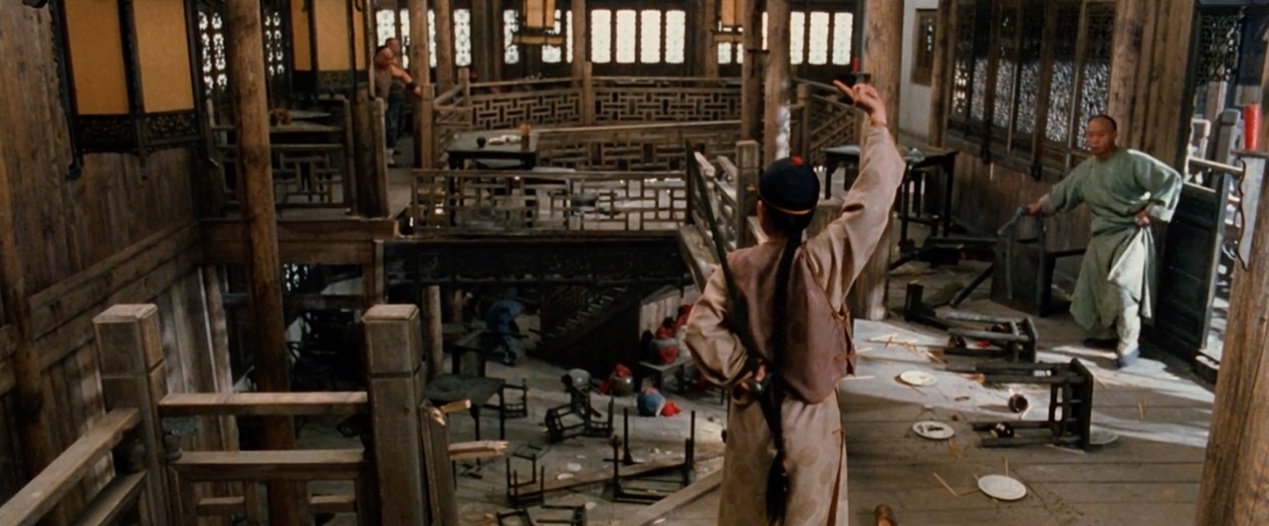
A still (01:31:09) from Clip 21 in “Crouching Tiger, Hidden Dragon” depicting various martial arts masters from the jianghu in an inn to challenge Jen.
The Film Score
To accentuate the depiction of the Xinjiang desert’s stark setting (Figure 7), Tan, in his scoring for “Crouching Tiger, Hidden Dragon”, drew inspiration from musical styles imbued with Xinjiang’s distinct ethnic qualities. This is particularly manifested in Clip 7 of the film, where the composer introduces the dap or hand drum, an instrument frequently used by the Uyghur15 ethnic group, to highlight theXinjiang music’s ethnic timbre, depicting Jen’s recollections of traversing theexpansive desert with her parents. The integration of this ethnic instrument lends the score a sense of the desert’s mystery and desolation, a departure from thefamiliar mainland. Moreover, the rhythm is characterized by the dotted or syncopated rhythmic features prevalent in Uyghur music of Xinjiang, a contrast tothe more regulated rhythmic patterns of mainland Chinese music, thereby infusing the piece with an intense sense of the exotic. Furthermore, Xinjiang folk songs are often used by composers to reinforce the physical setting of the desert. InClip 13, the desert is scored with the film’s sole piece of authorized music: “SilkRoad Camel Bells” [丝绸驼铃]. This folk melody from Xinjiang, adapted by Ning Yong and rendered by Liu Bo in 1994, is elegantly accompanied by the ruan [阮] and hand drums.
In the iconic bamboo forest duel of “Crouching Tiger, Hidden Dragon”, thebamboo flute serves as the principal instrument to evoke the essence of thebamboo forest, articulating the central melodic themes of the score. Thebamboo flute, crafted from natural bamboo, emerges as an instrument intrinsically aligned with the profound symbolism of the bamboo forest. Known for its plaintive, lyrical melodies and clear, luminous timbre, the bamboo flute is especially harmonious with the Southern China region’s associated imagery of quaint bridges, meandering streams, and lush bamboo stands (Qing, 2013, p. 145). This is specifically visualized in Clip 19 showing Jen drinking tea in a bamboo forest and Clip 20 depicting Li and Shu Lien resting in a small pavilion within a bamboo forest, where the music of both segments is quite brief (Figure 8). In these clips, the overarching quietude is punctuated by the bamboo flute playing in the traditional Chinese yu mode16 [羽调式], setting the stage for the verdant bamboo forest depicted on screen. Beyond the bamboo flute, the bawu [巴乌], also crafted from bamboo, enriches thesoundscape within this setting. In Clip 24, the bawu’s plaintive melodies and pronounced rhythmic quality, coupled with the visual narrative of Jen and Li’s deft navigation through the bamboo, effectively conjure the enigmatic essence of thejianghu envisioned as a bamboo forest (Figure 3).
In Clip 21 (Figure 9), where Jen challenges a group of martial arts experts gathered in the inn, the music begins with a subtle and gentle prelude, featuring thetraditional bamboo flute. The melodious tones of the flute evoke the tranquillity and picturesque waterways of the Jiangnan region, effectively enhancing the atmospheric tension of the confrontation with its serene and culturally resonant sounds. Transitioning from a soft and leisurely tempo to a sprightly cadence, and enhanced by the rhythm of hand drums, the score captures Jen’s exuberant personality and nimble prowess, indicative of her nascent yet staunchly independent and self-assured nature. The composition draws on the melodic structure of the Chinese folk music “The Stream Flows” [小河淌水] undergoing several thematic variations and expansions. Tan’s precision in employing this adapted traditional piece in the background radiates with a festive aura in a playful manner, fusing it with abrupt humour as seen in the sword fighting scene, which is designated as a pleasant encounter without blood, where Jen was ambushed by a hilarious gang of male fighters. In this context, the music serves to align with the emotional arc of theprotagonist and the film’s plot developments, thus presenting a musical image of a southern farmhouse inn.
Discussion
Based on the data above, the visual element of wu encompasses traditional martial scenes, wuwu martial scenes, logically structured and elegantly paced qinggong, and a display of various weapons. These elements together create a distinctive style of fight scene. In fact, they draw deeply on Chinese traditional opera, particularly its wuchang [武场 martial] segments. On stage, opera performers typically use weapons, such as spears and staves, while executing highly skilled movements. Forinstance, fanten [翻腾] refers to the flips and leaps akin to the spinning and turning techniques often seen as martial arts displays in Chinese operas. These are all showcased in the wu clips in “Crouching Tiger, Hidden Dragon”. Moreover, these Chinese opera-inspired action scenes in “Crouching Tiger, Hidden Dragon” are not solely for aesthetic purposes but also serves a narrative function, highlighting theprotagonists’ internal struggles. The film’s depiction of qinggong likewise draws on acrobatic techniques where specialized footwork and bodily poses convey animpression of lightness. As a similar example, in the Peking Opera “Stealing theImmortal Herb” [盗仙草], White Snake’s nighttime venture into the immortal mountain employs wirework and flowing water sleeves to produce a surreal airborne effect. Music depicting wu in the film is also closely linked to Chinese opera traditions. In terms of instrumentation, the sound of nanbangzi and clapper drum, common percussion instruments featured in acrobatic scenes of Chinese operas, appears repeatedly when a fight scene is set up. Furthermore, the use of therapid rhythmic pattern known as jijifeng and the jinda manchang technique can likewise be traced to Chinese operas. As a recurring rhythmic theme, jijifeng generates an impression of urgency and tension, typically deployed to emphasize what Rao (2017, p. 174) identifies as swift entry, combat, hurried marches, pursuit, ormilitary engagement on the opera stage. Rao also notes that jinda manchang traditionally conveys a dualistic atmosphere, which may either be relaxed or saturated with fervent urgency.
The audiovisual presentation of xia in “Crouching Tiger, Hidden Dragon” skilfully intertwines Chinese aesthetics with the philosophical depth of xia, thereby enriching the narrative that runs in a more convincing manner. Characters like Liand Shu Lien are portrayed through symbolic settings and personalities that highlight their adherence to Confucian values, emphasizing restraint and moral integrity. Female characters also face numerous moral constraints, including the“three obediences and four virtues,” requiring them to stay at home and learn pursuits of literati, such as the zither [music], chess, calligraphy, and painting. Thisforms the central narrative thread for Jen, who strives to break free from these shackles and embrace an unfettered life of chivalry. Musically, Tan’s strategic employment of varying instruments to represent different heroic archetypes facilitates a cinematic portrayal that is rich in character differentiation and narrative clarity. This approach mirrors the traditional Peking opera, where distinct instruments are tailored to represent diverse character types: In the traditional Peking opera, the accompaniment for the laosheng [老生 old male] and hualian [花脸 painted face] roles typically represented by the Chinese gong [大锣], while chou [丑 clown], qingyi [青衣 decent female], and laodan [老旦 old female] are more commonly under-scored by the delicate sound of the small Chinese gong [小锣] (Chenshi, 2022).
In “Crouching Tiger, Hidden Dragon”, jianghu are more than mere backdrops; they are integral to the narrative and thematic depth. The desert represents both brutal danger and romantic freedom, highlighting Jen’s desire for an unconstrained and untamed life. The bamboo forest symbolizes resilience and beauty, reflecting the characters’ internal struggles between freedom and discipline. The inn, asastage for key conflicts, often contains hidden threat and is central totheunfolding drama of politics. These settings are integral with the deepening visual and emotional storytelling about the jianghu. Musically, the deployment of particular instruments, rhythms, or stylistic idioms can evoke associations with distinct cultural, natural, social, or historical milieus, thus reinforcing the spatial physicality and augmenting the realistic narrativity situated in the ancient world of the jianghu. This illustrates the capacity of film music to anchor a narrative inaspecific temporal and geographical context (Copland, 2010, p. 87).
Overall, we observe that in “Crouching Tiger, Hidden Dragon”, visual and auditory elements not only fulfil a narrative function but also interweave and echo one another, forming a cohesive artistic whole. In contrast, certain other wuxia films tend to prioritise vibrant colours, symmetrical compositions in cinematography or grand-scale crowd scenes. For instance, the film “Hero” adopts a theatrical formalist style that heightens the impact of primary colours, visual symmetry, and large-scale crowd shots. Audibly, it introduces Western orchestral music [also composed by Tan Dun], resonant percussion, low-register suona [唢呐] and theclang of bladed weapons. This approach positions the film’s audiovisual elements chiefly in service of accentuating the ‘form’ itself, allowing viewers toexperience the story’s atmosphere through a powerful sensory ravishes. Nevertheless, for the wuxia genre, the synergy between visuals and sound is significantly paramount. Unlike purely combat-driven ‘kung fu films,’ where dazzling fight scenes dominate, wuxia places greater emphasis on the portrayal of a rather noble chivalric spirit.
Moreover, the audiovisual design of “Crouching Tiger, Hidden Dragon” is profoundly grounded in Chinese culture and aesthetics, including philosophy, literary, and theatrical traditions. As Chinese director Tsui Hark once remarked,
Wuxia culture is unique to China; it resonates closely with the folk life, andthechivalry it represents fully exhibits the spirit of justice inherent inourcultural character (Luotuo, 2005).
As a distinctive product of China, wuxia cinema not only conveys ancient Chinese subject matter but also preserves the conventions of the Chinese tradition. In contrast, other wuxia works sometimes take different approaches that are fardeparted from Chinese history. For example, in “The Banquet”, modern and pop-influenced music by Lang Lang’s piano performances is employed. While novel inform, it does not seem fully align with the perceived historical setting, and dilutes, to some extent, the audience’s cultural identification with the ancient milieu. Yet wuxia films are regarded as artistic creation closely relevant to manifest the ethics, philosophy, and spiritual core of the East Asian culture. By drawing upon rhetorical techniques rooted in Chinese culture and aesthetics, they enable their audiences to immerse themselves more deeply in ancient Chinese narratives, evoking a sense of historical resonance.
Conclusion
In summary, we have observed that the “secret manual” of the ethos in“Crouching Tiger, Hidden Dragon” lies in how its visual and auditory elements not only fulfil their narrative functions but are also intricately interconnected and deeply rooted in Chinese culture and aesthetics. Through this rhetoric approach, “Crouching Tiger, Hidden Dragon” reached a pinnacle in the history of Chinese wuxia cinema since the genre’s emergence in Hong Kong during the 1960s. Meanwhile, we believe that this technique of closely integrating audiovisual elements with Chinese aesthetics and culture provides an exemplary direction for filmmakers in addressing how to express the cultural connotations within wuxia films. It sets anunconquerable benchmark that delivers both subtly dramatic presentations through a moving, sensible narrative and the essence of Chinese culture and aesthetics at its most delicate form, which perhaps stands as of important appreciation for enthusiasts of Chinese culture worldwide. At the same time, by clarifying the complex interplay of audiovisual elements, this study enhances our understanding of the cultural and rhetorical factors that shape contemporary Chinese film audiences.
From a rhetorical perspective, this paper integrates the classical rhetorical theory and contemporary film analysis to offer a valid ground of investigating theenduring impact of wuxia narratives in the modern cinematic landscape. Ethos serves as the core and foundation of wuxia filmmaking, with its inherent cultural expression uniquely shaping the genres of film and music. This cultural dimension directly influences the audience reception and the emotional resonance with thefilm. Examining wuxia cinema through the lens of rhetoric opens newapproaches to interpret this genre, while it also offers a tangible example of how such films can elevate cultural understanding on a global scale. At the same time, the other two components of the rhetorical triangle—logos and pathos—could offer equally valuable insights into the study of wuxia cinema. A more comprehensive exploration of these rhetorical strategies could further enrich our reception of the multifaceted audiovisual expressions within the genre. Future research that integrates these rhetorical elements may deepen our investigation of the complex narrative and stylistic dimensions in wuxia works.
Wuxia as a film genre has emerged as a pivotal element in the projection and amplification of China’s cultural soft power (Xie & Dong, 2022, p. 176). The international success of Chinese-themed movie franchise, from Walt Disney’s “The Joy Luck Club” (1993), “Mulan” (1998), Miramax’s “Kill Bill, Volume 1 & 2” (2003–2004), DreamWorks’ “Kung Fu Panda” (2008), Warner Bros’ “Crazy Rich Asians” (2018) toA24’s “Everything Everywhere All at Once” (2022), underscores the global appeal and practical viability of wuxia’s internationalisation. Posing as an ‘ambassador’ of Chinese culture on the world stage, the wuxia cinema should acquire a strategic dissemination and capacity to convey the Chinese narrative more effectively totheworld. It warrants contemplative deliberation by Chinese filmmakers inshaping the future of China’s cultural outreach through the splendour of wuxia cinema.
Authors’ Statements
Agreement with the Journal’s Policies
All authors of this manuscript have been notified and agree tothejournal'scurrent policies as described on the publication's website.
Originality and Exclusivity of the Manuscript
All authors confirm that the manuscript is original, has not been published previously in whole or in part, and is not under consideration for publication elsewhere.
Authorship and Contribution (CRediT)
Mao, Conceptualization, Methodology, Writing, original draft
Chow, Conceptualization, Methodology, review and editing
Loo, Data curation [music materials], review and editing
Megat, Data curation [film materials], review and editing
Policy on Preprints and Previous Versions
Authors confirm that there is no preprint or working version.
Conflict of Interest
No conflicts.
Funding
This work has not been funded by any sponsor.
Use of Generative AI and Supporting Tools
AI tools are not listed as authors; any contributions (text editing, translation, illustrations, code) are described in the “Methods” section; accuracy, originality, and compliance with rights have been verified.
Permissions for Use (Texts, Images, Maps, Illustrations)
All copyrighted materials are reproduced with the permission of the copyright holder; license terms (including CC) are observed.
Acknowledgments and Contributions without Authorship
None
References | Список литературы
Aristotle. (2006). The Art of Rhetoric (J. H. Freese, Trans.). Harvard University Press.
Audissino, E. (2017). Film/Music Analysis: A Film Studies Approach. Springer International Publishing. https://doi.org/10.1007/978-3-319-61693-3
Blakesley, D. (2003). Introduction: The Rhetoric of Film and Film Studies. In D. Blakesley (Ed.), TheTerministic Screen: Rhetorical Perspectives on Film (pp. 1–16). Southern Illinois UniversityPress.
Bordwell, D. (n.d.). Hong Kong Martial Arts Cinema. Journey to the East. https://journeyeast.tripod.com/wuxia_pian.html
Campbell, Z. (2016). Re-Dreaming China: Reflexivity, Revisionism, and Orientalism in the Wuxia Cinema of Chor Yuen [PhD thesis]. Concordia University.
Chan, F. (2012). From World Cinema to World Cinema: Wong Kar-wai’s “Ashes of Time” and “Ashes of Time Redux.” In L. Nagib, C. Perriam, & R. Dudrah (Eds.), Theorizing World Cinema (pp. 93‑110). Bloomsbury Publishing. https://doi.org/10.5040/9780755698141.ch-006
Chang, C. (Director). (1970). Vengeance [Video recording]. Shaw Brothers Pictures International Limited.
Chang, C. (Director). (1978). The Five Venoms [Video recording]. Shaw Brothers Pictures International Limited.
Chen, M. (2005). History of Chinese Wuxia Cinema. China Film Press. (In Chinese).
Chu, J. M. (Director). (2018). Crazy Rich Asians [Video recording]. Warner Bros. Pictures.
Cook, B., & Bancroft, T. (Directors). (1998). Mulan [Video recording]. Buena Vista Pictures Distribution.
Copland, A. (2010). Our New Music. In M. Cooke (Ed.), The Hollywood Film Music Reader (pp. 83–92). Oxford University Press.
Deppman, H.-C. (2017). 1. Wang Dulu and Ang Lee: Artistic Creativity and Sexual Freedom in Crouching Tiger, Hidden Dragon. In H.-C. Deppman (Ed.), Adapted for the Screen: The Cultural Politics of Modern Chinese Fiction and Film (pp. 11–33). University of Hawaii Press. https://doi.org/10.1515/9780824860653-003
Destefani, B. (2010). Killing Bill: A Tarantino Inspired Film Series. https://miapnyu.org/program/student_work/2010fall/10f_1800_destefani_a2_y.pdf
Erickson, F. (1992). Ethnographic Microanalysis of Interaction. In M. LeCompte & J. Preissle (Eds.), TheHandbook of Qualitative Research in Education (pp. 201–225). Academic Press.
Faraci, D. (2006). Exclusive Interview: Ronny Yu (Fearless). Chud 2. https://chud.com/7686/exclusive-interview-ronny-yu-fearless/
Feng, Xi. (Director). (2006). The Banquet [Video recording]. Huayi Brothers and Media Asia Films.
Hamzah, I. F. A., Johan, N. I. M., & Rahmat, N. H. (2019). Ethos, Pathos, Logos: The Versatility of a Hijab Video Advertisement. European Journal of Literature, Language and Linguistics Studies, 3(3), 82–99. https://doi.org/10.5281/zenodo.3524222
Hu, K. (Director). (1966). Come Drink with Me [Video recording]. Shaw Brothers Studio.
Hu, K. (Director). (1967a). Dragon Inn [Video recording]. Union Film Company.
Hu, K. (Director). (1967b). One-Armed Swordsman [Video recording]. Shaw Brothers Studio.
Hu, K. (Director). (1970). A Touch of Zen [Video recording]. Union Film and Golden Harvest.
Hu, K. (Director). (1990). The Swordsman [Video recording]. Newport Entertainment.
Hu, L. (2023). Daughters of jianghu: Female heroism in Jia Zhangke’s A Touch of Sin and Ash Is Purest White. Feminist Media Studies, 23(3), 874–887. https://doi.org/10.1080/14680777.2021.1996421
Jia L. (2005). History of Chinese Wuxia Cinema. Culture Art Publishing House. (In Chinese).
Jia L. (2007). The Myth of “Dance of Martial Arts”: Chinese Martial Arts Film and Its Cultural Spirit. Nanjing Normal University. (In Chinese).
Kupfer, J. H. (2018). Aesthetic Violence and Women in Film: Kill Bill with Flying Daggers (1st ed.). Routledge. https://doi.org/10.4324/9781315228143
Kwan, D., & Scheinert, D. (Directors). (2022). Everything Everywhere All at Once [Video recording]. A24.
Lacey, L. (2000). Toronto International Film Festival: Ang Lee, Burns Win Top Prizes. The Globe and Mail. https://www.theglobeandmail.com/arts/toronto-international-film-festival-ang-lee-burns-win-top-prizes/article4167341/
Lee, A. (Director). (2000). Crouching Tiger, Hidden Dragon [Video recording]. Sony Pictures Classics; Warner Bros.; Columbia TriStar Film Distributors International.
Lee, R. (Director). (1992). New Dragon Gate Inn [Video recording]. Golden Harvest.
Levitin, J. (2006). Crouching Tiger Hidden Dragon, Hero, and House of the Flying Daggers: Interpreting Gender Thematics in the Contemporary Swordplay Film—A View From the West. AsianCinema, 17(1), 166–182. https://doi.org/10.1386/ac.17.1.166_1
Luotuo. (2005). Video: Tsui Hark Unveils the Making of ‘Seven Swords’ and Behind the Scenes. https://ent.sina.com.cn/m/c/2005-06-29/1819766058.html (In Chinese)
Ma, J. (2015). Circuitous Action: Revenge Cinema. Criticism, 57(1), 47–70.
Ma, Y. (2023). The Evolution of Chinese Cinema in the New Century: From Martial Arts Classics toNewMainstream Blockbusters. Journal of Research in Social Science and Humanities, 2(10), 37–42. https://doi.org/10.56397/JRSSH.2023.10.05
Macabasco, L. W. (2022). Michelle Yeoh, Martial Arts and the Multiverse: Inside the Year’s Wildest Movie. The Guardian. https://www.theguardian.com/film/2022/apr/11/everything-everywhere-all-at-once-michelle-yeoh
Peking Opera Percussion: Drum Rhythm and Soul of the Opera. (2022). Chenshi Fengguang. https://www.sohu.com/a/615260474_121124771 (In Chinese)
Qing Y. (2013). Discussion on the Strategy of Music in “Crouching Tiger, Hidden Dragon.” Movie Literature, 2, 144-145. (In Chinese).
Rao, N. Y. (2017). Chinese Opera Percussion from Model Opera to Tan Dun. In H.-L. Yang & M. Saffle (Eds.), China and the West: Music, Representation, and Reception (pp. 163–185). University of Michigan Press. https://doi.org/10.2307/j.ctt1qv5n9n.11
Siu-tung, C. (Director). (1992). The Legend of the Swordsman [Video recording]. Golden Princess Amusement.
Stevenson, J., & Osborne, M. (Directors). (2008). Kung Fu Panda [Video recording]. DreamWorks Animation.
Tarantino, Q. (Director). (2003-2004). Kill Bill, Volume 1 & 2 [Video recording]. Miramax Films.
Teo, S. (2009). Chinese Martial Arts Cinema: The Wuxia Tradition. Edinburgh University Press. https://doi.org/10.3366/edinburgh/9780748632855.001.0001
Tsui, C. (2012). China Will Top US as Biggest Film Market in the World by 2020: Study. The Hollywood Reporter. https://www.hollywoodreporter.com/news/general-news/china-will-top-us-as-395366/
Tsui, H. (Director). (1991). Once Upon a Time in China [Video recording]. Golden Harvest.
Tsui, H. (Director). (2011). Flying Swords of Dragon Gate [Video recording]. Distribution Workshop.
Wang, S. (2023). From Stage to Screen: The Legacy of Traditional Chinese Theatre in Chinese Martial Arts Cinema Soundtracks. Springer Nature Singapore.
Wang, W. (Director). (1993). The Joy Luck Club [Video recording]. Buena Vista Pictures Distribution.
Wang, Y. (2017). Research on the Film Music of Tan Dun’s “Wuxia Trilogy” [Master’s thesis]. Hunan University of Technology. (In Chinese).
Wong, K. (Director). (1994). Ashes of Time [Video recording]. Newport Entertainment; HKFM.
Wu, H. Y. W. (2012). A Journey Across Rivers and Lakes: A Look at the Untranslatable Jianghu in Chinese Culture and Literature. 452oF. Electronic Journal of Theory of Literature and Comparative Literature, 7, 58–71.
Xie M., & Dong C. (2022). From Construction to Meaning Expression: The Inner Genes and Narrative Ethics of Chinese Martial Arts Cinema. Contemporary Cinema, 3, 172-176. (In Chinese).
Yang Y. (2010). From Jianghu to War Epic: Interview With Angie Lam, Editor and Postproduction Supervisor of “Red Cliff” and “Reign of Assassins.” Audio and Video Production, 10, 22-23. (InChinese).
Yu, X. (2021). Crouching Tiger Cello Concerto – A Melding of Form and Content for the Concert Stage [PhD Thesis]. University of Kentucky.
Zhang, J. (2021). Re-dissecting Ang Lee’s Crouching Tiger, Hidden Dragon from the Perspectives of Cognition, Translation and Reconfiguration of Culture. Comparative Literature: East & West, 5(1), 103–122. https://doi.org/10.1080/25723618.2021.1940680
Zhang L. (2012). The Secret of Kung Fu Film—The Art of Action Director. World Publishing Corporation. (In Chinese).
Zhang, S. (Director). (1928, 1931). The Burning of the Red Lotus Temple [Video recording]. Mingxing Film Company.
Zhang, Y. (Director). (2002). Hero [Video recording]. Beijing New Picture Film.
Zhang, Y. (Director). (2004). House of Flying Daggers [Video recording]. Edko Films.
Zheng, Y. (2020). A Rhetorical Analysis of Forrest Gump from the Perspective of Triangle Theory. Journal of Literature and Art Studies, 10(12), 1197–1201. https://doi.org/10.17265/2159-5836/2020.12.018
1While there exists no entirely satisfactory English equivalent for the term ‘wuxia film,’ it is often referenced as ‘the swordplay film’ in critical research (Levitin, 2006).
2This film is an adaptation of Wang Dulu’s [王度庐] wuxia novel of the same title written in 1941–1942. This work is part of his Crane-Iron novel series [鹤铁系列].
3Tan has also scored Chinese costume films like “Hero” [英雄] (2002) and “The Banquet” [夜宴] (2006). In2011,Sony Masterwork released a compilation soundtrack album entitled “The Martial Arts Trilogy”, featuringa selection of film music from Tan’s engagement in three costume films, including “Crouching Tiger, Hidden Dragon”.
4The term “secret manual” historically denotes Chinese martial arts textbooks from antiquity, repositories of esoteric and potent martial arts techniques. The custodians of these martial traditions, valuing the continuity and sanctity of their art, typically shrouded their practices in secrecy to prevent dissemination beyond trusted circles. This proclivity for concealment engendered a sense of mystique.
5References of wuxia films in “Kill Bill, Volume 1” (2003) have been discussed in a few literatures, such as “Come Drink with Me” [大醉俠] (1966), “One-Armed Swordsman” [独臂刀] (1967), “Vengeance” [报仇] (1970), “The Five Venoms” [五毒] (1978), and “Crouching Tiger, Hidden Dragon” (Destefani, 2010, pp. 9–10; Ma, 2015, pp. 53–59; Kupfer, 2018, pp. 58–108).
6Erickson’s five stages of microanalysis: stage one, reviewing the whole event; stage two: identifying major constituent parts of the event; stage three: identifying aspects of organization within major parts of the event having; stage four: focus on actions of individuals; stage five: comparative analysis of instances across theresearch corpus microanalysis (Erickson, 1992, pp. 217–220).
7The orthography of the characters follows Zhang’s version (2021).
8Other characters include Luo Xiahu [罗小虎] played by Chang Chen [张震], and Jade Fox [碧眼狐狸] byChengPei-pei [郑佩佩1946–2024].
9Liyue in ancient China encompasses rituals and music, forming an integral part of the societal system. Li (ritual) aspect primarily prescribes the correct social conduct in a formal sense, detailing the appropriate etiquettes and duties for individuals of various social statuses.
10The heroes of Liangshan come from the Chinese novel “Water Margin” [水浒传]. The story narrates how 108 heroes gather at mount Liang to fight for justice, rebelling against the evil forces that control the imperial court.
11Ma is an American cellist of Chinese descent, graduated from the Juilliard School of Music and Harvard University. As a soloist, he has collaborated with orchestras worldwide. Throughout his career, he has recorded over 90 albums and received 19 Grammy Awards.
12In addition to household matters, an emphasis was placed on the cultivation of the “three obediences”—obey father, husband, and sons after death of the husband, and the “four virtues” —chastity, modesty in speech, neatness of appearance, and good needlework and cooking. Under the same restriction, a widow could not remarry in order to keep to these noble “virtues”.
13Original text: “离开江湖,谈何武侠” (Jia, 2007, p.71).
14Fourteen years after the public screening of “Ashes of Time” (1994), Wong re-edited the film and renamed this US-premiered version as “Ashes of Time Redux” [东邪西毒: 终极版] (2008).
15The Uyghurs, who are the main ethnic group in the Xinjiang Uyghur Autonomous Region of Northwest China, are skilled in both singing and dancing. Their music, often distinguished by its unique Eastern qualities, typically features stringed instruments like the rawap and the huqin [胡琴], as well as diverse percussion. The rhythmic intricacy of Uyghur music is widely acclaimed.
16Yu mode is derived from the traditional Chinese pentatonic scale, which is arranged based on the interval of aperfect fifth and consists of five notes. These notes are named gong [宫], shang [商], jue [角], zhi [徵], and yu [羽], which equivalently correspond to C, D, E, G, and A on the Western keyboard. When the yu note serves asthe foundational tonic, the scale is specifically referred to as the yu, wherein A is the principal pitch.