From Strength to Self-Care: Reconstructing Masculinity in Men’s Grooming and Self-Care Advertising
Indian Institute of Technology (BHU) Varanasi (Uttar Pradesh, India).
Email: jyotikumari.rs.hss20[at]itbhu.ac.in
 0009-0003-5714-7740
Indian Institute of Technology (BHU) Varanasi (Uttar Pradesh, India).
Email: namratapaul.rs.hss21[at]itbhu.ac.in
0009-0009-8917-1853Indian Institute of Technology (BHU) Varanasi (Uttar Pradesh, India).
Email: sanjukta.hss[at]iitbhu.ac.in
0000-0001-6119-9058Abstract
This study explores the evolving portrayal of masculinity in men’s grooming advertisements by Gillette, Dove Men+Care, and Axe from 2013 to 2023, focusing on Indian and global campaigns in a cross-cultural context. Drawing on Connell’s (1995) multiple masculinities, Anderson’s (2009) Inclusive Masculinity Theory, Kreicbergs’ (2023) consumer typology, and Multimodal Discourse Analysis (Kress & van Leeuwen, 2006; Jewitt, 2009), the research examines how advertising reconstructs masculinity. While traditional hegemonic masculinity remains in earlier campaigns, more recent ones incorporate emotional openness, caregiving, and fluidity. This study highlights the intersection of advertising, culture, and evolving gender representations.
Keywords
Masculinity, Advertising, Cross-cultural Context, Gillette, Dove Men+Care, Axe, Gender Representation, Multimodal Discourse Analysis, Consumer Culture
От «силы» к уходу за собой: реконструкция маскулинности в рекламе средств по уходу за собой и косметических средств для мужчин
Индийский технологический институт (BHU) Варанаси (Уттар-Прадеш, Индия).
Email: jyotikumari.rs.hss20[at]itbhu.ac.in
0009-0003-5714-7740Индийский технологический институт (BHU) Варанаси (Уттар-Прадеш, Индия).
Email: namratapaul.rs.hss21[at]itbhu.ac.in
0009-0009-8917-1853Индийский технологический институт (BHU) Варанаси (Уттар-Прадеш, Индия).
Email: sanjukta.hss[at]iitbhu.ac.in
0000-0001-6119-9058Аннотация
В данном исследовании в межкультурном контексте рассматривается эволюция изображения мужественности в рекламе средств по уходу за собой для мужчин от Gillette, Dove Men+Care и Axe с 2013 по 2023 год, с акцентом на индийские и глобальные кампании. Опираясь на теорию множественной маскулинности Коннелла (1995), теорию инклюзивной маскулинности Андерсона (2009), типологию потребителей Крейцберга (2023) и мультимодальный дискурс-анализ (Kress & van Leeuwen, 2006; Jewitt, 2009), исследование анализирует, как реклама реконструирует маскулинность. В то время как традиционная гегемонная маскулинность сохраняется в ранних кампаниях, более поздние кампании включают эмоциональную открытость, заботу и гибкость. Это исследование подчеркивает пересечение рекламы, культуры и меняющихся представлений о гендере.
Ключевые слова
маскулинность, реклама, межкультурный контекст, Gillette, Dove Men+Care, Axe, гендерное представление, мультимодальный дискурс-анализ, потребительская культура
Introduction
Over the past two decades, scholars have increasingly examined the evolving role of masculinity in advertising. Research suggests that masculinity is now strategically marketed as a commodity, with various representations tailored for consumer appeal (Scheibling & Lafrance, 2019, pp. 222–239). This phenomenon, termed branded masculinity (Alexander, 2003, pp. 535–554) underscores how corporate brands construct and sell specific ideals of masculinity, shaping consumer behaviour through strategic messaging. Within consumer capitalism, brands capitalize on insecurity, aspiration, and identity formation, persuading men that masculinity itself can be curated through the selection of particular products. As a result, masculinity has become one of the most frequently utilized social resources in advertising (Zayer et al., 2020, pp. 238–260), playing a crucial role in shaping cultural norms and expectations surrounding male identity.
However, masculinity in advertising is not static. Traditional hegemonic masculinity, characterized by strength, control, and dominance, has long been the dominant archetype in marketing. Yet, as societal attitudes toward gender, identity, and self-expression evolve, brands face increasing pressure to diversify their portrayals of masculinity. With heightened conversations around gender inclusivity and progressive masculinity, brands are reconfiguring their messaging to reflect a more nuanced, multidimensional vision of manhood (Scheibling & Lafrance, 2019, pp. 222–239; Zayer et al., 2020, pp. 238–260). This shift is particularly evident in men’s grooming advertisements, where notions of self-care, vulnerability, emotional strength, and individuality are gradually redefining traditional masculine ideals.
This study explores the reconstruction of masculinity in contemporary media advertising, focusing on Indian as well as global male grooming and self-care products as a case study. (Barlett et al., 2008) In the context of this study, grooming refers to the set of practices and products aimed at enhancing and maintaining men’s physical appearance, including shaving, skincare, hairstyling, and hygiene routines. While traditionally associated with discipline and outward presentation, grooming has increasingly intersected with the broader concept of self-care—a term that encompasses emotional well-being, personal expression, and mental health. In contemporary advertising, these practices are no longer just about appearance but are positioned as integral to modern masculinity, reflecting a shift from rigid gender norms toward more inclusive and multifaceted portrayals of male identity. As media increasingly portrays muscular, idealized male bodies, men face heightened pressure to conform, leading to lower body satisfaction, self-esteem, and body esteem, as supported by two meta-analyses (Barlett et al., 2008). These ideals are reinforced through commercials, magazines, and even action figures, contributing to negative self-perceptions and harmful behaviours. However, modern advertising’s more inclusive framing of masculinity suggests a complex, evolving narrative—one that both challenges traditional norms and reinforces appearance-based pressures.
As a global leader in men’s grooming, Gillette has a long history of shaping cultural perceptions of masculinity. With a presence in over 140 countries, the brand has demonstrated an ability to adapt its marketing strategies to different cultural and regional contexts. In India, Gillette’s advertising has traditionally aligned with aspirational masculinity, portraying confidence, success, and refinement. However, in recent years, the brand has experimented with more emotionally driven storytelling, engaging with themes of fatherhood, mentorship, and self‑acceptance. Globally, Gillette has also evolved its portrayal of masculinity, moving beyond performance-driven messaging to embrace social responsibility and emotional depth. Through qualitative analysis of Gillette’s advertisements over the past decade, this study aims to uncover how traditional and evolving notions of masculinity are portrayed and marketed to consumers across cultures. It also examines how the shifting global trends influence localized narratives in India, offering a broader perspective on branded masculinity across cultures.
To enhance the universality and relevance of this research, the study will also incorporate a comparative analysis of other prominent men’s grooming brands, including Axe, and Dove Men+Care. Furthermore, given the increasing dominance of digital media, the study will explore contemporary media formats like social media content – campaigns, posters, reels, to assess their impact on masculinity representation. Additionally, an international perspective will be integrated to contrast how brands in different cultural contexts—such as Gillette, Axe, and Dove Men+Care (Global and Indian contexts)—navigate shifting gender norms in their advertising.
By expanding the scope beyond one brand and traditional advertising formats, this study seeks to provide a more comprehensive understanding of branded masculinity in the contemporary media landscape. It will explore how brands balance cultural expectations, consumer behaviour, and evolving gender discourse to shape their portrayal of masculinity. In doing so, the study will address three key research objectives:
-
How do traditional ideals of masculinity appear in the advertising strategies of Gillette and other leading men’s grooming brands?
-
How are the ideas of masculinity shaping the marketing strategies of grooming brands changing, and what effects do these portrayals have on consumers?
-
How do contemporary media formats—such as social media and influencer content—use multimodal strategies to construct and communicate masculinity in grooming advertisements?
-
What similarities and differences in gender representation emerge from a comparison of Indian and international men’s grooming advertisements?
This research contributes to the ongoing discourse on gender representation in advertising, offering insights into the dynamic interplay between corporate branding, masculinity, and shifting cultural values. Ultimately, this study moves beyond mere description of changing advertising trends to critically ask: Is masculinity genuinely changing, or are corporations primarily adapting their portrayals to fit societal expectations? What is the profound “so what” of this shift? This essay argues that the relationship is far more complex: corporations, driven by societal pressure (e.g., #MeToo), strategically adapt their messaging, which in turn re-narrates and re-commodifies masculinity itself. By rigorously analyzing these processes, this paper will empower readers to critically evaluate commercial media’s role in the co-construction of gender, offering a nuanced framework for studying media, masculinity, and consumer culture.
Theory and Literature on Masculinity Portrayal in Advertisements
The representation of gender in advertising is a longstanding site of cultural production and social negotiation. Advertising not only reflects prevailing societal norms but also functions as a powerful agent in shaping them. In particular, the portrayal of masculinity in advertisements has historically adhered to hegemonic ideals—privileging traits such as dominance, stoicism, physical prowess, and heterosexual assertiveness. As contemporary cultures become more reflective of gender diversity and inclusivity, the terrain of masculinity in advertising is undergoing significant transformation.
Traditional Masculinity and the Hegemonic Ideal
Seminal works such as those by Connell (1995, 2005) and Connell & Messerschmidt (2005) lay the theoretical groundwork for understanding masculinity as a hierarchical, socially constructed phenomenon. Connell (1995) identifies multiple masculinities—hegemonic, complicit, subordinated, and marginalized—with hegemonic masculinity positioned as the culturally exalted standard that legitimizes male dominance and the subordination of women and non-hegemonic men. This model has been instrumental in decoding the mechanisms through which media, including advertising, sustains patriarchal norms.
Connell’s (1995) framework is rooted in sociological inquiry and centres on the power dynamics that shape masculine identities. Hegemonic masculinity maintains cultural dominance, complicit masculinity benefits from this system without overtly enforcing it, subordinated masculinity is devalued—often linked to non-heteronormative expressions—and marginalized masculinity is shaped by intersections of race, class, and exclusion from the hegemonic ideal.
 Figure 1. Connell’s (1995) Hierarchy of Masculinity
Early empirical studies (Schroeder & Zwick, 2004, pp. 21-52; Ahlstrand, 2007) demonstrate how advertising reinforces gender stereotypes by presenting men as powerful narrators and women as submissive or decorative. In India, similar patterns are evident. Research by Das (2011, pp. 208–222), Kakade & Javalkar (2020), and Sharma & Bumb (2021, pp. 236–255) exposes the recurring portrayal of women in domestic or sexualized roles, while men are shown as rational, strong, and professionally capable. These portrayals not only reflect but perpetuate deep‑rooted gender hierarchies. Research conducted by Shivani and Kumari (2012) reviewed gender portrayals in advertising across various regions, including India, and found that traditional gender roles persist despite efforts to address stereotypes. A historical context of gender stereotypes in advertising is explored by Grau and Zotos (2016, pp. 761–770). They analyzed how descriptive and prescriptive stereotypes perpetuate gender inequities. The article is a valuable resource for understanding the pervasive influence of gender stereotypes in advertising and its consequences. Ghosh (2016, pp. 15-166) applied Critical Discourse Analysis to show how advertisements reflect socio-economic factors influencing gender portrayals.
Masculinity in Media and Its Societal Impact
Building on Connell’s (1995, 2005) framework, scholars like Kailing (2014) and Muldrow (2018) delve into how media representations of masculinity affect social behaviour and identity formation. Kailing (2014) applies Bandura’s (1971) Social Learning Theory to argue that advertising models ideal masculine behaviour—dominance, emotional detachment, and physical aggression—which audiences then internalize. Muldrow’s (2018) content analysis of male-targeted magazines further supports this claim, showing how different types of publications emphasize either objectified male beauty or hegemonic traits like strength and stoicism. These limited portrayals contribute to toxic masculinity, body image issues, and emotional suppression among men (Mahalik et al., 2003; Pope et al., 2000). West and Zimmerman (1987, pp. 125–151) stress upon the significance of the ethnomethodological foundation of omnirelevance, i.e., the relevance of gender in every social situation. Butler (1990) develops a poststructuralist notion on gendered subjectivity by drawing upon the performativity and materiality of gender. Butler’s conception of ‘doing gender’ focuses more on how gender is performed to real and imagined audiences. Gender being an integral part of individual identity as well as social structure, one can never not do gender. Essentially, both theories challenge the idea of gender as a fixed, natural attribute, highlighting instead its performative and socially constructed nature. Drawing upon this performative nature of gender and its potential for both stability and subversion, masculinity can be viewed as a socially enacted identity constructed through repeated behaviours rather than inherent traits. The orthodoxy–heterodoxy–cacodoxy framework views masculinity as a continuum of performances, with increasing deviation from tradition met with greater social risk.
Inclusive Masculinity and Hybrid Identities
Recent scholarship highlights the fragmentation and reconfiguration of masculinity, challenging earlier rigid constructions. Anderson’s (2009) Inclusive Masculinity Theory, grounded in declining homophobia, suggests younger generations are embracing emotional intimacy, physical affection, and gender inclusivity. Connor et al. (2021) identify four global trends signaling this shift: Inclusivity, Emotional Intimacy, Physicality, and Resistance to traditional norms, reflecting broader cultural challenges to hegemonic ideals and the emergence of hybrid masculinities combining strength with sensitivity.
This evolving discourse is notably salient in consumer culture. Kreicbergs (2023, pp. 135-151) offers a typology for advertising, distinguishing between traditional (aggression, emotional repression), hybrid (blending dominant and nurturing traits), and modern (equality, vulnerability, self-expression) masculinities based on consumer perception, distinct from Connell’s (1995) sociological power-based framework. However, Bridges & Pascoe (2014, pp. 246–258) critically argue that hybrid masculinities, by incorporating marginalized elements, can paradoxically reinforce gender inequality by devaluing marginalized identities and obscuring power structures.
While Anderson’s (2009) theory has been influential, recent global developments suggest its linear progress narrative is not universal. Bridges & Pascoe (2014) and others note an uneven decline of homophobia, with resurging anti-LGBTQ+ sentiment in many regions, including parts of India and the Global North. Furthermore, inclusive masculinity is increasingly commodified for corporate branding rather than structural change. Thus, Anderson’s framework must be situated within today’s contested, politically volatile landscape, where inclusivity and backlash coexist.
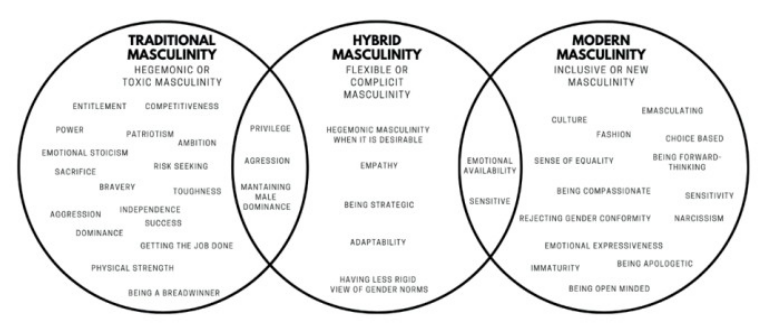
Figure 2. Types of masculinity and their key characteristics, behaviours and rhetoric
(Source: Kreicbergs (2023, pp. 135-151))
The Role of Advertising in Shifting Masculine Ideals
Recent campaigns such as Gillette’s “The Best a Man Can Be” and Lynx’s “Is It OK for Guys?” exemplify efforts to reframe masculinity. Scholars such as Trott (2022, pp. 1417–1434), Bogen et al. (2021, pp. 101–112), and Knudsen & Andersen (2020) analyze these campaigns to explore how masculinity is rhetorically reconstructed. Gillette’s campaign, though praised for its moral stance, was criticized for its paternalistic tone. In contrast, Lynx adopted a dialogic and empathetic approach, encouraging men to reflect on their identities without overt judgment. The contrasting reception of these campaigns underscores the complexities involved in negotiating masculinity through advertising.
These insights are echoed in archetype-based analyses by Kreicbergs & Ščeulovs (2022, pp. 21–38), who show that brands leveraging emotionally expressive archetypes like the Lover or Everyman tend to foster stronger consumer engagement than those that adhere to heroic or authoritarian masculinity tropes. Consumers today increasingly value authenticity, vulnerability, and emotional nuance in male portrayals.
Consumer Perceptions and Generational Shifts
There is a generational dimension to these shifting ideals. Research by Lingnau (2023) and Kreicbergs & Ščeulovs (2023, pp. 299–304) finds that younger men—especially Gen Z and Millennials—are critical of traditional masculine portrayals and prefer more diverse, inclusive representations. Yet, even as many express discomfort with hegemonic masculinity, traditional images continue to influence purchasing behaviour. This tension between aspiration and action suggests that change is underway, but incomplete.
Moreover, gendered responses to advertising vary. Knutson & Waldner (2017) found that while female participants responded more favourably to “menvertising” that challenged masculine stereotypes, male participants often maintained neutrality or ambivalence—reflecting an entrenched cultural normalization of hegemonic ideals.
Regional Specificities and the Indian Context
While global advertising trends increasingly support gender diversity, regional disparities remain. Gogoi & Sinha’s (2024, pp. 1–36) multimodal analysis of outdoor ads in Patna, India, highlights how masculine norms in advertising remain firmly tied to power, authority, and occupational dominance. These portrayals are deeply embedded in local cultural and linguistic semiotics—colour, gaze, text, and spatial design—reinforcing masculinity as the default identity of strength and leadership, while relegating femininity to domesticity and beauty.
Masculinity Beyond the Male Body
Adding further complexity, Halberstam & Halberstam (1998, pp. 1–43) argues that masculinity is not inherently tied to the male body. His work on female masculinity illustrates how masculine traits can be performed by individuals of any gender, subverting traditional binaries and expanding the spectrum of gender identity. This theoretical lens is crucial for understanding the increasing appearance of non-binary and gender-nonconforming figures in contemporary advertising.
The literature suggests that masculinity in advertising is undergoing a profound transformation. From reinforcing hegemonic ideals to embracing emotional authenticity and diversity, advertising now serves as both a site of resistance and reinforcement. While early research focused on the damaging effects of rigid portrayals, more recent work explores how advertising can serve as a platform for social change. Yet, the adoption of inclusive masculinity is uneven, influenced by generational, regional, and cultural factors.
The present study contributes to this evolving discourse by examining the portrayal of masculinity in men’s grooming and self-care advertisements from 2013 to 2023. By employing both Connell’s (1995, 2005) power-based framework and Kreicbergs’ (2023) consumer-centric typology, this work aims to illuminate the nuanced ways in which masculinity is being reconstructed—not only as strength, but as self-care, empathy, and identity in flux.
Theory and Literature on Multimodal Discourse Analysis
Multimodal Discourse Analysis (MDA) offers a powerful theoretical framework for examining how meaning is constructed through the interplay of multiple semiotic modes, such as language, images, layout, colour, and design, within media texts. This approach, grounded in the works of scholars like Jewitt (2009), Kress and van Leeuwen (2006), allows for a nuanced exploration of how visual and textual elements collaborate to shape meaning in advertisements, particularly in relation to the reconstruction of masculinity.
In the context of Gillette India’s advertisements, MDA enables a critical analysis of how masculinity is both visually and textually represented. Rather than focusing solely on the language used, MDA examines how the meaning is conveyed through a variety of semiotic modes. These include body language, colour schemes, camera angles, visual symbolism, and layout. For instance, the portrayal of men in positions of power, authority, or vulnerability, alongside their attire, expressions, and the framing of shots, works in conjunction with accompanying text and narration to construct a specific understanding of masculinity. Whether through close-up shots that convey strength or vulnerability or wide-angle shots that position the subject as dominant or introspective, the combination of these elements directly influences the viewer’s interpretation of masculine identity.
This approach goes beyond simply examining whether advertisements reinforce traditional ideals of masculinity—such as physical strength, stoicism, and dominance. It also considers whether they challenge these norms by presenting alternative, more inclusive representations of masculinity, such as emotional sensitivity, caregiving, or allyship. Advertisements from Gillette, Axe, and Dove Men+Care, for example, not only promote products but also engage in identity construction by aligning the male subject with particular social values, aspirations, and behavioural norms. This multimodal approach provides a lens through which to interrogate the embedded ideologies within these advertisements, as noted by Jewitt (2009), who emphasized how social meanings in multimodal texts are shaped by societal conventions and cultural expectations.
A powerful example of this can be seen in advertisements that pair images of men engaging in traditionally feminine roles, such as a father comforting his child, with messages about grooming. This juxtaposition challenges traditional associations of masculinity with emotional detachment and promotes a reimagining of masculine roles through both visual and linguistic elements. Through MDA, these advertisements become more than just promotional materials; they act as cultural texts that contribute to the ongoing negotiation and reconstruction of masculinity in contemporary media.
This framework allows for an in-depth exploration of how semiotic resources—ranging from image composition to layout design—are selectively configured to align masculinity with emerging social values. By unpacking the strategies employed in these advertisements, MDA reveals how they both reflect and shape evolving gender norms. Moreover, the analysis demonstrates how contemporary media can simultaneously challenge and perpetuate dominant ideologies of gender, offering a deeper understanding of the ways in which gender identities are constructed, communicated, and understood in the public sphere.
When applied to the analysis of advertisements, MDA also draws from Halliday’s (1978, 1989, 2009) social semiotic theory, which identifies three key communicative functions—ideational, interpersonal, and textual. These functions are visually realized through image composition, as noted by scholars like Joyce and Gaudin (2007) and Kress and van Leeuwen (2006). In this context, advertisements become a site where ideologies surrounding gender and masculinity are not merely communicated through text but are also visually constructed through carefully composed images that engage the viewer both intellectually and emotionally.
The integration of multimodal strategies in advertisements aligns with the work of Machin and Thornborrow (2003, pp. 453–471), who discussed how magazines like Cosmopolitan use multimodal elements to promote values such as independence and power, often through physical appeal and social skills rather than intellectual capacity. In a similar vein, advertisements like those from Gillette India and other global brands – Dove Men+Care and Axe – strategically deploy visual and linguistic elements to align men with desirable social values. By incorporating multimodal discourse analysis, we can explore how these advertisements are not just about selling products but about promoting specific constructions of masculinity in the public eye.
Thus, MDA becomes a critical tool for understanding the evolving portrayal of masculinity in advertisements, allowing for an analysis that recognizes the complex ways in which visual, textual, and design elements contribute to the broader cultural discourse around gender. Through this lens, advertisements become powerful sites of ideological negotiation, shaping and reshaping societal understandings of what it means to be masculine in contemporary media.
Methodology
For the sake of this research, we first took up commercial campaigns of three multinational male grooming products and self-care brands, namely, Gillette, Axe, and Dove Men+Care, spanning from 2013 to 2023. These advertisements, which included not only TV commercials and ad posters but also contemporary media content, including digital marketing, social media contents like social media posts, videos, reels, and challenges—created by consumers rather than the brand itself, were handpicked from YouTube and various social media platforms like Facebook, Instagram, etc. (links have been provided at the reference) and then, directly transcribed for analysis. From the advertisement narratives, we tend to delve into how Gillette India advertisements use masculine and feminine gender representations in their narratives as a part of their marketing efforts to persuade the consumers. We also try to locate any sort of change in the representations of masculinity and gender roles in the Gillette India advertisements over the years.
Data Presentation and Analysis
This section presents and analyses the data collected from commercial campaigns of three multinational male grooming and self-care brands—Gillette, Axe, and Dove Men+Care—spanning from 2013 to 2023. For the scope of this research, particular emphasis is placed on Gillette’s advertisements, analyzing how the brand employs gender representations as a marketing strategy to shape consumer perception. The findings from this analysis will be contextualized within broader discussions on gender representation in advertising and marketing.
Diachronic Case Study of Masculinity in Gillette India’s Advertising Campaigns
In this section, we present a diachronic analysis of Gillette India’s advertisements which reveals a progressive shift in the portrayal of masculinity.
Case Study 1: 2013 – Shave or Crave
This campaign rigidly endorsed hegemonic masculinity by linking male desirability to a clean-shaven appearance, implying female validation. It functioned as complicit masculinity by enforcing patriarchal grooming norms and branded masculinity by commodifying male identity. Multimodally, the slogan, imagery, and “challenge–solution–result” placard normalized a narrow, appearance-driven male ideal.
Case Study 2: 2014 – #MyRoleModel
While primarily reinforcing hegemonic and complicit masculinities through the father-son dynamic valuing toughness, this campaign subtly introduced modern/inclusive masculinity by featuring the son’s emotional reflection. MDA highlighted the use of nostalgic visuals and Rahul Dravid’s authoritative voice to construct a traditional, strength-based masculinity.
Case Study 3: 2015 – The Best A Fan Can Get
This campaign presented a diverse portrayal incorporating hegemonic (Rahul Dravid’s discipline), marginalized (blind fan challenging physical prowess), subordinate (son’s caregiving), modern/inclusive (emotional openness), and branded masculinities. Multimodal elements like emotional pacing and soft visuals emphasized resilience and relational bonds, broadening the definition of masculinity.
Case Study 4: 2016 & 2017 – Manscaping Tips & Gillette BODY
These campaigns reconfigured norms by portraying hegemonic (control, hygiene), complicit (adherence to evolving grooming), subordinate (normalizing body grooming), hybrid (feminine traits in masculine frame), modern/inclusive (individuality), and branded masculinities. MDA revealed how clean aesthetics and bold typography normalized male body grooming as a masculine act, challenging taboos.
Case Study 5: 2018 – BeerBiceps Shaving Tips
This influencer campaign integrated hegemonic (physical strength), complicit (daily grooming), subordinate (supporting marginalized grooming), hybrid (self-care with traditional traits), modern/inclusive (diversity in grooming), and branded masculinities. Visually, minimalist close-ups emphasized care, while Allahbadia’s conversational tone and upbeat music positioned grooming as self-expression.
Case Study 6: 2019 – #ShavingStereotypes
This campaign reimagined gender roles by challenging hegemonic masculinity and introducing female, modern/inclusive, hybrid, and branded masculinities, showcasing women in a male-dominated profession. MDA highlighted how authentic visuals, progressive dialogue (“a razor doesn’t know the difference between a boy and a girl”), and traditional music juxtaposed cultural norms with evolving values.
Case Study 7: 2019 – Man Enough
Employing Lt Col M K Sinha’s narrative, this campaign challenged hegemonic ideals by celebrating subordinate (vulnerability), hybrid (authority with vulnerability), modern/inclusive, and branded masculinities. MDA revealed how soft lighting, visible scars, and father-son interactions redefined strength as emotional depth and ethical responsibility.
Case Study 8: 2022 – #EngineeringChang
This campaign redefined masculinity through Prashant Gade’s story, challenging associations of male worth with financial success. It elevated subordinate (compassion), hybrid (leadership without dominance), modern/inclusive, and branded masculinities. Multimodal analysis showed close-ups of Gade’s work and empathetic interactions, framing masculinity as purpose-driven and compassionate.
Diachronic Case Study of Masculinity in Gillette’s (Global) Advertising Campaigns
In this section, we present a diachronic presentation and analysis of the advertisements used by Gillette (global) for their campaign. Gillette’s global advertising also demonstrated a significant evolution from reinforcing traditional ideals to embracing more inclusive and emotionally nuanced representations.
Case Study 9: 2013 – “Man of Steel”: How Does Superman Shave?
This campaign reinforced hegemonic (strength, perfection) and complicit masculinities by inviting emulation of a heroic ideal through grooming. It subtly hinted at hybrid masculinity but largely offered a narrow portrayal. MDA noted how humanizing Superman and using intimate close-ups promoted authenticity.
Case Study 10: 2014 – BODY Razor Campaign
This ad modernized grooming while reinforcing hegemonic (discipline, physical perfection) and complicit masculinities, and introduced hybrid masculinity by incorporating grooming practices associated with femininity. MDA showed rugged landscapes and confident male figures emphasizing durability and control.
Case Study 11: 2016 – Fusion ProShield – NFL Linemen
This campaign reinforced hegemonic (protectors, physical dominance) and complicit masculinities, suggesting hybrid masculinity by integrating shaving into hypermasculine sports. MDA highlighted playful contrasts and bold text to convey strength and self-expression.
Case Study 12: 2017 – TREO™ Assisted Shaving
This campaign radically redefined masculinity by positioning caregiving as a masculine act, challenging hegemonic norms and valorizing emotional vulnerability. It affirmed complicit, marginalized, subordinate, hybrid, modern/inclusive, and branded masculinities. MDA detailed intimate visuals, a personal voiceover, and gentle interactions reframing masculinity as empathetic and nurturing.
Case Study 13: 2018 – Solomon Thomas – #HisBigDay
Featuring NFL player Solomon Thomas, this campaign challenged hegemonic masculinity by highlighting emotional vulnerability and father-son bonding. It engaged marginalized (Black male identity), affirmed subordinate, and embodied hybrid, modern/inclusive, and branded masculinities. MDA showed intimate embraces and a focus on shared milestones, shifting branding from performance to connection.
Case Study 14: 2019 – We Believe: The Best Men Can Be
Gillette’s “We believe: the best men can be” razors commercial takes on toxic masculinity
“First Shave” (A father helping his transgender son shave for the first time) – Highlighting the importance of inclusivity in masculinity.
Gillette / First Shave – The Story of Samson
“The Best Men Can Be” partnerships – Collaborations with organizations like the Boys & Girls Clubs of America to promote positive role modelling.
Gillette #TheBestMenCanBe
This controversial campaign marked a critical shift by directly addressing “toxic masculinity” (critiquing hegemonic). It celebrated subordinate (care, vulnerability), marginalized (transgender, racialized identities), modern/inclusive, hybrid, and branded masculinities. Sub-campaigns like “First Shave” (transgender son) and “The Best Men Can Be” partnerships further reinforced inclusivity and positive role modelling through multimodal contrasts and emotional narratives.
Case Study 15: 2022 – Moms Know Us
This campaign reimagined masculinity by centring maternal influence and a mother-son bond, reflecting female, modern/inclusive, subordinate, hybrid, and branded masculinities. MDA showed a simulated text exchange using emojis and a selfie to convey care, convenience, and emotional authenticity in everyday interactions.
Case Study of Masculinity in Other Multinational Brand’s Advertising Campaigns
In this section, we analyze case studies of advertisements of several other multinational men’s grooming product and self-care brands to examine the shift in global and Indian marketing towards a more nuanced portrayal of masculinity, grounding the analysis in Connell’s framework of masculinity studies (1995) and CDA (Fairclough, 2001 and Van Dijk, 1993, pp. 249–283).
Dove Men+Care – Case Study
Launched in 2010 to celebrate authentic masculinity, Dove Men+Care consistently focuses on emotional masculinity and caregiving.
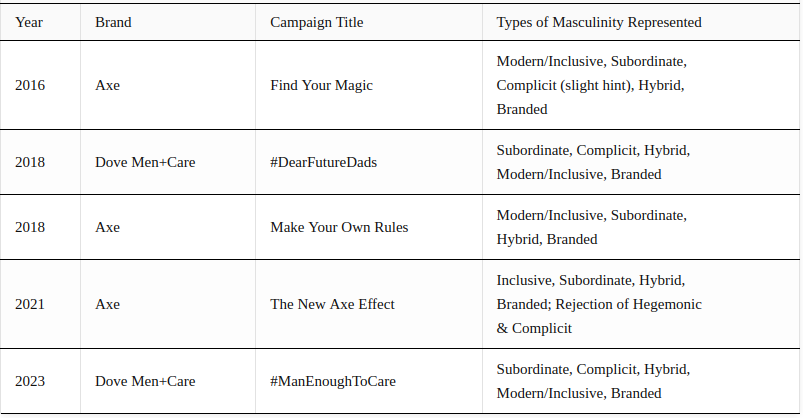
Case Study 16: 2018 – #DearFutureDads (Dove Men+Care – Global Context)
#DearFutureDads Campaign | Dove Men+Care
This campaign advocated for paternity leave, reimagining masculinity by foregrounding fatherhood, caregiving, and emotional presence. It challenged hegemonic ideals, affirming complicit (balancing work/domestic roles), subordinate (emotional intimacy), modern/inclusive (gender equality), hybrid, and branded masculinities. MDA showed images of fathers bonding, personal testimonials, and emotive music to redefine masculinity and advocate for change.
Case Study 17: 2023 – #ManEnoughToCare (Dove Men+Care – Indian Context)
#ManEnoughToCare | Dove Men+Care
This campaign redefined masculinity by centring caregiving, tenderness, and emotional presence as masculine virtues. It challenged hegemonic norms, while reflecting complicit, affirming subordinate, exemplifying hybrid, aligning with modern/inclusive, and leveraging branded masculinities. MDA highlighted images of fathers nurturing children and language emphasizing tenderness as strength, promoting a progressive view of masculinity.
Axe – Case Study
Axe, historically known for hypermasculine, attraction-based grooming, has undergone a notable transformation towards celebrating individuality and self‑expression.
Case Study 18: 2016 – AXE – Find Your Magic (AXE – Global Context)
Axe – Find Your Magic
This campaign marked a clear break from hyper-heteronormative portrayals by embracing a plural, inclusive vision. It challenged hegemonic masculinity, affirmed subordinate (queer identities, drag performers), emphasized individuality (over dominance), exemplified hybrid, and reflected modern/inclusive masculinities. MDA showed a voiceover juxtaposing conventional traits with unique expressions, subverting traditional masculinity through diverse visuals and empowering tone.
Case Study 19: 2021 – The New Axe Effect (AXE – Global Context)
The New Axe Effect
This campaign signaled a sharp departure, redefining masculinity as inclusive, diverse, and emotionally expressive. It rejected hegemonic and complicit masculinities, foregrounding inclusive (queer, non-binary, racially diverse identities), affirmed subordinated (emotional vulnerability), and showcased hybrid masculinities. MDA highlighted direct voiceovers, diverse visuals, and energetic music to promote universal attraction and self-affirmation.
Axe – Indian Context
Still leans towards attraction-based messaging but incorporates urban self-expression themes. Axe India advertisements mostly embodied hegemonic masculinity, and/or complicit masculinity. The storyline that most of these commercial follows typically revolves around the brand’s signature theme of attraction and confidence. Axe has long been known for using humour and exaggerated scenarios to appeal to young men, often linking the product to enhanced appeal and social dominance. The advertisement typically ends with the tagline or brand message, emphasizing that Axe deodorant is the key to unlocking the ultimate masculine appeal, reinforcing the idea that using the product will give men access to idealized masculinity—strong, attractive, and dominant.
However, influenced by the global campaigns, Axe India in 2018 shifted towards urban self-expression themes with advertisement posters in social media (Facebook and Instagram).
Case Study 20: 2018 – Make Your Own Rules (AXE – Indian Context)
Influenced by global campaigns, Axe India shifted towards urban self-expression. This campaign redefined masculinity by rejecting hegemonic norms in favour of self-expression, creativity, and authenticity. It affirmed inclusive, modern, subordinate, hybrid, and branded masculinities. MDA showed bold lighting, confident gestures, and a quote challenging traditional career expectations, promoting a modern masculinity rooted in self-expression and independence.
Discussion
The diachronic analysis of the multinational men’s grooming products and self-care brands’ advertising strategy indeed reflects a significant evolution in how the brands approaches the concepts of masculinity and gender relations. Advertisements increasingly portray evolving masculinities, impacting societal norms beyond consumerism. By showcasing caregiving, emotional intelligence, and vulnerability, these campaigns challenge patriarchal structures and promote gender equality. This shift from hegemonic to inclusive masculinities influences identity formation and destabilizes rigid gender binaries, fostering a more equitable understanding of gender roles in public and private spheres.
Addressing the “So What?”: Masculinity in Flux, or Corporate Calculation?
A core finding of this research is that the observed shifts in masculine portrayal are not simply a reflection of an independently changing masculinity, nor are they purely cynical corporate adaptations to superficial trends. Instead, they represent a dynamic and complex co-construction driven by the interplay of genuine societal shifts and strategic corporate responses.
For example, the dramatic transformation of Axe from its hyper-sexualized, “conquering women” imagery to its “Find Your Magic” and “New Axe Effect” campaigns directly exemplifies this tension. This change was not solely a spontaneous internal evolution of “masculinity itself.” Rather, it was a direct corporate adaptation to a societal demand for more authentic and inclusive portrayals, fuelled by shifting consumer values and a growing rejection of toxic masculinity. The widespread impact of the #MeToo movement, in particular, served as a powerful external catalyst, forcing brands like Gillette to undertake radical re-evaluations of their messaging. Gillette’s “We Believe: The Best Men Can Be” campaign (2019), which directly critiqued bullying and harassment, was a stark example of a brand responding to acute societal pressure. The “so what” here is that corporations, as powerful cultural institutions, are not merely mirrors but active participants in the ongoing re-narration and re-commodification of masculinity. By analyzing how these specific multimodal strategies are employed (as shown in the detailed case studies), this paper reveals the mechanisms through which brands aim to align themselves with contemporary social values, often seeking to retain market relevance and capture new consumer segments who demand more progressive ideals.
The Evolution of Masculinity in Gillette India’s Advertising
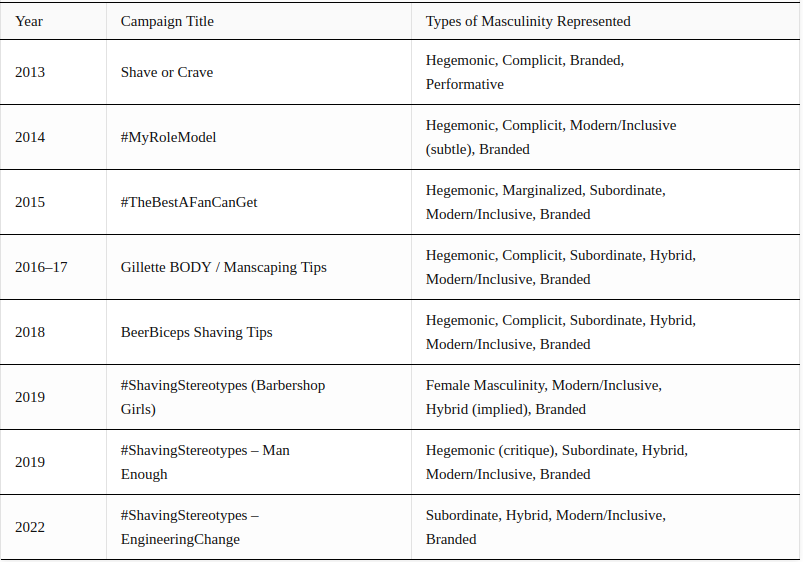
Gillette India’s campaigns evolved from reinforcing hegemonic masculinity (2013–2015) to challenging stereotypes (2019–2022).
Table 1. Diachronic representation of masculinity in Gillette India advertisements
Overall Shift in Gillette India’s Advertising
Gillette’s India campaigns show a shift from promoting hegemonic masculinity (2013–2014) focused on physical appearance and toughness, towards embracing plural masculinities emphasizing emotional depth and care (2015). This evolved to normalizing self-care and inclusive masculinity (2016–2017), leveraging influencers to promote modern ideals (2018), explicitly challenging gender stereotypes (2019), and finally framing masculinity as social responsibility (2022), reflecting a broader cultural move from conformity to individuality and relational identity within the Indian context.
The Evolution of Masculinity in Gillette’s (Global) Advertising
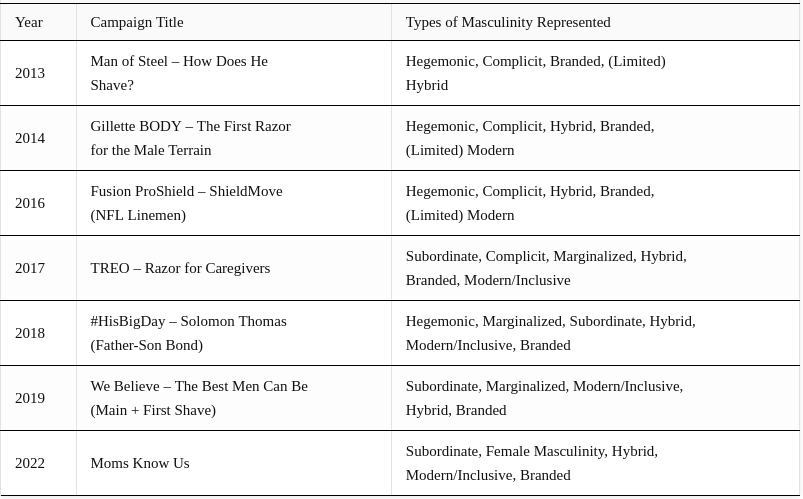
Gillette’s advertisements reflect the evolution of masculinity over time, shifting from reinforcing hegemonic ideals to gradually embracing more inclusive and emotionally nuanced representations. While earlier campaigns emphasized strength, control, and grooming as a mark of masculinity, later campaigns introduced caregiving, emotional depth, and social responsibility. The 2019 campaign stands out as the most radical critique of traditional masculinity, while 2022 highlights changing gender roles in caregiving. However, elements of hegemonic masculinity remain present, ensuring Gillette’s branding remains aspirational and commercially viable.
Table 2. Diachronic representations of masculinity in Gillette’s international advertisements
Overall Shift in Gillette International’s Advertising
Gillette’s advertising in India shifted from reinforcing traditional, dominant masculinity (2013–2016) focused on control and success through grooming, to introducing diverse masculinities embracing care, vulnerability, and varied identities (2017–2019). This further evolved to fully inclusive and fluid models (2022) incorporating female masculinity and relational aspects, broadening the definition of masculinity beyond traditional boundaries.
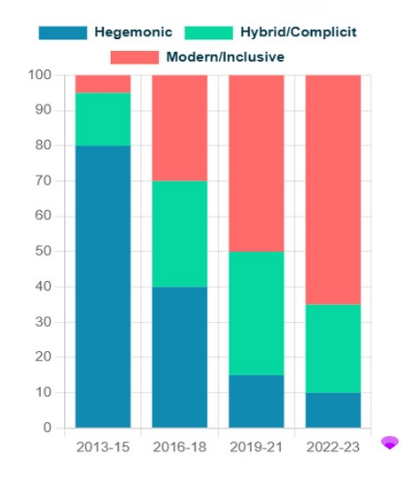
Figure 3. Gillette’s Journey: From Hegemony to Plurality
Overall Shift in Dove Men+Care and Axe’s Advertising: Comparative Analysis
Dove Men+Care consistently centres its narratives on fatherhood, caregiving, and emotional presence, emphasizing modern, relational, and ethical masculinity that blends care with strength. Axe, conversely, has strategically rebranded from hegemonic and hypersexual masculinity to celebrate individuality, queerness, and emotional authenticity, leveraging branded masculinity as a tool for self-expression. Both brands align with inclusive and hybrid masculinities, with Dove leading in ethical caregiving and Axe in liberation through self-styled identity.
Table 3. Evolution of Masculinity in Advertisements (comparing Dove Men+Care and Axe)
Overall Brand Strategy
It is crucial to acknowledge that shifts in gender representation—such as the increasing portrayal of emotional openness or self-care in men—do carry political weight, particularly in regions, where non-conforming gender identities face resistance or repression. The growing visibility of inclusive masculinity in ads may both reflect and provoke tensions in societies grappling with evolving gender norms. As anti-LGBTQ+ sentiments gain traction in various parts of the world, future research should investigate how advertising either resists or reinforces these political currents, and what this means for the future of gender representation in media. These findings further suggest that the teleological assumptions embedded in Inclusive Masculinity Theory—in which declining homophobia is expected to produce more inclusive gender representations—require re-examination. In a global climate where homophobia is resurging and cultural polarization is intensifying, the relationship between branded masculinity and genuine inclusivity appears increasingly unstable. Future research should thus engage with more flexible, intersectional models of masculinity that acknowledge the persistence of structural inequalities and the ways that market-friendly narratives of “inclusive masculinity” may coexist with, or even obscure, ongoing forms of exclusion and backlash.
By 2023, the three brands occupy distinct positions. Dove champions care, Axe focuses on individuality, and Gillette balances social responsibility with traditional aspirational themes. The article text should be formatted according to this template. It is recommended to use the IMRAD structure (Introduction, Methods and Methodology, Results, and Discussion). However, as practice shows, this is not necessarily the case for social science and humanities research. Simply orient your work around this structure, but each subsection can be named as required by the organization of your research.
Conclusions
This study has undertaken a critical examination of masculinity as represented in multinational grooming and self-care advertisements between 2013 and 2023, with a comparative focus on Indian and global campaigns. Drawing on Connell’s (1995, 2005) theory of multiple masculinities, Anderson’s (2009) Inclusive Masculinity Theory, Kreicbergs’ (2023) consumer-centred typology, and Multimodal Discourse Analysis (Jewitt, 2009), the findings reveal both convergence and divergence in how masculinities are constructed, negotiated, and commodified across sociocultural contexts.
The Indian and global campaigns studied share a trajectory that reflects a broader destabilization of hegemonic masculinity. Both begin with representations rooted in dominance, stoicism, and heterosexual desirability, but gradually incorporate subordinate, inclusive, and hybrid masculinities. However, the modalities and rhetorical strategies through which this transition is articulated differ substantively between contexts.
Globally, particularly in campaigns by Gillette and Axe, the critique of hegemonic masculinity is often direct and ideologically explicit. Campaigns such as ‘We Believe: The Best Men Can Be’ and ‘The New Axe Effect’ confront toxic masculinity, promote gender inclusivity, and centralize marginalized identities, including queer, transgender, and racialized masculinities. These campaigns often employ high-impact multimodal strategies—contrapuntal imagery, emotionally charged narration, and confrontational tone—to position masculinity as fluid, relational, and ethically accountable. While Anderson’s (2009) framework of inclusive masculinity remains useful for explaining how some campaigns normalize emotional openness, vulnerability, and physical affection, its underlying assumption of declining homophobia requires careful reconsideration. As this study demonstrates, branded representations of inclusive masculinity emerge in an era marked not only by progressive change but also by resurgent homophobia and gender backlash. The resulting portrayals are thus shaped by both market logics and socio‑political tensions, raising important questions about the limits and possibilities of such representations in fostering genuine cultural transformation.
In contrast, Indian campaigns, especially those by Gillette India, employ a more culturally embedded approach. Rather than overtly repudiating hegemonic masculinity, they reconfigure it from within, blending traditional symbols of authority—fatherhood, military service, cricket—with emergent traits such as empathy, caregiving, and emotional literacy. The deployment of hybrid masculinity (Bridges & Pascoe, 2014, pp. 246–258; Kreicbergs, 2023) is thus more strategic and conservative, allowing for the integration of non-hegemonic traits without destabilizing culturally dominant norms. Campaigns such as ‘#ShavingStereotypes’ and ‘#EngineeringChange’ do not dismantle hegemonic ideals outright but instead recast them within aspirational narratives of national pride and familial responsibility.
This distinction is further reinforced through semiotic analysis. Global advertisements often foreground identity politics through stark visual contrasts, intersectional casting, and activist framing. Indian advertisements, by contrast, rely heavily on emotional storytelling, familiar relational archetypes (father-son, mentor-disciple), and culturally resonant visual registers (e.g., village barbershops, cricket fields). While both sets of campaigns utilize MDA’s ideational, interpersonal, and textual functions to reconstruct masculinity, the global context privileges the ideational (social critique and disruption), whereas the Indian context leans into the interpersonal (relational bonding and continuity).
Despite these differences, both contexts participate in the logics of branded masculinity (Kreicbergs & Ščeulovs, 2022, pp. 21–38), wherein progressive masculinities are commodified as aspirational identities aligned with consumer choice. Whether framed as social responsibility (Gillette), emotional strength (Dove Men+Care), or self-expression (Axe), these campaigns construct masculinity as a site of identity labour mediated through consumption. In this sense, the brands do not merely reflect cultural change—they actively curate and commercialize evolving gender norms.
The “So What?”: Implications for Media and Masculinity Studies
This research offers crucial insights for scholars by moving beyond mere descriptive accounts of advertising trends to a critical analysis of their underlying dynamics and implications.
-
Challenging Linear Change: The study argues shifts in masculinity are a complex interplay between societal demands (e.g., #MeToo impact, youth values) and corporate strategies for relevance. It shows how societal expectations drive corporate adaptation, which then re-narrates and re-commodifies masculinity, pushing media studies to scrutinize corporate “inclusivity” performativity.
-
Elevating Multimodal Analysis (MDA): By applying MDA to diverse ad campaigns, this paper demonstrates how subtle visual, linguistic, and auditory cues construct new masculine ideals. This empowers researchers to deconstruct commercial messages, revealing how brands signal (or feign) alignment with progressive values, offering a robust methodology for understanding embedded ideologies shaping gender identities in media.
-
Reframing Branded Masculinity: This paper posits branded masculinity as a significant cultural force, not merely a marketing phenomenon. Brands actively produce and circulate gendered identities, compelling researchers to view commercial media as a dynamic site of gender negotiation, production, and consumption, fostering a critical lens on corporate influence and ethics.
-
Contextualizing Global Gender Discourse: The cross-cultural comparison (India vs. Global) is paramount, revealing that “inclusive masculinity” adoption is context-dependent, adapted to local nuances. This avoids universalist assumptions in gender studies, urging contextual specificity and underscoring that “progress” is contested and regionally shaped.
-
Criticality Towards Commodification: Crucially, this paper argues “inclusive masculinity” is increasingly commodified for corporate branding, not just genuine change. It cautions against uncritical celebration of progressive ads, highlighting that corporate “inclusivity” can coexist with or obscure ongoing exclusion and backlash. This fundamentally reshapes how scholars should approach claims of gender progress in advertising, demanding deeper inquiry into whether portrayals translate to substantive behavioural shifts or remain primarily a “branded performance.”
The ownership and corporate positioning of Gillette (Procter & Gamble) and Dove/Axe (Unilever) significantly shape the narratives and shifts in masculinity portrayed in their advertising. As a U.S.-based corporation, P&G’s Gillette has leveraged American cultural discourses—such as #MeToo and ethical consumerism—to reposition masculinity as socially accountable, reflecting its broader brand strategy centred on moral leadership and social responsibility. In contrast, Unilever’s dual branding strategy—through Dove’s emotional, caregiving masculinity and Axe’s edgy, youth-oriented inclusivity—demonstrates a calculated segmentation approach, aligning each brand with different facets of evolving male identity. The multinational scope of both companies enables them to adapt these narratives to local markets, but the core messaging is influenced by their global brand architecture, stakeholder expectations, and corporate social values, thereby framing masculinity as both a moral and marketable asset.
This study contributes to a growing body of scholarship that positions advertising as a central arena in the discursive reconfiguration of masculinity. While Connell’s (1995) model remains foundational in diagnosing structural power relations, it is through the integration of Anderson’s (2009) inclusive masculinity, Kreicbergs’ (2023) consumer-centric lens, and MDA’s multimodal methodology that we can understand the granular shifts in how masculinities are visually and linguistically constructed, contested, and marketed across cultural contexts.
In sum, the portrayal of masculinity in advertising is increasingly marked by plurality, fluidity, and emotional nuance. However, the degree and manner of this transformation remain contingent on regional socio-cultural norms, generational shifts, and market dynamics. Indian campaigns show an incremental, culturally grounded negotiation with progressive masculinities, while global campaigns are more likely to adopt direct, intersectional critiques. Future research might explore audience reception and the durability of these representations—probing whether the commodification of inclusive masculinity translates into substantive shifts in gendered behaviours, or whether it remains, ultimately, a branded performance.
Authors' Statements
Agreement with the Journal’s Policies
All authors of this manuscript have been notified and agree to the journal’s current policies as described on the publication’s website.
Originality and Exclusivity of the Manuscript
All authors confirm that the manuscript is original, has not been published previously in whole or in part, and is not under consideration for publication elsewhere.
Authorship and Contribution (CRediT)
The first author, Jyoti Kumari contributed to the data collection and analysis and was responsible for writing the original draft of the manuscript. The second author, Namrata Paul contributed equally to the data collection and analysis and participated in writing the original draft of the manuscript. The third author, Dr. Sanjukta Ghosh supervised the research process and contributed to the review and editing of the manuscript.
Policy on Preprints and Previous Versions
All authors confirm that there is no violation of the journal’s policy. All authors confirm that there is no preprint/working version.
Conflict of Interest
The authors declare that they have no conflicts of interest.
Funding
The authors declare that they have received no funding for the research or publication of this work.
Use of Generative AI and Supporting Tools
AI tools are not listed as authors. No generative AI or supporting tools were used in the preparation of this manuscript. All content was created and verified by the authors.
Permissions for Use (Texts, Images, Maps, Illustrations)
The use of texts, images, maps, and illustrations did not require permission, as no copyrighted materials were included. All materials were obtained from freely available public domain sources.
Acknowledgments and Contributions without Authorship
We thank the journal editor and the anonymous reviewers for their valuable comments and suggestions that helped improve this manuscript.
References
Ahlstrand, M. (2007). Gender stereotyping in television advertisements: A case of Austrian state television [Dissertation]. Luleå University of Technology.
Åkestam, N., Rosengren, S., Dahlén, M., Liljedal, K. T., & Berg, H. (2021). Gender stereotypes in advertising have negative cross-gender effects. European Journal of Marketing, 55(13), 63–93. https://doi.org/10.1108/EJM-02-2019-0125
Alexander, S. M. (2003). Stylish Hard Bodies: Branded Masculinity in Men’s Health Magazine. Sociological Perspectives, 46(4), 535–554. https://doi.org/10.1525/sop.2003.46.4.535
Barlett, C. P., Vowels, C. L., & Saucier, D. A. (2008). Meta-Analyses of the Effects of Media Images on Men’s Body-image Concerns. Journal of Social and Clinical Psychology, 27(3), 279–310. https://doi.org/10.1521/jscp.2008.27.3.279
Bhatti, F. (2022). Introductory Chapter: Contributions to Masculinity Studies. In Masculinity Studies—An Interdisciplinary Approach. IntechOpen. https://doi.org/10.5772/intechopen.107381
Bogen, K. W., Williams, S. L., Reidy, D. E., & Orchowski, L. M. (2021). We (want to) believe in the best of men: A qualitative analysis of reactions to #Gillette on Twitter. Psychology of Men & Masculinities, 22(1), 101–112. https://doi.org/10.1037/men0000308
Bridges, T., & Pascoe, C. J. (2014). Hybrid Masculinities: New Directions in the Sociology of Men and Masculinities. Sociology Compass, 8(3), 246–258. https://doi.org/10.1111/soc4.12134
Butler, J. (1990). Gender Trouble: Feminism and the Subversion of Identity. Routledge.
Connell, R. (1995). Masculinities. University of California Press.
Connell, R. W. (2005). Masculinities (2nd ed.). Routledge.
Connor, S., Edvardsson, K., Fisher, C., & Spelten, E. (2021). Perceptions and Interpretation of Contemporary Masculinities in Western Culture: A Systematic Review. American Journal of Men’s Health, 15(6), 15579883211061009. https://doi.org/10.1177/15579883211061009
Das, M. (2011). Gender Role Portrayals in Indian Television Ads. Sex Roles, 64(3–4), 208–222. https://doi.org/10.1007/s11199-010-9750-1
Forceville, C. (2002). Pictorial Metaphor in Advertising. Routledge.
Forceville, C. (2009). Non-verbal and multimodal metaphor in a cognitivist framework: Agendas for research. In C. Forceville & E. Urios-Aparisi (Eds.), Multimodal Metaphor (pp. 19–40). Walter de Gruyter. https://doi.org/10.1515/9783110215366.1.19
Gender Bias in Advertising: Research, Trends and New Visual Language. (n.d.). Stravito. Gender Bias in Advertising: Research, Trends and New Visual Language.
Ghosh, S. (2016). Language and Gender in the discourse of Indian TV Advertisements. International Journal of Dravidian Linguistics: IJDL., 45, 155–166.
Gogoi, D., & Sinha, S. (2024). Investigating Gender-Based Stereotypes in Advertisement Landscape: A Multimodal Analysis of an Indian Town. Manusya: Journal of Humanities, 27(1), 1–36. https://doi.org/10.1163/26659077-20242709
Grau, S. L., & Zotos, Y. C. (2016). Gender stereotypes in advertising: A review of current research. International Journal of Advertising, 35(5), 761–770. https://doi.org/10.1080/02650487.2016.1203556
Halberstam, J., & Halberstam, J. (1998). An introduction to female masculinity. In Female Masculinity (pp. 1–43). Duke University Press. https://doi.org/10.2307/j.ctv11hpjb1.5
Halliday, M. A. K. (1978). Language as Social Semiotic: The Social Interpretation of Language and Meaning. University Park Press.
Halliday, M. A. K. (1989). Spoken and Written Language. Oxford University Press.
Halliday, M. A. K., & Webster, J. J. (2009). Collected Works of M. A. K. Halliday. Bloomsbury Academic.
Javalkar, S., & Kakade, P. O. (2020). The portrayal of Women in Indian TV Advertisements-A Review. Purakala (UGC Care Journal), 31(15), 712–725.
Jewitt, C. (Ed.). (2009). The Routledge Handbook of Multimodal Analysis. Routledge.
Joyce, H. D. S., & Gaudin, J. (2007). Interpreting the Visual: A Resource Book for Teachers. Phoenix Education.
Kailing, D. W., & Cantrell, P. (2014). Traditional masculinity & advertising image approval [Undergraduate Honors Theses].
Knudsen, G. H., & Andersen, L. P. (2020). Changing Masculinity, One Ad at a Time. Westminster Papers in Communication and Culture, 15(2). https://doi.org/10.16997/wpcc.382
Knutson, M., & Waldner, M. (2017). Reshaping the man in the mirror: The effects of challenging stereotypical male portrayals in advertising [BSc Thesis in Marketing]. Stockholm School of Economics.
Kövecses, Z. (2005). Metaphor in Culture: Universality and Variation (1st ed.). Cambridge University Press. https://doi.org/10.1017/CBO9780511614408
Kreicbergs, T. (2023). The Analysis of Masculinity in Advertising: A Qualitative Study Based on Consumer Perceptions. Economics and Business, 37(1), 135–151. https://doi.org/10.2478/eb-2023-0009
Kreicbergs, T., & Ščeulovs, D. (2022). The Use of Brand and Masculinity Archetypes in Analysing Consumer Engagement in Advertising. Trends Economics and Management, 16(40), 21–38. https://doi.org/10.13164/trends.2022.40.21
Kreicbergs, T., & Ščeulovs, D. (2023). Consumer Perceptions of Masculinity in Advertising: The Viewpoint of Generation Z and Millennials. Proceedings of the 27th World Multi-Conference on Systemics, Cybernetics and Informatics: WMSCI 2023, 299–304. https://doi.org/10.54808/WMSCI2023.01.299
Kress, G. R., & Leeuwen, T. V. (2006). Reading Images: The Grammar of Visual Design. Routledge. https://doi.org/10.4324/9780203619728
Lakoff, G., & Johnson, M. (1980). Metaphors We Live By. University of Chicago Press.
Lingnau, L. M. (2023). Redefining Masculinity: A Study on the Shifting Landscape of Advertisements and its Impact on the Perception of Masculinity among Young Adult Men [Bachelor’s thesis]. University of Twente.
Machin, D., & Thornborrow, J. (2003). Branding and Discourse: The Case of Cosmopolitan. Discourse & Society, 14(4), 453–471. https://doi.org/10.1177/0957926503014004003
Muldrow, A. F. (2018). Masculinity in Advertising: A Content Analysis of Male Body Images. Washington State University.
Reghunath, S., & Sreena, K. (2023). Representation of Gender Stereotypes in Indian Advertisements: An Analysis on Ariel’s #Sharetheload Campaign. ShodhKosh: Journal of Visual and Performing Arts, 4(1SE), 99–106. https://doi.org/10.29121/shodhkosh.v4.i1SE.2023.505
Scheibling, C., & Lafrance, M. (2019). Man Up but Stay Smooth: Hybrid Masculinities in Advertising for Men’s Grooming Products. The Journal of Men’s Studies, 27(2), 222–239. https://doi.org/10.1177/1060826519841473
Schroeder, J. E., & Zwick, D. (2004). Mirrors of Masculinity: Representation and Identity in Advertising Images. Consumption Markets & Culture, 7(1), 21–52. https://doi.org/10.1080/1025386042000212383
Semmler, D. (2013). The Unrecognized Problem: An analysis of masculinity stereotypes in advertising across six channels [Honors Thesis]. University of South Dakota.
Sharma, S., & Bumb, A. (2021). Role Portrayal of Women in Advertising: An Empirical Study. Journal of International Women’s Studies, 22(9), 236–255.
Shivani, S., & Kumari, S. (2012). A Study on Gender Portrayals in Advertising through the Years: A Review Report. Journal of Research in Gender Studies, 2(2), 54–63.
Timke, E., & O’Barr, W. M. (2017). Representations of Masculinity and Femininity in Advertising. Advertising & Society Review, 17(3–4). https://doi.org/10.1353/asr.2017.0004
Trott, V. A. (2022). ‘Gillette: The best a beta can get’: Networking hegemonic masculinity in the digital sphere. New Media & Society, 24(6), 1417–1434. https://doi.org/10.1177/1461444820978293
West, C., & Zimmerman, D. H. (1987). Doing Gender. Gender & Society, 1(2), 125–151. https://doi.org/10.1177/0891243287001002002
Wodak, R. (1999). The Discursive Construction of National Identity. Edinburgh University Press.
Zayer, L. T., Coleman, C. A., & Gurrieri, L. (2023). Driving Impact through Inclusive Advertising: An Examination of Award-Winning Gender-Inclusive Advertising. Journal of Advertising, 52(5), 647–665. https://doi.org/10.1080/00913367.2023.2255233
Zayer, L. T., McGrath, M. A., & Castro-González, P. (2019). Men and masculinities in a changing world: (De)legitimizing gender ideals in advertising. European Journal of Marketing, 54(1), 238–260. https://doi.org/10.1108/EJM-07-2018-0502
Zeeshan, A. (2015). Visual Metaphors in Language of Advertising. Language in India, 15(10), 74–82.