Symbolising the Climate Crisis: A Semiotic Perspective on Public Discourse in Türkiye
Selçuk University (Konya, Türkiye).
Email: suheylaayvaz[at]selcuk.edu.tr
 0000-0002-1065-592X
Selçuk University (Konya, Türkiye).
Email: sezin.dogan[at]selcuk.edu.tr
0000-0002-5161-5481Selçuk University (Konya, Türkiye).
Email: elif.kaya[at]selcuk.edu.tr
0000-0003-4629-6647Abstract
Climate communication has emerged as a distinct form of communication, encompassing public communication activities designed to ensure that information and scientific data about climate change are disseminated in an accessible manner to society and the public. The objective of this research is to elucidate the manner in which climate change communication is constructed in the media at the semiotic level, in the context of public communication, using the local example of Türkiye. In this study, the posters published by the Turkish Ministry of Environment, Urbanization and Climate Change on 15 May 2024 World Climate Day to draw attention to climate change were subjected to a semiotic analysis using Roland Barthes’ concept cluster as an analytical framework. The analysis yielded three dominant themes: the Anthropocene myth, the environmental catastrophism myth and the sustainability myth. The analysis revealed that the Ministry attributed responsibility to individuals, omitted the primary sources of the problem, and employed symbols to evoke fear and emotional attachment. The expressions and symbols used in climate change posters emphasize individual change and movement, and the construction of fear appeal is focused on individuals. This study makes an original contribution to the literature in terms of understanding climate change indicators in the context of public communication, showing that individual change is focused on in creating awareness about the climate crisis. However, the examined posters did not address the destructive effects of the economic systems, government policies, and production processes that underlie the climate crisis.
Keywords
Climate Change, Climate Change Communication, Poster Analysis, Public Communication, Roland Barthes’ Model, Semiotic Analysis, Türkiye
Символизация климатического кризиса: семиотическая перспектива публичного дискурса в Турции
Сельчукский университет (Конья, Турция).
Email: suheylaayvaz[at]selcuk.edu.tr
0000-0002-1065-592XСельчукский университет (Конья, Турция).
Email: sezin.dogan[at]selcuk.edu.tr
0000-0002-5161-5481Сельчукский университет (Конья, Турция).
Email: elif.kaya[at]selcuk.edu.tr
0000-0003-4629-6647Аннотация
Климатическая коммуникация сформировалась как особая форма общественной коммуникации, направленная на обеспечение доступного распространения информации и научных данных о климатических изменениях среди населения. Цель данного исследования — прояснить, каким образом медийное конструирование климатической коммуникации осуществляется на семиотическом уровне в контексте публичного взаимодействия, на локальном примере Турции. В рамках исследования был проведён семиотический анализ постеров, опубликованных Министерством окружающей среды, урбанизации и изменения климата Турции 15 мая 2024 года в честь Всемирного дня климата, с использованием концептуального аппарата Ролана Барта. Анализ выявил три доминирующих мифа: миф Антропоцена, миф экологического катастрофизма и миф устойчивого развития. Результаты показали, что Министерство возлагает ответственность за климатический кризис на отдельных индивидов, при этом умалчивая о первоисточниках проблемы, и использует символы, призванные вызвать страх и эмоциональную вовлечённость. Символика и вербальные выражения в постерах акцентируют внимание на индивидуальных изменениях и личной активности, а формирование страха адресуется отдельному человеку. Исследование вносит вклад в осмысление климатической коммуникации в публичном контексте, демонстрируя, что основным инструментом повышения осведомлённости о климатическом кризисе становится акцент на индивидуальных действиях. Вместе с тем анализируемые постеры не затрагивают разрушительные последствия экономических систем, государственной политики и производственных процессов, лежащих в основе климатического кризиса.
Ключевые слова
климатические изменения, климатическая коммуникация, анализ постеров, публичная коммуникация, модель Ролана Барта, семиотический анализ, Турция
Introduction
Climate change is a difficult concept to define as it encompasses multiple perspectives and discourses, is not temporal in nature and has a global impact across a range of dimensions. Climate communication has emerged as a form of communication that encompasses public communication activities designed to ensure that information and scientific data about climate change are disseminated in an accessible manner to the public.
Climate change, as defined by the United Nations (2024), is described as long-term alterations in temperature and weather patterns, which are frequently attributed to anthropogenic activities (Lynas et al., 2021; Cook et al., 2013). This issue has been identified as critical, with far-reaching impacts on global health, ecosystems and social dynamics (Shivanna, 2022; Ling et al., 2022; Romanello et al., 2022). It is emphasized that, although climate change is a global phenomenon, its effects are not universally experienced; these changes are felt in different ways in different environments, and the frequency and severity of droughts, floods, snowstorms and heat waves are increasing day by day (Ummenhofer & Meehl, 2017). On the other hand, it is also argued that the climate crisis affects all of humanity at the same time (Akarsu, 2020) and that for the first time in human history, human activities (use of fossil fuels, deforestation, unplanned urbanization and industrial processes) have affected the climate on a regional and global scale and this has brought about the problem of global climate change (Kadıoğlu, 2020).
In the academic literature, the concept of climate change is defined as a complex, widespread and uncertain phenomenon that people have difficulty in understanding, comprehending, and associating. This issue is seen as a chain of events that are likely to occur in the distant future, non-locally globally, as well as due to uncertainty, debate, doubt, intuitive morality (Markowitz & Shariff 2012), limited participation, politics, incomplete communication, psychological, social, cultural and institutional reasons, and this situation prevents individuals from taking action to combat climate change (Moser, 2010; Lorenzoni & Pidgeon, 2006).
As scientific knowledge about the causes, impacts, and complexity of climate change increases, so does the need for tools to communicate it (Pidgeon & Fischhoff, 2013; Neset et al., 2010). Uncertainty in scientific communication is often related to closing knowledge gaps. Climate change communication also focuses on uncertainty. On the one hand, this points to the complexity of uncertainties associated with climate change science; on the other hand, it is a matter of how uncertainty is communicated and understood by various audiences (Penz, 2022). Communication about climate change aims to bring scientific knowledge to the public’s attention by relating it to everyday life, but climate change challenges and solutions go beyond scientific knowledge, affecting every aspect of socio-environmental health. What is important in the context of climate change communication is to empower people at a fundamental level, inspiring collective and individual action (Dulic et al., 2016).
Climate communication encompasses social communication activities that aim to make climate change information and related scientific knowledge understandable and relevant to the public. Seeking solutions to climate change problems through changes in public attitudes and behaviour (Wu et al., 2023), climate change communication is increasingly being used to promote sustainable behaviour, and the framing of these communications can significantly alter their impact on recipients (Spence & Pidgeon, 2010). Over the past years, there has been a large increase in publications on communicating climate change to the public. This increase is driven by the significant contribution of individual and household emissions to climate change and the ability of individuals to exert political influence on governments and corporations through their actions as consumers and citizens. Therefore, effective communication is vital for climate change (Ballantyne, 2016).
Climate change communication is linked to several fields that examine attitudes towards risks and strategies that can be used to trigger behaviour change (Kaushal et al., 2022), one of which is public communication. Public communication can be defined as the communication activities that are conducted in an institutionalized manner with the objective of promoting the public interest, reviving civic consciousness, securing public debates, informing the public, raising awareness, understanding the expectations and debates of the public, and protecting the sense of collective belonging (Kurt, 2016). Public communication campaigns are designed to reach a wide target audience for a specific purpose. They comprise regular communication activities conducted over a defined period. Their objective is to convey persuasive and informative content to inform the public (Rogers & Storey 1987), to attract public attention, to raise awareness and to change behaviors in this direction (Koçyiğit, 2022; Örs, 2018).
Climate change communication, which emerged as a different form of public communication, covers social communication activities designed to facilitate the dissemination of climate change-related information and scientific knowledge in a way that is accessible to the public. In this context, the aim of climate change communication is to identify communication strategies to mitigate the impacts of climate change for sustainable development, which is thought to be particularly achievable through the participation of the general population in policy dialogues, political influences, and changes in lifestyles (Kaushal et al., 2022).
Communication strategies are crucial for effectively increasing the level of scientific knowledge regarding climate change. To gain and maintain the public’s trust in climate change communication, specific strategies are necessary. A trust-based strategy in climate change communication is the most important step for increasing engagement and ensuring credibility. Including evidence that supports the claims in any visual and written content aimed at raising awareness about climate change will help reduce people’s doubts. Ensuring transparency of data and accountability for scientific misconduct is vital as a climate change strategy (Goodwin & Dahlstrom, 2014). As a communication strategy for climate change, it is essential to share not only the quantitative status of scientific knowledge about uncertainty, but also qualitative indicators related to the observational basis of this knowledge. In many communication strategies regarding climate change, a key point that affects people’s perceptions is not so much how climate risks are communicated, but rather whether solutions are considered possible. The extent to which people are aware of the technologies and institutions that can provide these solutions may have a greater impact on their perceptions (Patt & Weber, 2013).
Another important point in climate change communication is empowering the audience. As a climate change strategy, showing people that climate change poses a threat to their own communities will motivate them to take action to overcome the threat (Bostrom et al., 2013). In their article, Thompson and Schweizer (2008) emphasize that the most important strategy in climate change communication is recognizing the target audience and linking messages to cultural values and beliefs. To raise awareness about climate change, some of the key strategies include associating messages with cultural values, collaborating with organizations, leaders, and celebrities to strengthen the content, and highlighting concrete actions that can be taken to make a difference. Understanding the target audience for climate change messages is a critical strategy. Knowing the audience’s motivations, being aware of their concerns and needs, is essential to make climate change messages more impactful (Markowitz & Guckian, 2018).
The phenomenon of climate change communication has become a subject of interest across a range of academic disciplines, given its growing environmental, social and political ramifications on a worldwide scale. A plethora of studies have been conducted on both digital media (Fariello & Jemielniak, 2025; Denisova, 2025; Mede & Schroeder, 2024; Schäfer & Schlichting, 2018), and traditional media (Günay et al., 2025; Safdar & Butt, 2024; Wu et al., 2024; Carvalho & Burgess, 2005; Boykoff & Boykoff, 2007). Studies showing that the removal of communicative resistance points and social acceptance of the climate crisis is possible through climate communication are one of the notable research areas (Takahashi et al., 2025; Guenther et al., 2024; Lee et al., 2024; Ittefaq, 2024; Monoyios et al., 2024; Moser, 2016; Moser & Dilling, 2011; Nerlich et al., 2010). Political actors’ approaches to climate communication, conflicts at the level of discourse and their impact on public opinion are also addressed (Cole et al., 2025; Schwörer, 2024). On the other hand, the role of fictional narratives in climate communication is becoming increasingly important, and storytelling-based approaches are found to increase emotional engagement and action orientation (Mayerson, 2018; Johns-Putra, 2016; Lowe et al., 2006).
In Türkiye, academic studies in this field address the issue on an interdisciplinary level and reveal the potential of climate communication to raise awareness, initiate public debate and encourage social action in the face of the climate crisis. The media’s function of forming public opinion and setting the agenda on the climate crisis has been examined in detail in studies conducted on the basis of traditional and digital media (Hassan, 2024; Uzelgun & Castro, 2015; Şahin, 2020; Ozay & Mustafa, 2022; Günay & Güçdemir, 2022; Tekin Çelik & Hepkon, 2022; Baykal Fide, 2022a; Demircan et al., 2016). In the mainstream media, it has been determined that climate change news is mostly limited to disaster discourses and superficial frames, while solution-oriented, science-based narratives are given limited coverage (Baykal Fide, 2022b; Çoban Keneş, 2024). In studies conducted in the context of political communication, on how policy-making actors construct climate discourse and what was the impact of this discourse on public opinion, the corresponding issues were evaluated through various texts, and the approaches of parties towards climate policies, especially during election periods, were analyzed (Susur & Özkaplan, 2024; Çetin, 2022; Umunç, 2022). Studies conducted in the field of corporate communication and public relations show that private sector and non-governmental organizations reach audiences through sustainability-based campaigns, and it is emphasized that social media strategies have become effective tools in climate communication (Varol & Varol, 2023; Balay Tuncer, 2022; Günay et al., 2018). In order to increase the effectiveness of these communication efforts, narrative strategies such as storytelling and visualization are also used (Yavaş, 2024; Karacaoğlu & Akbaba, 2024).
Research on cultural narratives reveals that the climate crisis is also represented in cinema and literary works and draws attention to the potential of these forms of representation to establish emotional bonds and raise awareness (Yavaş, 2024; Dinvar Pekşen, 2024; Kınam, 2022; Uygur, 2015). In the field of visual communication, it has been examined how the climate crisis is represented in the public sphere with activist discourses and aesthetic codes, especially through tools such as poster design, and the role of these visual narratives in raising awareness has been emphasized (Özdil & Çırak, 2024; Aksoy, 2023; Şahin, 2023; Geçgel & Karaca, 2023; Bürge, 2020; Türe, 2014). In addition, it is seen that media representations of issues such as climate-induced migration are also covered within security, crisis and uncertainty frameworks, as these representations affect the social perception of the climate crisis (Pazarbaşı, 2024). At the individual level, it has been revealed that the relationship between climate change concern and climate action can be transformed into action with the right communication strategies and that this transformation can change depending on the level of knowledge (Kurt & Akdur, 2024).
A general evaluation of the international literature reveals an approach to climate communication that is multidimensional, theoretically based and methodologically diverse. The visual, cultural, digital, and political dimensions are examined as a whole. Within the context of Türkiye, however, this domain remains in its nascent stages of development. Despite the emergence of literature enriched by contributions from diverse academic disciplines, a recurring pattern in studies is the repetition of certain themes, with methodological diversity remaining limited. In this context, the present study aims to analyze those by focusing on the semiotic analysis of the posters prepared by the Turkish Ministry of Environment, Urbanization and Climate Change. The study thereby seeks to make an original contribution to the field by revealing how public awareness-raising efforts on climate change are shaped through representations. It is anticipated that this study will contribute to the elimination of gaps in the field of climate communication in Türkiye.
The communication activities of public institutions regarding climate change constitute an important step for making changes and improvements regarding both individual and country policies. Posters published regarding climate change can influence the public opinion and pave the way for the formation of sustainable behaviors. In this study, the posters published by the Ministry of Environment, Urbanization and Climate Change regarding climate change are examined in terms of the message they aim to convey at a semiotic level, their meanings and cultural/ideological aspects. In this context, the strategies used within the framework of climate change communication are presented in this study.
Methodology
This research will be conducted in accordance with the qualitative research paradigm and the case study design will be employed for the purposes of analysis. A case study is a qualitative research strategy that begins with the identification of a unique situation and involves an in-depth investigation of that situation. The investigation is limited and identifiable according to certain characteristics, such as a specific time or place (Creswell, 2023). The case in which the research will deepen is determined as ‘the communication activities of the Ministry of Environment, Urbanisation and Climate Change of the Republic of Türkiye on 15 May 2024 World Climate Day’. In this context, the objective of this research is to elucidate the message, meanings, and cultural/ideological context that the posters published by the Ministry for World Climate Day seek to convey at the semiotic level. At this juncture, the research questions are as follows:
RQ1: What is the primary message that the posters intend to convey?
RQ2: What textual strategies do posters employ to convey the main message?
RQ3: What visual strategies do posters utilize to convey the main message?
RQ4: What cultural and/or ideological values do posters construct?
The data were collected using the purposive sampling technique, as the research was focused on items with high potential to provide data that would meet the objectives of the study. The data set for the research was constituted by the 9 posters designed by the Ministry on World Climate Day and shared on its official Instagram1 (Owned by Meta, which is recognized as extremist in Russia) and X2 accounts on the same day. The data were subjected to analysis using Roland Barthes’ (2011, p. 184) two-layered myth model (Fig. 1):
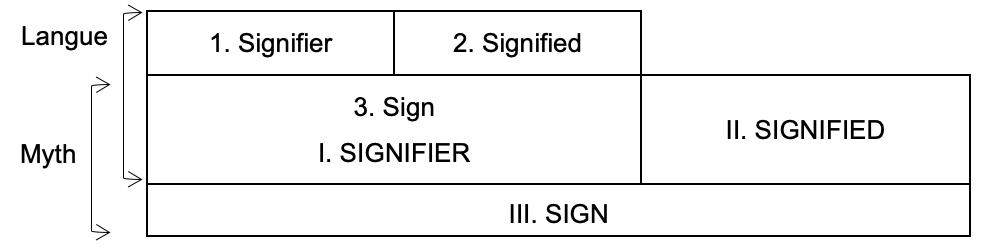
Figure 1. Roland Barthes’s myth model
The initial layer of this model comprises the elements of signifier (1), signified (2) and sign (3). In the context of semiotics, the term signifier can be defined as form, the signified as concept, and the sign as signification (Barthes, 2011, pp. 186-189). The term signified in this layer corresponds to the denotation of the sign, the true meaning of a sign, the direct meaning of what it objectively represents (Aiello, 2006, p. 94). The second layer begins with the transformation of the sign (3) of the first layer into a signifier (I), that is, a connotation (Bouzida, 2015), which expresses the symbolic, associative, cultural, coded, ideological, subjective and emotional meaning of an image (Berger, 2014). The signifier, in the form of a connotation, in this layer comes together with another signified (II) to form a new sign (III), which in turn creates myth. The concept of myth refers to ideological values that are presented, reinforced and naturalized as natural, universal and immutable truths. Myths influence the way society perceives, conceptualizes, thinks and interprets the world as a set of interrelated and triggering concepts (Fiske, 2003). Although the terms ‘myth’ and ‘connotation’ may appear to be synonymous, there is a distinction between the two. Myth can be defined as a narrative that evokes ideological concepts, whereas connotation refers to the ideological meaning attributed to a particular sign (Aiello, 2006). Accordingly, myths function as metanarratives (Barthes, 2011).
A considerable number of studies have been published which utilize semiotic methodology and tools to explore the representation of climate change in the media. These studies have typically focused on visual representations in newspapers (Hasan & Norma, 2015; Kangas, 2019; Habib & Zahra, 2024), NGO campaign posters (Puspita, 2014; Harper, 2014; Suciyanto, 2016; Dallyono & Sukyadi, 2019; br Sitorus et al., 2022; Catellani, 2022) and, less frequently, public communication studies conducted by governments (Geçgel & Karaca, 2023). A number of these studies employ a general set of semiotic concepts as opposed to drawing upon the specific contributions of semiotic theorists within their methodological approach (Harper, 2014; Geçgel & Karaca, 2023). Conversely, some of them employ diverse sets of concepts from multiple semiotic methodology theorists: Saussure (Puspita, 2014), Peirce (Suciyanto, 2016), Kress and van Leeuwen (br Sitorus et al., 2022; Hasan & Norma, 2015; Habib & Zahra, 2024), Bezemer and Kressin (Dallyono & Sukyadi, 2019). As with the present study, there are few others that employ Barthes’ semiotic methodology and concept set. Manzo (2010) analyzed a number of images from five climate action campaigns in the UK between 2007 and 2008, although the exact number of images analyzed is unclear. In a notable study, Bürge (2020) analyzed six random posters with the theme of global warming. Concurrently, Benjaminsen (2021) undertook an analysis of three iconic images, encompassing cracked soil, fence-line contrasts, and satellite images accompanied by colour-coded maps. In a recent study, Habib and Zahra (2024) analyzed thirteen representations of climate change-induced flooding, particularly in Pakistan, published in two monthly issues of Time Magazine in 2022. These studies generally categorized the indicators thematically or analyzed them in a condensed, summary format. As is apparent, the majority of these studies impose restrictions on the data set to be analyzed, and consequently, this study is also subject to a limitation.
A detailed examination of the nine posters was not deemed a viable option due to the constraints of time and word limitations, the potential for repetition, the risk of data overload and confusion, the possibility of overlooking details and compromising the quality of the analysis, and the inability to conduct an in-depth examination. Instead, recurring themes were identified across the nine posters, and four of them, which were deemed to have high representational adequacy, were subjected to a more comprehensive analysis.
Results and Discussion
When 9 posters of the Ministry were analyzed, it was revealed that the posters had recurrent myth themes: The myth of anthropocene, the myth of environmental catastrophism and the myth of sustainability. The posters were analyzed under these headings within the scope of the slogan, sub-heading and visual elements components of the posters by using the concept set of the signifier, signified, sign, denotation, connotation and myth in Barthes’ model. Since the slogan was analyzed in Section 3.1, the subsequent analyses will focus mainly on the textual indicators of the other parts of the textual indicators of the posters that function as adverbial complements in the sentence.
The myth of anthropocene
The discussion under this heading seeks to answer the first research question, which is what the main message of the posters is. Although four posters are analyzed due to limitations, the slogan to be analyzed here constitutes the main message of the communication since it is repeated in 9 posters and preferred as a hashtag #İklimDeğişmedenBizDeğişelim i.e. ‘Let us change before the climate changes’) in social media accounts.
| Sign | Signifier | Signified |
|---|---|---|
| Biz değişelim i.e. Let’s change (independent clause) | Text Pronoun: ‘Biz’ (i.e. us) Verb: ‘değiş’ (i.e. change) Suffix: -elim (like let’s) |
A call for people to change their lifestyles and behaviour, act together, share responsibility and cooperate on climate change, call-to-action |
| Visual Capital, bold, sans serif, centred, modern and easily readable font, placed at the top of the poster |
Seriousness, importance, urgency, priority | |
| İklim değişmeden i.e. Before the climate changes (dependent clause) | Text Object: ‘İklim’ (i.e. climate) Verb: ‘değiş’ (i.e. change) Time suffix: ‘-meden’ (i.e. before) |
The critical time when the potential negative impacts of climate change and related disasters have not yet emerged |
| Visual Capital letters, thin, sans serif, centred, modern and easily readable font, placed at the top of the poster |
Hierarchically, the secondary importance of ‘time’ (from the independent clause) vis-à-vis ‘action’ |
Connotation of the slogan: The slogan is based on the connotation of collective action. By using the language of ‘we’, a call for collective action is made between the Ministry and the target audience. Since the impact of individual actions on climate change is not measurable and can be ignored due to their small size, the collective results of actions and the necessity for large-scale change (Banks, 2013) are emphasized. However, the pronoun ‘we’ implies both that individuals can effect change in themselves and that this change can affect society, so it can in fact be linked to the connotation that individual action will create collective change. Accordingly, if individuals adopted an ethic of environmental sensitivity in their actions, they would have the collective power to prevent climate change. To emphasize this argument, the Ministry has elected to use the pronoun ‘we’ to highlight the necessity for unity which reiterates the need for collective action throughout the duration of the campaign. These findings overlap with one of the few studies on public environmental communication, which analyses a public service announcement of the German Federal Ministry of Environment. This study similarly emphasizes the construction of meanings such as collective responsibility, unity, cooperation and joint decision-making, and argues that climate protection is only possible through joint action (Geçgel & Karaca, 2023). These connotations are fed by the universal culture in which environmental behaviour is perceived as a global common responsibility shared by all people in our age (Lowe et al., 2006). This indicates that the target audience is positioned as active actors, as individuals who care about their environment and take action to protect it, who are actively involved in addressing climate change, who respond to these challenges as part of the solution, and who take on a shared ethical responsibility within a collective moral framework (Dallyono & Sukyadi, 2019; br Sitorus et. al., 2022). In this regard, with the acceptance of the threat of climate change, mechanisms such as governments and non-governmental organizations are known to carry out public communication activities by planning personal responsibility campaigns targeting individuals and households (Kent, 2009). The personification of the climate change issue is a common messaging strategy in climate change communication (Smith & Joffe, 2009; O'Neill, 2013). In a literal sense, responsibility is attributed to individuals and the structures that facilitate industrial growth and consumerist behaviour, while the underlying causes of climate change, namely these very structures, are overlooked. A compelling and optimistic narrative is constructed, positing that individual change and choice can save the world. While it advocates for the prevention of climate change as a proactive measure within an optimistic paradigm, it lacks a clear message regarding the specific actions that should be taken to achieve this goal. There is no concrete proposal, such as the protection of green areas, reduced consumption, the utilization of sustainable energy sources, energy saving, and so forth. Research shows that there is a decline in personal interest and sense of responsibility for climate change and that taking action is positively correlated with education, information and finances (Connelly, 2020). However, in this campaign of the Ministry, it is seen that a communication is established on the hidden assumption that the society is aware of this issue and that it is educationally and financially mature. Therefore, it can be said that a paradigm for communication with different social groups has not been determined; on the contrary, society is treated as a homogenous entity.
Mythological analysis of the slogan: The slogan and the entire campaign are constructed within the ideological context of the anthropocene myth, in which the term ‘anthropocene’ is derived from the Greek word ‘anthropos’, meaning ‘human’. This myth posits that the human species has become a geological force and is therefore responsible for climate change (Rickard, 2015). The human-dominated geological period that began at the end of the eighteenth century is called The Anthropocene Epoch (Zalasiewicz et al., 2011; Crutzen, 2016; Ievdokymov, 2018). This concept is dichotomous, comprising both an accusation against humanity as well as a call to responsibility and action (Lepori, 2015). Media discourses such as this poster, which employs the second meaning, exemplify the repositioning of human beings as the driving force of change in the world (Yusoff & Gabrys, 2011). Therefore, while the question of who developed the technologies that led to The Anthropocene Epoch, who used them, who benefited or suffered from them and, most crucially, who was excluded from this process remains unanswered, and the necessity to accept accountability for climate change is eclipsed by the universalization of history and responsibility (Lepori, 2015). Furthermore, the choice of names such as ‘westernocene’ (San Román & Molinero-Gerbeau, 2023), which emphasises the historical and systemic responsibility of the West, or ‘capitalocene’ or ‘econocene’, which emphasises the responsibility of the economic paradigm, enables the blame and responsibility to be shifted directly to capitalism or the global economic system, rather than a vague accusation of humanity (Chakrabarty, 2018). In this way, the ideological meaning of this poster attributes to all humanity the consequences of the Enlightenment’s ideas of humanity, progress, growth and development and its actions in favour of the few. Conversely, in some parts of the world, those engaged in agriculture and animal husbandry or living in slums are responsible for ecological destruction or over-exploitation of the planet, to varying degrees, in comparison to others (Baskin, 2015). The Ministry’s slogan places a universal human community at the centre of climate change and assigns responsibility to it. It does not refer to the connection of climate change to the economic system in the country or to the producers of the main actions that cause it. Nevertheless, it also positions the ‘human’ as superior in the relationship, once more in relation to colonial attitudes towards the ‘liberation’ of nature (Harper, 2014).
The myth of environmental catastrophism
This title examines the textual, visual, and ideological message strategies of the myth of environmental catastrophism, which is reiterated as the primary message across all five posters. For this reason, this title is intended to address the second, third, and fourth research questions.
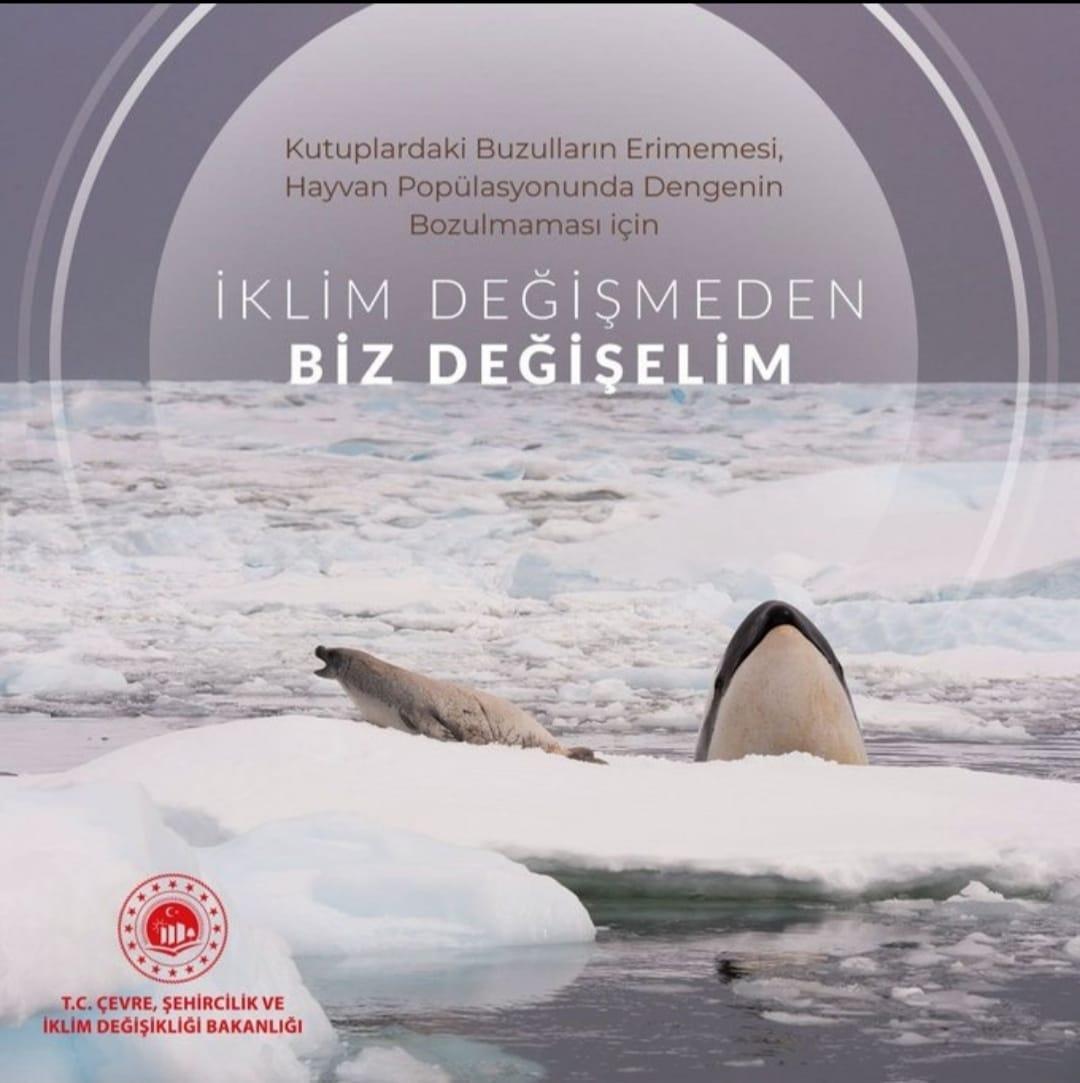
Figure 1. “Let’s change before climate changes”3
| Sign | Signifier | Signified |
|---|---|---|
| Text ‘Kutuplardaki buzulların erimemesi, hayvan popülasyonunda dengenin bozulmaması için’ (i.e. so that the polar ice caps do not melt and the balance in the animal population is not disturbed) |
Text Words: Polar ice, melt, balance, animal population, disturbed Negation suffix: me/ma (i.e., 'not') |
To evoke in the minds of the target audience an image in which the vast polar ice sheets remain intact, thus sustaining the existence of a wide variety of polar animals |
| Visual Thin, sans serif, centred, brown colour, smaller than the slogan, positioned above the slogan, first letter of each word capitalised (A similar design is observed in other posters, and thus the same ones will not be repeated in the subsequent visual analysis; only the different ones will be interpreted.) |
Second in importance compared to the slogan | |
| Visual Water Glaciers Seal Whale Grey |
Melted glaciers and grey water up to the horizon A seal on a melted ice floe, closer to the target audience and positioned just to the left in front of the whale, facing left, with its mouth open and appearing to call out A whale close to the target audience, facing towards it, mouth open, further to the right, with its head sticking out of the ocean water mixed with melted glacier ice |
Recalling typical images of global warming Symbol of threatened polar animals Species in need of human help Sadness, melancholy, loneliness, helplessness, vulnerability, urgency |
Connotation of poster 1: The poster generally carries the connotation that climate change threatens the ecosystem. Climate change is changing the physical environments in ecosystems, which affects organisms in ecosystems in many ways, from how they grow to how they behave (Climate Change Impacts on Ecosystems..., 2024). The polar ecosystem is also experiencing some of the strongest climate changes in physical terms (Robinson 2022); in particular, it is losing a lot of glaciers due to warming, which poses a threat to ice-dependent species (Gilg et al., 2012). The poster also focuses on this problem, symbolizing melting ice floes (Carey, 2007) and sad/desperate polar animals as classic images of the reality of climate change (Moreno-Tarín et al., 2021). Images of melting ice, including icebergs, glaciers, and photographs of polar regions, are a dominant element in public discourse on climate change (Greyson, 2010). Photographic evidence of retreating glaciers and melting polar ice caps reflect both the scale and speed of the climate change problem (Smith & Joffe, 2009). While images of melting glaciers as symbols of climate change signify a fragile world, at the same time, through photography, the real is transformed into the recorded and clearly documented, or in Barthes’ words, ‘what has been’ (Doyle, 2007). In this poster, while images of other species are preferred over the conventional polar bear image which typically illustrates the vulnerability of the ecosystem in the polar regions, the referential system is structured in a similar manner. Just as polar bears, which are the dominant element in the public discourse of climate change (Hansen & Machin, 2008; Owen & Swaisgood, 2008), are condemned to a limited life as boundary objects on the edge of melting glaciers (Born, 2019), isolated and defenseless and in danger, whales and seals are endowed with the same ideological meanings here. It is known that iconic and charismatic animal signs identified with the polar region, such as polar bears, whales, penguins, seals, etc., which are shown under destruction and threat, are preferred because they enable the public to emotionally connect with the situation and are effective in evoking their reaction (Greyson, 2010). As emphasized in another study, facial expressions of polar animals play a key role within the system of signs by facilitating emotional communication with the target audience. Through these expressions, meanings such as seeking help, vulnerability, and resilience are constructed (Habib & Zahra, 2024). It is stated that this helps humanity to be empathically motivated, eliciting public sympathy through a broad narrative that reminds audiences of their own existential threats, while simultaneously fostering a sense of pity and guilt for being complicit in this crisis (Huggan, 2015). This suggests an affective stance, as viewers are prompted to respond emotionally, with images leveraging human emotions to convey climate risk (Dallyono & Sukyadi, 2019; Hasan & Norma, 2015). Such media representations therefore serve to persuade the target audience to pay more attention to environmental issues and habitats, such as saving animals from extinction (Puspita, 2014). However, such signs can increase awareness of climate change, but they can also hinder the understanding of the human dimensions of the crisis, the imagining of solutions, and the imagining of an image in which the world is not heading towards inevitable doom (Dunaway, 2009).

Figure 2. “Let’s change before climate change”4
| Sign | Signifier | Signified |
|---|---|---|
| Text ‘İklim değişikliğine bağlı zorunlu göçlerle kimsenin yerinden yurdundan olmaması için’ (i.e. To ensure that no one is displaced by forced migration due to climate change) |
Text Words: No one, displaced, forced, migration Textual negativity: olmaması (i.e. to ensure that no one is...) |
Imagining a dark future in which people will be forced to leave their habitats |
| Visual Brown in colour |
Pessimism | |
| Visual Sunset Storks Earth People Burdens Soil Orange and yellow |
A sunrise, indicating the moment when the sun appears above the horizon Silhouetted earth, people, storks, burdens and soil Sunset colours |
The possibility of a dystopian world where people are forced to leave their homes, just as storks migrate at sunrise to survive climate change, People lined up one after the other, continuity A world where people are forced to leave their places of residence regardless of gender, age or status |
Connotation of poster 2: The poster ideologically constructs the connotation that climate migration and thus climate refugees will occur because of drought, flood, sea level rise, desertification, extreme temperatures, forest fires, food crisis, water scarcity and similar natural disasters caused by climate changes through the fear factor. Ecological refugees (Brown et. al., 1976) or environmental refugees are defined as displaced people who are forced to leave (or voluntarily leave) their original habitat to protect themselves from harm and/or to seek a better quality of life (Hinnawi, 1985, p. 4). There are projections that 200 million people (Myers, 2002; Miller, 2017) or even more (Leal-Arcas, 2012) will be displaced by 2050 due to climate change. It is also considered that such numbers are not scientifically sound, leading to ignore the impact of social, economic, political and political structures, and in many cases used as a manipulative tool to influence the political agenda (Jakobeit & Methmann, 2012). Furthermore, it is asserted that the policies developed at the international level on this issue are predicated on a fallacious narrative that includes the assumption that climate change is a significant driver of global migration and, accordingly, it anticipates a substantial number of climate refugees, despite the absence of corroborating evidence (Boas et al., 2019). However, media representations frequently portray members of communities experiencing the impacts of climate change as key figures who emphasize the urgency and seriousness of the problem through the situations they face (Smith & Joffe, 2009). As demonstrated in semiotic analyses of climate change communication in the media, messages suggesting that people will be forced to leave their homes due to inadequate shelter, loss of livelihoods, famine, natural disasters, displacement, and poverty (Harper, 2014; Suciyanto, 2016; Habib & Zahra, 2024) construct the idea of climate change as a threat to the notion of “home” itself (Smith & Joffe, 2009). In this context, it can be argued that the choice of words (e.g., forced, migration, and displacement) and the visual elements symbolizing migration (e.g., the stork, burdens, and sunset (?)) collectively construct the discourse surrounding World Climate Day. This discourse can be seen as a means of influencing the political agenda against the risk of migration that will occur because of climate change.
It is important to note that the discourse does not address the structural problems that contribute to migration; instead, it assigns responsibility to the public. In the media, climate refugees are often portrayed either as victims or as security threats (Venkataraman, 2018). In terms of victimization, this catastrophic narrative about climate change may be salient; however, it may limit the ability of people in Türkiye to connect with the issue, as such experiences remain distant from their local realities. Given that large-scale climate-induced migration is not currently a familiar experience for Turkish citizens, the poster frames victimization primarily through imagery associated with poorer or less developed countries. In this context, the use of the word ‘nobody’ in the poster can be interpreted as a reference to an anonymous and uncertain foreign other.
In parallel, when the photographic depiction of the poster is analyzed, displacement is observed, since it is difficult to identify the crowd, it is not clear how many people it consists of, and it is not possible to determine where they come from and where they go (Høeg & Tulloch, 2019). In terms of security threats, it can be posited that the emphasis is laid on the potential for migration to Türkiye rather than on the Turkish population. More precisely, it appears to be a reference to the potential for a global migration crisis. It is established that individuals are more likely to engage with messages on posters that consider their personal reference points, including their values, attitudes, beliefs, experiences and local environment (O’Neill & Nicholson-Cole, 2009). Although arresting, startling, attention-getting, amazing, uplifting, upsetting and even shocking images used in posters have the potential to create awareness and encourage action by making the abstract concrete, they can also paralyze and demobilize (O’Neill, 2013). The discrepancy between the images presented by the media and the lived experience can give rise to a phenomenon known as ‘climate change fatigue’; this sense of distance can erode trust in both the media and the scientific community (Wang et al., 2017).
Myth analysis of poster 1 and 2: Climate change itself is the most generic name for global ecological catastrophe, and there are many predictions of catastrophe associated with it. These include many ecological disasters such as global warming, forest fires5 and desertification6 which are found in the two posters of the Ministry analyzed under this heading, including melting of glaciers, rising sea water, extinction of polar animals, increase in ecological migrations, and in the other three posters. The five posters designed by the Ministry employed more standardized and generalized visual representations, eschewing the depiction of actual events or locations common for the other forms of media representation (Hasan & Norma, 2015). In the analyzed posters, including those depicting other disasters such as wildfires and droughts, there is an evident presence of apocalyptic scenarios that reflect the prevailing tones of contemporary climate discourse (Manzo, 2010). It is acknowledged that such negative representations of climate impacts dominate the media (O’Neill & Smith, 2014; Kangas, 2019). The myth of environmental catastrophism was previously employed by right-wing discourse to discredit, ascribe blame to, and impede the efforts of activists who warned people about environmental dangers. It was subsequently adopted as a pejorative term in left-wing discourse (Angus, 2013). Currently, however, it is recognized and described in the language of alarmism in numerous instances through appeals to fear in public discourse (O’Neill & Nicholson-Cole, 2009). The posters convey a sense of impending disaster and serve to reinforce the idea of the need for urgent intervention.
In semiotic analyses of climate communication, the messages that time is essential, that immediate action is required and that irreversible dangerous consequences will be encountered in case of delay are of particular interest. In these analyses, the emphasis on urgency emerges as a prominent theme (Bürge, 2020; Habib & Zahra, 2024; Suciyanto, 2016). However, it has been argued that messages concerning the potential for a climate catastrophe are perceived as inconsequential and ineffective due to their frequent reiteration in mainstream media outlets (Romm, 2012). Concurrently, it is also argued that the myth of ecological catastrophism, which is predicated on the appeal of fear, has the potential to instigate eco-anxiety (Jones, 2023). It has been observed that there has been an increase in the level of concern about the potential for future disasters resulting from climate change, particularly in recent times (Pearson, 2024): A global survey conducted in 2021 revealed that over half of individuals within the 16-25 age bracket experienced negative emotional responses to climate change, including feelings of sadness, anxiety and powerlessness. It is established that CO₂ emissions must be reduced by 90% to avert climate change catastrophes. However, as capitalism has evolved in conjunction with oil, coal and natural gas, it has become dependent on them and organized the world accordingly. This has resulted in a state of deadlock within the system (Williams, 2010). Because of this intrinsic feature of the capitalist economy, the implementation of sustainable environmental policies is rendered challenging. Transformation journalists and academics posit that global ecological disasters are an inevitable consequence of an environment in which global economic, political and social institutions remain untransformed (Barkdull & Harris, 2014).
The myth of sustainability
This title examines the textual, visual and ideological message strategies of the myth of sustainability which is reiterated as the primary message across all four posters. For this reason, this title is intended to question the second, third and fourth research questions.
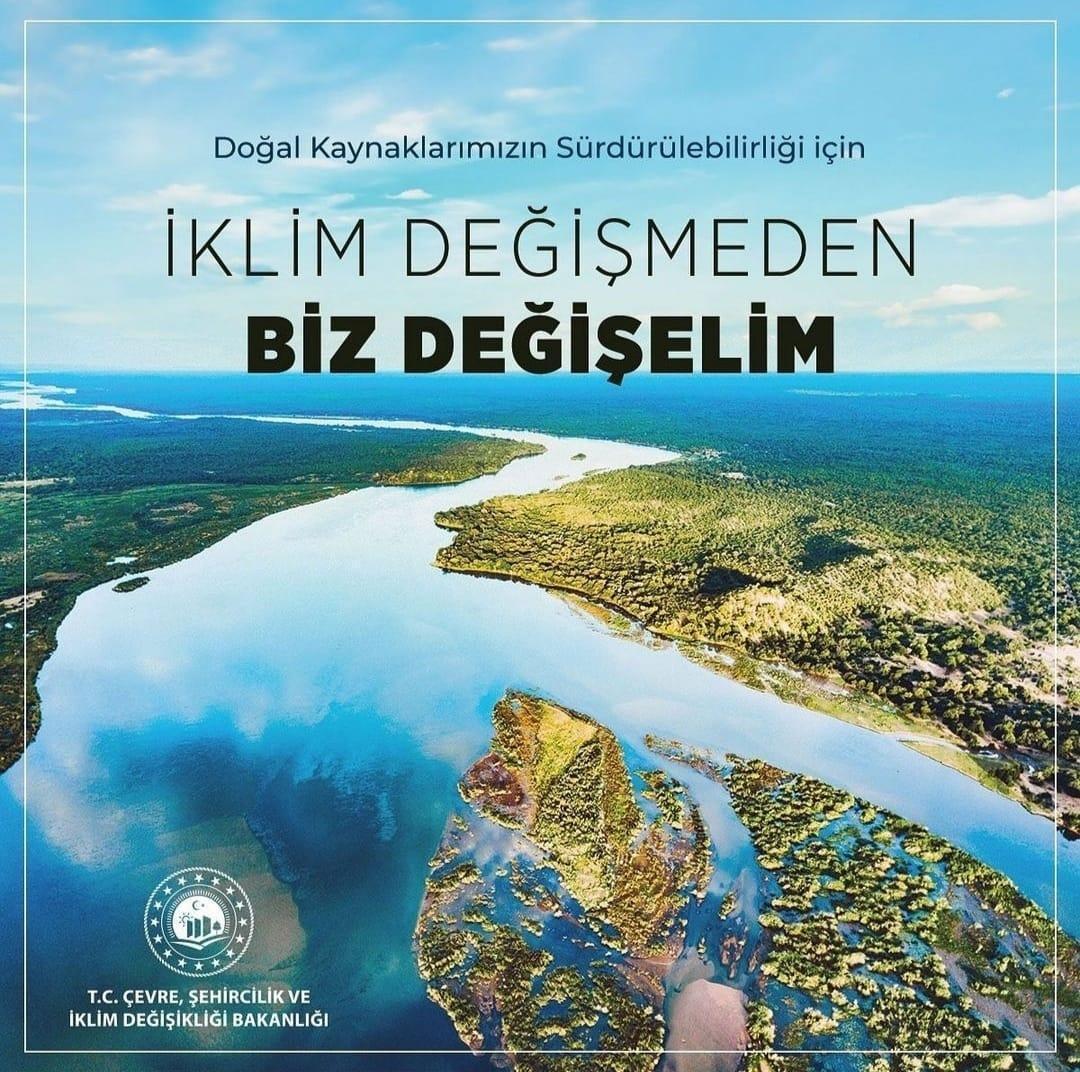
Figure 3. “Let’s change before climate change”7
| Sign | Signifier | Signified |
|---|---|---|
| Text ‘Doğal kaynaklarımızın sürdürülebilirliği için’ (i.e. For the sustainability of our natural resources) |
Textual Words: Natural, resources, sustainability. Possessive suffix: -mızın (like our) |
‘Natural resources’ - evocation of substances such as air, plants, water, minerals and soil The necessity of maintaining the current situation Human responsibility for the future sustainability of natural resources, which are finite and belong to humans |
| Visual A shade of blue that harmonizes with the sky |
An organic part of nature, positive associations, naturalisation | |
| Visual A wide valley A meander A reflection of the sky on the surface of the river The sky itself Blue and green |
A wide valley formed by the reaching of the base level of an arcuate bed A meander formed by the bends made by the river in the wide valley floor due to the decrease in slope A reflection of the sky on the surface of the river |
An unspoilt and habitable environment, abundance of air, water and vegetation, a balanced environmental system, interdependence of unpolluted and productive resources, biodiversity, sustainability of the environment |
Connotation of poster 3: The poster employs the connotation of ownership of natural resources. The question of who owns natural resources is a highly contentious one. Depending on the context, a variety of entities have been proposed as the rightful owners of these resources, including individuals, institutions, communities, societies, countries, humanity, and even nature itself (Armstrong, 2017). The use of the Turkish phrase “our natural resources” in the first-person plural by an official public institution in Türkiye indicates that the poster directly associates the State of the Republic of Türkiye and its citizens with ownership of natural resources. The visuals in the poster suggest that river waters and agricultural lands are state-owned and that this ownership is shared with the public, as evidenced by the emphasis on “us” in the discourse. This is in accordance with Article 56 of the Constitution of the Republic of Türkiye, which states that it is the duty of the state and citizens to improve the environment, protect environmental health and prevent environmental pollution. Nevertheless, this poster also exemplifies the type of state ownership that is included in contemporary ownership regimes, where the state is the primary official owner of natural resources in almost all nation-states around the world (Marchack, 1998). Article 168 of the Constitution definitively establishes state ownership of natural wealth and resources. It stipulates that these assets are under the sovereignty and control of the state, and that the state has the exclusive right to explore and exploit them. However, the state may, at its discretion, transfer this right to other entities, including legal persons, for a specified period.
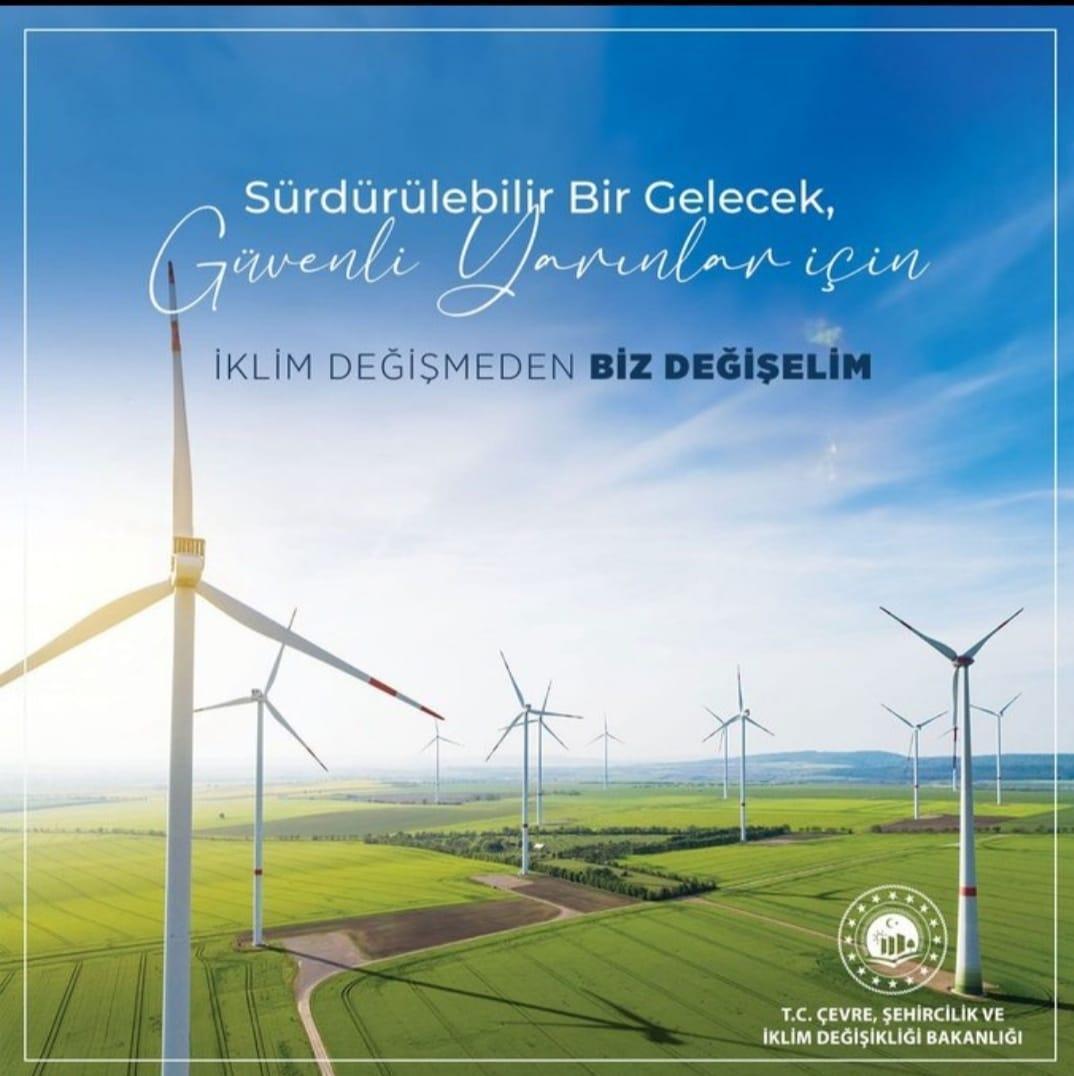
Figure 4. “Let’s change before climate change”8
| Sign | Signifier | Signified |
|---|---|---|
| Text ‘Sürdürülebilir gelecek, güvenli yarınlar için’ (i.e. For a sustainable future, for a safe tomorrow) |
Textual Words: Sustainable, future, safe, tomorrow Words with the meaning of future: ‘gelecek’ (i.e. future) and ‘yarınlar’ (i.e. tomorrows). |
The efficient and responsible use of the world’s natural resources to meet the needs of present and future generations, the need to make changes today for the future, and the long-term historical and collective benefit |
| Visual First line normal and second line italic The letters G and Y are capitalised more than other letters |
Dilution of the formal tone of handwritten communication, rejuvenation, emotional and sincere tone | |
| Visual Wind turbines Plains Montains Sky Nature colours |
Wind turbines, which convert the energy created by the power of the wind into mechanical energy A landscape comprising plains, mountains and sky |
Fertile soils and weather conditions can produce energy by protecting nature, energy obtained from natural resources can prevent climate change and ensure the continuity of the current state of the environment, clean, renewable and sustainable nature resource, wind can be converted into energy with the support of technology, protection of green areas and clean air is possible with renewable energy, ecosystem will be protected with environmentally friendly applications of technology |
Connotation of poster 4: The poster’s central premise is that renewable energy is a natural and limitless resource, and that transitioning to this energy system will safeguard the ecosystem and the future of humanity. It is widely acknowledged that the rapid growth of urban populations, the surge in energy consumption, the unsustainability of fossil fuels and the emission of greenhouse gases have collectively precipitated a raft of significant environmental challenges, compelling governments, international organizations, stakeholders and individuals to explore the potential of renewable energy sources (Olabi & Abdelkareem, 2022). The term ‘renewable energy resource’ is used to describe natural resources that can replenish themselves without any risk of depletion (Owusu & Asumadu-Sarkodie, 2016). Renewable energy employs renewable natural resources, including biomass, wind, solar, tidal, and geothermal energy, to enerate electricity and heat without emitting greenhouse gases (Kaygusuz, 2015). It is currently estimated that 17% of global energy is derived from renewable sources (Why the world must join forces to scale renewable energy..., 2024). Wind energy is one of the renewable energy types that has been in development since the 1970s (Chang et al., 2021). It has the potential to play a pivotal role in mitigating climate change. It was in the 2000s (Pryor Barthelmie, 2010) that it began to develop rapidly in recent years and has since been recognized as one of the most promising and applicable energy sources (Liu & Barlow, 2017). Concurrently, there has been a notable increase in media discourse on wind energy since 1990 (Stephens et. al., 2009). Visuals of sustainable technologies, such as wind turbines, stand in contrast to depictions of unsustainable technologies like fossil fuel factories and smokestacks (as illustrated in one of the visuals from the Ministry’s analyzed campaign9). As in Hasan and Norma’s (2015) analysis, these representations construct a mental dichotomy of ‘foe and friend’, symbolizing conflict and choice. As observed by Kangas (2019) in newspaper visuals, the role of color in representing clean technology is also evident in this poster, where wind turbines appear as a natural part of the environment, blending aesthetically into the light, spacious landscape with a blue sky and white clouds, evoking the feel of a watercolor painting. However, renewable energy technologies are predicated on the assumption that there are infinite minerals in nature and are produced through toxic mining activities. In the case of wind energy, for instance, a single wind turbine contains 500 kg of nickel, which requires 100 tons of steelmaking coal to refine. Furthermore, an onshore wind farm necessitates the use of nine times more minerals than an equivalent gas-fired power plant (Nikiforuk, 2023). Furthermore, there are arguments that wind farms require an excessive amount of land and pose a threat to birds, including endangered species (Bradley, 1997). The poster eschews engagement with these debates by employing visual representations of wind turbines and associating a sustainable future with them.
Myth analysis of Poster 3 and 4: The prevention of climate change is a policy objective that is broadly supported at the national and global levels. The notion of sustainability is predicated upon the concept of sustainability as outlined in the 1987 report of the World Commission on Environment and Development. The report, entitled Our Common Future, examines the global common future through the lens of sustainable energy resources in a social, economic, and environmental context (WCED, 1987). Accordingly, sustainable development is defined as development that meets the needs of the present without compromising the ability of future generations to meet their needs (Elum & Momodu, 2017, p. 74). Therefore, the goal of sustainable development is fixed to the future, and this meaning is constructed in the posters. The two examples presented in the Ministry’s poster illustrate two distinct but related aspects of this objective. The first example demonstrates the sustainability of natural resources in general, while the second example illustrates a technology that can be used for this purpose. In the remaining two posters that reiterate the concept of sustainability, the referential system is founded upon the sustainability of natural resources, namely water, forests, and air.10 Consistent with this finding, other studies focusing on media representations of climate change in the literature similarly highlight how the issue is framed in terms of increasing the risk of extinction or harm to future generations (Suciyanto, 2016), setting future years as targets in public communication (Geçgel & Karaca, 2023), and emphasizing the importance of protecting the environment for the benefit of those future generations (br Sitorus et al., 2022). In line with Kangas’s (2019) analysis, these posters also frame climate change as a large-scale technological issue, reflecting and reinforcing a technological approach to the problem.
However, the concept of sustainable development is a modern myth that is perceived as an unattainable ideal, particularly considering the world’s growing population. Firstly, it presents a vision of a future society that is environmentally, ethically and economically balanced and equitable. Secondly, it situates itself within a clearly identifiable historical context, namely the 1960s and beyond. Thirdly, it creates its own terminology and narrative, including concepts such as renewable energy and carbon footprint, as well as literature that documents environmental disasters and issues such as the health effects of air pollution (Walker, 2007). Furthermore, as an oxymoron, the term provides an ideological foundation for green capitalism, encompassing both economic growth and the preservation of finite resources (Cock, 2011). Notably, this sustainability discourse incorporates cosmetic environmentalism, which refers to actions aimed at appeasing the public’s mounting concerns about environmental issues through superficial and symbolic measures (Robinson, 2004).
Conclusion, Limitations and Future Research
In this article, the posters published by the T.C. Ministry of Environment, Urbanization and Climate Change for World Climate Day on 15 May 2024 are analyzed with Roland Barthes’ concept set using semiotic method. The article focuses on the visual, verbal, and ideological strategies of the posters. It is seen that three themes are repeated in the analysis: Anthropocene myth, the environmental catastrophism myth and the sustainability myth. According to the results, the common slogan ‘Let’s Change Before the Climate Changes’ emphasizes the importance of individual measures as the potential danger of the climate crisis has not yet materialized. The message intended to be conveyed with the slogan focuses on the importance of collective change and action in preventing the climate crisis. By using elements such as the melting of glaciers and climate-induced forced migration, the posters place the overall responsibility for saving the world from the climate crisis and environmental problems on individuals within the framework of fear appeal. However, within the scope of the sustainability myth used by the posters, processes such as environmental policies and the protection of natural resources are not solely the responsibility of individuals; they require the cooperation of governments, the private sector, and international organizations. It is seen that the posters analyzed primarily focus on individual change in raising awareness about the climate crisis. In addition, it is noteworthy that the fact that capitalist economic policies accelerate ecological disasters is ignored in the posters in addressing the climate crisis and proposing solutions. The posters do not refer to the destructive effects of economic systems, government policies and production processes underlying the climate crisis.
The present research methodology is constrained by its focus on a single country (Türkiye), a specific public institution (the Ministry of Environment, Urbanization and Climate Change), a specific date (World Climate Day on 15 May 2024), and a specific type of media text (poster). Moreover, it is methodologically constrained to semiotics. The context of a specific country and institution may limit the generalizability of its findings. This limitation is significant not only in terms of the sample, but also in terms of the manner in which climate change communication is conceptualized as a form of public communication at the semiotic level. It is evident that forms of public discourse, political paradigms, societal values, institutional norms, and media practices are frequently profoundly entrenched within the specific contexts of individual nations. Consequently, the extent to which the findings can be considered valid across different cultural environments remains a subject of debate. While this limitation does not compromise the validity of the study’s results, it does demand a more nuanced and context-sensitive interpretation and application. It is therefore recommended that future studies employ designs of a similar nature in a range of geographical settings in order to enhance the robustness and transferability of the findings.
Further research could also employ multidimensional analysis, encompassing the communication activities of other public institutions, and conducting a comparative analysis of public communication activities across different countries on climate communication. Furthermore, it is suggested that the present analysis serve as a point of departure for future research endeavours. Such endeavours could involve the employment of quantitative methodologies for the purpose of examining the communication activities of the relevant ministry. This examination could be facilitated by the utilization of large-scale data sets. Additionally, future studies could benefit from incorporating focus groups or in-depth interviews to evaluate how such visual materials are perceived and interpreted by different audiences, thereby complementing the semiotic analysis with audience-based insights.
Footnotes
1See: https://www.instagram.com/cevre_sehircilik_bakanligi/
2See: https://x.com/csbgovtr?t=rnSOmeM-PvA-j2sK031Vrg&s=09
3See: https://x.com/csbgovtr/status/1790790965294416119?t=k6DoabjrkapCyMJwyd30KA&s=19
4See: https://x.com/csbgovtr/status/1790789961819570613?t=gkl22pNFPstmChQQ0pNRWw&s=19
5 See: https://www.instagram.com/p/C6_yYs6NCvk/?utm_source=ig_web_button_share_sheet
6 See: https://www.instagram.com/p/C6_zrxKtDG7/?utm_source=ig_web_button_share_sheet
7See: https://x.com/csbgovtr/status/1790788133908341005?t=dxphoaPJdzPZSiuSuEGPww&s=19
8See: https://x.com/csbgovtr/status/1790790479707025515?t=rix16J9zTN-PTPp-HelT9Q&s=19
9See: https://www.instagram.com/p/C6_ypb3tW-y/?utm_source=ig_web_button_share_sheet
10See: https://www.instagram.com/p/C6_0DA0N_hr/?igsh=cndjY3BsaGtuYWRq; https://www.instagram.com/p/C6_xwnINPTY/?igsh=MXRzeXN6N2R4NTZu
References
Aiello, G. (2006). Theoretical Advances in Critical Visual Analysis: Perception, Ideology, Mythologies, and Social Semiotics. Journal of Visual Literacy, 26(2), 89–102. https://doi.org/10.1080/23796529.2006.11674635
Akarsu, F. (2020). Yeşil, Sürdürebilir Yaşam ve İklim [Green, Sustainable Living, and Climate]. A7 Kitap. (In Turkish).
Aksoy, B. (2023). İklim krizi içerikli afişlerin göstergebilimsel yaklaşımlarla incelenmesi ve uygulamalar [The Analysis of Climate Crisis-Related Posters Using Semiotic Approaches and Applications] [Master’s Thesis]. University of Hacettepe. (In Turkish).
Angus, I. (2013, September 1). The Myth of “Environmental Catastrophism.” Monthly Review. https://monthlyreview.org/articles/myth-environmental-catastrophism/
Armstrong, C. (2017). Natural Resource Ownership (SSRN Scholarly Paper No. 3045687). Social Science Research Network. https://papers.ssrn.com/abstract=3045687
Balay Tuncer, B. (2022). Halkla İlişkilerin Toplumsal Dönüştürücü Rolü Bağlamında Sürdürülebilirlik ve İklim Krizi Üzerine Bir Deneme [An Essay on Sustainability and Climate Crisis in the Context of the Social Transformative Role of Public Relations]. Ahi Evran Üniversitesi Sosyal Bilimler Enstitüsü Dergisi, 8(3), 836–851. https://doi.org/10.31592/aeusbed.1038197 (In Turkish).
Ballantyne, A. G. (2016). Climate change communication: What can we learn from communication theory? WIREs Climate Change, 7(3), 329–344. https://doi.org/10.1002/wcc.392
Banks, M. (2013). Individual Responsibility for Climate Change. The Southern Journal of Philosophy, 51(1), 42–66. https://doi.org/10.1111/sjp.12008
Barkdull, J., & Harris, P. G. (2014). Climate Catastrophe and Transformationalism. Seton Hall Journal of Diplomacy and International Relations, 16, 119.
Barthes, R. (2011). Çağdaş Söylenler [Mythologies] (T. Yücel, Trans.). Metis. (In Turkish).
Baskin, J. (2015). Paradigm Dressed as Epoch: The Ideology of the Anthropocene. Environmental Values, 24(1), 9–29. https://doi.org/10.3197/096327115X14183182353746
Baykal Fide, E. (2022a). Turkish Newspapers Wildfire Coverage During the Summer of 2021. Kent Akademisi, 15(4), 2110–2127. https://doi.org/10.35674/kent.1151956
Baykal Fide, E. (2022b). Turkish press climate crisis coverage (2018–2019): Elements of disconnect in discourses and the representation of solutions. New Perspectives on Turkey, 67, 32–56. https://doi.org/10.1017/npt.2022.8
Benjaminsen, T. A. (2021). Depicting decline: Images and myths in environmental discourse analysis. Landscape Research, 46(2), 211–225. https://doi.org/10.1080/01426397.2020.1737663
Berger, A. A. (2012). Kültür Eleştirisi: Kültürel Kavramlara Giriş [Cultural Criticism: An Introduction to Cultural Concepts] (E. Özgün, Trans.). Pinhan Yayıncılık. (In Turkish).
Boas, I., Farbotko, C., Adams, H., Sterly, H., Bush, S., Van Der Geest, K., Wiegel, H., Ashraf, H., Baldwin, A., Bettini, G., Blondin, S., De Bruijn, M., Durand-Delacre, D., Fröhlich, C., Gioli, G., Guaita, L., Hut, E., Jarawura, F. X., Lamers, M., … Hulme, M. (2019). Climate migration myths. Nature Climate Change, 9(12), 901–903. https://doi.org/10.1038/s41558-019-0633-3
Born, D. (2019). Bearing Witness? Polar Bears as Icons for Climate Change Communication in National Geographic. Environmental Communication, 13(5), 649–663. https://doi.org/10.1080/17524032.2018.1435557
Bostrom, A., Böhm, G., & O’Connor, R. E. (2013). Targeting and tailoring climate change communications. WIREs Climate Change, 4(5), 447–455. https://doi.org/10.1002/wcc.234
Bouzida, F. (2015). Connotation in semiotics according to Roland Barthes approach. International Journal of Scientific and Technology Reseach, 11, 4–9.
Boykoff, M. T., & Boykoff, J. M. (2007). Climate change and journalistic norms: A case-study of US mass-media coverage. Geoforum, 38(6), 1190–1204. https://doi.org/10.1016/j.geoforum.2007.01.008
br Sitorus, S. W., Sinar, S., & Lubis, M. S. (2022). A Multimodal Analysis on Environmental Posters in the Selected Greenpeace Posters Campaign. ELT (English Language Teaching Prima Journal), 4(1), 1–13.
Bradley, R. L. (1998). Renewable Energy: Not Cheap, Not Green? Strategic Planning for Energy and the Environment, 17(3), 15–21. https://doi.org/10.1080/10485236.1998.10530522
Brown, L. R., McGrath, P. L., & Stokes, B. (1976). Twenty-two dimensions of the population problem. Population Reports. Series J, Family Planning Programs, 11, 177–202.
Bürge, Z. E. (2020). Küresel ısınma temalı sosyal afiş tasarımlarının göstergebilim yöntemi ile analizi [Analysis of Social Poster Designs on the Theme of Global Warming Using Semiotics]. IEDSR Association, 7(7), 398–410. https://doi.org/10.46872/pj.132
Carey, M. (2007). The History of Ice: How Glaciers Became an Endangered Species. Environmental History, 12(3), 497–527. https://doi.org/10.1093/envhis/12.3.497
Carvalho, A., & Burgess, J. (2005). Cultural Circuits of Climate Change in U.K. Broadsheet Newspapers, 1985–2003. Risk Analysis, 25(6), 1457–1469. https://doi.org/10.1111/j.1539-6924.2005.00692.x
Catellani, A. (2022). Semiotic analysis of environmental communication campaigns. In G. Gonçalves & E. Oliveira (Eds.), The Routledge Handbook of Nonprofit Communication (pp. 224–234). Routledge.
Çetin, S. (2022). Yeşil düşünce, yeşil siyaset ve çevre iletişimi [Green Thinking, Green Politics, and Environmental Communication]. Ütopya Yayıncılık. (In Turkish).
Chakrabarty, D. (2018). Anthropocene time. History and Theory, 57(1), 5–32. https://doi.org/10.1111/hith.12044
Chang, V., Chen, Y., (Justin) Zhang, Z., Xu, Q. A., Baudier, P., & Liu, B. S. C. (2021). The market challenge of wind turbine industry-renewable energy in PR China and Germany. Technological Forecasting and Social Change, 166, 120631. https://doi.org/10.1016/j.techfore.2021.120631
Climate Change Impacts on Ecosystems. (2024, July 17). Environmental Protection Agency (EPA). https://www.epa.gov/climateimpacts/climate-change-impacts-ecosystems
Çoban Keneş, H. (2024). İklim Krizinin Medyada Ele Alınışı: Akademik Eğilimlerin ve Çalışmaların Bibliyografik Analizi [Coverage of the Climate Crisis in the Media: A Bibliographic Analysis of Academic Trends and Studies]. Kültür ve İletişim, 27(54), 221–257. https://doi.org/10.18691/kulturveiletisim.1522634 (In Turkish).
Cock, J. (2011). Green capitalism or environmental justice: A critique of the sustainability discourse. Focus, 63, 45–51.
Cole, J. C., Gillis, A. J., Van Der Linden, S., Cohen, M. A., & Vandenbergh, M. P. (2025). Social Psychological Perspectives on Political Polarization: Insights and Implications for Climate Change. Perspectives on Psychological Science, 20(1), 115–141. https://doi.org/10.1177/17456916231186409
Connelly, J. (2020). Moral Action, Collective Action, and Responsibility for Climate Change. Marmara Üniversitesi Avrupa Topluluğu Enstitüsü Avrupa Araştırmaları Dergisi, 28(2), 203–219. https://doi.org/10.29228/mjes.2
Cook, J., Nuccitelli, D., Green, S. A., Richardson, M., Winkler, B., Painting, R., Way, R., Jacobs, P., & Skuce, A. (2013). Quantifying the consensus on anthropogenic global warming in the scientific literature. Environmental Research Letters, 8(2), 024024. https://doi.org/10.1088/1748-9326/8/2/024024
Cresswell, J. W. (2023). Nitel Araştırma Yöntemleri: Beş Yaklaşıma Göre Nitel Araştırma ve Araştırma Deseni [Qualitative Research Methods: Qualitative Research and Research Design According to Five Approaches] (S. B. Demir & M. Bütün, Trans.). Siyasal Kitapevi. (In Turkish).
Dallyono, R., & Sukyadi, D. (2019). An analysis of multimodal resources in environmental protection posters. Indonesian Journal of Applied Linguistics, 9(2). https://doi.org/10.17509/ijal.v9i2.20245
Demircan, M., Turan, N., Arabacı, H., Coşkun, M., Türkoğlu, N., & Çiçek, İ. (2016). Gündem belirleme modeline göre yazılı basındaki iklim değişikliği haber ve köşe yazılarının analizi [Analysis of Climate Change News and Opinion Pieces in the Print Media According to the Agenda-Setting Model]. TÜCAUM Uluslararası Coğrafya Sempozyumu, 13, 13-14. (In Turkish).
Denisova, A. (2025). Ten News Values for Climate Communication: From ‘Crisisation’ to Attribution, Emotional Offsets, Pragmatic Instructions and Punchy Storytelling. In A. Denisova, Effective Climate Communication (pp. 13–59). Springer Nature Switzerland. https://doi.org/10.1007/978-3-031-67340-5_2
Dinvar Pekşen, G. (2024). İklim iletişimi faaliyetleri: Ekosinema alanındaki bilimsel üretimi çerçevelemek [Climate Communication Activities: Framing Scientific Production in the Field of Ecocinema]. İnönü Üniversitesi İletişim Fakültesi Elektronik Dergisi (İNİF E-Dergi), 9(2), 129‑151. https://doi.org/10.47107/inifedergi.1514758 (In Turkish).
Doyle, J. (2007). Picturing the Clima(c)tic: Greenpeace and the Representational Politics of Climate Change Communication. Science as Culture, 16(2), 129–150. https://doi.org/10.1080/09505430701368938
Dulic, A., Angel, J., & Sheppard, S. (2016). Designing futures: Inquiry in climate change communication. Futures, 81, 54–67. https://doi.org/10.1016/j.futures.2016.01.004
Dunaway, F. (2009). Seeing Global Warming: Contemporary Art and the Fate of the Planet. Environmental History, 14(1), 9–31. https://doi.org/10.1093/envhis/14.1.9
Elum, Z. A., & Momodu, A. S. (2017). Climate change mitigation and renewable energy for sustainable development in Nigeria: A discourse approach. Renewable and Sustainable Energy Reviews, 76, 72–80. https://doi.org/10.1016/j.rser.2017.03.040
Fariello, G., & Jemielniak, D. (2025). The changing language and sentiment of conversations about climate change in Reddit posts over sixteen years. Communications Earth & Environment, 6(1), 3. https://doi.org/10.1038/s43247-024-01974-8
Fiske, J. (2003). İletişim Çalışmalarına Giriş [Introduction to Communication Studies] (S. İrvan, Trans.). Bilim ve Sanat. (In Turkish).
Geçgel, D., & Karaca, A. (2023). Yeşil ekonomi kapsamında Almanya’nın iklim değişikliği ile mücadele kamu spotlarının göstergebilimsel analizi [A Semiotic Analysis of Germany’s Public Service Announcements on Climate Change within the Framework of the Green Economy]. Ahi Evran Üniversitesi İktisadi ve İdari Bilimler Fakültesi Dergisi, 7(1), Article 1.
Gilg, O., Kovacs, K. M., Aars, J., Fort, J., Gauthier, G., Grémillet, D., Ims, R. A., Meltofte, H., Moreau, J., Post, E., Schmidt, N. M., Yannic, G., & Bollache, L. (2012). Climate change and the ecology and evolution of Arctic vertebrates. Annals of the New York Academy of Sciences, 1249(1), 166–190. https://doi.org/10.1111/j.1749-6632.2011.06412.x
Goodwin, J., & Dahlstrom, M. F. (2014). Communication strategies for earning trust in climate change debates. WIREs Climate Change, 5(1), 151–160. https://doi.org/10.1002/wcc.262
Greyson, C. (2010). Fire and Ice: The Visual Rhetoric of Online Climate Change Images [PhD thesis]. University of British Columbia.
Guenther, L., Jörges, S., Mahl, D., & Brüggemann, M. (2024). Framing as a Bridging Concept for Climate Change Communication: A Systematic Review Based on 25 Years of Literature. Communication Research, 51(4), 367–391. https://doi.org/10.1177/00936502221137165
Günay, D., İşeri, E., & Ersoy, M. (2018). Alternative Media and the Securitization of Climate Change in Turkey. Alternatives: Global, Local, Political, 43(2), 96–114. https://doi.org/10.1177/0304375418820384
Günay, D., Yenen Aytekin, Ö., & Melek, G. (2025). Visual framing of climate change during natural disasters at home and abroad: An analysis of British news. Visual Communication, 14703572251320304. https://doi.org/10.1177/14703572251320304
Günay, K., & Güçdemi̇R, Y. (2022). İklim iletişimi bağlamında 2020-2021 Türkiye’de sivil toplum kuruluşlarının Twitter paylaşımlarının konu modelleme analizi [Topic Modeling Analysis of Ngo’s Twitter Postings between 2020- 2021 in Turkey within the Context of Climate Change Communica Tion]. Turkish Online Journal of Design Art and Communication, 12(4), 1026–1045. https://doi.org/10.7456/11204100/009 (In Turkish).
Habib, A., & Zahra, F. T. (2024). Eco-Linguistic Analysis of Flood Representations in Selected Print Media: A Case of Climate Change Semiotics. Pakistan Languages and Humanities Review, 8(2), 240–251. https://doi.org/10.47205/plhr.2024(8-II)21
Hansen, A., & Machin, D. (2008). Visually branding the environment: Climate change as a marketing opportunity. Discourse Studies, 10(6), 777–794. https://doi.org/10.1177/1461445608098200
Harper, E. T. (2014). Representation of nature in environmental campaigns. Academia.Edu. https://www.academia.edu/13995390/Representation_of_Nature_in_Environmental_Campaigns_The_Visual_Case_of_Greenpeacess_SaveTheArctic_Polar_Bear
Hasan, N., & Norma, N. (2015). Climate change and the risk messages of environment: A visual social semiotics analysis of the Malaysian and German online newspapers. USM Repository. https://eprints.usm.my/32053/1/Nik_Norma_Nik_Hassan.pdf
Hassan, M. Ş. (2024). İklim gazeteciliği: Her zamankinden daha acil iklim hikâyeleri yazmak [Climate Journalism: Writing Climate Stories More Urgently Than Ever]. In E. Güven & İ. Kılınç (Eds.), Yeni Çağda Dönüşen Gazetecilik-Gazetecilikte Yeni Yaklaşımlar [Journalism in the New Age: New Approaches in Journalism] (pp. 73–88). Eğitim Yayınevi. (In Turkish).
Hinnawi, E. E. (with United Nations Environment Programme). (1985). Environmental refugees. United Nations Environment Programme.
Høeg, E., & Tulloch, C. D. (2019). Sinking Strangers: Media Representations of Climate Refugees on the BBC and Al Jazeera. Journal of Communication Inquiry, 43(3), 225–248. https://doi.org/10.1177/0196859918809486
Huggan, G. (2015). Never-ending stories, ending narratives: Polar bears, climate change populism, and the recent history of British nature documentary film. In J. Nyman & N. Schuurman (Eds.), Affect, Space and Animals (pp. 13–24). Routledge. https://doi.org/10.4324/9781315686691-2
Ievdokymov, V., Oliinyk, O., Grytsyshen, D., Ksendzuk, V., & Nord, G. (2018). The New Geological Epoch, “Anthropocene,” as a Result of Human Economic Activity. Comparative Economic Research. Central and Eastern Europe, 21(3), 131–149. https://doi.org/10.2478/cer-2018-0023
Ittefaq, M. (2024). Climate Communication, Public Health, and Social Media: Examining the Role of Health Agencies in Addressing the Impacts of Climate Change on Human Health. Journal of Health Communication, 29(sup1), 68–76. https://doi.org/10.1080/10810730.2024.2360021
Jakobeit, C., & Methmann, C. (2012). ‘Climate Refugees’ as Dawning Catastrophe? A Critique of the Dominant Quest for Numbers. In J. Scheffran, M. Brzoska, H. G. Brauch, P. M. Link, & J. Schilling (Eds.), Climate Change, Human Security and Violent Conflict (Vol. 8, pp. 301–314). Springer Berlin Heidelberg. https://doi.org/10.1007/978-3-642-28626-1_16
Johns‐Putra, A. (2016). Climate change in literature and literary studies: From cli‐fi, climate change theater and ecopoetry to ecocriticism and climate change criticism. WIREs Climate Change, 7(2), 266–282. https://doi.org/10.1002/wcc.385
Kadıoğlu, M. (2020). Bildiğiniz havaların sonu. Küresel iklim değişimi ve Türkiye [The End of the Weather You Know. Global Climate Change and Turkey]. Sia Kitap. (In Turkish).
Kangas, J. (2019). Picturing two modernities: Ecological modernisation and the media imagery of climate change. Nordicom Review, 40(1), 61–74. https://doi.org/10.2478/nor-2019-0003
Karacaoğlu, B., & Akbaba, M. F. (2024). Multidisciplinary perspective: A review of the importance of communication in managing climate change challenges. Environmental Research and Technology, 7(3), 457–470. https://doi.org/10.35208/ert.1461700
Kaushal, S., Dhammi, S., & Guha, A. (2022). Climate crisis and language – A constructivist ecolinguistic approach. Materials Today: Proceedings, 49, 3581–3584. https://doi.org/10.1016/j.matpr.2021.08.093
Kaygusuz, K. (2015). Global energy issues, climate change and wind power for clean and sustainable energy development. Journal of Engineering Research and Applied Science, 4(2), 317–327.
Kent, J. (2009). Individualized responsibility and climate change: “If climate protection becomes everyone’s responsibility, does it end up being no-one’s?” Cosmopolitan Civil Societies: An Interdisciplinary Journal, 1(3), 132–149. https://doi.org/10.3316/informit.136404740616745
Kinam, B. (2022). Şimdi ve gelecek için farkındalık yaratıcı çevreci belgesel filmler [Environmental Documentary Films That Raise Awareness for Now and the Future]. Medeniyet Sanat Dergisi, 8(2), 207–228. https://doi.org/10.46641/medeniyetsanat.1193591 (In Turkish).
Koçyiğit, A. (2022). Kamusal iletişim sürecinde sosyal medya kullanımı: İletişim başkanlığı Twitter hesabı üzerine bir inceleme [The Use of Socıal Medıa in the Publıc Communıcatıon Process: A Revıew of the Communıcatıons Department’s Twıtter Account]. Kastamonu İletişim Araştırmaları Dergisi, 8, 56-77. (In Turkish).
Kurt, G. (2016). Türkiye’de Dijital Diplomasi Uygulamalarının Kamusal İletişim Bağlamında Analizi: Gezi Parkı Örneği [Analysis of Digital Diplomacy Applications in Turkey in the Context of Public Communication: The Gezi Park Example] [PhD Thesis]. Galatasaray University.
Kurt, G., & Akdur, R. (2024). Under What Conditions Does Climate Change Worry Contribute to Climate Action in Turkey: What Moderates This Relationship? Sustainability, 16(6), 2269. https://doi.org/10.3390/su16062269
Leal-Arcas, R. (2012). Climate Migrants: Legal Options. Procedia - Social and Behavioral Sciences, 37, 86–96. https://doi.org/10.1016/j.sbspro.2012.03.277
Lee, B. Y., Pavilonis, B., John, D. C., Heneghan, J., Bartsch, S. M., & Kavouras, I. (2024). The Need to Focus More on Climate Change Communication and Incorporate More Systems Approaches. Journal of Health Communication, 29(sup1), 1–10. https://doi.org/10.1080/10810730.2024.2361566
Lepori, M. (2015). There Is No Anthropocene: Climate Change, Species-Talk, and Political Economy. Telos, 2015(172), 103–124. https://doi.org/10.3817/0915172103
Ling, T.-Y., Lin, J.-S., Lin, C.-T., & Lin, C.-H. (2022). Citizen engagement under climate change-local communication practice toward resilience. Current Research in Environmental Sustainability, 4, 100184. https://doi.org/10.1016/j.crsust.2022.100184
Liu, P., & Barlow, C. Y. (2017). Wind turbine blade waste in 2050. Waste Management, 62, 229–240. https://doi.org/10.1016/j.wasman.2017.02.007
Lorenzoni, I., & Pidgeon, N. F. (2006). Public Views on Climate Change: European and USA Perspectives. Climatic Change, 77(1–2), 73–95. https://doi.org/10.1007/s10584-006-9072-z
Lowe, T., Brown, K., Dessai, S., De França Doria, M., Haynes, K., & Vincent, K. (2006). Does tomorrow ever come? Disaster narrative and public perceptions of climate change. Public Understanding of Science, 15(4), 435–457. https://doi.org/10.1177/0963662506063796
Lynas, M., Houlton, B. Z., & Perry, S. (2021). Greater than 99% consensus on human caused climate change in the peer-reviewed scientific literature. Environmental Research Letters, 16(11), 114005. https://doi.org/10.1088/1748-9326/ac2966
Manzo, K. (2010). Imaging vulnerability: The iconography of climate change. Area, 42(1), 96–107. https://doi.org/10.1111/j.1475-4762.2009.00887.x
Marchak, M. P. (1998). Who Owns Natural Resources in the United States and Canada? AgEcon, 20, 1‑11. https://doi.org/10.22004/AG.ECON.12778
Markowitz, E. M., & Guckian, M. L. (2018). Climate change communication. In S. Clayton & C. Manning (Eds.), Psychology and Climate Change (pp. 35–63). Elsevier. https://doi.org/10.1016/B978-0-12-813130-5.00003-5
Markowitz, E. M., & Shariff, A. F. (2012). Climate change and moral judgement. Nature Climate Change, 2(4), 243–247. https://doi.org/10.1038/nclimate1378
Mede, N. G., & Schroeder, R. (2024). The “Greta Effect” on Social Media: A Systematic Review of Research on Thunberg’s Impact on Digital Climate Change Communication. Environmental Communication, 18(6), 801–818. https://doi.org/10.1080/17524032.2024.2314028
Miller, D. S. (2017). Climate Refugees and the Human Cost of Global Climate Change. Environmental Justice, 10(4), 89–92. https://doi.org/10.1089/env.2017.29027.dm
Monoyios, K., Carlson, K., Litwak, T., Marien, T., & Martin, F. (2024). Visuals as a Catalyst for Climate Science Communication. In E. Coren & H. Wang (Eds.), Storytelling to Accelerate Climate Solutions (pp. 225–263). Springer International Publishing. https://doi.org/10.1007/978-3-031-54790-4_11
Moreno-Tarín, S., Pina, T., & Domínguez, M. (2021). Worlds apart, drawn together: Bears, penguins and biodiversity in climate change cartoons. Public Understanding of Science, 30(4), 384–399. https://doi.org/10.1177/0963662521992508
Moser, S. C. (2010). Communicating climate change: History, challenges, process and future directions. WIREs Climate Change, 1(1), 31–53. https://doi.org/10.1002/wcc.11
Moser, S. C. (2016). Reflections on climate change communication research and practice in the second decade of the 21st century: What more is there to say? WIREs Climate Change, 7(3), 345–369. https://doi.org/10.1002/wcc.403
Moser, S. C., & Dilling, L. (2011). Communicating Climate Change: Closing the Science‐Action Gap. Oxford University Press. https://doi.org/10.1093/oxfordhb/9780199566600.003.0011
Myers, N. (2002). Environmental refugees: A growing phenomenon of the 21st century. Philosophical Transactions of the Royal Society of London. Series B: Biological Sciences, 357(1420), 609–613. https://doi.org/10.1098/rstb.2001.0953
Nerlich, B., Koteyko, N., & Brown, B. (2010). Theory and language of climate change communication. WIREs Climate Change, 1(1), 97–110. https://doi.org/10.1002/wcc.2
Neset, T.-S. S., Wibeck, V., Uhrqvist, O., & Johansson, J. (2010). Visualizing Climate Change: The Potential of Dome Presentations as a Tool for Climate Communication. In Eurographics 2010—Areas Papers (pp. 31–35). The Eurographics Association. https://doi.org/10.2312/ega.20101004
Nicholson-Cole, S. A. (2005). Representing climate change futures: A critique on the use of images for visual communication. Computers, Environment and Urban Systems, 29(3), 255–273. https://doi.org/10.1016/j.compenvurbsys.2004.05.002
Nikiforuk, A. (2023, April 7). The Rising Chorus of Renewable Energy Skeptics. The Tyee. https://thetyee.ca/Analysis/2023/04/07/Rising-Chorus-Renewable-Energy-Skeptics/
Olabi, A. G., & Abdelkareem, M. A. (2022). Renewable energy and climate change. Renewable and Sustainable Energy Reviews, 158, 112111. https://doi.org/10.1016/j.rser.2022.112111
O’Neill, S. J. (2013). Image matters: Climate change imagery in US, UK and Australian newspapers. Geoforum, 49, 10–19. https://doi.org/10.1016/j.geoforum.2013.04.030
O’Neill, S. J., & Smith, N. (2014). Climate change and visual imagery. WIREs Climate Change, 5(1), 73–87. https://doi.org/10.1002/wcc.249
O’Neill, S., & Nicholson-Cole, S. (2009). “Fear Won’t Do It”: Promoting Positive Engagement With Climate Change Through Visual and Iconic Representations. Science Communication, 30(3), 355–379. https://doi.org/10.1177/1075547008329201
Örs, F. (2018). Çevre farkındalığının oluşturulmasında toplumsal iletişimin rolü [The Role of Social Communication in Creating Environmental Awareness]. Academia Journal of Social Sciences, Special Issue of ASM5, 188-196. (In Turkish).
Owusu, P. A., & Asumadu-Sarkodie, S. (2016). A review of renewable energy sources, sustainability issues and climate change mitigation. Cogent Engineering, 3(1), 1167990. https://doi.org/10.1080/23311916.2016.1167990
Ozay, S., & Mustafa, S. N. (2022). Considering The Climate Crisis From The Turkish Media Framework. İnsan ve İnsan Dergisi, 9(33). https://doi.org/10.29224/insanveinsan.1104362
Özdi̇l, T., & Çirak, A. N. (2023). Sıfır Atık Olgusunun Sıfır Atık Afişleri Üzerinden Göstergebilim Yaklaşımıyla Analizi [Analysis of the Zero Waste Concept through Zero Waste Posters Using a Semiotic Approach]. Celal Bayar Üniversitesi Sosyal Bilimler Dergisi, 22(1), 54–74. https://doi.org/10.18026/cbayarsos.1322854 (In Turkish).
Patt, A. G., & Weber, E. U. (2014). Perceptions and communication strategies for the many uncertainties relevant for climate policy. WIREs Climate Change, 5(2), 219–232. https://doi.org/10.1002/wcc.259
Pazarbaşı, B. (2024). İklim Göçünün Anlatılarını İnşa Etmek: Türk Haber Medyasında İklim Değişikliği ve Göç Söyleminin Analizi. Afet ve Risk Dergisi, 7(3), 642–658. https://doi.org/10.35341/afet.1379010
Pearson, H. (2024). The rise of eco-anxiety: Scientists wake up to the mental-health toll of climate change. Nature, 628(8007), 256–258. https://doi.org/10.1038/d41586-024-00998-6
Penz, H. (2022). Communicating climate change: How (not) to touch a cord with people and promote action. Text & Talk, 42(4), 571–590. https://doi.org/10.1515/text-2020-0081
Pidgeon, N., & Fischhoff, B. (2013). The role of social and decision sciences in communicating uncertain climate risks. In J. Arvai & L. Rivers (Eds.), Effective Risk Communication (pp. 319–342). Routledge.
Pryor, S. C., & Barthelmie, R. J. (2010). Climate change impacts on wind energy: A review. Renewable and Sustainable Energy Reviews, 14(1), 430–437. https://doi.org/10.1016/j.rser.2009.07.028
Puspita, A. R. (2014). A Study of Semiotics on Connotative Meaning in the World Wide Fund for Nature (WWF) Advertising Campaign on Climate Changes [PhD Thesis]. Brawijaya University.
Rickards, L. A. (2015). Metaphor and the Anthropocene: Presenting Humans as a Geological Force. Geographical Research, 53(3), 280–287. https://doi.org/10.1111/1745-5871.12128
Robinson, J. (2004). Squaring the circle? Some thoughts on the idea of sustainable development. Ecological Economics, 48(4), 369–384. https://doi.org/10.1016/j.ecolecon.2003.10.017
Robinson, S. A. (2022). Climate change and extreme events are changing the biology of Polar Regions. Global Change Biology, 28(20), 5861–5864. https://doi.org/10.1111/gcb.16309
Rogers, M. E., & Storey, D. J. (1987). Communication campaigns. In C. R. Berger & S. H. Chaffee (Eds.), Handbook of Communication Science (pp. 817–846). Sage Publications.
Romanello, M., Napoli, C. D., Drummond, P., Green, C., Kennard, H., Lampard, P., Scamman, D., Arnell, N., Ayeb-Karlsson, S., Ford, L. B., Belesova, K., Bowen, K., Cai, W., Callaghan, M., Campbell-Lendrum, D., Chambers, J., Daalen, K. R. van, Dalin, C., Dasandi, N., … Costello, A. (2022). The 2022 report of the Lancet Countdown on health and climate change: Health at the mercy of fossil fuels. The Lancet, 400(10363), 1619–1654. https://doi.org/10.1016/S0140-6736(22)01540-9
Romm, J. (2012, February 26). Apocalypse Not: The Oscars, The Media And The Myth of ‘Constant Repetition of Doomsday Messages’ on Climate. https://archive.thinkprogress.org/apocalypse-not-the-oscars-the-media-and-the-myth-of-constant-repetition-of-doomsday-messages-on-1a7c5136b63/
Safdar, G., & Butt, A. (2025). Exploring Public Perception about Traditional Media Coverage on Climate Change. Print, Radio, TV and Film Studies, 5, 28–42. https://doi.org/10.71016/prtfs/zby98y69
Şahi̇n, C. (2023). Tema Vakfı Afişlerinin Çok Modlu Kaynaklar Açısından İncelenmesi [Analysis of Tema Foundation Posters in Terms of Multimodal Resources]. Sanat ve Tasarım Dergisi, 32, 165–178. https://doi.org/10.18603/sanatvetasarim.1404970 (In Turkish).
Şahi̇n, M. (2020). İklim değişikliği ve bilim gazeteciliği: Avustralya yangınları haberlerinde bilim izi [Climate Change and Science Journalism: Science Trail in Australian Bushfires News]. Gümüşhane Üniversitesi İletişim Fakültesi Elektronik Dergisi, 8(2), 1011–1030. https://doi.org/10.19145/e-gifder.726578 (In Turkish).
San Román, Á., & Molinero-Gerbeau, Y. (2023). Anthropocene, Capitalocene or Westernocene? On the Ideological Foundations of the Current Climate Crisis. Capitalism Nature Socialism, 34(4), 39–57. https://doi.org/10.1080/10455752.2023.2189131
Schäfer, M. S., & Schlichting, I. (2017). Media Representations of Climate Change: A Meta-Analysis of the Research Field. In M. S. Schäfer & I. Schlichting (Eds.), Media Research on Climate Change (pp. 14–32). Routledge.
Schneider-Mayerson, M. (2018). The Influence of Climate Fiction. Environmental Humanities, 10(2), 473–500. https://doi.org/10.1215/22011919-7156848
Schwörer, J. (2024). Mainstream parties and global warming: What determines parties’ engagement in climate protection? European Journal of Political Research, 63(1), 303–325. https://doi.org/10.1111/1475-6765.12602
Shivanna, K. R. (2022). Climate change and its impact on biodiversity and human welfare. Proceedings of the Indian National Science Academy, 88(2), 160–171. https://doi.org/10.1007/s43538-022-00073-6
Smith, N. W., & Joffe, H. (2009). Climate change in the British press: The role of the visual. Journal of Risk Research, 12(5), 647–663. https://doi.org/10.1080/13669870802586512
Spence, A., & Pidgeon, N. (2010). Framing and communicating climate change: The effects of distance and outcome frame manipulations. Global Environmental Change, 20(4), 656–667. https://doi.org/10.1016/j.gloenvcha.2010.07.002
Stephens, J. C., Rand, G. M., & Melnick, L. L. (2009). Wind Energy in US Media: A Comparative State-Level Analysis of a Critical Climate Change Mitigation Technology. Environmental Communication, 3(2), 168–190. https://doi.org/10.1080/17524030902916640
Suciyanto, S. E. (2016). Semiotic Analysis of Greenpeace Campaign Posters in Climate Change Series. State Islamic University Syarif Hidayatullah, Jakarta. https://repository.uinjkt.ac.id/dspace/handle/123456789/32205
Susur, M., & Özkaplan, L. (2024). 2023 Türkiye seçimlerinde iklim değişikliği iletişimi [Climate change communication in the 2023 Turkish elections]. In İklim İletişimi [Climate Communication] (pp. 77–98). Eğitim Yayinevi. (In Turkish).
Takahashi, B., Amiden Dos Santos, I., & Salas, M. F. (2025). Building Bridges: A Narrative Literature Review of Spanish and Portuguese-Language Climate Change Communication Scholarship from Latin America. Environmental Communication, 19(5), 1016–1030. https://doi.org/10.1080/17524032.2025.2458229
Tekin Çelik, P., & Hepkon, Z. (2022). İklim Değişikliği ve Medya: Greta Thunberg’in “Yılın İnsanı” Seçilmesinin Ana Akım Medyada Ele Alınışının Analizi [Climate Change and the Media: Analysis of Greta Thunberg’s Election as “Person of the Year” in Mainstream Media ]. Etkileşim, 5(10), 32–51. https://doi.org/10.32739/etkilesim.2022.5.10.168 (In Turkish).
Thompson, J. L., & Schweizer, S. (2008). The conventions of climate change communication. Annual Meeting of the NCA 94th Annual Convention, TBA, San Diego.[Online]. http://earthtosky.org/content/climate/PDF_Resources/thompson%20%20schweizer%20nca%202008.pdf
Türe, C. (2016). Küresel İklim Değişikliğinin Toplumsal Algısında Görsel Sanatların Rolü [The Role of Visual Arts in the Social Perception of Global Climate Change]. Anadolu Üniversitesi Sanat & Tasarım Dergisi, 6(6), 224–239. https://doi.org/10.20488/austd.88679 (In Turkish).
Ummenhofer, C. C., & Meehl, G. A. (2017). Extreme weather and climate events with ecological relevance: A review. Philosophical Transactions of the Royal Society B: Biological Sciences, 372(1723), 20160135. https://doi.org/10.1098/rstb.2016.0135
Umunç, C. (2022). Doğal afetlerde siyasi liderlerin kriz iletişimi ve sosyal medya söylemi: Recep Tayyip Erdoğan ve Kemal Kılıçdaroğlu’nun Twitter paylaşımları [Crisis Communication and Social Media Discourse of Political Leaders in Natural Disasters: Twitter Posts of Recep Tayyip Erdoğan and Kemal Kılıçdaroğlu]. Nosyon: Uluslararası Toplum ve Kültür Çalışmaları Dergisi, 9, 24-51. (In Turkish).
Uygur, İ. (2015). Peyzaj ve küresel iklim değişikliği etkileşiminin görsel anlatım biçimleri üzerinden değerlendirilmesi [Evaluating the Interaction between Landscape and Global Climate Change through Visual Narrative Forms] [Master’s Thesis]. İstanbul Technical University. (In Turkish).
Uzelgun, M. A., & Castro, P. (2015). Climate Change in the Mainstream Turkish Press: Coverage Trends and Meaning Dimensions in the First Attention Cycle. Mass Communication and Society, 18(6), 730–752. https://doi.org/10.1080/15205436.2015.1027407
Varol, A., & Varol, B. (2023). İklim iletişimi ve sürdürülebilirlik bağlamında Türk Ekonomi Bankası “Ya Sonra? Sürdürülebilir Bir Dünya İçin” farkındalık projesi üzerine bir inceleme [An examination of Türk Ekonomi Bankası’s awareness project “What Next? For a Sustainable World” in the context of climate communication and sustainability]. In M. D. Aydın (Ed.), Sosyal bilimler üzerine araştırmalar VIII [Research on the Social Sciences VIII] (pp. 37–55). Özgür Yayınları. (In Turkish).
Venkataraman, N. (2018). What’s Not in a Frame? Analysis of Media Representations of the Environmental Refugee. In M. Schröter & C. Taylor (Eds.), Exploring Silence and Absence in Discourse (pp. 241–279). Springer International Publishing. https://doi.org/10.1007/978-3-319-64580-3_9
Walker, S. (2007, January). Sustainability-the evolution of a contemporary myth. Proceedings of the 5th European Academy of Design Conference, Barcelona, Spain. https://www.researchgate.net/profile/Stuart-Walker-6/publication/253103985_Sustainability_-_the_Evolution_of_a_Contemporary_Myth/links/55b625d208aec0e5f436e143/Sustainability-the-Evolution-of-a-Contemporary-Myth.pdf
Wang, S., Corner, A., Chapman, D., & Markowitz, E. (2018). Public engagement with climate imagery in a changing digital landscape. WIREs Climate Change, 9(2), e509. https://doi.org/10.1002/wcc.509
Wced, S. W. S. (1987). World commission on environment and development. Our Common Future, 17(1), 1–91.
Why the world must join forces to scale renewable energy. (2024, January 11). World Economic Forum. https://www.weforum.org/stories/2024/01/renewables-energy-transition-cooperation/
Williams, C. (2010). Ecology and Socialism: Solutions to Capitalist Ecological Crisis. Haymarket Books.
Wu, M., Long, R., Chen, H., & Wang, J. (2023a). Is social media more conducive to climate change communication behavior? The mediating role of risk perception and environmental values. Environment, Development and Sustainability, 26(11), 29401–29427. https://doi.org/10.1007/s10668-023-03870-1
Wu, M., Long, R., Chen, H., & Wang, J. (2023b). Is social media more conducive to climate change communication behavior? The mediating role of risk perception and environmental values. Environment, Development and Sustainability, 26(11), 29401–29427. https://doi.org/10.1007/s10668-023-03870-1
Yavaş, N. (2024). Barbara Kingsolver’ın Flight Behaviour Romanında İklim Değişikliği ve İklim Değişikliği İletişimi [Climate Change and Climate Change Communication in Barbara Kingsolver’s Flight Behaviour]. RumeliDE Dil ve Edebiyat Araştırmaları Dergisi, 14, 1146–1162. https://doi.org/10.29000/rumelide.1454574 (In Turkish).
Yusoff, K., & Gabrys, J. (2011). Climate change and the imagination. WIREs Climate Change, 2(4), 516‑534. https://doi.org/10.1002/wcc.117
Zalasiewicz, J., Williams, M., Haywood, A., & Ellis, M. (2011). The Anthropocene: A new epoch of geological time? Philosophical Transactions of the Royal Society A: Mathematical, Physical and Engineering Sciences, 369(1938), 835–841. https://doi.org/10.1098/rsta.2010.0339