Man without Capital: Cultural Dispossession and Neoliberal Survival in Turkish Cinema Between 1980-1990
Sakarya University (Sakarya, Turkey).
Email: serhaty[at]sakarya.edu.tr
 0000-0001-5674-0284
Aydın Adnan Menderes University (Aydın, Turkey).
Email: menderes.akdag[at]adu.edu.tr
0000-0002-9301-684XSakarya University (Sakarya, Turkey).
Email: aslanm[at]sakarya.edu.tr
0000-0001-5322-767XAbstract
This article investigates how Turkish cinema transformed under neoliberal restructuring following the 1980 military coup, proposing “Neoliberal Realism” as a new conceptual framework to describe the cinematic narratives of the 1980s. While Turkish cinema from 1960 to 1980 was shaped by collective struggles and social realism, the post-1980 era witnessed a departure toward individualized narratives marked by alienation, moral compromise, and economic survival. The research aims to analyze how neoliberal logics redefined narrative structures, character formations, and symbolic capital in Turkish cinema between 1980 and 1990. Drawing on Pierre Bourdieu’s theories of field, habitus, and cultural capital, the study offers a close reading of selected films—such as The Naked Citizen, The Wheel, and The Honest One—to decode how characters navigate a commodified social reality. The findings show that neoliberal realism replaces revolutionary cinema with depoliticized storytelling, where social mobility is no longer tied to labor or merit but to media visibility and spectacle. This shift also illustrates how cultural capital becomes devalued under economic liberalization. The article contributes to the literature by bridging cinema studies with sociology, offering a multidisciplinary analysis of Turkey’s cinematic and ideological transformation. This article introduces the original concept of Neoliberal Realism to explain how Turkish cinema of the 1980s internalized and reflected neoliberal rationalities through narrative and character transformation. By shifting the analytical focus from comparative periodization to the symbolic consequences of economic liberalization, the study offers a novel contribution at the intersection of film studies and political sociology.
Keywords
Turkish Cinema, Neoliberal Realism, Social Realism, Cultural Capital, Political Economy of Cinema, Bourdieu, Media Visibility, Symbolic Violence, Urban Transformation, 1980 Military Coup
Человек без капитала: культурная утрата и неолиберальные стратегии выживания в турецком кино 1980–1990-х годов
Университет Сакарьи (Сакарья, Турция).
Email: serhaty[at]sakarya.edu.tr
0000-0001-5674-0284Университет Айдына Аднана Мендереса (Айдын, Турция).
Email: menderes.akdag[at]adu.edu.tr
0000-0002-9301-684XУниверситет Сакарьи (Сакарья, Турция).
Email: aslanm[at]sakarya.edu.tr
0000-0001-5322-767XАннотация
Статья анализирует трансформацию турецкого кино в контексте неолиберальной перестройки, последовавшей за военным переворотом 1980 года, и предлагает концепт «неолиберального реализма» как аналитическую рамку для описания кинематографических нарративов 1980-х. Если в период 1960–1980 годов турецкое кино формировалось под влиянием коллективных движений и традиций социального реализма, то после 1980 года наблюдается переход к индивидуализированным повествованиям, отмеченным отчуждением, моральными компромиссами и логикой экономического выживания. Цель исследования — проанализировать, каким образом неолиберальные установки переопределили нарративные структуры, типажи персонажей и формы символического капитала в турецком кино 1980–1990 годов. Опираясь на теоретический аппарат Пьера Бурдьё — понятия поля, габитуса и культурного капитала, — автор осуществляет детальный анализ ключевых фильмов десятилетия, включая “The Naked Citizen”, “The Wheel” и “The Honest One”, чтобы показать, как персонажи осваивают и переосмысливают товаризированную социальную реальность. Результаты исследования демонстрируют, что неолиберальный реализм вытесняет революционное кино деполитизированными повествованиями, в которых социальная мобильность больше не связана с трудом или заслугами, а определяется степенью медиавидимости и участием в спектакулярных форматах. Этот сдвиг указывает на обесценивание культурного капитала в условиях экономической либерализации. Статья вносит вклад в научную дискуссию, соединяя подходы киноисследований и социологии, и предлагает междисциплинарный анализ идеологической и кинематографической трансформации Турции 1980-х годов. Вводя оригинальное понятие неолиберального реализма, работа объясняет, каким образом турецкое кино данного периода интериоризировало и отражало неолиберальные рациональности через трансформацию нарратива и персонажей. Сместив фокус с периодизации на символические последствия экономической либерализации, исследование предлагает новое видение на пересечении политической социологии и исследований кино.
Ключевые слова
турецкое кино, неолиберальный реализм, социальный реализм, культурный капитал, политическая экономия кино, Бурдьё, медиавидимость, символическое насилие, урбанистическая трансформация, военный переворот 1980 года
Introduction
The central claim of this article is that Turkish cinema of the 1980s constitutes a distinct cinematic mode termed Neoliberal Realism, through which cultural dispossession, symbolic impoverishment, and economic precarity are narratively rendered within the context of post-1980 neoliberal transformation. Drawing on Pierre Bourdieu’s concepts of field, habitus, and cultural capital, the article argues that film narratives of this period mark a paradigmatic shift from collectivist resistance to individualized adaptation, wherein social mobility is no longer determined by labor or merit, but increasingly by Spectacularization of Precarity, performance, and mediatized recognition. By conceptualizing cinema as a site where neoliberal rationalities are both represented and internalized, the article seeks to demonstrate how Turkish films of the 1980s function as cultural texts that reflect and reproduce the structural logics of neoliberalism in everyday life.
To understand the neoliberal transformation of the 1980s, it is essential to trace the historical and economic-political ruptures from the foundation of the Turkish Republic through the post-World War II period, and examine their cinematic reflections. Turkey’s early industrialization, shaped by the 1929 Great Depression, led to a mixed economy model grounded in statism and public investment, which persisted until military interventions in 1960, 1971, and especially 1980 redirected the country toward liberal and eventually neoliberal policies (Bila, 2020). While some sources trace neoliberal tendencies back to the Democrat Party’s rise in 1950—with its emphasis on privatization and market liberalization at the expense of labor rights—the 1980 military coup marked a decisive shift, institutionalizing neoliberalism by weakening state regulation and aligning with global economic norms. This shift was accelerated by the January 24, 1980 economic decisions and the Özal administration, though it became more contested during the coalition governments of the 1990s (Erdoğan, 2023, pp. 302–303). After the mentioned decisions signalled a decisive turn toward official neoliberalism, structural adjustments imposed by global lenders pushed liberalization, real devaluations, import deregulation, and wage suppression to the forefront of economic policy (Kazgan, 2008, pp. 195–196).
From the 1980s onward, neoliberalism—marked by aggressive privatization, tax cuts, monetarist inflation control, and public spending reductions—began reshaping global economic structures (Steger, 2004, p. 65). International financial institutions like the IMF and World Bank actively promoted this shift, conditioning their support on policy compliance. These reforms often led to relative poverty, shrinking public services in education and health, and diverting budgets away from the non-capitalist sectors. This shift inaugurated an era where market logic reigned supreme. Public enterprises were dismantled, state investments curbed, and restrictions on interest rates, exchange controls, and foreign capital flows were lifted. Foreign investments, now unregulated, largely bypassed the real economy in favor of financial speculation, deepening Turkey’s integration into the global neoliberal order (Uçkaç, 2010, p.427).
Different sources see the neo-liberal process as a gain. The affirmative view of neoliberalism highlights its modernizing effect on Türkiye’s economy, particularly under Turgut Özal in the 1980s. His reforms shifted the country from protectionism to a liberal, export-driven model, promoting privatization and global market integration. Özal fostered an entrepreneurial spirit, especially in conservative Anatolian cities like Kayseri, Konya, and Gaziantep, where traditional tradesmen evolved into globally competitive business leaders. These new entrepreneurs stood out through innovation, institutionalization, and strategic planning, marking a departure from earlier, small-scale economic models (Varol, 2018, pp. 8–10). The table below summarizes the cultural characteristics of Türkiye’s political process from the 1950s to the 1990s and facilitates the understanding of periodic changes:
Table 1. Structural Historical-Political Atmosphere in Türkiye (1960-1990) and its impact on Turkish cinema
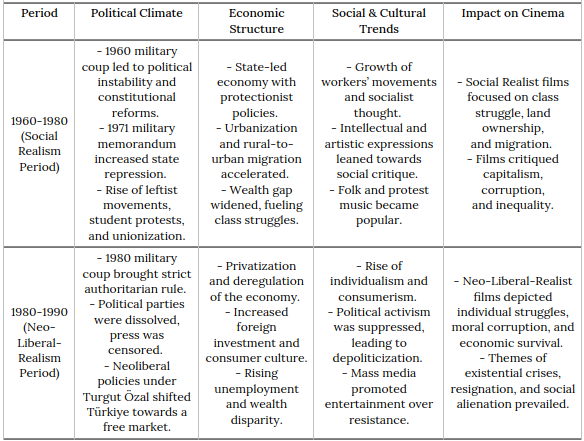
After the 1980 military coup Türkye experienced a depoliticization process. According to Pösteki, liberal economic policies were implemented in the 1980s, a consumer culture was formed, state-owned enterprises were privatized, import restrictions were lifted and the country opened up more to the outside world. However, the inflation problem could not be resolved and the gap between the rich and the poor increased. Therefore, it is possible to see the reflections of all these changes in Turkish cinema in the 1980s. According to Sever, the most distinctive feature of the 1980s was the tendency to have a luxurious life in the easy way, to consider every means valid to reach a higher status, and to differentiate by buying expensive and branded products, becoming widespread in daily life. Expressions such as “turning the corner, being a fixer” became indicators expressing the general mentality of this period. An apolitical human type that does not know it’s real problems and needs, disrespects labour, has developed. As a result of the globalization policy of capital a new type of person has emerged who is individualistic and selfish, greed for money is above all else, a man believes that his status increases as he consumes, and substitutes being visible for thinking. After the famine and gas cylinder-oil-fuel queues experienced in the 1970s, the abundance promised by the economic policy of the 80s has led to the establishment of a consumer culture. The population in the cities has increased; the cities that are the living spaces of the masses who have adopted the consumer culture through fashion, advertising and the media industry have also changed (Cited in Kaplan, 2022, p. 271–273) For example, Zeki Ökten continued his realistic attitude and produced social-political criticism through the films he shot throughout the 80s such as Attack on Interest (Faize Hücum 1982), Wrestler (Pehlivan, 1984), Plaintiff (Davacı 1986), The Poor Man (Yoksul, 1987), Queer World (Düttürü Dünya, 1988). Films such as these show a new cultural approach centred on the neo-liberal economy (Kaplan, 2022, p. 271–273).
In the 1980s, Turkish cinema shifted from overt political engagement to more personal and symbolic narratives, influenced by censorship and depoliticization as mentioned above. Atıf Yılmaz played a key role in this transformation through his “socio-fantastic” films—Vasfiye is Her Name (Adı Vasfiye, 1985), Oh Belinda (1986), My Dreams, My Love and You (Hayallerim, Aşkım ve Sen, 1987), and Devil, My Friend (Arkadaşım Şeytan, 1988)—which merged surreal elements with critiques of social norms. Oh Belinda, for instance, tells of an actress who becomes the housewife she plays in a commercial, satirizing the constructed roles of consumer culture. These films metaphorically addressed the socio-economic anxieties of the neoliberal era, including rising individualism and economic precarity (Can, 2016, pp. 16‑23).
Turkey’s post-1950 trajectory reveals a tension between democratic ambition and incomplete modernization. Despite constitutional reforms, the absence of sustained educational and cultural integration hindered the development of modern individuality and economic resilience. Industrialization remained limited, urban migration intensified socio-spatial inequalities, and unemployment grew. By the 1980s, these structural challenges began to shape cinematic narratives, portraying themes like precarious labor, child work, and survival under urban pressure—yet this cinematic phase remains underexamined.
This article introduces “Neoliberal Realism” as a conceptual lens to explore the transformation of Turkish cinema following the 1980 military coup and the implementation of neoliberal economic reforms. Rather than emphasizing auteur styles or production contexts, the focus shifts to narrative structures, character development, and the socio-economic imaginaries that emerged during this period. Drawing on Bourdieu’s concepts of field, habitus, and cultural capital, the study examines how cinema became a symbolic arena where individuals grappled with the pressures of deregulation, precarity, and commodified visibility. Films such as The Lucky Worker (Talihli Amele, 1980), The Treadmill (Dolap Beygiri, 1982), The Honest One (Namuslu, 1985), The Tenant (Kiracı, 1987), and The Teacher (Öğretmen, 1988) reveal how economic dispossession and institutional collapse shaped the lived experiences of characters, offering insight into how neoliberal logic restructured not only labor and housing but also subjectivity itself.
In this regard, the central argument of this paper is that Turkish cinema in the 1980s articulated a new narrative mode—Neoliberal Realism—that internalized the logic of neoliberal transformation through individualized stories of economic dispossession, symbolic struggle, and precarious survival. This term is introduced to describe a shift away from the collectivist ethos and class consciousness of earlier social realist cinema toward depoliticized portrayals of characters negotiating crises in housing, labor, masculinity, and visibility within an increasingly commodified society. These cinematic forms, we argue, reflect how neoliberal rationalities reshaped not only institutions and economic relations, but also emotional life, cultural values, and the social imagination itself.
This paper argues that Turkish cinema of the 1980s exhibits a distinct narrative formation that we define as “Neoliberal Realism”, a mode that internalizes and dramatizes the socio-economic effects of neoliberal transformation through stories of cultural dispossession, moral disorientation, and individualized survival. Unlike prior periods characterized by collective resistance and social critique, the films of this era portray characters whose symbolic capital, ethical integrity, and institutional affiliations are rendered obsolete within a commodified and depoliticized field. This conceptual shift—rooted in Bourdieu’s theoretical triad of field, habitus, and capital—allows for a deeper analysis of how cinema narrates the emotional, economic, and symbolic fractures of post-1980 Turkish society.
The originality of this research lies in its formulation of Neoliberal Realism as a new analytical category that bridges media aesthetics with political economy. Rather than foregrounding production contexts or auteurism, the study develops a sociologically grounded reading of narrative, space, and character in Turkish films between 1980 and 1990, arguing that these works collectively visualize the restructuring of everyday life under neoliberal logic. In other words, while cinematic analyses often rely on frameworks such as social realism, postcolonial realism, or subjective realism, this article offers an original contribution by conceptualizing and applying the notion of neoliberal reality as a distinct narrative mode. Rather than focusing on production contexts or auteurist tendencies, the study emphasizes how neoliberal logic is embedded in the narrative structures and character trajectories of films produced in Turkey during the 1980s. By foregrounding narrative analysis over industrial or formalist concerns, and by examining relatively underexplored cinematic texts, this article advances a rare and much-needed perspective on how neoliberalism restructures not only economic life but also cinematic imagination.
Methodology
Methodologically, this study adopts a dual-layered strategy. First, it uses Kracauer’s theory of cinema as a mirror of social reality to briefly contextualize the social realist tradition (1960–1980) as a narrative precursor. Second—and mainly—it applies close content analysis to selected films from 1980 to 1990, interpreting character behavior, narrative structures, and thematic tensions through the lens of Bourdieu’s concepts of field, habitus, and symbolic capital.
“(…) But the most important point is that through the increased symbolic power of television overall, and, among the competing kinds of television, the increased influence of the most cynical and most successful seekers after anything sensational, spectacular, or extraordinary, a certain vision of the news comes to take over the whole of the journalistic field. Until recently, this conception of the news had been relegated to the tabloids specializing in sports and human interest stories. Similarly, a certain category of journalists, recruited at great cost for their ability immediately to fulfill the expectations of the public that expects the least-journalists who are necessarily the most cynical, the most indifferent to any kind of structural analysis, and even more reluctant to engage in any inquiry that touches on politics-tends to impose on all journalists its ‘values,’ its preferences, its ways of being and speaking, its ‘human ideal.’ Pushed by competition for marketshare, television networks have greater and greater recourse to the tried and true formulas of tabloid journalism, with emphasis (when not the entire newscast) devoted to human interest stories or sports. No matter what has happened in the world on a given day, more and more often the evening news begins with French soccer scores or another sporting event, interrupting the regular news. Or it will highlight the most anecdotal, ritualized political event (visits of foreign heads of state, the president's trips abroad, and so on), or the natural disasters, accidents, fires and the like. In short, the focus is on those things which are apt to arouse curiosity but require no analysis, especially in the political sphere (Bourdieu, 1998, pp. 50-51)”
In this passage, Bourdieu anticipates what would later become a hallmark of neoliberal media culture: the colonization of public discourse by market logics of visibility and competition. Television, in his view, no longer functions as a medium of information or civic debate but as a field structured by the pursuit of attention, profit, and affective immediacy. The “most cynical and successful seekers after anything sensational” embody the neoliberal ethos of performativity—where success depends on exposure rather than substance, and information is replaced by spectacle. Under neoliberalism, screens transform into economic and symbolic markets in which visibility becomes capital itself. Journalistic and cultural production align with commercial imperatives, producing what Bourdieu calls symbolic violence: the normalization of superficiality and the depoliticization of thought. In this sense, the passage illustrates the shift from critical mediation to consumable affect, from collective meaning-making to individualized entertainment—a process that extends beyond television into today’s algorithmic and platform-driven screen culture.
This approach allows for a nuanced reading of how neoliberal pressures—such as deregulation, labor precarity, and visibility economies—are cinematically encoded not through direct political allegory, but through everyday struggles and emotional fragmentation. Each film is treated as a cultural artifact shaped by and responding to the symbolic violence of neoliberal transformation. In order to explore how Turkish cinema of the 1980s internalized and visualized the structural logic of neoliberal transformation, this study is guided by the following research questions:
-
How do selected Turkish films from the 1980s narrativize the socio-economic effects of neoliberal restructuring on individual subjectivity and everyday life?
-
What defines Neoliberal Realism as a narrative mode in the selected films, and in what ways does it depart from the aesthetic and ideological patterns of earlier social realist cinema?
-
How can Pierre Bourdieu’s conceptual triad of field, habitus, and symbolic capital be employed to analyse the ways characters negotiate institutional collapse, cultural dispossession, and symbolic violence in post-1980 Turkish cinema?
In the first phase, a general historical and thematic overview is provided for the 1960–1980 period. Drawing on Siegfried Kracauer’s theory of cinema as a mirror of social reality, this section outlines the socio-political conditions, directorial tendencies, and cultural characteristics of key films that emerged during the social realist wave. Thematically, these films reflected collective struggles such as class conflict, labor rights, rural-urban migration, and poverty, often influenced by Italian and French neorealism. Rather than detailed scene analysis, this portion serves as a critical narrative cartography to understand how Turkish cinema once articulated structural inequalities through collectivist frameworks.
The core focus of the article, however, lies in the 1980–1990 period, a decade shaped by Türkiye’s official transition to neoliberal economic policies following the 1980 military coup and the January 24th economic reforms. Here, the methodology shifts from contextual mapping to close content analysis, with an emphasis on how neoliberal rationalities are inscribed into film narratives—not in terms of production processes, but through character behavior, plot structures, and everyday struggles depicted on screen.
Using Pierre Bourdieu’s (1986) concepts of field, habitus, and particularly cultural capital, the article explores how characters respond to themes such as precarious labor, union erosion, wage suppression, the rise of finance capital, overwork, media commodification, and moral compromise. These themes are analysed through scene-level observation, dialogue, and dramatic tension in a corpus of selected films including A Sip of Love (Bir Yudum Sevgi, 1984), The Naked Citizen (Çıplak Vatandaş, 1985), The Honest One (Namuslu, 1985), and others. Through this lens, the study decodes how individual characters embody or resist neoliberal subjectivities, and how the accumulation—or deprivation—of cultural capital becomes central to their survival strategies.
The 1980–1990 period in Turkish cinema marks a critical shift from collective struggles of social realism toward individualized narratives shaped by neoliberal economic realities. The films listed in Table 2: Classification of Turkish Films by Period and Theme (with Neo-liberal context, 1980–1990) reveal characters grappling with precarious labor, systemic corruption, hyperinflation, and the erosion of traditional social structures etc. Works such as A Sip of Love and The Naked Citizen depict economic survival and symbolic poverty through female labor and absurd commodification of identity, while The Plaintiff and The Honest One highlight a justice system and bureaucratic ethics deeply compromised by market logic. These films serve as cinematic responses to a rapidly neoliberalizing society where financial anxiety, rent burdens, and overwork dominate personal lives. The saturation of economic distress in everyday spaces—from homes to workplaces—aligns with Bourdieu’s framework of cultural and economic capital struggles within the social field. Within the scope of the article, the neoliberal reality of the following films will be analysed through the reflection of the neoliberal policies of the period on the daily lives of the characters:
Table 2. Classification of Turkish Films by Period and Theme (with Neo-liberal context, 1980–1990)
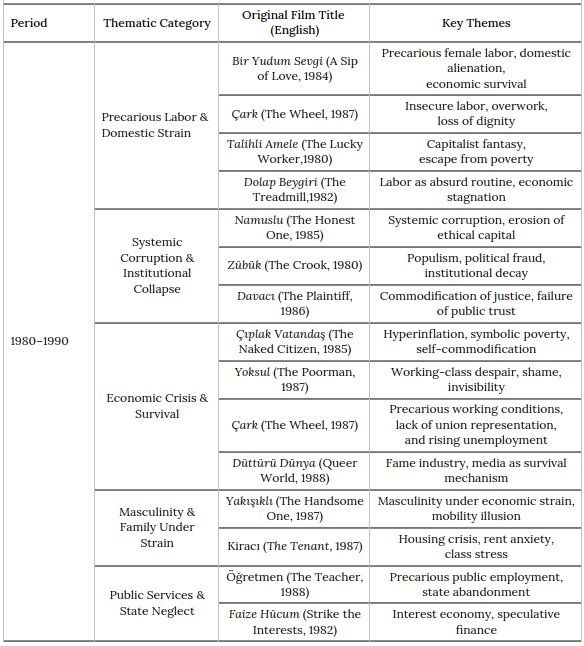
According to Gorski, Bourdieu’s concept of the field denotes the space of expression for what he defines as forms of capital. Bourdieu’s concept of field benefits from the meta-theoretical tendency that social identities are constructed through oppositions with others and that their sociological characteristics require them to be positioned in a comprehensive field consisting of opposing relations. Bourdieu’s concept of field is the unit of analysis in methodological language, and it consists of various units of observation. These units that construct the concept of field are mainly expressed as individuals, organizations, communities, social interactions. In traditional methodological language, it is not possible to observe fields directly. In order to observe fields, it is possible to obtain the results by using empirical data that continue their functions in mutual relations.
According to Brubaker and Bourdieu, cultural capital is a form of capital that, alongside economic capital, shapes individuals’ positions in social space. It is acquired gradually, starting from birth. Cultural capital is expressed as all the practices that the agent acquires and reinforces throughout his/her social life in social space, especially in educational institutions and family institutions, from birth. Bourdieu tries to explain the differences with cultural capital. With these differences, cultural capital is tried to be understood and the aim is to reveal the differences that cannot be explained by economic inequalities in cultural practices and educational performances. (Cited by Kaplan & Yardımcıoğlu, 2020, p. 25). Atkinson, Balaj and Eikemo make in-depth detections on this subject:
“The class structure of a social order can be conceived of as a field – which Bourdieu (1984) called the ‘social space’ – and is, in capitalist societies, structured by possession of economic capital (money and wealth) and cultural capital (embodied and credentialised mastery of legitimated symbol systems), and secondarily the social capital of connections and networks. Class habitus is the seat of various strategies to accumulate – or challenge the worth of – money and wealth but also credentials and masteries, the font of specific cultural tastes adapted to the possibilities given by social location and the perceptual grid through which we categorise and judge the activities and tastes of others. It is forged first in the domestic sphere, through parent–child relations, and indeed strategies can be intergenerational, involving activities toward improving or maintaining not only one’s own position but the capital holdings of one’s offspring (Bourdieu, 1996a; Bourdieu & Passeron, 1990, Cited by Atkinson, 2024, pp.2.-3)”
“According to Bourdieu and Wacquant (Bourdieu & Wacquant, 1992), acknowledging that “capital can take a variety of forms is indispensable to explain the structure and dynamics of differentiated societies.” In “The Forms of Capital” (1986) Bourdieu differentiates between four types of capital. First, economic capital is directly convertible into money and material assets. Second, cultural capital can exist in three forms: in embodied disposition (habitus), in an objectified state as cultural goods and in an institutionalised state, the most prominent of which is educational qualifications. Third, social capital represents material and non‐material resources that individuals can mobilise from mutual recognition as members of a group. Fourth, symbolic capital is the form each capital can assume when it is recognized as legitimate. Bourdieu introduces physical capital as a form of cultural capital, which he refers to as “heavily disguised” embodied cultural capital. Generally, Bourdieu understands physical capital as the acquisition of habits of body comportment through socialisation in sports, patterns of food consumption and etiquette (Bourdieu, 2013, cited by Balaj & Eikemo, 2022, pp.1216-1217)”
The selected corpus of post-1980 Turkish films—such as The Handsome One (Yakışıklı, 1987), The Naked Citizen (Çıplak Vatandaş, 1985), The Honest One (Namuslu, 1985), Strike the Interests (Faize Hücum, 1982), The Teacher (Öğretmen, 1988), The Tenant (Kiracı, 1987), The Lucky Worker (Talihli Amele, 1980), and The Treadmill (Dolap Beygiri, 1982)—offer a cinematic terrain in which neoliberal economic rationality encounters and restructures the individual’s habitus. Each film dramatizes the dissonance between inherited dispositions and the emerging neoliberal field, where previously valued forms of cultural capital are rendered obsolete or non‑convertible.
In The Handsome One, for instance, the protagonist’s inability to secure housing or fulfil the traditional role of provider, despite his physical appeal and presumed social desirability, reveals the impotence of symbolic and embodied capital in a field now dominated by monetary value. A scene where wealthy Iranian and Arab tenants offer hard currency for rent, displacing Turkish locals, crystallizes Bourdieu’s insight that habitus—here rooted in republican middle-class expectations—collides with a transformed urban field governed by foreign exchange, speculation, and exclusion. Marriage itself is deferred, linking private intimacy to macroeconomic forces.
The Naked Citizen amplifies this alienation. The protagonist’s frantic engagement in eight different jobs is emblematic of precarity—a foundational condition of neoliberal labor markets. His eventual breakdown and symbolic act of stripping in public illustrate a loss of both economic and symbolic capital. His labor is no longer valorized; rather, it is fragmented, absurd, and invisible. In Bourdieu’s terms, the character becomes a “man without capital or symbolically dispossessed subject” in a social space where even self-worth must be marketable. The only remaining path to visibility is mediatization—his notoriety, once exposed by television, grants him economic opportunity. This reflects the neoliberal valorization of visibility over substance, performance over competence.
Similarly, The Honest One critiques the moral inversion of the neoliberal field. The protagonist’s honest behaviour is met with suspicion, and he is falsely accused of corruption. Ironically, this accusation increases his social value, as honesty has become economically irrational. Symbolic capital—in the form of ethical integrity—is not only unrewarded but punished. This inversion reveals a deep fracture between inherited habitus and a new field where corruption has become normative.
Strike the Interests offers a critique of financialization. The film centers on retirees who survive solely through interest-bearing bank accounts—an economic practice symptomatic of neoliberal economies in which labor no longer guarantees subsistence. The elderly, once bearers of institutional cultural capital, are now reduced to passive investors. Finance replaces social production; economic value is abstracted from work and grounded in speculation.
In The Teacher, the protagonist’s relocation to a metropolitan school exposes the erosion of the welfare state’s symbolic authority. Despite his position as a civil servant—a role historically associated with stability and moral standing—his salary cannot cover transportation, forcing him to walk to work and take on undignified side jobs. The degradation of public employment echoes Bourdieu’s assertion that the state’s withdrawal from the cultural field diminishes the value of institutional capital and leaves symbolic laborers socially orphaned.
The Tenant furthers this motif, as inflation and currency devaluation render middle-class salaries insufficient. In this film, hyperinflation is not merely an economic condition but a narrative force that erases the material foundations of the petite bourgeoisie. The character’s symbolic expectations (home, marriage, stability) are shattered, as economic capital becomes the sole arbiter of social worth.
The Treadmill critiques the speculative logic of the emerging finance economy. Through its depiction of the character’s entrapment in a meaningless labor cycle, the film allegorizes how personal savings and economic hopes are absorbed and dissolved by banking institutions and informal financial networks. Here, the film speaks directly to the rise of finance capital, which extracts surplus not through production but through systemic exploitation of economic precarity and misinformation.
Finally, The Lucky Worker and The Naked Citizen both depict media spectacle as the only viable escape from poverty. Social mobility is no longer linked to merit, labor, or education, but to public visibility—being featured on television becomes a substitute for structural change. Bourdieu’s critique of the illusio of the media field—where visibility creates symbolic value independent of institutional validation—is played out in these narratives, warning of a society where performative capital overtakes all else.
Across these works, neoliberalism appears not as an abstract policy set but as a force that reshapes daily life, relational structures, and subjective possibilities. When read through Bourdieu’s conceptual toolkit, these films become ethnographic documents of a society where cultural capital is devalued, habitus is misaligned with new social demands, and symbolic violence becomes normalized. The cinema of this era thus reveals not only what neoliberalism does to institutions, but what it does to people—how it rewrites the coordinates of dignity, agency, and identity on screen.
Nezih Erdoğan (1998) highlights a key difference between Turkish cinema—especially Yeşilçam—and the classical realist model developed by Hollywood. Hollywood aims to create a seamless illusion of reality by hiding the traces of production. Its style, often called “classical realism,” is built on strategies that make the audience forget they are watching a film: characters never look at the camera, editing cuts are hidden by redirecting attention, and the narrative flows smoothly to maintain realism. In contrast, Yeşilçam adopts a hybrid cinematic attitude. It blends Hollywood’s classical realism with elements of traditional Turkish visual and narrative culture—such as shadow plays, miniatures, and popular folk theater. Even when Yeşilçam shamelessly reproduces Hollywood-style plots, the visible traces of low-budget production and cultural references give the films an unexpected sense of authenticity. While Hollywood tries to fully integrate the viewer into the film’s narrative world through carefully constructed perspectives and visual coherence, Yeşilçam often remains indifferent to such requirements. Characters might appear in flat, frontal compositions, lacking visual depth, and narrative conventions might be broken or stylized. In this way, Yeşilçam does not aim to replicate reality, but instead creates its own culturally specific version of it—one that is openly artificial, performative, and local.
According to Arslan (2017) The question “Whither Yeşilçam?” echoed frequently throughout the 1980s and 1990s—until it became clear that Yeşilçam, Turkey’s once-thriving popular film industry, had indeed come to an end. More than just a production center, Yeşilçam represented a distinctive mode of filmmaking, one that developed its own indigenous cinematic language, markedly different from Western filmmaking norms. Rather than adhering to the rigid rules of Hollywood’s continuity editing and immersive illusionism, Yeşilçam cultivated a modest yet inventive storytelling approach. While some of its stylistic features—such as the absence of dubbing, visible continuity errors, or rudimentary special effects—were shaped by practical and economic limitations, they also reflected a deeper connection to Turkey’s longstanding literary and performative traditions. In this sense, Yeşilçam’s cinematic style was not simply a product of constraint, but also a cultural continuation of local narrative forms.
Building on Erdoğan’s analysis of Yeşilçam’s hybrid and culturally rooted approach to cinematic realism, Arslan reinforces the idea that Yeşilçam was more than a mere film industry—it was a unique narrative tradition shaped by local aesthetics and constraints. Both scholars underscore how Yeşilçam’s stylistic departures from Hollywood were not solely technical shortcomings, but rather expressions of a culturally embedded cinematic language that eventually faded amid broader transformations in Turkish cinema. The article will also take these approaches into account when analyzing the films.
Common Cultural Features of Social Realism of Turkish Cinema between before 1980s
The 1950s in Turkey marked a turbulent convergence of politics and popular culture, shaped by the conservative-liberal policies of the Democrat Party under Adnan Menderes. With its pro-American stance in foreign policy and support for liberal economics, the party undermined many of the early republican reforms, such as the closure of Village Institutes and People’s Houses, and a symbolic return to Ottoman-Islamic traditions—exemplified by reinstating the Arabic call to prayer. The suppression of opposition, press censorship, and the eventual establishment of a parliamentary inquiry commission triggered widespread unrest, culminating in the military coup of May 27, 1960. This political climate directly influenced cinematic narratives, as melodramatic tropes became a vehicle for expressing deep‑seated social anxieties. Films like My Stone Grave (Mezarımı Taştan Oyun, 1951) and The Daughter of the Harlot (Kahpenin Kızı, 1952) employed obsessive characters, heightened moral conflict, and a distinct sense of fatalism, drawing not only from Ottoman-Islamic motifs but also from the Arab melodrama tradition, mirroring Turkey’s simultaneous cultural flirtation with both Egypt and the United States, and these films brought themes such as female sexuality, violence, and class conflict into the melodramatic narrative, reflecting the emotional and ideological complexities of the 1950s of Türkiye (Teksoy, 2008. p. 43). Cinema of this era reflected Turkey’s ideological contradictions, blending rural conservatism with urban modernity. Archetypal characters—like the cruel rich man or golden-hearted prostitute—embodied the tension between realism and fantasy. Films such as Ezo the Bride (Ezo Gelin, 1955) and The Blemish (Leke, 1957) explored themes of honor, class, and gender. Though not overtly critical, these films, as Teksoy (2007) suggests, offer ethnographic insight into a society caught between East and West.
The liberal climate established by the 1961 Constitution following the 1960 military coup catalyzed the emergence of social realism in Turkish cinema, allowing filmmakers to confront pressing social issues such as poverty, labor exploitation, migration, and inadequate public services. This era marked a cinematic awakening where directors used the screen as a reflective surface for the struggles of the working class and the marginalized. Seminal works like Ertem Göreç’s The Bus Travelers (Otobüs Yolcuları, 1961) and Those Awakening in the Dark (Karanlıkta Uyuyanlar, 1964), Halit Refiğ’s Birds of Exile (Gurbet Kuşları, 1964) and Four Women in the Harem (Haremde Dört Kadın, 1965), Duygu Sağıroğlu’s The Unending Road (Bitmeyen Yol, 1965), and Lütfi Akad’s Law of the Borders (Hudutların Kanunu, 1966) exemplify this socially engaged cinematic turn. These films did not merely dramatize individual hardship but positioned personal stories within broader class dynamics, regional inequalities, and urban-rural divides, articulating a new visual grammar for a society in transition.
This movement declined after the 1971 military memorandum, as films turned to “savior” figures amid growing political and economic turmoil. For instance, The Tarkan film series1 reflects the 1970s in Türkiye—a decade of economic and political turmoil—by offering mythological heroism as psychological escape. While rooted in the social realist era, Tarkan diverges by channelling public anxiety into a savior narrative, fulfilling a collective need for reassurance (Tunç, 2022, pp. 144–145).
Turkish Cinema of the 1960-1980 period consists of films that are political, focused on family relations and religion; they reflect the problems of society, and frequently feature the phenomenon of migration. While Halit Refiğ’s Birds of Exile (Gurbet Kuşları, 1964) film witnesses the migration event and the events experienced during this process, Yücel Çakmaklı's Crossroads (Birleşen Yollar, 1970) emphasizes the fact that worldly pleasures, money, and luxury are transient, and that what is permanent is the necessity of achieving inner peace by fulfilling religious duties. Yılmaz Güney's Hope (Umut, 1970) film is a perfect reflection of the saying “Hope is the bread of the poor”. While the film incorporates scenes inspired by real life, it depicts how poverty pushes individuals toward actions they would not normally consider, erodes their mental and moral consciousness in the pursuit of wealth, and implies that material gains can be achieved through symbolic or abstract assets (Tugen, 2014, p. 175). The cinema of the 1970s is characterized by these exemplary films.
While the 1960–1980 period in Türkiye is typically associated with social realist cinema, some scholars suggest alternative categorizations such as “national” or “religious” cinema, reflecting ideological diversifications within the era. Despite these terminological debates, the dominant cinematic tendency remained socially engaged, especially up to 1965, with films often shaped by leftist thought and a sense of intellectual responsibility aligned with Marxist ideals. As economic crises deepened and public interest in social issues declined, filmmakers increasingly explored alternative cultural frameworks. The “national cinema” movement, led by figures like Halit Refiğ, sought to counter Western influences by drawing on Turkish traditions and Kemal Tahir’s interpretations of Marxism and the Asiatic mode of production. However, this effort to construct a classless, culturally rooted cinematic identity struggled to resonate with broader audiences and faced criticism for idealizing Ottoman heritage and overestimating the cinematic potential of traditional arts (Kırtepe, 2019, pp. 113–115).
According to Yarar Aksoy (2023, p. 87), the socialist realism movement in Turkish cinema during the 1960s led to the production of films that explored socio-economic and socio-political issues such as migration, poverty, and post‑industrial conflicts. Despite the economic challenges faced by the Turkish film industry in the 1970s, directors like Yılmaz Güney, Yavuz Özkan, Lütfi Akad, and Şerif Gören created influential political films. The 1980s, however, marked a completely different era due to the military coup and shifts in the political economy. These transformations, as in other art forms, were reflected in filmmaking as well. Additionally, economic and political shifts, censorship, strict regulatory measures, and self-censorship significantly impacted film production and distribution.
1961 constitution brought to the fields of art and thought, and “Social Realism” movement that attempted to address and explain the social problems and the characteristics and relationships of the people who formed this structure, began to emerge in Turkish cinema. (Yılmaz, 2011, pp. 48–49). In the 1960s and 1970s, Turkish cinema closely reflected the country’s social and political realities, particularly through socially conscious films that raised awareness of class inequality, injustice, and cultural-identity contradictions (Duyan, 2023, pp. 336–227).
Directors like Yılmaz Güney took this activist spirit further, as seen in Friend (Arkadaş, 1974), which portrayed class and identity struggle and opposed bourgeois values through a Marxist lens. Instead of individual heroism, Güney emphasized collective consciousness and revolutionary potential, aligning with the broader leftist movements of the era. Thus, the cinema of this period served not just as entertainment, but as a powerful medium for critique, solidarity, and social transformation.
In 1970s Turkish cinema, rapid urbanization and westernization reshaped gender roles and social narratives. Films like My Proof Lover (Vesikalı Yarim, 1968) portrayed marginalized women with social realism, while arabesque films—especially those featuring Orhan Gencebay—depicted conflicted masculinity torn between rural values and modern life. These stories often centered on emotional intensity, self-sacrifice, and male vulnerability, reflecting the identity crisis and societal pressures of the era (Büyücek, 2024, p. 712–714).
Turkish cinema in the 1960s and 1970s often addressed themes of identity, ideology, and cultural conflict. Films like Traveler of the Same Road (Aynı Yolun Yolcusu, 1972) and My German Lover (Almanyalı Yarim, 1974) reflect the earlier period’s focus on religion, immigration, and cross-cultural tensions, often exploring societal contradictions through social realist storytelling. Similarly, My Country (Memleketim, 1974) examines East–West identity crises through the lives of Turkish professionals abroad, promoting loyalty to national values over Western admiration.
Siegfried Kracauer evaluates cinema as a reflection of the collective subconscious of society and positions it as one of the most powerful tools that depict social reality. According to Kracauer, cinema directly conveys the general mood and collective experiences of society by making invisible social dynamics, ideological orientations and socio-economic conditions visible (Kracauer, 1960). In this context, the films of social realist Turkish cinema in the 1960s in Türkiye present a direct reflection of social realities and deal with phenomena such as economic inequality, immigration, urbanization problems and class contradictions with a bold and realistic narrative.
According to Maule, Italian Neo-realism, which occupies an extremely important place in both theory and practice in the context of the relationship between cinema and reality, and which came to life with the ideas of Cesare Zavattini, whom Bazin and Kracauer also praise, and the films of directors such as Vittorio De Sica, Roberto Rossellini, and Luchino Visconti, is an important cinematic experience. Considered the pioneer of the form of filmmaking also called art cinema today, Italian Neo-realism, which consists of socially determined and sensitive intellectuals who have a strong stance on the practical aspects of filmmaking, had their first professional experiences in the film industry during the years of Mussolini’s fascist regime and took it upon themselves to tell the tragic and painful events of post-war Italy in their films. According to Wagstaff, Italian Neorealists pioneered various innovations in terms of narrative and aesthetics. As Bazin and Kracauer often say, they brought the content to the forefront and made the plot almost invisible. However, they frequently used realistic cinematographic styles such as long shots, plan sequences, fixed cameras and uncomplicated angles, and preferred to not shoot in studios and use streets and natural light instead of artificial lighting there (cited in Olgunsoy, 2021, pp.123–124).
According to Kracauer’s theory of cinema, realism should be analyzed not only thematically but also through formal preferences. Shooting films in natural locations, choosing non-professional actors, and foregrounding ordinary dialogues from daily life in scenarios establish strong emotional bonds with the audience and facilitate empathy with social reality (Kracauer, 1960). From this perspective, Turkish films in 1960s such as Dry Summer (Susuz Yaz, 1963), Revenge of the Snakes (Yılanların Öcü 1962), and Birds of Exile (Gurbet Kuşları 1964) perfectly match Kracauer’s understanding of realism. These films presented the social realities of the period with raw, unfiltered, and powerful visual images, allowing the audience to confront social issues.
From the late 1960s onward, discussions of revolutionary cinema in Türkiye began to intersect with the principles of the Third Cinema, emphasizing the political dimension of film alongside its artistic qualities. These debates explored how cinema could function as a tool to expose cracks within dominant systems and serve revolutionary purposes. Even before the term “Third Cinema” gained prominence, several films—such as Beyond the Nights (Gecelerin Ötesi, 1960) by Metin Erksan, Bus Passengers (Otobüs Yolcuları 1961) and Karanlıkta Uyananlar (Those Who Wake Up in the Dark, 1965) by Ertem Göreç, The Neverending Road (Bitmeyen Yol 1965) by Duygu Sağıroğlu, Dry Summer (Susuz Yaz, 1963) and Revenge of the Snakes (Yılanların Öcü, 1962) by Erksan—were evaluated through this lens. A generation of young filmmakers, often described as activist filmmakers, produced politically engaged short films, documentaries, and newsreels despite limited resources, driven by anti-imperialist and anti-capitalist ideals rooted in socialist thought. Although many continued working in cinema into the 1970s, they struggled to establish a coherent national cinematic language aligned with their revolutionary vision. After the 1971 military memorandum, the Turkish Young Cinema movement disbanded, leaving Yılmaz Güney as the sole figure to sustain revolutionary cinema in feature-length form. His 1970 film Hope is recognized as the first true example of Third Cinema in Türkiye and significantly influenced the cinematic language of the next generation (Esen, 2007, cited in Cantaş & Koluaçık, 2023, pp.1777–1778).
In the context of 1970s “militant cinema”, Yavuz Özkan’s films The Mine (1978) and The Railway (1989) stand out for foregrounding themes such as social transformation, justice, and political struggle. These films initiate a critical discourse around these issues by portraying the stories of workers situated at the lower strata of Türkiye’s socio-economic hierarchy. Both works can be considered “militant” in structure due to their direct engagement with class struggle and their political commitment. Özkan compels the audience to confront their own realities, fostering a link between the events portrayed on screen and the viewers’ lived experiences. This approach cultivates an awareness of capitalist exploitation and underlines the necessity of labor unionization as the only path to overcoming such systemic oppression. In both films, this message is conveyed with clarity and urgency. Özkan advocates for a bottom-up societal transformation, emphasizing that genuine change is only possible through organized, collective class-based struggle (Cantaş & Koluaçık, 2023, p.1778).
Feudalism was the subject of some films from the 1970s. In the films Polite Feyzo (Kibar Feyzo, 1978), and Male Beauty Miserable Bilo (Erkek Güzeli Sefil Bilo, 1979), the landowners were portrayed through the character of Maho Ağa (feudal lord), a cunning and untrustworthy man who had no intention of sharing his power. There is no question of being angry at the self-interested, fraudulent landowner portrayal created in the films; because what is in question is the tragicomic ignorance of the villagers who could not realize this fact for a long time. (Şen, 2019, p. 714).
Religion and search for religious identity was also a central theme in 1970’s Turkis movies; for instance, in Traveler of the Same Road (1972) by Turgut Demirağ, which contrasts two imam (Islamic prayer leader) figures. The traditional imam promotes rote learning and resists change, while the younger one engages youth through arts, sports, and vocational training. Though his modern methods gain local support, he is eventually removed, and the old imam returns. The mufti (a senior Islamic scholar) influences events behind the scenes, adding ambiguity. Unlike typical religious portrayals, the young imam prioritizes moral development over dogma. Demirağ, with a background in both agriculture and cinema, presents religion through a social and legal lens rather than a purely spiritual or political one.
Religion also featured prominently in Ömer Lütfi Akad’s 1970s migration trilogy—The Bride (Gelin, 1973), Wedding (Düğün, 1973), and Blood Money (Diyet, 1974)—which portrays the impact of rural-to-urban migration on individuals and national identity. The films explore economic hardship, labor commodification, and the challenge of preserving traditions in urban settings. Drawing from Kracauer’s social realism, Akad reveals how religion and patriarchy both oppress and provide moral structure, highlighting the complex interplay between tradition and modernity in migrant experiences.
Influenced by Italian Neo-realism, Turkish cinema saw a major shift in the late 1960s with the rise of socialist realist films, diverging from mainstream Yeşilçam melodramas. This new wave focused on class conflict, urban poverty, and internal migration, placing these issues at the heart of the narrative. Unlike earlier vague portrayals, these films directly depicted the hardships of rural migrants in Istanbul, using the city as both setting and symbolic force. With a documentary-like style and culturally rooted aesthetics, Social Realist cinema highlighted everyday struggles and critiqued the socio-economic and political structures of the time (Can, 2016, pp. 16–23).
In sum, the cultural framework of Turkish social realist cinema between 1960 and 1980 reveals a complex interplay between tradition and transformation, collective identity and structural constraint. These films not only portrayed class tensions, migration, and rural hardship but also articulated a critical consciousness rooted in lived experience. The period’s cinematic output functioned as a cultural testimony to social fractures and aspirations, drawing from oral traditions, theatrical conventions, and neorealist aesthetics. By foregrounding the symbolic weight of everyday life—through archetypes, moral dilemmas, and spatial metaphors—this body of work provided a narrative archive of Turkey’s evolving socio-political landscape. This legacy of social realism would serve as a crucial point of reference for the narrative shifts that occurred in the neoliberal era, offering both continuity and contrast in the cinematic portrayal of social reality.
The density of politically engaged films produced between 1960 and 1980 reflects not only a culturally vibrant period in Turkish cinema but also a unique alignment between social reality and cinematic form. Enabled by the relatively liberal atmosphere of the 1961 Constitution and influenced by international cinematic currents such as Italian Neorealism, Third Cinema, and Marxist aesthetics, Turkish filmmakers of the era—particularly figures like Yılmaz Güney and Lütfi Akad etc.—used the medium to articulate collective grievances, from class oppression to urban migration, labor exploitation, identity, and gender inequality. The intellectual climate fostered by institutions like Turkish Cinematheque provided exposure to French, Italian, Soviet and Latin American cinematic models, reinforcing the function of cinema as a site of ideological contestation and resistance. Film thus became a visual manifesto of societal critique, mirroring the aspirations of a politically mobilized generation.
Findings: Narrative and Cultural Analyses of Neo-Liberal Realist Scenes in Turkish Cinema between 1980 and 1990
The 1980 military coup shattered ideological landscape of Turkish society. As state repression silenced dissent and neoliberal policies commodified daily life, cinema underwent a narrative fracture. The once outspoken protagonists of Social Realism dissolved into passive, alienated figures, trapped in existential crises and moral decay. Neo-Liberal-Realist films abandoned the call for revolution and instead portrayed individual struggles for survival in a system that normalized corruption and inequality. Linear plots of resistance morphed into fragmented, cyclical tales of disillusionment, where characters were no longer agents of change but mere spectators of an oppressive reality. In this period after 1980s, Turkish cinema ceased to ask, “How do we change society?” and instead whispered, “How do we survive it?”
According to Meral Gündoğdu, Turkish cinema addressed the 1980 coup primarily through themes such as imprisonment, torture, “a revolutionary struggling to survive after prison,” or “a revolutionary who realizes their mistake.” However, the influence of the coup is not only evident in films that criticize revolutionary violence or defend the revolution. It is essential to view Turkish films of this period as products of the prevailing cultural values and the socio-political climate shaped by the September 12 coup, even when they aimed to adopt a progressive stance (cited in Yarar Aksoy, 2023, p. 92).
After 1980s the neoliberal process of shaping individuals within diverse cultural frameworks is also evident in the New Turkish Cinema. As it becomes more embedded in global production networks and festival circuits, it increasingly prioritizes micro-political themes and identity-related issues. The new independent cinema even after 1990s focuses on topics that do not challenge political or cultural capital. In this context, many films take place in small towns, often featuring unknown or nonprofessional actors – primarily children – who narrate stories of ordinary people, portraying their struggles with disillusionment, identity crises, and social isolation. The emphasis on collective action and social awareness gradually gives way to a more ambiguous approach, often described as “life politics.” As Rosenau argues, affirmative postmodernists prioritize ‘life politics’ over emancipation. They dismiss emancipatory politics, arguing that many efforts once considered liberatory – such as the pursuit of justice, freedom from inequality, and resistance to oppression – ultimately became oppressive themselves. Moreover, any form of emancipation presupposes a structured plan or coherent program. Instead, affirmative postmodernists embrace ‘life politics’, which is loosely defined by themes such as intimacy, globalization, self-actualization, and identity. (cited in Daldal, 2023, p. 8).
The transition to colour television broadcasting in Türkiye in the mid-1980s marked a significant turning point in the country’s media and consumer culture. Beginning in the late 1970s, television increasingly appeared in films as a central symbol of the emerging consumer society. Advertising became a key component of this new cultural landscape, reinforcing consumption-oriented values. During the 1980s, television played a continuous role in shaping an instalment-based consumption culture, encouraging audiences to adopt credit-driven purchasing practices. In this sense, television can be seen as contributing to a form of economic dependency by promoting consumption through loans and instalment payments, particularly for commodities such as cars, apartments, and television sets.
In the early period of television in Türkiye, the growing influence of advertising culture was also reflected in cinema. Films such as The Man Who Turned the Corner (Köşeyi Dönen Adam, 1978) and Man Number 100 (Yüz Numaralı Adam, 1978) exemplify this tendency. Television further functioned as a platform for producing new film and advertising stars who were represented as emerging “from the ordinary people,” often through strategies of representational promotion. Similarly, images of consumer society and its social consequences can be observed in The Naked Citizen (Çıplak Vatandaş, 1985).
In Man Number 100, the protagonist Şaban, who lives with his parents and siblings in a modest household, is portrayed as experiencing both a rise and a fall within the advertising industry. At a time when the advertising sector was losing its effectiveness, advertisements featuring well-known celebrities failed to generate significant public interest. Consequently, an advertising agency developed a new campaign strategy by casting an ordinary person from among the public. Şaban, a low-income individual representing the everyday public, was considered an ideal candidate for this project. (Şen, 2019, p.719). Films such as The Naked Citizen, Lucky Worker, and Man Number 100 convey the message that in 1980s Türkiye, where hard work alone was no longer sufficient to secure a livelihood or achieve upward social mobility, economic survival and class advancement increasingly appeared possible through advertising, television exposure, and fame within popular media culture.
The Naked Citizen (Çıplak Vatandaş, 1985), a striking example of Neo-Liberal Realist cinema, depicts a public servant crushed by inflation. Despite taking on multiple side jobs, he cannot survive economically and repeats the line “not enough”, reflecting the erosion of wages and dignity. In a moment of breakdown, he strips naked in public—an act of despair that ironically brings him media fame. The film emphasizes how male nudity becomes a commodified spectacle. Once the protagonist’s act draws attention, others begin to undress too, hoping for similar visibility and opportunity. Nudity becomes currency in a neoliberal society where visibility replaces value. Even the Prime Minister joins the media frenzy, and the protagonist is re-employed—not for his labor, but for his public image. Eventually, this unsustainable exposure leads to his institutionalization, while the media reaps all the benefits. The film ends ambiguously, underscoring how neoliberalism turns vulnerability into entertainment without addressing systemic injustice.
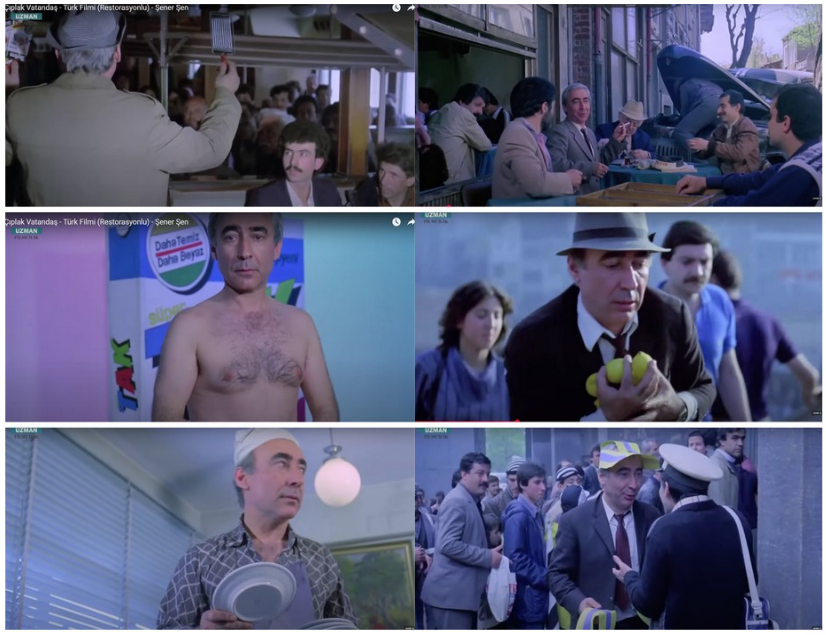
Figure 1. Scenes from “The Naked Citizen” (1985), Source: Uzman Film
In The Naked Citizen, the everyday struggle of a civil servant (played by Şener Şen) becomes a poignant critique of Turkey’s neoliberal transformation in the 1980s. The protagonist, whose official salary proves utterly insufficient, is forced to juggle eight different jobs in a desperate effort to survive in an urban economy increasingly dominated by inflation and precarious labor. His side hustles—selling lemons, distributing promotional hats at football matches, working as a dishwasher, and even undressing for detergent commercials—underscore the erosion of job security and the absurd commodification of human labor.
Set against the backdrop of a city where gambling and lottery schemes have become informal livelihoods for the poor, the film depicts a society where hope is privatized, and the working class is pushed into the margins of economic rationality. The protagonist’s oft-repeated line, “It wasn’t enough. I couldn’t make ends meet,” serves as a refrain highlighting the shrinking value of wages under runaway inflation.
What begins as a satire of economic survival gradually evolves into a psychological drama. Unable to find stability despite endless work, the protagonist ultimately attempts to navigate the system not through resistance, but by aligning with it—seeking media attention as a means of social mobility. His transition into a “mediatic” figure mirrors the neoliberal valorization of visibility over substance. However, this pursuit of fame leads not to liberation but to psychological collapse. The character suffers a breakdown and is institutionalized in a mental hospital—illustrating how the pressures of commodified identity and performative capitalism culminate in personal disintegration.
This sequence of images reveals the structural contradictions of the 1980s: a laboring subject who is simultaneously invisible to the economy and hyper-visible to the media. His story exemplifies Bourdieu’s concept of symbolic violence, whereby individuals internalize systemic failure as personal inadequacy. The Naked Citizen ultimately offers a tragicomic portrait of a neoliberal order in which survival requires not just work but spectacle, not just endurance but exposure.
Both Queer World and The Naked Citizen reflect how, in a neoliberal landscape where traditional paths of upward mobility are blocked, the promise of mediatic visibility emerges as an alternative—yet illusory—route to class transcendence, turning personal struggle into public spectacle without addressing structural inequality. In Queer World (Düttürü Dünya, 1988), director Zeki Ökten presents a melancholic portrayal of the working poor in a rapidly transforming neoliberal Turkey. At the center is Dütdüt Mehmet (protagonist), a clarinetist who supports his family by playing at nightclubs. Despite his honest efforts, he is unable to meet even the most basic needs of shelter and sustenance for his disabled child, his wife, and himself. His home—a squatter’s house owned by his opportunistic brother-in-law—is soon to be demolished by urban developers, and Mehmet cannot afford rent elsewhere. He scrambles to survive, yet his income is perennially insufficient.
Mehmet’s character embodies the neoliberal subject paralyzed by structural inequality, yet clinging to the seductive promise of personal success. Though he performs as a musician, he idealizes his craft with dreams of becoming the next Orhan Gencebay or İbrahim Tatlıses (Music stars of the period). Their posters and self-composed songs signal not resistance, but resignation to the fantasy of celebrity—a hallmark of neoliberal ideology where media visibility replaces collective political engagement. Rather than organizing or questioning systemic conditions, Mehmet turns inward, believing that success will arrive through talent and fate.
The film Queer World explicitly contrasts this Depoliticized Subjectivity with scenes of women protesting inflation by banging pots and pans. Mehmet dismisses their protest, saying, “Will life get cheaper by hitting pots?”—then ironically offers a musical demonstration of how to do it in rhythm. This moment captures his naivety and disconnection from class-based struggle, reinforcing a central critique of neoliberal culture: the internalization of helplessness masked by dreams of fame.
Meanwhile, Osman, the brother-in-law, epitomizes the corrupt petty bureaucrat thriving under 1980s economic liberalization. As a government messenger, he brags about how “a well-placed signature can make millions,” championing a system of “my civil servant knows how to get things done.” Osman’s philosophy reflects the ruthless entrepreneurialism of Turkey’s ANAP-era reforms, where public office becomes a gateway to private profit and where ethical considerations are abandoned in the name of survival.
Queer World captures the emotional disintegration of the working class, not through melodrama, but through everyday exhaustion, passivity, and deferred dreams. The neoliberal spirit of the 1980s is not one of organized rebellion but of inward retreat, where music replaces mobilization and fantasy replaces structural critique. Through Mehmet’s broken clarinet notes and Osman’s bureaucratic schemes, the film offers a quiet but damning diagnosis of a world where the poor are denied both voice and vision.
Although housing and rent problems were being addressed in Turkish cinema as early as the 1960s, they became much more visible and central to social realist narratives after the 1980s due to global factors such as the oil crisis and the international circulation of Arab capital. In early examples like Bitter Life (1962), filmed after the coup, issues related to housing and rent already appeared—showing, for instance, how newlyweds had to rent homes without basic utilities like electricity or water. Shared rooms among multiple families, high rents, and unfulfilled promises by politicians and the press were already visible in the 1960s, as seen in The Epic of Ali of Keshan and Bus Passengers. Although figures like Selahattin Acar even centered their political campaigns around the rent issue in 1979, systemic solutions remained elusive (Akdağ, 2018).
However, these concerns—treated as side themes in the pre-1980 period—assumed a far more prominent role in the aftermath of the 1980 coup. Films such as The Tenant reflected how the housing crisis persisted in the neoliberal period, while The Handsome One, starring Kemal Sunal, resonated with broad audiences by articulating collective urban anxieties. The narrative continued in The Laughing Man, where the character’s struggle with recurrent demolitions of his self-built home and his eventual invention of a mobile house struck a chord with viewers. This post-1980 period also coincided with intensified real estate speculation, particularly driven by wealthy Arab investors enriched by the 1970s oil price surge. In fact, the couple who played the leading roles in the movie The Handsome One and displayed superhuman strength to get married complain about the exorbitant rent prices and the Iranian-Arab capital’s increasing real estate prices in Türkiye.
In this scene from The Laughing Man, the protagonist—still in search of a home—visits a modest neighborhood real estate agency. The setting itself is telling: the office is a makeshift, cramped structure cluttered with signs offering various properties in foreign currencies—$300, 250 Deutsche Marks, or 600 French Francs. These details subtly yet powerfully illustrate the decline of the Turkish lira under inflationary pressure and the increasing role of foreign currencies in the domestic housing market. The commodification of housing is no longer measured in local terms; instead, it reflects Turkey’s integration into transnational economic flows.
This moment encapsulates several intersecting crises: the housing shortage, currency devaluation, and the deregulation of local markets. It also highlights how global capital—in this case, the influx of remittances from Turkish workers in Germany—reshapes urban space. These migrant laborers, who had accumulated foreign currency abroad, often returned to Turkey to invest in property. While such investment appeared beneficial at the surface, it frequently bypassed formal financial channels, resulting in unregulated or even illicit cash flows. The outcome was a distortion of the local housing economy: prices were set according to the value of international currencies, alienating citizens whose incomes remained tied to a devalued national currency. Thus, the scene serves as a satirical but sharp critique of the neoliberal housing economy, revealing how capital mobility and informal financial mechanisms exacerbated inequality and urban exclusion. Through the lens of a comic real estate transaction, the film exposes how everyday struggles—like securing a place to live—are enmeshed within larger geopolitical and economic transformations.
In The Handsome One, the protagonists—deeply in love—struggle intensely to get married, yet housing emerges as a central and insurmountable obstacle. At the heart of the narrative there lies the issue of shelter, positioned not merely as a logistical challenge but as a structural barrier to personal happiness. The housing crisis is woven into the everyday routines of the characters, highlighting its pervasive nature. The dialogue below exemplifies how global capital disrupts local lives, articulating a localized resistance to neoliberal intrusion. As seen in the images, actions such as setting up a protest tent in Taksim Square, sleeping in a truck bed, or threatening to set fire to an unfinished building serve as expressions of protest by the couple. Kemal Sunal’s character voices a critique of neoliberal housing policies with the following monologue:
“We are not squatters. We are a newlywed couple simply in search of a place to live. If you try to use force, I will burn the building down. We never wanted to reach this point; we did everything we could to avoid it. But for a livable flat, they asked for 1000 Deutsche Marks a month, and our combined salary is only 350,000 lira. How could we afford it? We even agreed to live in a chicken coop. Then came the Arabs offering 700,000 a month, and the Iranians offering 20,000 a day. Suddenly, we were competing with foreigners in our own country, with our own money. We became the outsiders. No force will remove us from here—only our corpses will. We will live here until we have a roof over our heads.”
This scene encapsulates a resistance against the commodification of urban space and the foreignization of local citizens in their own country. It critiques a system in which shelter becomes a luxury and local populations are displaced by global capital flows, echoing broader concerns central to neoliberal urbanism.

Figure 2. Scenes from The Handsome One (1987), Source: Fanatik Film
The housing crisis and the symbolic decline of the middle class are poignantly expressed in The Tenant and The Handsome One, where inflation, speculative capital, and foreign real estate investments render once-accessible domestic spaces unattainable. These films dramatize how economic capital becomes the sole determinant of social belonging, collapsing the symbolic stability once attached to home ownership, marriage, and professional status.
In The Tenant, the dialogue between the landlord and the tenant reveals the impact of transnational socio-economic dynamics on everyday urban life in Turkey. The landlord demands the evacuation of the apartment, claiming that his daughter and son-in-law are returning from Germany and would like to live in their own property. Alternatively, he proposes that the tenant may stay—provided the rent is raised to match the couple’s “social status” acquired abroad. The underlying logic is not based on need or fairness, but on aligning the value of domestic property with the perceived prestige of foreign-earned capital. This negotiation reflects a larger pattern in post-1980s Turkish urban life, where remittances and foreign status began reshaping rental markets. The landlord’s statement, “If you raise the rent to match my daughter and son-in-law’s social standing, there will be no need to vacate,” reveals how international hierarchies and symbolic capital influence local housing practices. The return of Turkish migrants from Europe—especially Germany—often came with higher expectations, and domestic landlords sought to monetize this through disproportionate rent hikes. The scene illustrates how global economic asymmetries penetrate local relationships, turning housing into a battleground of class status and international currency power. Rather than functioning as a basic right or shelter, the home becomes a tradable commodity, subject to social comparison and transnational capital flow. It satirically portrays the moral absurdity of this system—where displacement is justified not by legal necessity, but by social vanity and economic opportunism.
In neo-liberal-realism era rather than fighting against the system in an organized manner, human figures who struggle within themselves and who lose this and lose their mental health because they cannot engage with the system have been created. Inflation and the high cost of living are in a position to crush people. In The Naked Citizen, the mental health of a head of a family is deteriorated because he cannot support his family. However, there is no suggestion against this at the end of the film. A similar migration situation is also valid for the film The teacher, which was shot in the same years. The film tells the story of a teacher and his family’s financial problems after they are forced to migrate to a big city because they are assigned there. Filmic story tells of a successful teacher who has difficulty making ends meet and has to do extra work and who also loses his mental health. The film ends with the teacher being taken to the mental hospital. There is no final frame message in these films that would mobilize the audience against the system. In this context, The Teacher criticizes the withdrawal of the state from education and public service, as civil servants are forced into informal labor markets and symbolic professions like teaching are economically devalued. These narratives document the shrinking of public welfare and the collapse of institutional cultural capital.
The Naked Citizen turns the neoliberal obsession with performance into satire. The protagonist, unable to maintain a decent life despite holding eight jobs, is forced to strip in public—a moment that allegorizes the commodification of identity and the new logic of media spectacle as a means of survival. This shift from structural critique to self-exposure reflects the neoliberal valorization of visibility over competence.
One of the films that tells the reflections of the neoliberal economic order in Türkiye is The Wheel (Çark, 1987) which was directed by Muzaffer Hiçdurmaz. It is a striking example of Turkish labor cinema from the post-1980 coup period, offering a vivid critique of systemic exploitation and social injustice. Originally titled Direniş (Resistance), the film’s name was changed to The Wheel due to political pressures, illustrating the broader climate of censorship and suppression following the 1980 military coup (Geçer, 2021). The film follows Rauf, a skilled worker played by Tarık Akan, as he navigates a series of harsh industrial environments—from glass factories to shipyards and leather workshops—each marked by degrading labor conditions and economic marginalization. Set against the backdrop of a neoliberal restructuring process, the narrative exposes the deepening precariousness of working life, characterized by low wages, job insecurity, and dangerous physical environments. Notably, The Wheel also emphasizes the resistance of the labor movement, portraying the collective efforts of unionized workers to organize, protest, and survive within an increasingly repressive regime. Despite distribution limitations, the film remains a significant cultural artifact that not only documents the economic and psychological toll of labor exploitation but also gives voice to a working class struggling to assert its dignity and rights in the face of growing authoritarianism and economic liberalization.
The film The Wheel delivers a raw and visceral depiction of working-class exploitation under precarious and dehumanizing conditions. In one of the opening sequences, neighborhood men labor in a glass factory—barefoot or in worn-out slippers, lacking even the most basic safety gear. Their exposure to extreme heat and danger becomes a visual metaphor for their systemic disposability. The absence of protective equipment not only symbolizes economic desperation but also highlights the negligence of industrial employers in a deregulated labor market.
One worker’s father falls gravely ill, but the son struggles to secure treatment due to a privatized and profit-driven healthcare system. Despite a lifetime of uninsured labor, the father is denied care and ultimately dies. As the plastic industry outpaces glass production, the factory closes. The workers, lacking union representation, are dismissed without recourse. Their despair is voiced in the line: “If you were in Germany, you’d be saved from this hell.”
Jobless and abandoned, the men roam in search of work, facing an economic climate where unemployment spreads like a plague. Eventually, they find a position at a shipyard—only to be rejected due to their interest in unionizing. They move on to a leather factory, where conditions are appalling: child laborers and disabled workers toil side by side, undocumented migrants are exploited, and breaks for meals are a luxury. The factory operates like a prison of flesh and fire, sustained by capitalist logic that values profit over people.
The Wheel exposes the brutality of a patronage-based labor regime, where individuals are stripped of agency and community is fractured. The film denounces how the unchecked rise of capital transforms labor into disposable bodies and flattens all other values into monetary calculation. Through its vivid and often disturbing imagery, the film presents a haunting indictment of neoliberal industrial decline and its human cost.
One of the most other important subjects of the 1980s Turkish cinema was about the banker crisis that emerged as a result of bankers defrauding the public. The serious economic problems that emerged after the 1980 coup, the disappearance of state security, public privatizations, and the excessive irregularity of market conditions and the melting salaries due to high inflation caused the society to experience very serious financial difficulties. During this process, bankers, who emerged as a hope to hold on to life, invested the money they collected from the public at high interest rates and began to pay the interest income back to the public in the form of monthly salaries. A very significant segment of the society in Türkiye in the 1980s trusted these bankers and deposited their money. It will be seen that these bankers, who also received licenses from the state, increased in number over time and began to defraud the public. The films Banker Bilo (1980) and Attack on Interest (1982) stand out as black-humour representations of the neoliberal economic transformations of the 1980s. Unlike the socially idealistic cinema of the 1960s and 1970s, which often proposed clear solutions, these films employ ambiguous endings that foreground observation and critique rather than resolution.
The decade following the 1980 military coup in Turkey marked a fundamental rupture in cinematic representation, as films shifted from collective narratives rooted in class struggle to individualized stories shaped by economic survival and systemic disintegration. This period can be understood through the lens of Neo‑Liberal Realism, a cinematic paradigm in which films reflect not political mobilization, but existential anxiety, financial precarity, and moral ambiguity. One of the era’s most prominent themes was the precarization of labor. In A Sip of Love (1984), for example, female labor is depicted as both emotionally and economically marginalized, revealing how domestic roles collapse under neoliberal economic pressures and rendering women effectively invisible both at home and in the workforce. Similarly, The Wheel (1987) and The Treadmill (1982) portray repetitive, underpaid labor as absurd and dehumanizing, serving as allegories for the loss of dignity in a deregulated economy.
In A Sip of Love (1984), the protagonist Aygül’s visibility and agency emerge only when she enters the labor force. Her domestic life is dominated by a husband who is economically inactive, spends his time gambling in coffeehouses, and embodies a crisis of masculinity—unemployed, passive, and both economically and sexually disempowered. Aygül, a mother of four, realizes that emancipation from both this dysfunctional marriage and the stifling pressures of patriarchal neighborhood norms is only possible through wage labor.
The contrast between Aygül and the women in her neighborhood is striking. While others rely on superstition, charms, and folk rituals to alter their fates, Aygül chooses factory work and productive labor. Through employment, she gains not only financial independence but also gendered autonomy. As Nazlı Bayram (2025) explains, Aygül’s economic self-sufficiency becomes the turning point that enables her to leave her husband and pursue a life rooted in personal desire and emotional fulfillment. However, the film’s conclusion hints at the cyclical nature of gendered roles—Aygül, now with a new partner, re-enters domesticity and motherhood, suggesting the persistence of structural constraints on female independence.
But on the other hand, in order to exist in a male-dominated world, Aygül is forced to give up her femininity and fight like a man in a man’s world. The film offers a powerful critique of traditional gender roles and underscores how women’s emancipation is intimately tied to their access to labor and income. Aygül’s journey from dependence to independence, and perhaps back again, reflects the complex, often circular path of male-gendered economic liberation in patriarchal societies.
Another dominant theme is systemic corruption and institutional failure, captured in The Honest One (Namuslu, 1985), where honesty itself becomes a liability. Here, symbolic capital—such as moral integrity—loses its value in a neoliberal order where visibility and manipulation triumph over substance. In The Crook (Zübük, 1980) and The Plaintiff (Davacı, 1986), political fraud and the commodification of justice reflect the erosion of public trust in institutions, illustrating Bourdieu’s claim that neoliberalism restructures fields of power by replacing civic values with transactional logics.
In The Crook based on the satirical novel by Aziz Nesin, the eponymous character İbrahim Zübükzade serves as a sharp and timeless critique of Machiavellian political figures in modern Turkey. Far from being a traditional statesman, Zübükzade operates more like a pragmatic boss, transforming governance into a space for personal economic gain. His actions echo the traits of today’s populist opportunists who exploit public office not to serve, but to extract value and consolidate power.
One of the film’s greatest achievements lies in its dual critique—not only of cunning politicians, but also of the electorate that continuously allows itself to be deceived. As Öziş (2017) argues, the power of Zübük is rooted in its ability to say plainly to the audience: “Wake up.” This critique goes beyond the individual—it targets a structural and cultural dynamic in which citizens, through blind faith or inaction, become complicit in their own manipulation. Zübükzade’s political rise is fueled by promises of mosques, roads, and dams—symbolic infrastructures that exploit the emotional and religious expectations of voters. Through these empty gestures, Zübük not only ridicules populist rhetoric but also reveals how democracy can be hollowed out when language becomes a tool of deception. His character, constantly scheming and lying, illustrates the parasitic ascent of those who climb the social ladder by trampling the very communities they claim to represent. Ultimately, Zübük reflects Aziz Nesin’s moral vision: an insistence on justice, and a warning against political greed and social complacency. The film’s ending, with a newspaper headline proclaiming “The Zübükzade era is over,” reaffirms Yeşilçam’s narrative tradition of moral closure—asserting that no evil goes unpunished. This resolution not only satisfies cinematic conventions but also serves as a cathartic reassurance to viewers who yearn for ethical restoration in public life.
In Plaintiff, directed by Zeki Ökten and starring Kemal Sunal, the storyline follows a protracted legal dispute between two neighbors in a rural village. Set in Yenişehir, Bursa, the film unfolds over a span of seven years, offering a sharp critique of the inefficiency and moral ambiguity of the Turkish judicial system. What begins as a petty disagreement gradually turns into a bureaucratic purgatory, where justice is both delayed and distorted.
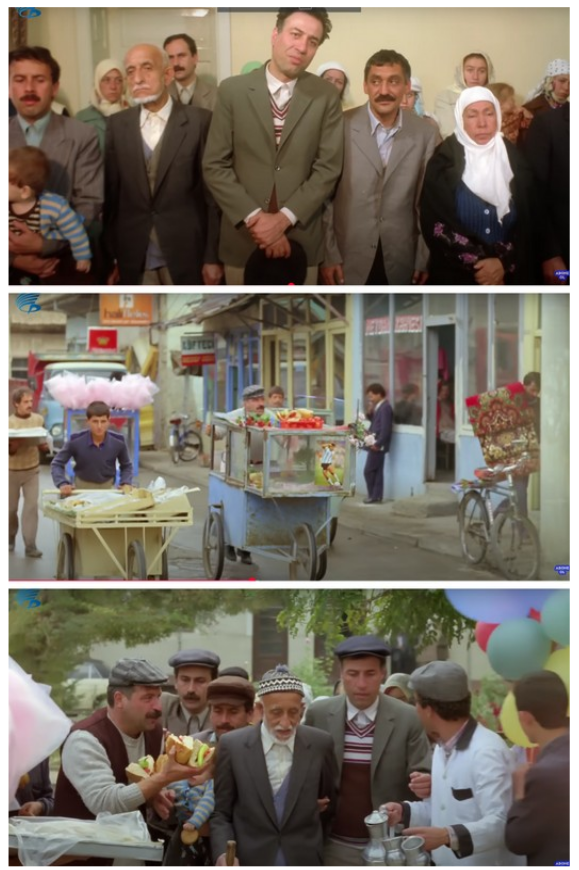
Figure 3. 2 Scenes from “Plaintiff” (1986), Source: Gülşah Film
A particularly poignant layer of the narrative is the presence of street vendors and informal workers who operate outside the courthouse. These characters turn the legal process into an economic opportunity, selling food, beverages, and services to those caught in the long cycle of trials. Their persistent visibility symbolizes how the judiciary, instead of being a space for impartial justice, has become a setting for profit, exploitation, and informal economies. The court becomes not a house of resolution, but a marketplace.
The film exposes how the judicial system, entangled with greedy lawyers and bribes disguised as settlement offers, transforms legal grievances into endless and absurd performances. This commercialization of justice reflects a broader critique of what could be called “judicial capitalism”—where access to justice is shaped by money, endurance, and negotiation rather than truth or fairness.
Through satire and repetition, Plaintiff portrays the judiciary not as an institution of moral clarity, but as an extended economic process, feeding a network of opportunists who survive off the system’s inefficiencies. The absurd length of the lawsuit reflects the lived frustrations of citizens who, in seeking justice, find themselves trapped in a game of endurance and expense.
Taken together, these films construct a cinematic cartography of the neoliberal subject—fragmented, precarious, and increasingly depoliticized. Through motifs of housing, labor, ethics, and media, Turkish cinema in the 1980s reveals how neoliberal rationality restructures not only economies but everyday life, identity, and narrative imagination. The figure below effectively visualizes the change after 1980 and produces a density map:
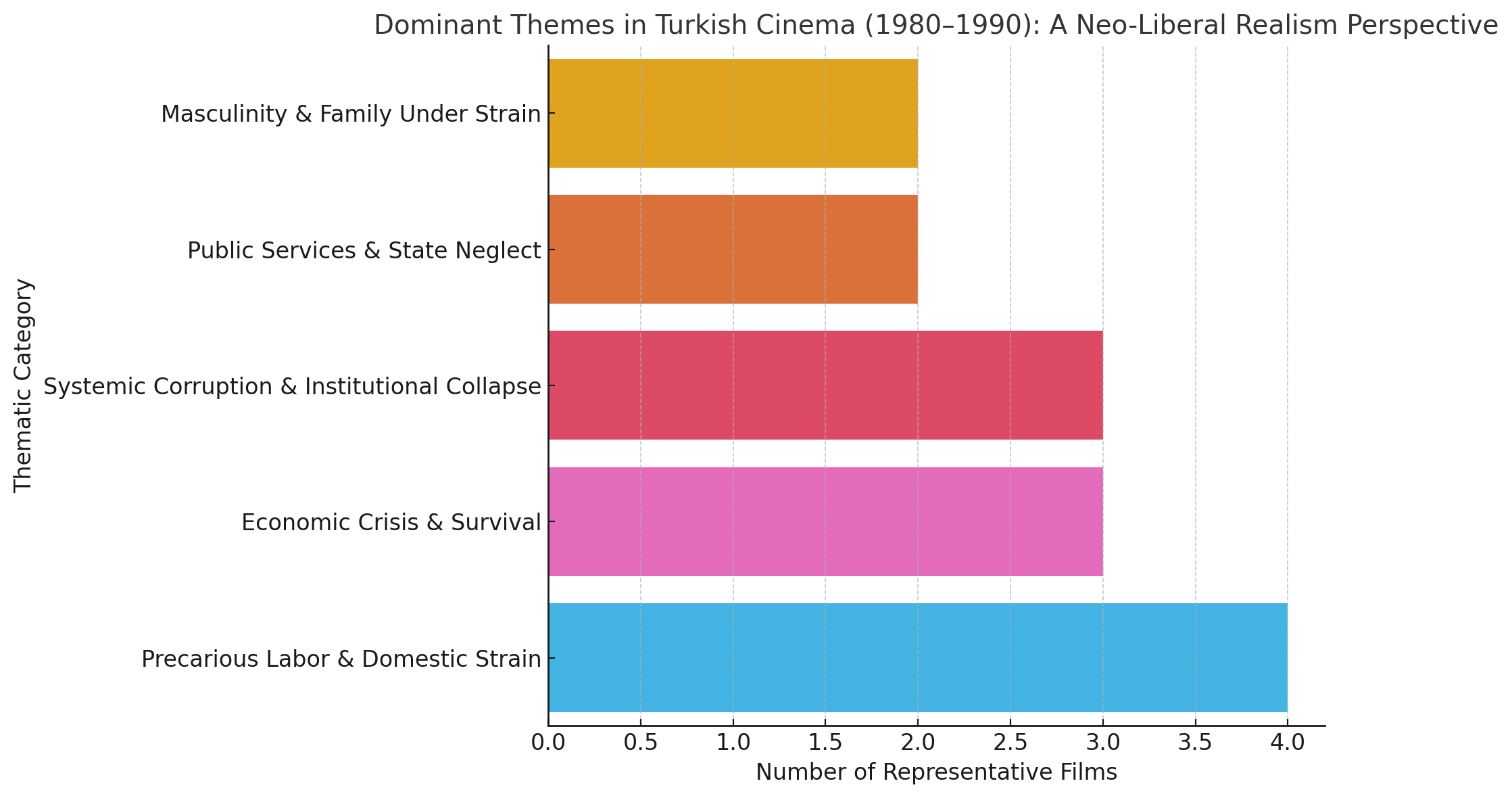
Figure 4. Statistics about dominant themes in Turkish Cinema (1980–1990) in the context of the Neo-Liberal Realism Perspective
Both The Interest Rush and Treadmill released in the early 1980s, explore the ideological and material consequences of Turkey’s transition to a neoliberal economy, particularly following the 1980 military coup. However, the two films adopt different narrative lenses and tonal strategies to depict the rise of finance capitalism and the social disintegration it induces.
In The Interest Rush, the story centers around Kamil Bey, a civil servant who represents the cautious, honest middle class clinging to traditional values of hard work and stability. The film traces his slow seduction into the world of speculative banking, catalyzed by government announcements legitimizing banker offices. Through Kamil’s eyes, the film documents how legal frameworks are manipulated to manufacture consent among ordinary people—encouraging them to gamble their life savings for promised wealth. This descent is marked by scenes such as the crowded banker offices, the euphoric gathering at Çiçek Pasajı, and the symbolic ice rink sequence, where skaters slide on slippery surfaces—mirroring the instability of a society built on speculative finance.
Treadmill, in contrast, employs satire and caricature to dissect the opportunists who exploit the same financial system. Banker Yakup is not a victim, but the architect of deception. Through fraudulent schemes and cynical manipulation, he embodies the dark psychology of those who thrive in deregulated markets. His scapegoating of the unsuspecting bookkeeper Ali—who is jailed for Yakup’s crimes—reveals how neoliberalism does not merely fail to protect the innocent; it actively punishes them. One of the most memorable scenes, where a religiously posturing character mocks secular values while leering at a woman, showcases the film’s sharp critique of moral hypocrisy under the guise of piety—a familiar trait in post-1980 Turkish sociopolitical life.
Whereas The Interest Rush mourns the collapse of collective ethics and social trust through the lens of a desperate but principled man, Treadmill mocks the performative morality and greed of the new bourgeoisie. The former is a social tragedy; the latter, a satirical farce. Yet both films converge in their conclusion: the neoliberal promise of effortless enrichment leads not to prosperity, but to ruin, betrayal, and loss. Kamil Bey’s financial dreams evaporate alongside state accountability, while Yakup’s fabricated suicide underscores how illusion and impunity go hand-in-hand in the world of finance. Moreover, both films reveal how the state subtly reinforces this system. In The Interest Rush, the Finance Minister’s public statement blaming citizens for “gambling” away their money reflects a neoliberal discourse of individual responsibility that absolves the state of its regulatory failures. In Treadmill, Yakup’s impunity suggests a state indifferent to—or even complicit in—economic predation. While Kamil Bey is a “banker victim,” Ali becomes a prisoner of bureaucratic indifference, punished for his trust.
In The Poor Man (Yoksul, 1986), Kemal Sunal portrays a naïve and kind-hearted tea server working in a bustling han (urban inn or commercial arcade). His character, aptly named “Yoksul” (literally and ironically “the Poor”), represents the voiceless and unorganized lower class of the neoliberal 1980s in Turkey. Despite his good intentions and hard work, he is repeatedly exploited by everyone around him—his boss, his coworkers, even the woman he loves. Yoksul is employed informally and underpaid by Süleyman Bey, the cynical owner of the tea house who epitomizes the opportunistic spirit of the post-1980 Turkish liberal economy. Süleyman’s mantra—“It’s the age of the economy, cheat or be cheated”—encapsulates the rise of market-oriented morality. In the han, commerce has replaced community; profit overshadows ethics. Yoksul falls in love with Leyla, a beautiful textile worker who manipulates his affection for material gain—coaxing him into buying gifts like watches and stereo systems. Her betrayal, when she runs off with a building contractor, mirrors the broader theme of moral erosion in neoliberal society, where relationships are transactional and upward mobility often depends on deceit. Economically and emotionally crushed, Yoksul begins to awaken through the guidance of Kerim Bey, a modern, English-speaking financial advisor who embodies the rational, technocratic spirit of the new capitalist order. With Kerim’s help, Yoksul exposes Süleyman Bey’s corruption and takes over the tea business himself‑rising from exploited laborer to small-time entrepreneur.
From a political economy perspective, the film allegorizes the social dislocations of the Özal era, during which privatization, deregulation, and free-market ideology reshaped Turkey’s urban fabric. As wages declined and labor protections vanished, the working poor were left to fend for themselves, often absorbing neoliberal ideals without structural support. The film critiques this system’s empty promises, showing that while anyone can become rich, it is often at the cost of solidarity, dignity, and truth. Ultimately, Yoksul is a darkly comic parable about the illusion of social mobility and the internalization of neoliberal values by those it harms most. Through the character of Yoksul, the film reveals how systemic poverty persists not only through exploitation, but through the moral compromises that the poor are forced to make under the weight of structural injustice.
Finally, The Lucky Worker (1980) constructs a poignant critique of Turkey’s early neoliberal transformation by exposing how mass media, advertising, and speculative capital commodify not only labor, but hope itself. Through the naive yet hardworking character of Mehmet Ali—played brilliantly by İlyas Salman—the film dramatizes how the working class is manipulated and discarded in a society where visibility substitutes for justice and spectacle replaces substance. The film begins with Mehmet Ali leaving his rural village and family behind in pursuit of a better life in Istanbul. As a construction worker, he is emblematic of the migrant labor force‑honest, skilled, and determined to build a stable future. His early scenes on the construction site emphasize solidarity, physical labor, and ambition. He dreams not of riches but of becoming a master bricklayer. However, this dream is quickly hijacked by the machinery of capitalist media. A turning point occurs when Mehmet Ali is selected in a promotional lottery organized by Millet Bankası—a fictional stand-in for corporate finance. The bank collaborates with a manipulative advertising firm run by Mösyö Alber, who turns Mehmet Ali into a marketing tool. He is paraded across media platforms as a model “lucky worker” who has supposedly won an apartment. Gifts, attention, and public admiration flood in. Yet all of this is an elaborate façade: the apartment is never legally his, no deed is handed over, and no one—including Mehmet Ali himself—thinks to ask for proof. This orchestrated fraud mirrors the spectacle-driven logic of neoliberal capitalism, where images of upward mobility are deployed to pacify and distract the masses. The film’s most critical commentary emerges through the character of the female journalist, who represents public conscience and investigative truth. Her boss’s comment—“You know what I like most about you? Your frankness, ambition, your drive to rise… and of course, your famous forgetfulness”—encapsulates how even public awareness is commodified and co-opted. The media, while seemingly exposing injustice, often functions as a tool of the same system it critiques.
As the truth unravels, Mehmet Ali’s mental state deteriorates. The film’s climax—his psychological collapse—symbolizes the destruction not only of his dream but of his very sense of self. What begins as a hopeful migration ends in alienation, madness, and the bitter realization that he was never the subject of empowerment, but the object of exploitation. The Lucky Worker functions as a devastating allegory of neoliberal spectacle, exposing how public institutions, private capital, and mass media coalesce to construct illusions of mobility while maintaining rigid class hierarchies. Mehmet Ali, the laborer who once believed in the dignity of work, becomes a disposable icon in a system that feeds off manipulated dreams. His tragedy is not that he was poor, but that he was made to believe—however briefly—that he had won.
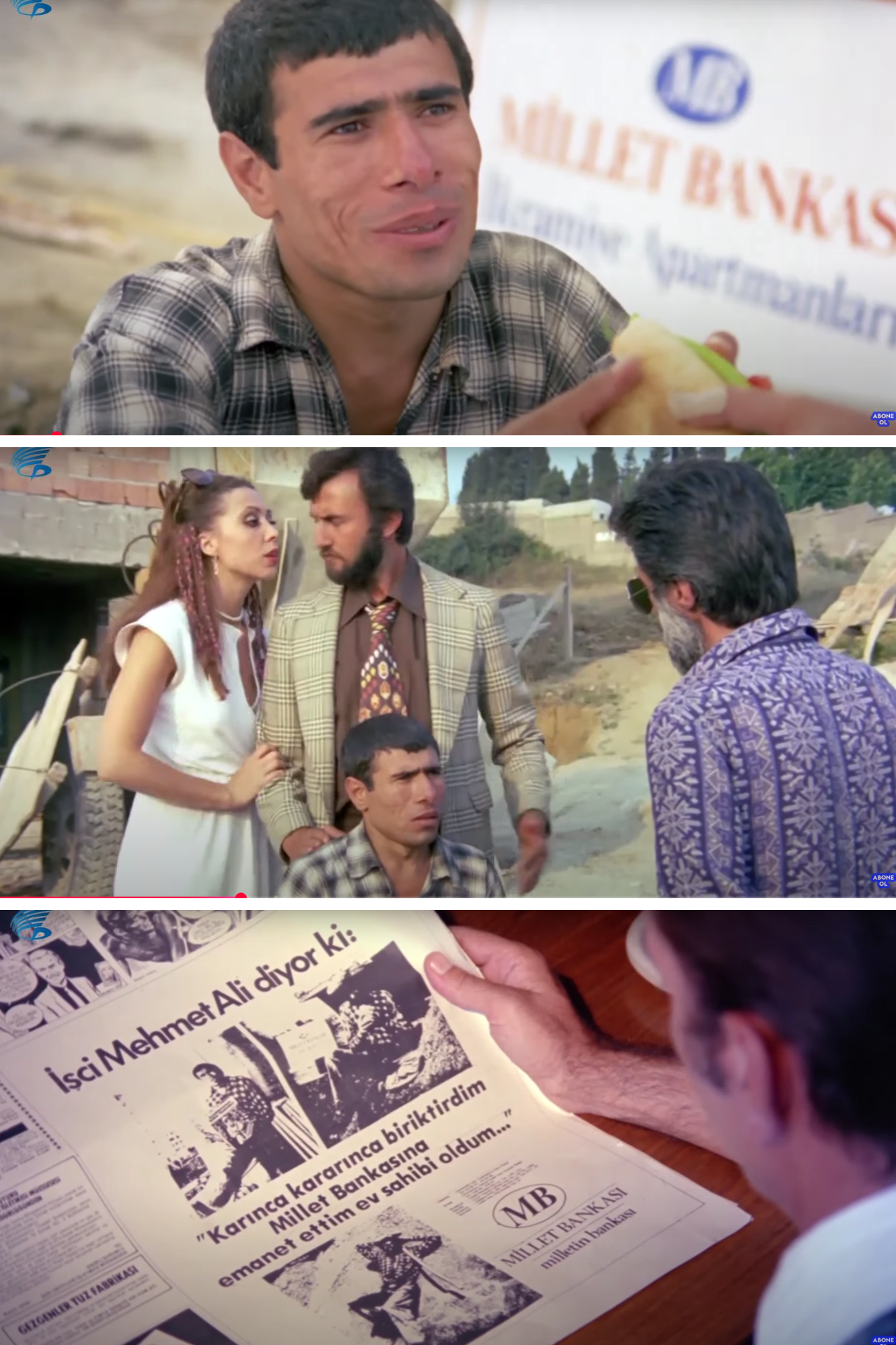
Figure 5. Scenes from “The Lucky Worker” (1980), Source: Fanatik Film
Conclusions
In conclusion, the article demonstrates that Turkish cinema of the 1980s did not merely adapt to economic change but actively registered and reproduced the symbolic grammar of neoliberalism. Through the framework of Neoliberal Realism, it becomes clear that cinema functioned as a site where older dispositions (habitus) collided with new market-driven fields, producing characters marked by precarity, institutional abandonment, and the commodification of selfhood. By reading these films not as isolated texts but as socially situated narratives, the study offers a novel theoretical model that connects aesthetics with structural change. The findings contribute to a deeper understanding of how cinema mediates economic ideology, and how symbolic capital is contested and recalibrated in visual culture under neoliberal conditions.
In the method section, concise answers to the questions that determine the problematic of the article were found as follows. These answers will be answered by further elaboration in the following paragraphs. In response to the first question, the analysis demonstrates that the selected films construct narrative worlds shaped by economic precarity, deregulated labor markets, and moral erosion. Characters are often portrayed as navigating broken institutions (e.g., schools, bureaucracies, the press), and are forced to survive through improvisation, deception, or visibility. These selected films narrativize not merely poverty or unemployment, but the deep cultural and symbolic consequences of neoliberalism: the loss of status, the collapse of collective agency, and the commodification of identity.
With regard to the second question, the concept of Neoliberal Realism emerges as a distinct narrative and aesthetic formation. Unlike the politically charged and ideologically explicit social realism of previous decades, these films favor individualized, depoliticized storylines grounded in domestic, professional, or existential crises. The narrative focus shifts from structural critique to the intimate dilemmas of characters struggling to reconcile outdated moral codes with new material realities. This realism is not defined by fidelity to material detail alone, but by its emphasis on symbolic displacement, social fragmentation, and the performativity of survival under neoliberal logic.
As for the third question, Bourdieu’s framework reveals how characters’ dispositions (habitus) are misaligned with the evolving socio-economic field, producing both personal crises and social commentary. The erosion of cultural and symbolic capital—evident in the figure of the teacher reduced to precarious work, or the honest man forced into dishonesty—exemplifies the symbolic violence of the period. These films show how neoliberalism reshapes not only external conditions but also internalized norms, as characters attempt to reposition themselves within a field that now values spectacle, adaptability, and entrepreneurial subjectivity over public service or ethical coherence.
However, the 1980 military coup marked a radical rupture in this trajectory. With the institutionalization of censorship, the dissolution of political parties, and the aggressive implementation of neoliberal economic policies, Turkish cinema was forced to abandon its overtly political stance. The post-coup period witnessed not just a shift in narrative content but a deeper epistemological transformation: from the mobilizing potential of cinema to its containment within depoliticized, commodified, and emotionally fragmented representations. What had once been a cinema of political awakening transformed into a cinema of personal survival and passive spectatorship.
In this new context, films increasingly relied on indirect political registers, favoring ironic distance, satire, and psychological interiority over revolutionary critique. The protagonists of 1980s cinema—disillusioned teachers, debt-ridden public workers, alienated tenants—embodied a new cultural logic where economic survival superseded ideological clarity. Films with neoliberal reality substitute structural critique with black comedy, presenting moral decay and institutional collapse not as political outcomes, but as symptoms of an abstract, depersonalized economic order. These narratives no longer demand collective change; rather, they offer a melancholic reflection on the invisibility and exhaustion of resistance in a society restructured by market logic.
Moreover, the very aesthetic tools of pre-1980 political cinema—once shaped by Brechtian distanciation, documentary realism, and collective subjectivity—began to dissolve under the influence of the neoliberal imaginary. The emerging figure of the neoliberal subject is atomized, emotionally disoriented, and symbolically disarmed. The space once occupied by class solidarity and radical aspiration is now filled with consumer fantasies, status anxiety, and the commodification of identity. Even humour, once used as a strategy of subversion, is co-opted by the dominant ideology, reframed as a coping mechanism rather than a mode of critique.
The decline in politically potent film production in the 1980s is thus not simply quantitative but profoundly symptomatic of a broader cultural transformation: a cinema that once demanded “How do we change the system?” now whispers, “How do we endure it?” This transition, aptly conceptualized as Neo-Liberal Realism, marks the absorption of radical aesthetics into a cinematic habitus aligned with individualism, privatization, and ideological resignation. Turkish cinema, in turn, ceased to function as a battleground for political meaning and became a stage for the dramatization of neoliberal fatigue.
A recurring motif in films - The Wheel, The Tenant, and Queer World etc.- is the fractured male identity in a neoliberal order. Once defined through labor and household authority, the male protagonists find themselves disempowered by unemployment, homelessness, and domestic strain. Their retreat—into silence, madness, or escapism—mirrors a broader class disorientation. These films depict not only economic hardship but the symbolic death of the patriarch as a stable social figure. This corpus of films constructs a cinematic grammar of neoliberal realism where hope is manufactured through spectacle, class struggle is obscured by market language, and characters drift between humiliation and illusion. Far from offering melodramatic resolution, these films reveal the psychological, domestic, and moral erosion that underpins Turkey’s neoliberal transformation. What unites these films is not merely their economic critique, but their tragicomic rendering of a society where survival replaces solidarity and image supplants ideology.
When viewed through the Bourdieusian lens of habitus, field, and capital, the narrative landscapes of Turkish cinema between 1980 and 1990 present more than individual tales of misfortune or triumph—they materialize as symbolic representations of displaced class positions under neoliberal restructuring. These films not only document the socio-economic shocks of the post-1980 Turkish economy but also illustrate the recalibration of class habitus under new capitalist configurations. In these narratives, the working-class protagonists—shaped by an ethos of dignity and modest survival—are gradually dislocated from their traditional positions within the social field, thrust into alien realms where symbolic and economic capital are both hyper-inflated and grotesquely uneven.
Bourdieu’s concept of illusio—the deep belief in the value of participation in a social game—helps elucidate the protagonists’ misplaced faith in social mobility. In The Lucky Worker, Mehmet Ali is seduced by the illusion of class ascension via media spectacle. Similarly, in The Naked Citizen, nudity becomes a mediatic currency for survival in a system where economic capital is unattainable through traditional labor. These acts of desperate self-representation reflect an enforced recalibration of symbolic capital in the absence of economic autonomy. The “game” of neoliberalism demands participation, but offers its own rigged rules.
The recurring motif of media-facilitated social mobility also echoes the transformation of field dynamics in neoliberal contexts. In Queer World, the protagonist’s naive attempt to navigate the cultural field through music and cassette dreams underscores Bourdieu’s point that without the necessary cultural and social capital, attempts to enter higher fields often result in symbolic violence. His failure, like that of others, is not personal but structural—it arises from a mismatch between habitus and field.
In these films, we witness what Bourdieu called the “left hand of the state”—the retreat of protective institutions—replaced by deregulated market mechanisms and coercive survival strategies. Whether it’s the illusion of a gifted apartment (The Lucky Worker), the sexualized spectacle of naked resistance (The Naked Citizen), or the ever-shifting dreams of cassette-born stardom (Queer World), these stories stage a tragicomic dance between individual agency and the structuring violence of capital.
The Turkish films produced in the aftermath of the 1980 military coup do not merely reflect a shift in aesthetic preferences or thematic concerns; rather, they constitute a profound transformation in the symbolic and social architecture of cinema itself. In contrast to the collectivist ethos of the 1960–1980 period, when social realism mobilized narratives of class struggle, solidarity, and moral awakening, the films of the following decade enact what may be called a cinematic deconstruction of habitus. Characters once positioned as agents of political change now find themselves dislocated in a field dominated by market rationality, Spectacularization of Precarity, and fragmented labor. The notion of cultural capital—once symbolized by moral integrity, educational credentials, or professional prestige—is revealed as non‑convertible under neoliberal conditions. These films thus illustrate the central paradox of neoliberal subjectivity: survival without meaning, visibility without value, and adaptation without agency.
The theme of alienation within the family and home further deepens this diagnosis. In films such as The Tenant and The Handsome One, the domestic space ceases to function as a refuge or locus of identity. Housing is commodified, priced in foreign currencies, and transformed into an arena of struggle against external economic forces. The protagonists’ inability to secure shelter is not merely a material failure but a symbolic disinheritance, reflecting how national citizens are rendered foreign in their own land. The presence of Iranian and Arab investors in these narratives is not coincidental—it marks the globalization of capital and the foreignization of the intimate, where marriage, family, and home are subordinated to speculative logic. This spatial alienation, embedded in the visual grammar of these films, underscores the erosion of the traditional petit-bourgeois dream and the emergence of a new urban precarity.
Equally significant is the way these films portray labor. The Wheel and The Treadmill present work not as a path to dignity but as a site of repetition, exhaustion, and disposability. In these narratives, labor is not a source of moral or social affirmation but a treadmill of survival, where the body is sacrificed to the indifference of capital. The absence of protective gear, the denial of healthcare, and the rejection of unionization reflect a deliberate dismantling of collective labor structures. These films expose how neoliberalism extracts surplus from vulnerability, valorizes overwork, and isolates workers into fragmented experiences devoid of solidarity. The characters’ responses—despair, resignation, or desperate entrepreneurship—mirror the broader depoliticization of the era. Protest is replaced by personal hustle, and collective resistance by resigned adaptation.
This inward turn is especially visible in The Teacher, The Honest One and The Naked Citizen where civil servants—once icons of state authority and social progress—are humiliated by economic degradation. Their descent into mental illness is not anecdotal but structural, a symptom of a society in which the state has abdicated its symbolic and material responsibilities. The recurring trope of institutionalization—whether psychiatric or bureaucratic—emerges as a metaphor for the collapse of the public sphere, where service is no longer a form of nation-building but an act of silent martyrdom. These films articulate, with subtle intensity, the erosion of moral economy, as the characters are stripped not only of income but also of narrative coherence and social purpose.
Crucially, these films also embody the operations of symbolic violence, in which structures of domination are naturalized, internalized, and reproduced without direct coercion. The internalization of failure, the normalization of humiliation, and the moral resignation that permeates these neoliberal films signal how neoliberalism reshapes not only institutions but also desires, hopes, and subjectivities. Individuals come to accept their dispossession as fate, their invisibility as normal, and their unfreedom as choice.
Footnotes
1Tarkan is a cult film series consisting of five films adapted from the fictional character Tarkan, created by Sezgin Burak in his comic book series. Preparations for the first Tarkan film began in 1969, and it was released in the same year. The final installment premiered on November 1, 1973. The first Tarkan film was directed by Tunç Başaran. The sequel Tarkan: Silver Saddle, Tarkan: Blood of the Vikings, Tarkan: The Golden Medallion, and Tarkan: The Mighty Warrio were directed by Mehmet Aslan. The series also carries the qualities of historical cinema, featuring themes such as the efforts of Attila, Emperor of the Huns; Genseric, King of the Vandals; and Valentinian, Emperor of Rome, to seize the magical sword of Mars, the God of War.
References
Akdağ, M. (2018). 1979 Mid-Term Elections And The Propaganda Method Applied By Parliamentary Candidate Selahattin Acar. Journal of Contemporary Turkish History Studies, 17(35), 345–366.
Arslan, S. (2017, September 16). The Plural States of Cinema in Turkey. Politics Today. https://politicstoday.org/the-plural-states-of-cinema-in-turkey/
Atkinson, W. (2025). Bourdieu on love: A latent capital, a primary field and a new research agenda. The Sociological Review, 73(3), 645–660. https://doi.org/10.1177/00380261241259541
Balaj, M., & Eikemo, T. A. (2022). Sick of social status: A Bourdieusian perspective on morbidity and health inequalities. Sociology of Health & Illness, 44(8), 1214–1250. https://doi.org/10.1111/1467-9566.13512
Bayram, N. (2025). Bir Yudum Sevgi [A Sip of Love]. Humanities Institute. (In Turkish)
Bila, F. (2020). Atatürk’ün attığı temele bugün hâlâ çok ihtiyacımız var [We still need the foundation laid by Ataturk today]. T24. https://t24.com.tr/yazarlar/fikret-bila/ataturk-un-attigi-temele-bugun-hala-cok-ihtiyacimiz-var,26665 (In Turkish)
Bourdieu, P. (1986). The Forms of Capital. In J. G. Richardson (Ed.), Handbook of Theory and Research for the Sociology of Education (pp. 241–258). Greenwood Press.
Bourdieu, P. (1998). On Television and Journalism. Pluto Press.
Büyücek, S. (2024). Representation of masculinities in the Arabesk films of Orhan Gencebay within the context of 1970s Turkish popular cinema (Yeşilçam). Turkish Studies, 25(4), 699–719. https://doi.org/10.1080/14683849.2024.2336697
Can, İ. (2016). Non Realist Tendencies in New Turkish Cinema [MA Thesis]. University of Bilkent.
Cantaş, A., & Koluaçik, İ. (2023). Third Cinema Aesthetics and Its Appearance in Yavuz Özkan Films. İnsan ve Toplum Bilimleri Araştırmaları Dergisi, 12(3), 1768–1790. https://doi.org/10.15869/itobiad.1284479
Daldal, A. (2023). The disappearance of the working class hero in the New Independent Turkish Cinema: Globalization and the politics of festivalism. Inter-Asia Cultural Studies, 24(1), 2–18. https://doi.org/10.1080/14649373.2023.2156113
Duyan, Y. (2023). Cinema Was a Tunnel to the Streets for Us: A Study on the Cinema Experience of Mardin Women in the 1960s and 1970s. Erciyes İletişim Dergisi, 10(1), 327–343. https://doi.org/10.17680/erciyesiletisim.1188274
Erdoğan, N. (1998). Melez Kültürler, Aşırılıklar [Mixed Cultures, Extremes]. Birikim. https://birikimdergisi.com/dergiler/birikim/1/sayi-111-112-temmuz-agustos-1998/2306/melez-kulturler-asiriliklar/5225 (In Turkish).
Erdoğan, U. (2023). Liberalism, Neoliberalism and The Transformation In Turkey After The September 12 Coup. Avrasya Sosyal ve Ekonomi Araştırmaları Dergisi, 10(1), 286–304.
Geçer, M. Ç. (2021, May 1). 12 Eylül sonrası ilk işçi filmimiz “Çark” ve bir direnişe etkileri #kaptanzaman [Our first worker film after September 12, “Çark,” and its impact on a resistance movement #kaptanzaman]. Bant Mag. https://bantmag.com/kaptan-zaman-12-eylul-sonrasi-ilk-isci-filmimiz-cark-ve-bir-direnise-etkileri (In Turkish)
Kaplan, A. B. (2022). Türkiye’nin Toplumsal Atmosferinin Sinemasal Örneği: Zeki Ökten Sinemasinda Toplumsal Gerçekçilik [A Cinematic Example of Turkey’s Social Atmosphere: Social Reality In Zeki Ökten Cinema]. Akademik Hassasiyetler, 9(18), 267–286. (In Turkish).
Kaplan, M., & Yardımcıoğlu, M. (2020). Pierre Bourdieu with the Concepts of Field, Habitus and Capital. Habitus Toplumbilim Dergisi, 1, 23–37.
Kazgan, G. (2004). Tanzimat’tan 21. yüzyıla Türkiye ekonomisi: Birinci küreselleşmeden, ikinci küreselleşmeye [The Turkish Economy from the Tanzimat to the 21st Century: From the First Wave of Globalization to the Second Wave]. İstanbul Bilgi Üniversitesi Yayınları. (In Turkish).
Kırtepe, S. (2019). Türkiye'de sol düşüncenin gelişimi ve 1960-1980 arası yıllarda sinema üzerinden okunması [The Development of Left Thought in Türkiye and its Reading through Cinema in the Years 1960-1980] [MA Thesis]. University of Aksaray. (In Turkish).
Kracauer, S. (1960). Theory of Film: The Redemption of Physical Reality. Oxford University Press.
Olgunsoy, U. C. (2021). Sinemasal Gerçekçilik Halen Mümkün Mü? Klasik ve Güncel Kuramlar Bağlamında Günümüz Türkiye Sinemasinda Gerçekçilik Eğilimleri [Is Cinematic Realism Still Possible? Realist Tendencies in Today's Turkish Cinema in the Context of Classical and Current Theories]. Sinecine: Sinema Araştırmaları Dergisi, 12(1), 113–145. https://doi.org/10.32001/sinecine.819386 (In Turkish).
Öziş, P. (2017, March 17). Aç Gözünü, Doldur Keseni; Demokrasi Geliyor: Zübük (1980) [Open Your Eyes, Fill Your Pockets; Democracy Is Coming: Zübük (1980)]. Öteki Sinema. https://www.otekisinema.com/ac-gozunu-doldur-keseni-demokrasi-geliyor-zubuk-1980/ (In Turkish).
Sen, F. (2019). 1970'lerden Günümüze Değişen Toplumsal Yapının Türk Komedi Film Karakterlerine Yansıması [The Reflection of the Changing Social Structure from the 1970s to the Present on Turkish Comedy Film Characters]. Ulakbilge Dergisi, 7(41), 711–725. https://doi.org/10.7816/ulakbilge-07-41-03 (In Turkish).
Steger, M. B. (2004). Küreselleşme [Globalisation] (A. Ersoy, Trans.). Dost Publications. (In Turkish).
Teksoy, R. (2007). Rekin Teksoy’un Türk Sineması [Rekin Teksoy’s Turkish Cinema]. Oğlak Publication. (In Tturkish).
Teksoy, R. (2008). Turkish Cinema. Oğlak Publication.
Tugen, B. (2014). 1960-1980 Darbeleri Arasında Türk Sinemasında Düşünce Oluşumu ve Filmlerin Sosyolojik Görünümleri [Between 1960-1980 Impact Bodies in Turkish Cinema and Films Sociological Thought Views]. 21. Yüzyılda Eğitim ve Toplum, 3(7), 159–175. (In Turkish).
Tunç, T. (2022). 1970'ler dönemi Türk sinemasında ideoloji ve mitoloji: Tarkan filmleri [Ideology and Mythology in 1970s Turkish Cinema: Tarkan Films] [MA Thesis]. Selçuk University. (In Turkish).
Uçkaç, A. (2010). Türkiye’de neoliberal ekonomi politikaları ve sosyo-ekonomik yansımaları [Neoliberal Economic Policies and Socio-Economic Reflections in Turkey]. Maliye Dergisi, 158(1), 422-430. (In Turkish).
Varol, F. (2018). From Developmentalism to Neoliberalism: The Changing Role of the State and Development of Islamic Business and Finance in Turkey. Turkish Journal of Islamic Economics, 5(1), 1–15. https://doi.org/10.26414/tujise.2018.5.1.1-15
Yarar Aksoy, F. N. (2023). Transformation of Political Discourse in Turkish Cinema from the 1960s to the 1990s. Third Text, 37(1), 87–98. https://doi.org/10.1080/09528822.2023.2195757
Yılmaz, H. R. (2011). Yeni gerçekçilik ve Türk sinemasında gerçekçilik [Neo Realism and Realism in Turkish Cinema] [MA Thesis]. Yeditepe University. (In Turkish).