MEDIA & JOURNALISMМЕДИА И ЖУРНАЛИСТИКА
Artificial Intelligence in Journalistic Routines: Factors Hindering Uptake in South Africa and Ghana
M&G Research Consultants (Durban, South Africa).
Email: tigerem589[at]gmail.com
 0000-0003-3773-4959
Durban University of Technology (Durban, South Africa).
Email: theodoradame[at]yahoo.com
0000-0002-3160-9607University of Media, Arts and Communication (Accra, Ghana).
Email: samuelkd2014[at]gmail.com
0000-0002-9396-2107Abstract
Despite the growing presence of artificial intelligence (AI) in Western journalism, AI adoption in Africa has remained slow. Drawing on qualitative interviews with 18 journalists, this study examines the sociocultural factors hindering the use of AI in journalistic routines. The findings reveal that newsroom practices, insufficient infrastructure, bureaucratic hurdles, gaps, and inconsistencies in AI policies are key barriers. The findings further show that social influence, organizational support, and access to resources significantly influence AI adoption. The lack of training negatively affects effort expectancy, while prevailing discourse surrounding AI shapes journalists’ perceptions. These findings suggest that integrating AI into journalistic routines requires addressing the socio-cultural and organizational challenges identified through the Unified Theory of Acceptance and Use of Technology (UTAUT) framework. The analysis extends UTAUT by incorporating organizational and managerial support, including guidelines on AI ethics and routine use, resource provision, and structured training, as a core organizational driver of adoption. It also introduces job security assurance as a distinct construct shaping journalists’ behavioral intention to use AI. Finally, the analysis identifies bureaucratic friction, defined as policy and approval bottlenecks, as an additional barrier related to organizational conditions that must be modeled in African newsroom contexts.
Keywords
Искусственный интеллект в журналистской рутине: факторы, препятствующие его внедрению в Южной Африке и Гане
M&G Research Consultants (Дурбан, ЮАР).
Email: tigerem589[at]gmail.com
0000-0003-3773-4959Дурбанский технологический университет (Дурбан, ЮАР).
Email: theodoradame[at]yahoo.com
0000-0002-3160-9607Университет медиа, искусств и коммуникаций (Аккра, Гана).
Email: samuelkd2014[at]gmail.com
0000-0002-9396-2107Аннотация
Несмотря на всё более заметное присутствие искусственного интеллекта (ИИ) в западной журналистике, темпы его внедрения в Африке остаются низкими. В исследовании, основанном на качественных интервью, проведённых с 18 журналистами, рассматриваются социокультурные факторы, препятствующие использованию ИИ в повседневных журналистских практиках. Полученные результаты показывают, что ключевыми барьерами являются сложившиеся практики работы редакций, недостаточная инфраструктура, бюрократические препятствия, пробелы в нормативной базе, а также непоследовательность политики в отношении ИИ. В исследовании также подчёркивается, что социальное влияние, организационная поддержка и доступ к ресурсам существенно влияют на внедрение ИИ. Недостаточная подготовка негативно влияет на восприятие простоты использования, тогда как преобладающие общественные дискуссии об ИИ формируют представления о нём и связанные с ним установки. Эти результаты позволяют заключить, что интеграция ИИ в рутинные журналистские практики требует учёта социокультурных и организационных вызовов при применении модели UTAUT. Исследование расширяет модель UTAUT, добавляя организационную и управленческую поддержку и рассматривая её компоненты — этические принципы использования ИИ, регламенты рутинных практик, ресурсное обеспечение и структурированное обучение — как ключевые факторы внедрения на уровне редакции. Кроме того, в модель вводится гарантия сохранения занятости как самостоятельный конструкт, влияющий на поведенческое намерение журналистов использовать ИИ. В исследовании предлагается рассматривать бюрократическое трение (узкие места, связанные с организационными политиками и процедурами согласования) как дополнительный барьер в системе организационных условий, который следует моделировать с учётом контекста африканских редакций.
Ключевые слова
Introduction
Available evidence suggests that AI plays a transformative role in journalism by enhancing the efficiency, accuracy, and overall quality of news production (Kioko et al., 2022). The adoption and integration of AI in newsrooms may streamline the news-making process, support journalistic routines, and optimize newsroom operations (Venkatesh et al., 2003). Within newsrooms, AI technologies can support journalists by automating routine tasks and allowing them to focus on more complex investigative work. These technologies can also improve the speed and accuracy of news delivery, ensuring that audiences receive timely and reliable information (Jamil, 2021). Nonetheless, many news organizations in Africa face significant technological and financial constraints and lack the infrastructure and resources necessary to invest in advanced AI tools and systems (Adjin-Tettey et al., 2024). A notable skills gap also persists because many journalists and media professionals are not adequately trained in AI and digital literacy, which complicates the effective use of these technologies (Munoriyarwa et al., 2021). The high costs associated with AI adoption, including procurement, maintenance, and training expenses, further complicate the situation (Jamil, 2021). Additionally, the digital divide, marked by uneven internet access and connectivity issues, hampers the widespread implementation of AI solutions (Kothari & Cruikshank, 2022). These interconnected challenges create a complex environment that significantly hinders the rapid integration of AI technologies into the media landscape across Africa.
Although the studies reviewed above provide valuable insight into the factors hindering the uptake of AI technologies in newsrooms, they do not capture the insights that a two-country study could provide. Previous studies have also been grounded in different theoretical frameworks, including the Technology Acceptance Model and the Technology Appropriation Theory. This choice may be attributable primarily to the UTAUT model’s limited attention to factors that inhibit information-system adoption. Nevertheless, we argue that research on the non-adoption or slow adoption of information systems, including AI technologies, can still contribute to the UTAUT framework. This is because factors that impede adoption may also reveal determinants that are not apparent when technology (AI) uptake is examined solely in terms of its facilitators. Accordingly, this study was motivated by the need to identify the factors hindering the adoption of AI technologies in journalistic routines and to determine what may facilitate their use at both the organizational level—including sociocultural factors and facilitating conditions within organizations—and the individual level. Such an inquiry is imperative given the current technological environment and the potential of AI systems to support journalism.
The media landscape in Ghana and South Africa
Both Ghana and South Africa have vibrant media environments, constitutional protections for press freedom, and conditions conducive to adopting technologies that support journalistic practice. Ghana, in particular, is regarded as one of Africa’s most democratic countries, with a vibrant and pluralistic media environment (RSF, 2022). It has more than 500 radio stations, more than 120 TV stations, and numerous print publications serving a population of just over 35 million people. The digital media landscape is also vibrant, supported by a strong tradition of citizen journalism (Adjin-Tettey & Etrue, 2026). The country has a comprehensive strategic framework for adopting and integrating AI across various sectors of the economy. Although media is not identified as a distinct pillar, it is implicitly included in Ghana's AI strategy through provisions related to national development, the creative industries, and AI-related risks such as misinformation. The government is also committed to developing the infrastructure necessary to facilitate AI‑driven transformation. This orientation toward innovation is also evident in newsrooms. Many newsrooms are equipped with state-of-the-art technology, maintain a strong digital presence, and are adapting their operations to capitalize on the affordances of digital technologies. This is evident in their use of tools for data-driven storytelling, particularly in election reporting. Some newsrooms also collaborate with organizations that train journalists to use technologies such as AI for storytelling and fact-checking. Despite these efforts, certain constraints, particularly financial limitations (Yeboah-Banin & Adjin-Tettey, 2023), may hamper the adoption of AI technologies. Overall, Ghana's relatively open media system and conducive socio-political environment allow media practitioners to operate with substantial freedom and adopt technologies that facilitate journalistic practice, including AI technologies.
South Africa presents a compelling case study for AI adoption in newsrooms because it lies at the intersection of traditional broadcast dominance and rapid digital transformation within the Global South. In 2025, the country had a robust mass media foundation, with approximately 334 radio stations and widespread television viewership. However, the radio and television sectors faced significant financial pressures, as the South African Broadcasting Corporation (SABC) and other traditional media outlets reported structural net losses (Labuschagne, 2025; Meltwater, 2025). This traditional landscape is being disrupted by a maturing digital ecosystem in which internet penetration has reached 78.9% and mobile connections are equivalent to 193% of the total population, driving a “social-first” news culture dominated by platforms such as TikTok and YouTube (DataReportal, 2025; Reuters Institute, 2025). In this financially constrained environment, South African newsrooms are increasingly turning to AI for automated content summarization and multilingual translation to help bridge digital divides across the country's 11 official languages. At the same time, they must navigate national regulatory frameworks such as the 2024 AI National Plan (Department of Communications and Digital Technologies, 2024; PwC, 2025). Consequently, the South African context provides a critical testing ground for examining how AI can be leveraged to sustain journalistic integrity and media viability amid rapid technological and socio-economic change.
AI adoption in South African and Ghanaian newsrooms must be understood in relation to media histories and platform power, rather than solely in terms of “resource constraints.” Postcolonial scholarship suggests that institutional legacies and power structures continue to shape perceptions of what constitutes credible journalism (Ademosu, 2025; Zirugo, 2021). At the same time, platformization and datafication further entrench inequality by shifting control over distribution, visibility, and revenue toward opaque external infrastructures, while regulation and organizational capacity often lag (Adjin-Tettey et al., 2021; Wu, 2024). Accordingly, these two cases contribute to global debates on algorithmic journalism in contexts of digital asymmetry, where labor precarity and weak governance are structural factors affecting adoption (Kothari & Cruikshank, 2022). This article also advances our earlier work (Adjin-Tettey et al., 2024) by moving from merely describing barriers to building theory through a comparative, newsroom-specific UTAUT extension that highlights how ethics governance, managerial resourcing, bureaucratic friction, and job security influence intention and use.
Literature Review: Adoption, Concerns and Challenges of AI Integration into Newsroom Routines
The incorporation of AI tools into journalistic routines provides innovative means of combining algorithms and automation to enhance content generation, news distribution, audience engagement, and editorial workflows (Diakopoulos, 2019). At the individual level, journalists use AI for numerous tasks across all stages of news production, including news gathering, news writing and presentation, news editing, and news promotion (Wu, 2026). AI tools used in journalism, such as computational news discovery, have also improved news production by directing editorial attention to potentially newsworthy information and trends in data streams (Diakopoulos, 2020). Beckett et al. (2023) argue that while AI tools offer opportunities to support newsroom tasks, such as fact-checking, content creation, and data analysis, they also pose challenges related to journalistic integrity, ethics, and the evolving relationship between journalists and their audiences. In analyzing AI adoption and the challenges it presents, Wu (2024) contends that it is important to recognize that code (including AI) may be adopted differently across socio-political and cultural contexts and that its use is shaped by the values embedded in journalistic systems and by the form of journalism practiced. A design ethnography conducted by Lopez et al. (2023) at the BBC and The Times found that the successful integration of AI requires close collaboration between journalists and technologists. The researchers emphasized that AI tools must align with editorial priorities to gain full acceptance. They also highlighted the role of leadership in bridging gaps between departments. Other key organizational barriers to AI adoption include knowledge silos. For example, research indicates that the inability of editorial, managerial, and technological teams to communicate effectively prevents Dutch media organizations from integrating responsible AI practices into everyday workflows (Dodds et al., 2024). This finding underscores the importance of organizational reforms that facilitate cross-departmental collaboration and knowledge sharing and suggests that leaders should establish clear workflows and provide the resources necessary to integrate AI into existing routines.
Verma (2024) found that journalists often struggle to reconcile efficiency gains with the risks of bias and misinformation in automated content creation and called for greater transparency and accountability in AI systems. Beyond these newsroom-level constraints, tools based on large language models have demonstrated a propensity to generate false, erroneous, or misleading content (Augenstein et al., 2023), perpetuate bias and misinformation, and infringe copyright (Situmorang, 2024), thereby discouraging their adoption in newsroom practice. These concerns were echoed by Forja-Pena et al. (2024), whose analysis of public perceptions and the views of journalists affiliated with 14 international press associations found widespread concern that AI-generated misinformation could erode trust and that AI could be misused in newsrooms. These fears are not isolated. Jamil (2022) found that Pakistani journalists expressed similar anxieties, often exacerbated by high unemployment rates and limited alternative opportunities. Harb and Arafat (2024) extended this discussion through their examination of Arab newsrooms, where journalists fear that AI’s efficiency may undermine traditional newsroom hierarchies and editorial autonomy. Sharadga et al. (2022) found that these concerns were further compounded by a lack of organizational support and transparency regarding how AI might affect journalists’ careers. These studies collectively show that fears of job displacement are not merely technological concerns but are deeply entwined with identity, trust, and professional autonomy.
Concerns about job loss feature prominently in research conducted in several African countries. Munoriyarwa et al. (2021) conducted an in-depth analysis of newsrooms in South Africa and found that the fear of job displacement is widespread among journalists. Their study showed that journalists view AI tools, especially those that automate tasks such as editing, as threats to their professional identities and roles. The researchers argue that this fear is rooted in broader anxieties about the erasure of human creativity and editorial judgment. Similarly, Kioko et al. (2022) documented that Kenyan journalists echo these concerns, emphasizing how AI's efficiency in processing press releases and generating content may render traditional newsroom roles redundant. Adjin-Tettey et al. (2024) also found that journalists in South Africa and Ghana feared that greater AI integration would automate newsroom tasks and reduce staffing needs, potentially resulting in job losses. Moreover, an ad hoc approach to AI adoption may result in inconsistent applications and ethical dilemmas. In Zimbabwe, Ndlovu (2024) found that the deployment of an AI-powered newsreader elicited mixed audience reactions. While some viewed the innovation as progress, others criticized it for lacking human emotion and cultural relevance and characterized it as a threat to the traditional practice of journalism.
Theoretical underpinning: Unified Theory of Acceptance and Use of Technology (UTAUT) Model
After carefully reviewing the literature on user acceptance and empirically comparing eight prominent models, Venkatesh et al. (2003) developed a unified model that integrates elements from all eight to explain technology acceptance. This model, the Unified Theory of Acceptance and Use of Technology (UTAUT), specifically explains users’ intentions to use information systems and their subsequent use behavior in organizational settings. Venkatesh et al. (2003) propose four key constructs that explain information system use in organizational contexts:
-
performance expectancy;
-
effort expectancy;
-
social influence; and
-
facilitating conditions.
Performance expectancy, effort expectancy, and social influence are considered direct determinants of behavioral intention, whereas facilitating conditions directly determine use behavior.
The four core UTAUT constructs: performance expectancy, effort expectancy, social influence, and facilitating conditions, capture beliefs about a system’s effects on job performance, its ease of use, social expectations regarding its use, and the availability of organizational support. Accordingly, when these conditions are met, users are more likely both to intend to use and actually use a system. However, variables such as gender, age, experience, and voluntariness of use moderate the effects of the four key constructs on behavioral intention and use behavior (Chang et al., 2019; Legris et al., 2003). Figure 1 presents the UTAUT model proposed by Venkatesh et al. (2003).
UTAUT has demonstrated predictive consistency across different contexts and technologies (Venkatesh et al., 2012, 2016; Xu et al., 2017). Venkatesh (2022) argues that additional technological antecedents need to be assessed within UTAUT, while Jacob and Pattusamy (2017) called for further empirical testing of the full UTAUT model, including nonlinear relationships and moderators. Several extensions of the model have been proposed, including UTAUT2, which adds three constructs—hedonic motivation, price value, and habit—to explain information system use in consumer contexts (Tamilmani et al., 2021; Venkatesh et al., 2012). In the context of AI use in newsrooms, perceptions of model errors and AI transparency may influence UTAUT predictors, while organizational innovation may influence the adoption and use of AI.
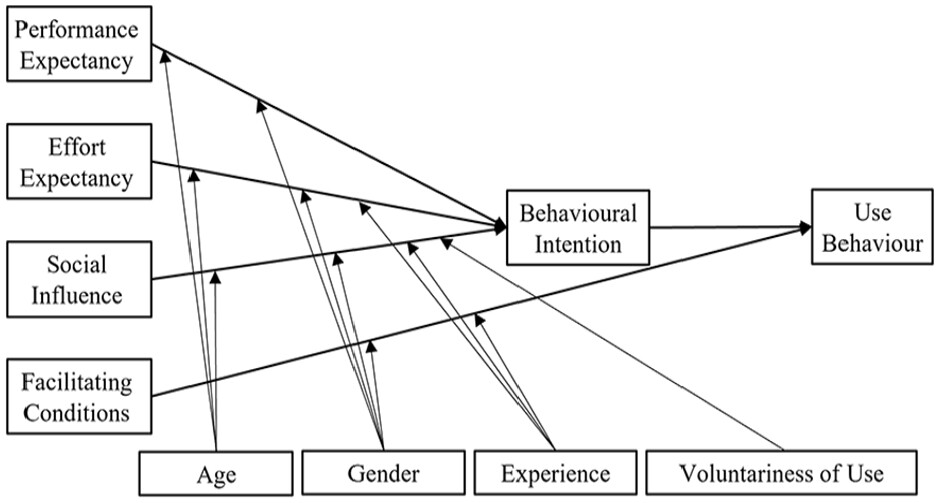
Figure 1. A visual depiction of the UTAUT model (Venkatesh et al., 2003)
We contend that, at both the individual and organizational levels, technology use is shaped by individual and social contexts, including organizational conditions. Thus, the theory is relevant to our examination of how newsroom practices, policies, and bureaucratic processes in South African and Ghanaian news organizations influence the integration of AI into journalistic workflows. However, this study takes a different approach by examining factors that impede AI adoption in journalistic routines and using these barriers to identify conditions that may facilitate adoption. Although UTAUT explains technology adoption, and most empirical studies using the model focus on factors that promote it, we argue that examining slow adoption and nonuse can also clarify the determinants of behavioral intention and actual AI use in journalistic routines.
Thus, drawing on the Unified Theory of Acceptance and Use of Technology (UTAUT), this study identifies and analyzes the factors hindering AI integration in journalistic practice in South African and Ghanaian news organizations and uses these findings to identify conditions that may facilitate adoption. The study answers the following questions:
-
How do existing newsroom practices, policies, and bureaucratic processes in South African and Ghanaian news organizations influence the integration of artificial intelligence into journalistic workflows?
-
What factors contribute to resistance to AI adoption in newsrooms in South Africa and Ghana?
Methods and materials
Approach
This study employed qualitative research methods, as Hammarberg et al. (2016) state, “are used to answer questions about experience, meaning and perspectives, most often from the standpoint of the participant” (p. 499). This approach was selected because it enabled us to identify the specific factors, including newsroom practices, policies, and bureaucratic processes, that contribute to reluctance to integrate AI tools into journalistic workflows. Ghana and South Africa were selected because both countries have vibrant media landscapes supported by constitutional protections and Right to Information (RTI) laws that foster a favorable environment for journalism (Adjin-Tettey, 2023), and conditions conducive to the adoption of AI in journalistic practice. The selection was also informed by their distinctive trajectories of AI adoption. South Africa is a continental leader in AI adoption, with more than 726 companies integrating AI solutions into their operations or developing new AI-based solutions (Jaldi, 2023), while Ghana has also made substantial progress in this area, including significant infrastructure investments related to human health, energy, and food security (Byrne, 2024). Despite these advances in Ghana and South Africa, the adoption of AI technologies in newsrooms in both countries remains notably slow because of ethical concerns and significant technological and financial constraints (Adjin-Tettey et al., 2024). Furthermore, it remains unclear how newsroom practices, policies, and bureaucratic processes in news organizations in the two countries influence the integration of AI into journalistic workflows, thereby establishing the need for this study.
Instrumentation, Sampling and Sampling Size
Semi-structured interviews were used to collect data, with an interview guide providing a flexible and adaptable framework that facilitated the interview process (Ruslin et al., 2022). The sample comprised eighteen journalists from South Africa and Ghana, with nine participants from each country. Using purposive sampling, the participants were selected based on their knowledge, experience, and expertise related to the research topic. Patton (2002) notes that purposive sampling is the typical approach used in qualitative research (as cited in Braun & Clarke, 2013). This approach helps generate insights and develop an in-depth understanding of a phenomenon (Ruslin et al., 2022). The selection criteria required participants to be reporters, news editors, producers, presenters, or trained journalists working as media managers and to have actively practiced journalism for at least five years. Participants with at least five years of experience were selected on the assumption that they would have developed sufficient expertise and understanding of newsroom operations and would be familiar with the use of AI within their organizations, as well as potential barriers to its adoption.
Data Collection and Ethical Adherence
The interviews were conducted between March and May 2024. When feasible, the interviews were conducted by telephone or video call. Telephone interviewing is an established method of qualitative data collection. Scholars have argued that it offers several methodological advantages over face-to-face interviewing, including greater convenience, lower costs, and higher response rates (Block & Erskine, 2012). All interviews were conducted in English, and each lasted approximately 40 minutes. To protect participant anonymity, all identifying information was withheld. Oral consent was obtained from all participants. Table 1 summarizes the characteristics of the participants:
Table 1. Participants’ profile
| Code assigned | Designation | Interview date |
|---|---|---|
| Participant 1 | News reporter, South Africa | 22 May 2024 |
| Participant 2 | TV News anchor, South Africa | 5 May 2024 |
| Participant 3 | Producer, South Africa | 9 March 2024 |
| Participant 4 | Journalists and social media manager, South Africa | 2 April 2024 |
| Participant 5 | Tech Journalist, South Africa | 18 April 2024 |
| Participant 6 | Executive Producer, South Africa | 9 May 2024 |
| Participant 7 | Editor, South Africa | 16 March 2024 |
| Participant 8 | Newsreader/compiler, South Africa | 19 April 2024 |
| Participant 9 | Producer, South Africa | 20 April 2024 |
| Participant 10 | TV News Editor, Ghana | 21 May 2024 |
| Participant 11 | Broadcast Journalist and news anchor, Ghana | 18 March 2024 |
| Participant 12 | Broadcast Journalist and reporter, Ghana | 20 May 2024 |
| Participant 13 | Broadcast Journalist & news anchor, Ghana | 15 March 2024 |
| Participant 14 | Broadcast journalist, Ghana | 7 April 2024 |
| Participant 15 | Journalist, Ghana | 28 April 2024 |
| Participant 16 | News reporter and producer, Ghana | 11 May 2024 |
| Participant 17 | News anchor and Editor, Ghana | 11 March 2024 |
| Participant 18 | Senior Broadcast Journalist and Morning Show Host, Ghana | 15 March 2024 |
| Source: Authors | ||
Data Analysis
The data were analyzed manually using Braun and Clarke’s (2019) reflexive thematic analysis (RTA) approach, which emphasizes the researcher’s active role in knowledge production and recognizes codes as interpretive constructions rather than objective representations of the dataset (Byrne, 2022). The RTA process comprises six phases: familiarizing oneself with the data, generating initial codes, constructing themes, reviewing potential themes, defining and labeling themes, and producing the report (Braun & Clarke, 2021). These phases formed the basis for the analysis. The findings are grounded in the informants’ experiences while also reflecting the researchers’ reflexive engagement with the data.
To enhance methodological transparency, all researchers systematically coded and thematically analyzed the interview transcripts in accordance with Braun and Clarke’s (2019) principles of reflexive thematic analysis. Coding decisions were discussed during a series of planned meetings, and differing interpretations were examined through repeated readings of the original transcripts. Coding decisions and themes were progressively refined, and an audit trail was maintained to document these modifications. To enhance rigor, the researchers conducted member checks, engaged in reflexive memoing, and maintained records of coding decisions and thematic development.
Interviews from South Africa and Ghana were analyzed concurrently within a single reflexive thematic analysis (RTA) process rather than through two separate phases. Each transcript was tagged by country during the coding process, enabling the use of a shared code set while preserving the context of each case. During theme refinement, coded extracts were reviewed within and across country tags to identify convergent patterns and country-specific emphases. A simple country-by-theme matrix was used to track the salience of themes and supporting quotations across the two cases, ensuring that country-level patterns informed the final thematic boundaries and interpretations.
During the initial coding phase, excerpts were assigned concise semantic codes reflecting their central points before being grouped into potential themes. The codes and potential themes were subsequently refined across the dataset. When a South African participant described how “AI models … will just flat out lie and make up things … [and] copy and paste whole,” the excerpt was initially coded as AI-generated misinformation/hallucination risk and automated plagiarism and was subsequently incorporated into the candidate theme “ethical concerns and integrity.” When a journalist noted how “there are so many layers of approval required to try something new,” the excerpt was coded as bureaucratic red tape/approval bottlenecks and subsequently incorporated into the candidate theme “Bureaucratic challenges and limited resources,” which captured organizational barriers to implementation. This process of incremental refinement was consistent with the six-phase framework described above.
Credibility and trustworthiness are essential to methodological rigor in qualitative research (Rose & Johnson, 2020). The researchers sought to establish credibility and trustworthiness through sustained engagement with the data, member checks, systematic coding, comparison of interpretations, and thematic analysis. They also practiced reflexivity and developed interpretations in accordance with the guidelines proposed by Johnson et al. (2020).
Findings
This section presents and analyzes the findings derived from interviews with the study participants. The participants were asked various questions aimed at identifying the factors influencing the non-adoption of AI in their newsrooms. The questions included the following:
-
What is your overall perception of AI in journalism?
-
What are the main challenges or obstacles to using AI tools?
-
Have you observed any hesitation or resistance to AI use among your peers?
-
If so, what reasons do they give for their hesitation?
-
Can you describe any specific concerns you have about using AI tools in your work?
Factors contributing to AI adoption hesitancy or resistance. Ethical Concerns and Integrity
Ethical concerns and perceived threats to journalistic integrity contribute to resistance to AI adoption. Journalists express concerns about plagiarism, misinformation, and the substitution of readily accessible content for thorough research. Participant 11, a Ghanaian broadcast journalist, noted that AI encourages shortcuts, potentially resulting in ethical breaches such as plagiarism. According to the participant, this tendency undermines journalistic practice by discouraging original research:
The use of AI in our industry has made things a bit easier, but it has unfortunately impacted the integrity of how we create and broadcast news. Journalists no longer want to do the groundwork. They just go online, get other people’s ideas, and in some instances end up plagiarizing.
Other participants emphasized concerns related to misinformation and public trust, stating that AI tools can produce errors, including misattributed quotations, that contribute to the dissemination of misinformation. According to these participants, such errors compromise the accuracy of news reporting and erode public trust in the media, because audiences rely on journalists for information.
Other participants emphasized AI’s limitations in maintaining contextual accuracy, which may lead to the fabrication of information. Such inaccuracies have ethical implications, including false reporting and plagiarism, and may undermine journalistic integrity. Participant 7, a South African editor, described the limitations of AI in preserving the accuracy and integrity of journalism:
A lot of the AI models currently will just flat out lie and make up things to just fill the word count. It can infer a lot of styles and sometimes copy and paste wholesale, which is just plagiarism from other sources.
Concerns were also raised about the apparent opacity of data sources and the potential inherent biases of AI systems. These concerns underscore journalists’ reservations about the ethical implications of integrating AI into newsroom routines and may discourage AI adoption in Ghana. Participant 16, a Ghanaian news reporter and producer, stated:
“Some of these challenges include algorithmic bias and the lack of transparency and accountability of voices. These AI tools violate ethics. So, it's also a huge concern for us to be able to navigate these issues.”
Fear of Job Displacement
Fear of job displacement was identified as another significant factor contributing to journalists’ hesitation to adopt AI tools in newsrooms. For instance, participants from both countries highlighted that a significant proportion of newsroom content, such as press releases, can be readily processed by AI, thereby reducing the need for multiple employees. Participant 7 from South Africa discussed the potential implications of AI for job displacement:
Probably about 40% of our site traffic volume is press releases and industry news coming to us from within the industry. There is a big risk there for people’s jobs to be displaced because AI can easily take over that kind of role and rewrite those things. You just have one person, maybe, overseeing a lot of these rewrites as they filter through the mailboxes.
Participants also highlighted AI’s impact on traditional job roles. Most agreed that the automation of camera operations has reduced the need for camera operators. Journalists now perform multiple tasks, such as editing, that were previously handled by additional staff. Participant 6, an executive producer from South Africa, provided an example of how automation has affected staffing within the organization:
An example in our company is that we are using multiple cameras that are self-operating. They do not need anyone to operate them. Instead of five cameramen, we only have one who operates all the cameras. Editorially, I think we had started training journalists to do their own editing. There is no need for a journalist to come back and file a story in the office.
Despite the fear of job displacement, some participants stressed the importance of overcoming such concerns. They argued that journalists could capitalize on the affordances of AI to enhance their work and develop new skills. Participant 2, a television news anchor from South Africa, explained:
I think that fear is unfounded and like I said, it comes from an older generation. What we need to be doing is upskilling people so they can benefit from it. AI needs to become more accessible, so people understand it. Once they do, they will use it. The job that we would have lost to machine learning, that person would have built another skill of actually operating and working with that machine.
Lack of Familiarity and Training
Limited knowledge of AI and a lack of formal training hinder its adoption, as many journalists reported feeling unprepared to use these technologies. Participants noted that AI tools are rarely used in newsrooms because journalists are unfamiliar with them. Consequently, traditional methods continue to dominate journalistic routines. Participant 9, a South African producer, stated that AI use remains limited because reporters lack the knowledge required to use these tools effectively:
“Truthfully, I think individually a few of the reporters might use AI for their research work or to get story ideas on a particular issue. This is to say it is used mostly on an individual or reporter level.”
Moreover, almost all participants expressed fear of and aversion to using AI in newsrooms. Participants pointed out that these concerns contribute to its underutilization. Journalists may use AI privately but hesitate to incorporate it into their professional workflows because of concerns about being perceived as less authentic or competent. Participant 2 described this perceived fear and aversion as follows:
“If anything, there's very little talk about using AI. I think if journalists are using AI, they probably do it very clandestinely. There’s still a lot of fear and taboo regarding the use of AI.”
Participants highlighted the absence of formal AI training in newsrooms, which requires journalists to rely on personal initiative to learn how to use and apply AI, resulting in inconsistent patterns of AI use across newsrooms. Participant 8, a South African newsreader and compiler, described this situation:
“Organizations haven't integrated AI into their strategy. Therefore, you are now left with having to make your personal decisions about a lot of things.”
Preference for traditional modes
Some Ghanaian participants indicated that many journalists and newsrooms prefer traditional journalistic methods because of concerns about AI’s accuracy, contextual relevance, and, in some cases, limited technical competence. Participant 6 emphasized that a failure to account for local African contexts can result in serious errors:
“I think AI has some margin of errors because depending on where you are, it might not be specific to your local context. Maybe even if it is, it might be a little different from what you're working on.”
Some participants pointed out that the technical complexity of AI tools can be daunting for journalists, leading them to prefer familiar, traditional methods. Such limitations in technical knowledge further hinder the adoption of AI in newsrooms. Participant 5 described the practical challenges journalists face when attempting to adopt AI technologies:
“There is a significant gap in understanding how to use these tools effectively. Most of my colleagues feel overwhelmed by the technical aspects of AI and prefer sticking to what they know”.
Resistance to Change and “Addicted” Adherence to Traditional Practices
Research indicates that resistance to change and reliance on traditional journalistic practices hinder AI adoption (Mukasa, 2024). Participants noted that journalists prefer familiar methods, thereby slowing AI integration. Participant 10 from Ghana attributed this strong reliance on conventional practices to the local nature of the stories that journalists cover:
“Most of the stories border [sic] on issues happening in and around us. I don't think we use it as much in our newsroom. I use AI unless I'm researching something.”
Participants from South Africa explained that AI is often viewed with suspicion. Many journalists perceive the use of AI tools as a potential compromise of their professional integrity. This skepticism hinders the acceptance and use of AI in newsrooms, as indicated by Participant 2 from South Africa:
“A lot of people who have used it felt that they had a sense that they were cheating or doing something wrong.”
In response to these concerns, Participant 7 emphasized the importance of maintaining traditional journalistic values, which can sometimes conflict with AI adoption. The participant also underscored the need for verification and corroboration, both of which are core principles of journalistic practice:
“You cannot put forward an idea without being able to prove where that idea came from. If I'm interviewing you and I put a thought towards you, I need to be able to corroborate that with something.”
Participant 6 also highlighted concerns that AI tools may not be tailored to the specific needs of local journalism, leading journalists to prefer traditional methods that they perceive as more reliable and contextually appropriate:
“Depending on where you are, maybe it might not be specific to your local context. Maybe even if it is, it might be a little different from exactly what you're working on.”
Participants from Ghana described cultural resistance to technological change and emphasized the importance of human creativity in journalistic practice. Their responses suggest that resistance to AI adoption is partly rooted in the perception that these technologies cannot replicate the creative dimensions of traditional journalism:
“If you are not adaptable, you will be replaced. But I'll tell you this one thing that AI can never do - it can never replace human creativity”, (Participant 8).
Bureaucratic Challenges and Limited Resources
Bureaucratic challenges and limited resources, which correspond to the facilitating conditions construct in UTAUT, hinder AI integration in newsrooms. Bureaucratic inertia slows adoption and stifles innovation, thereby generating frustration among journalists. Participant 15, a Ghanaian journalist, highlighted this slow institutional adaptation:
“The issue is that the industry has not caught up with the technology. There are still a lot of hoops to jump through before new technologies are adopted, which slows down the process significantly.”
Additionally, participants from Ghana emphasized that resource constraints limit access to AI tools and platforms in newsrooms. They explained that local broadcasters often lack widespread access to such tools. Consequently, journalists must rely on personal resources and initiative, as Participant 10 indicated:
“Because of where we are and what we do, especially for local broadcasters, it’s mostly done on an individual or reporter level. AI tools are not widely available in our newsroom.”
Almost all participants concurred that a lack of institutional support limits the adoption of AI tools in their professional practice. They indicated that, without institutional support, journalists must navigate AI use independently, leading to fragmented and potentially unethical practices. Participant 3 described the lack of institutional support for AI integration:
“The use of AI has not been operationalized in my organisation. Conscious efforts have not been made by my management for everybody to use AI. However, personally, I use AI without any ethical guidelines.”
Participant 5 described inadequate technological infrastructure, including insufficient hardware and software to support AI, as a factor contributing to slow adoption:
“The infrastructure in our newsroom is not equipped to handle advanced AI tools. We lack the m hardware and software, which makes it difficult to integrate AI into our workflows.”
Some participants identified administrative red tape as a barrier impeding the adoption of AI, as illustrated by Participant 8:
“There are so many layers of approval required to try something new. By the time you get the go-ahead, the technology might already be outdated.”
Participant 18, a senior broadcast journalist and morning show host in Ghana, also highlighted the lack of funding and institutional resources for AI training and implementation, which contributes to uneven levels of knowledge and skill in newsrooms:
“We do not have specific budgets allocated for AI training. Most of the time, journalists have to learn on their own or during their free time, which is not ideal.”
These views illustrate the substantial extent to which bureaucratic barriers and limited resources impede AI adoption in newsroom workflows.
Inadequate AI Policies and Frameworks
Salonurmi (2024) states that the lack of formal AI policies in newsrooms affects rameworks, leading to inconsistent practices and ethical concerns. Participants noted that navigating AI without guidelines results in ad hoc practices. This increases the perceived effort required to use AI, as bureaucratic barriers make the technology appear more complex to journalists. Participant 8 stressed that, without a structured approach to AI integration, journalists must make independent decisions about its use, resulting in inconsistent practices and ethical dilemmas:
“Organisations haven't integrated AI into their strategy. Therefore, you are now left with having to make your personal decisions about a lot of things.”
Participants from both countries agreed that inconsistent practices and ethical challenges hinder AI integration in newsrooms. Most reported that their newsrooms lacked formal AI policies and relied instead on informal mechanisms, such as diary meetings. Such an approach does not adequately safeguard ethical AI use or journalistic integrity. Participant 2 emphasized the need for transparency and ethical guidelines, warning that unclear policies can lead to unverified sourcing and a lack of accountability:
Even if we were to get into a phase where journalists start being open about the use of AI, there would need to be quite a bit of transparency around that as well. You cannot put forward an idea without being able to prove where that idea came from (Participant 2).
Participant 10 pointed out that AI use is minimal and often informal because of the lack of structured policies. This variability in adoption practices can lead to the inconsistent application of AI tools and potential ethical challenges. The participant described the informal nature of AI use within the newsroom:
In our newsroom, it’s unusual. Most of the time we discuss the things the journalists are going to be working on. For TV you can't actually do that. Even if you do, you might get some visuals that AI will provide but you need to speak to the people (Participant 10)
Some participants believed that establishing formal policies and guidelines could encourage AI adoption in newsrooms. Participant 3, for example, described a continued reliance on traditional methods in the absence of formal AI frameworks. This gap hinders the effective and ethical integration of AI tools into journalism:
“We have never had any formal training on how to use AI tools. Everything I know is self-taught, and I still rely heavily on traditional journalism techniques.”
Despite the general lack of policies and guidelines, a small number of news organizations appear to be developing formal frameworks, signaling institutional recognition that journalists are already using AI, even if primarily on an individual basis. Participant 7 described the development of an AI policy within their organization:
“We are still developing our AI policy within the business, but we have implemented a number of GPTs in our backend.”
The participants’ responses demonstrate that the absence of formal policies makes AI adoption more difficult in newsrooms.
Discussion
The study found that resistance to AI use in South African and Ghanaian newsrooms has distinctive features compared with that observed in other cultural contexts. Whereas AI adoption in many Western contexts is often driven by market competition and technological capacity, South African and Ghanaian newsrooms face challenges rooted in colonial-era media structures that continue to shape journalistic autonomy and newsroom hierarchies (Ademosu, 2025; Zirugo, 2021). AI adoption in both countries is hindered not only by skepticism but also by severe resource constraints. Many media outlets in South Africa and Ghana operate under tight budgetary constraints, which can make AI tools less financially accessible than they are to media outlets in wealthier Western contexts. Furthermore, in contrast to the European Union, where AI regulation is being actively developed, South Africa and Ghana lack comprehensive policies governing AI ethics and implementation in journalism. This regulatory gap creates uncertainty and may contribute to resistance to AI adoption or outright non-adoption in newsrooms. In addition, AI use in journalism is viewed with suspicion in South Africa and Ghana because of concerns about job displacement and misinformation. This perception differs from that in contexts where AI is viewed primarily as a tool for improving efficiency rather than as a potential source of job displacement or misleading content. These are among the socio-political factors that Munoriyarwa et al. (2021) identify as slowing AI adoption in African journalism and underscoring the need for targeted interventions.
AI models can help detect and moderate online disinformation (Bontridder & Poullet, 2021), generate compelling and useful content (Germani et al., 2024), support the efficient production of high-quality journalism (Opdahl et al., 2023). However, journalists in the study expressed concern that AI could facilitate ethical breaches, such as plagiarism and misinformation, as well as what is termed “lazy journalism”, whereby journalists rely on online information rather than undertaking rigorous original research. Additionally, AI models may fabricate information, thereby contributing to false reporting, perpetuating bias and misinformation, and infringing copyright (Situmorang, 2024), which may discourage their adoption in newsroom practice. Accordingly, even when AI is incorporated into newsroom workflows, journalists must verify AI-generated information using established journalistic practices to reduce the risk of misattributed quotations, misinformation, and the erosion of public trust (Adjin-Tettey, 2024).
Regarding job displacement as a factor contributing to resistance to AI use, journalists expressed concern that AI could replace some of their roles and increase job insecurity. One example is the potential use of AI to perform tasks such as rewriting press releases. These concerns are consistent with the findings of Kioko et al. (2022), who identified similar anxieties among Kenyan journalists. Nevertheless, some participants in this study argued that understanding and integrating AI could create new roles, suggesting that such concerns might be mitigated through appropriate education, training, and upskilling. At the same time, many journalists feel unprepared to integrate AI into their work because of insufficient knowledge and formal training. This problem is compounded by limited or ineffective communication among editorial, managerial, and technological teams regarding how to integrate responsible AI practices into everyday workflows, as demonstrated in research on Dutch media organizations (Dodds et al., 2024).
Many journalists perceive AI tools as technically complex, which further inhibits adoption. The absence of formal, organization-wide AI training forces journalists to rely on self-education, thereby perpetuating reliance on traditional methods. The findings underscore the importance of addressing cultural attitudes and providing transparent, supportive environments for AI adoption in journalism, as extensively discussed by Al-Zoubi et al. (2024), Harb and Arafat (2024), and Sharadga et al. (2022).
The lack of formal AI policies and frameworks is a significant impediment to AI integration. Many organizations have yet to develop AI policies or are still in the process of doing so, resulting in inconsistent use and ethical challenges. One participant stressed that the absence of strategic AI integration forces journalists to navigate AI use independently, leading to inconsistent practices and potential ethical dilemmas. The reliance on informal oversight mechanisms, such as diary meetings, is insufficient to ensure ethical AI use.
Furthermore, local news reporting relies heavily on traditional methods, which may limit the integration of AI tools. AI is often viewed with suspicion, and many journalists perceive its use as compromising their professional integrity. Reliance on AI-generated content may conflict with the established journalistic principles of verification and corroboration. Concerns that AI tools may not be tailored to the specific needs of local journalism also contributed to a preference for conventional methods. These findings align with previous research by Kioko et al. (2022) and Munoriyarwa et al. (2021), who identified similar resistance to change among journalists.
Bureaucratic processes that delay the adoption of new technologies, together with limited resources, constitute additional barriers to AI integration in newsrooms. Local broadcasters often lack adequate access to AI tools because of resource limitations, leading to limited and inconsistent use. Without formal support structures for AI integration, adoption remains fragmented, increasing the risk of unethical practices. Multiple layers of approval within news organizations further impede the implementation of new technologies. Without adequate technological infrastructure, newsrooms cannot fully integrate AI tools. These findings are consistent with previous research identifying similar bureaucratic and resource-related challenges in newsrooms in developing countries.
Despite their reservations about AI, some journalists reported using these tools discreetly to support their work. This finding reveals a tension between public hesitation and private acceptance, suggesting that AI’s perceived utility coexists with substantial apprehension. Previous studies have highlighted the importance of organizational support and clear ethical guidelines (Jamil, 2022; Kioko et al., 2022), and the present findings corroborate this conclusion. Additionally, the resistance to change and continued adherence to traditional practices observed in this study echo the findings of Munoriyarwa et al. (2021), who documented similar resistance among South African journalists. However, this study provides new insights by explicitly focusing on the distinctive challenges faced in South Africa and Ghana, including historical and structural legacies, resource constraints, regulatory and policy gaps, and sociocultural and political resistance to technological change (Asiedu, 2025; Zirugo, 2021). Ademosu (2025) argues that West African media systems were shaped by church and colonial origins and continue to be constrained by ownership-driven, ideological, and political-economic structures that persist in today’s “new media” environment. Similarly, Zirugo (2021) shows that journalism in post-apartheid South Africa is shaped by tensions surrounding paradigm adaptation rooted in historically produced power relations and contemporary political pressures. Thus, newsroom practices and technology uptake are conditioned by colonial and structural legacies and by sociopolitical constraints rather than by “adoption” factors alone. These contextual dimensions highlight the need for region-specific strategies to address barriers to AI integration in African newsrooms.
Across South African and Ghanaian newsrooms, journalists reported similar barriers to AI uptake. Ethical concerns are prominent, particularly those related to plagiarism, fabricated content, and weakened public trust. These concerns intersect with fears of job displacement and pressure toward intensified multiskilling as automation expands. Adoption is also constrained by weak organizational support. AI use is often informal, training is limited, access to tools is uneven, and newsroom policies remain absent or underdeveloped. However, the relative emphasis placed on these barriers differs between the two contexts. Ghanaian participants more strongly emphasized resource shortages, slow approval processes, and the need for local contextual accuracy. South African participants more often highlighted stigma and secrecy surrounding AI use, alongside clearer indications of workflow restructuring and role compression. The two settings therefore share a common set of barriers but differ in the pressures that participants emphasized. This finding suggests that interventions should be standardized in principle—particularly with respect to training, policy, resources, and ethics—while being tailored in their implementation to national newsroom realities.
Theoretical contributions
Our findings on AI adoption in journalism illuminate several core constructs of the Unified Theory of Acceptance and Use of Technology (UTAUT). Performance expectancy: the belief that AI tools can enhance job performance by improving efficiency and output quality, emerged as an important influence on AI uptake, despite the absence of formal newsroom structures. We argue that insufficient training negatively affects effort expectancy and impedes integration. Accordingly, providing journalists with appropriate instruction and skills development may facilitate uptake. Social influence, reflected in dominant peer discourse and professional attitudes toward AI, was also crucial to the integration of these technologies into newsroom practice.
Other barriers included concerns about job displacement and job security, as well as ethical risks such as plagiarism and misinformation. At the same time, access to resources and organizational support, including guidelines for incorporating AI into journalistic practice, may facilitate its use; without such support, uptake may remain minimal or nonexistent. Thus, the factors associated with slow adoption or nonuse are linked to performance expectancy, social influence, and facilitating conditions within UTAUT. These constructs encompass beliefs about AI’s effects on job performance, professional expectations surrounding its use, and the availability of organizational support, including newsroom guidelines.
When extending the UTAUT framework to AI use in newsrooms, job-security concerns should be incorporated explicitly because they were found to exert a substantial influence on resistance. Inadequate preparation and the perceived technical complexity of AI tools also underscore the importance of robust skills-development programs and institutional support systems. According to the study's findings, the following additional variables should be considered when extending UTAUT to the adoption of AI technologies in journalistic routines:
-
newsroom guidelines for the ethical use of AI;
-
managerial support, including access to AI resources and formal training;
-
assurance that AI will not displace journalists, thereby strengthening perceptions of job security; and
-
minimal bureaucratic barriers, which relate to facilitating conditions within the newsroom.
This study contributes to the literature not only by identifying common organizational and ethical challenges but also by demonstrating, within UTAUT’s causal logic, how newsroom conditions influence behavioral intention and actual use. UTAUT has been widely applied across fields, including research on AI-related technologies, and scholars have called for context-sensitive modeling rather than one-size-fits-all applications (Tamilmani et al., 2021; Venkatesh, 2022; Venkatesh et al., 2003, 2012). In journalism specifically, recent empirical studies have applied or extended UTAUT to explain AI adoption and its limitations in newsrooms, confirming that uptake may be hindered by perceived ethical risks, gaps in organizational readiness, and weak enabling conditions (Shah et al., 2024; Trang et al., 2024). Parallel research in related professional fields, such as librarianship and academic research, similarly demonstrates that AI acceptance models often require additional organizational and trust-related conditions to explain behavioral intention and actual use (Andrews et al., 2021; Chen et al., 2025). Furthermore, technology research increasingly recognizes non-adoption, resistance, and re-adoption as patterned outcomes shaped by constraints and perceived costs rather than simply by an absence of perceived benefits (Xu et al., 2017). Building on this established body of research, this study develops an explicit newsroom-oriented extension of UTAUT grounded in interview data and tailored to journalistic routines in South Africa and Ghana (Adjin-Tettey et al., 2024; Mtemang’ombe & Chikunkhuzeni, 2025).
The expanded model introduces a direct relationship between job-security assurance and behavioral intention because displacement anxiety emerged as a distinct source of resistance that is not adequately captured by performance expectancy or effort expectancy alone (Shah et al., 2024). The model also disaggregates facilitating conditions into newsroom-specific components rather than treating “organizational support” as a generic contextual factor. Facilitating conditions are operationalized as newsroom guidelines for the ethical use of AI and managerial support, with the latter defined concretely as the provision of AI resources and formalized training. This refinement aligns with prior UTAUT-based studies in journalism and other professional settings that emphasize the importance of organizational enablement in shaping actual use (Andrews et al., 2021; Chen et al., 2025; Trang et al., 2024).
Additionally, our data identify bureaucratic friction as a significant newsroom constraint. We therefore extend facilitating conditions to include minimal bureaucratic barriers, as slow approval processes and procurement delays impede the translation of behavioral intention into routine use (Venkatesh, 2022; Xu et al., 2017). Finally, although training is often implicitly incorporated into effort expectancy, the extended framework makes this mechanism explicit: structured instruction reduces perceived complexity and strengthens the relationship between effort expectancy and behavioral intention. This relationship is consistent with evidence indicating that AI tools require structured competence development before they can be normalized in professional practice (Andrews et al., 2021; Trang et al., 2024). Our previous research (Adjin-Tettey et al., 2024) examined AI adoption dynamics in South African and Ghanaian newsrooms at descriptive and explanatory levels. The present article advances that work by proposing a framework that incorporates additional constructs, including managerial support and training, job-security assurance, and minimal bureaucratic friction. Its contribution lies in specifying an empirically grounded theoretical extension rather than merely interpreting the findings through the existing UTAUT framework.
These additions position managerial support—manifested through ethical guidelines, formal training, and resource provision—alongside job-security assurance, reduced bureaucratic friction, and influential peer discourse as theoretically grounded components of an extended UTAUT model for AI use in journalistic routines. Within this framework, peer discourse operates through social influence, while training and resource access strengthen effort expectancy and performance expectancy. Figure 2 presents these proposed relationships graphically.
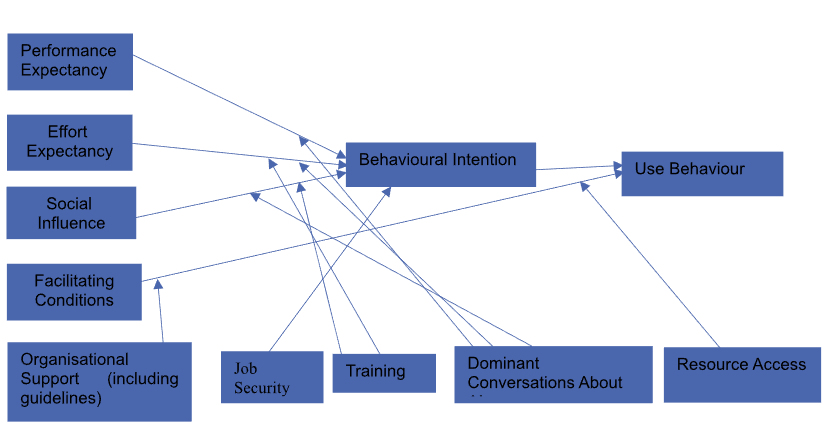
Figure 2. A conceptual model for factors accounting for AI adoption in journalistic routines
(Source: Authors)
Practical implications
The findings of this study have practical implications for journalism in South Africa and Ghana, particularly for addressing the context-specific challenges that impede AI adoption in their newsrooms. News organizations in these countries can design targeted AI training programs that address the specific ethical concerns, newsroom structures, and technological constraints affecting journalistic practice in these contexts. These programs should focus not only on technical skills but also on situating AI use within the sociopolitical realities of media practice in the two countries, where concerns about press freedom and government influence remain significant.
Additionally, newsroom leaders in South Africa and Ghana should develop institutional policies that provide clear guidelines for AI use while protecting journalistic integrity. Whereas AI policies are being actively developed in many Western media environments, the findings indicate that newsrooms in Ghana and South Africa lack formal institutional frameworks, leading to uncertainty and reluctance to use AI tools. Stakeholders, including journalists’ unions and regulatory bodies, should collaborate to develop ethical standards that safeguard employment while fostering innovation.
For AI developers, this study underscores the need for technologies that align with the realities of South African and Ghanaian newsrooms. This requires the development of tools that are both cost-effective and adaptable to resource-constrained environments. Developers should work closely with journalists in South Africa and Ghana to create AI systems that support investigative reporting while accommodating differences in how newsroom cultures adopt and integrate AI technologies.
Conclusions
Our study identifies key factors influencing the integration of AI into journalism through the UTAUT framework. Performance expectancy played a significant role, as journalists believed that AI could improve efficiency and the quality of their work. Insufficient training negatively affected effort expectancy by increasing the perceived difficulty of using AI and thereby slowing its uptake. Social influence, including peer discussions and professional attitudes, was also an important determinant. Barriers included anxieties about job security and ethical risks such as plagiarism and misinformation. By contrast, organizational support—including clear guidelines, access to resources, and structured skills development—facilitated implementation. Resistance was particularly associated with fears of job displacement, underscoring the importance of institutional safeguards and appropriate capacity-building measures. The study extends UTAUT by incorporating managerial support, formal training, resource access, job-security assurance, and dominant professional discourse. The latter operates through social influence, while training and resource provision may strengthen effort expectancy and performance expectancy.
News organizations should develop targeted training programs that address ethical risks, newsroom structures, and technological constraints while accounting for sociopolitical realities such as press freedom and government influence. Newsroom leaders should establish institutional AI policies that protect journalistic integrity, as the absence of formal frameworks in the contexts examined contributes to uncertainty. Collaboration among journalists’ unions and regulatory bodies is essential for balancing technological innovation with employment protection. AI developers should design cost-effective, adaptable tools suited to resource-constrained newsrooms and collaborate closely with journalists to support investigative reporting.
Future research
The study highlights several gaps in the existing literature that warrant further investigation. Future research could use larger samples and mixed-methods designs to provide a more comprehensive account of AI adoption, as the qualitative design of the present study may limit the breadth and transferability of its findings. Further studies could examine the long-term effects of AI integration on journalistic practices and the quality of news reporting. Research could also assess the effectiveness of different training programs and policy interventions in promoting AI integration in newsrooms. Cross-national and cross-regional comparisons could provide further insight into the cultural and contextual factors influencing uptake.
Authors' Statements
Agreement with the Journal's Policies
All authors of this manuscript have been notified and agree to the journal's current policies as described on the publication's website.
Originality and Exclusivity of the Manuscript
All authors confirm that the manuscript is original, has not been published previously in whole or in part, and is not under consideration for publication elsewhere.
Authorship and Contribution (CRediT)
Tigere Muringa: Conceptualisation, data analysis and drafting of manuscript; Theodora Dame Adjin-Tettey: Data collection, data analysis, drafting of manuscript, editing; Samuel Danso: Data collection, data analysis, drafting of manuscript and editing.
Policy on Preprints and Previous Versions
Authors confirm that there is no violation of the journal's policy
Conflict of Interest
No conflicts
Funding
This work has not been funded by any sponsor.
Use of Generative AI and Supporting Tools
AI tools are not listed as authors; any contributions (text editing, translation, illustrations, code) are described in the “Methods” section; accuracy, originality, and compliance with rights have been verified.
Permissions for Use (Texts, Images, Maps, Illustrations)
All copyrighted materials are reproduced with the permission of the copyright holder; license terms (including CC) are observed.
Acknowledgments and Contributions without Authorship
The authors of this work express their gratitude to the participants of the study.
Список литературы
Ademosu, I. (2025). Understanding the West African Media Landscape in Times of Conflicts. In A. Adeniyi, P. A. Obi, S. K. Usman, & I. U. Yusuf (Eds.), Media, Conflicts and the National Security Question (pp. 85–101). Springer Nature Switzerland. https://doi.org/10.1007/978-3-031-82198-1_5
Adjin-Tettey, T. D. (2023). Ghana’s Right to Information (RTI) Act of 2019: Exploration of its implementation dynamics. The African Journal of Information and Communication (AJIC), (32), 1–17. https://doi.org/10.23962/ajic.i32.16223
Adjin-Tettey, T. D. (2024). From the Classroom to the African Newsroom: How Journalism Education Can Bridge the Gap between the Classroom and the Shrinking Newsroom. African Journalism Studies, 45(3), 178–195. https://doi.org/10.1080/23743670.2024.2321133
Adjin-Tettey, T. D., Garman, A., Krüger, F., Olausson, U., Berglez, P., Tallert, L., Berger, G., & Fritzon, V. (2021). Towards Sustainable Journalism in Sub-Saharan Africa: Policy Brief, 2nd Ed. Fojo Media Institute. https://urn.kb.se/resolve?urn=urn:nbn:se:hj:diva-52988
Adjin-Tettey, T. D., Muringa, T., Danso, S., & Zondi, S. (2024). The Role of Artificial Intelligence in Contemporary Journalism Practice in Two African Countries. Journalism and Media, 5(3), 846–860. https://doi.org/10.3390/journalmedia5030054
Adjin-Tettey, T., & Etrue, M. (2026). Digitalizing Democracy in Africa: Interrogating Shortcomings and Exploring Opportunities for Enhanced Participation. In The Routledge Companion to Digital Media and Democracy (pp. 65-76). Routledge. https://doi.org/10.4324/9781003477570-7
Al-Zoubi, O., Ahmad, N., & Hamid, N. A. (2024). Artificial Intelligence in Newsrooms: Ethical Challenges Facing Journalists. Studies in Media and Communication, 12(1), 401. https://doi.org/10.11114/smc.v12i1.6587
Andrews, J. E., Ward, H., & Yoon, J. (2021). UTAUT as a Model for Understanding Intention to Adopt AI and Related Technologies Among Librarians. The Journal of Academic Librarianship, 47(6), 102437. https://doi.org/10.1016/j.acalib.2021.102437
Asiedu, E. (2025). Exploring Comparative Media Analysis and Its Application to Ghana [Dissertation]. Northern Illinois University.
Augenstein, I., Baldwin, T., Cha, M., Chakraborty, T., Ciampaglia, G. L., Corney, D., DiResta, R., Ferrara, E., Hale, S., Halevy, A., Hovy, E., Ji, H., Menczer, F., Miguez, R., Nakov, P., Scheufele, D., Sharma, S., & Zagni, G. (2023). Factuality Challenges in the Era of Large Language Models (Version 2). arXiv. https://doi.org/10.48550/ARXIV.2310.05189
Beckett, C., Sanguinetti, P., & Palomo, B. (2023). New Frontiers of the Intelligent Journalism. In M.‑C. Negreira-Rey, J. Vázquez-Herrero, J. Sixto-García, & X. López-García (Eds.), Blurring Boundaries of Journalism in Digital Media (Vol. 140, pp. 275–288). Springer International Publishing. https://doi.org/10.1007/978-3-031-43926-1_19
Block, E. S., & Erskine, L. (2012). Interviewing by Telephone: Specific Considerations, Opportunities, and Challenges. International Journal of Qualitative Methods, 11(4), 428–445. https://doi.org/10.1177/160940691201100409
Bontridder, N., & Poullet, Y. (2021). The Role of Artificial Intelligence in Disinformation. Data & Policy, 3, e32. https://doi.org/10.1017/dap.2021.20
Braun, V., & Clarke, V. (2013). Successful Qualitative Research: A Practical Guide for Beginners. SAGE.
Braun, V., & Clarke, V. (2019). Reflecting on Reflexive Thematic Analysis. Qualitative Research in Sport, Exercise and Health, 11(4), 589–597. https://doi.org/10.1080/2159676X.2019.1628806
Braun, V., & Clarke, V. (2021). One Size Fits All? What Counts as Quality Practice in (reflexive) Thematic Analysis? Qualitative Research in Psychology, 18(3), 328–352. https://doi.org/10.1080/14780887.2020.1769238
Byrne, D. (2022). A Worked Example of Braun and Clarke’s Approach to Reflexive Thematic Analysis. Quality & Quantity, 56(3), 1391–1412. https://doi.org/10.1007/s11135-021-01182-y
Byrne, D. (2024). How artificial intelligence is helping Ghana plan for a renewable energy future. Nature, d41586-024-01316-w. https://doi.org/10.1038/d41586-024-01316-w
Chang, C.-M., Liu, L.-W., Huang, H.-C., & Hsieh, H.-H. (2019). Factors Influencing Online Hotel Booking: Extending UTAUT2 with Age, Gender, and Experience as Moderators. Information, 10(9), 281. https://doi.org/10.3390/info10090281
Chen, G., Fan, J., & Azam, M. (2025). Exploring Artificial Intelligence (AI) Chatbots Adoption Among Research Scholars Using Unified Theory of Acceptance and Use of Technology (UTAUT). Journal of Librarianship and Information Science, 57(4), 1205–1223. https://doi.org/10.1177/09610006241269189
Diakopoulos, N. (2019). Automating the News: How Algorithms Are Rewriting the Media. Harvard University Press. https://doi.org/10.4159/9780674239302
Diakopoulos, N. (2020). Computational News Discovery: Towards Design Considerations for Editorial Orientation Algorithms in Journalism. Digital Journalism, 8(7), 945–967. https://doi.org/10.1080/21670811.2020.1736946
Digital 2025: South Africa. (2025). DataReportal. datareportal.com
Dodds, T., Vandendaele, A., Simon, F. M., Helberger, N., Resendez, V., & Yeung, W. N. (2024). The Impact of Knowledge Silos on Responsible AI Practices in Journalism (Version 2). arXiv. https://doi.org/10.48550/ARXIV.2410.01138
Forja-Pena, T., García-Orosa, B., & López-García, X. (2024). The Ethical Revolution: Challenges and Reflections in the Face of the Integration of Artificial Intelligence in Digital Journalism. Communication & Society, 37(3), 237–254. https://doi.org/10.15581/003.37.3.237-254
Germani, F., Spitale, G., & Biller-Andorno, N. (2024). The Dual Nature of AI in Information Dissemination: Ethical Considerations. JMIR AI, 3, e53505. https://doi.org/10.2196/53505
Ghana. (2021). RSF. https://rsf.org/en/country/ghana
Hammarberg, K., Kirkman, M., & De Lacey, S. (2016). Qualitative Research Methods: When to Use Them and How to Judge Them. Human Reproduction, 31(3), 498–501. https://doi.org/10.1093/humrep/dev334
Harb, Z., & Arafat, R. (2024). The Adoption of Artificial Intelligence Technologies in Arab Newsrooms: Potentials and Challenges. Emerging Media, 2(3), 371–381. https://doi.org/10.1177/27523543241291068
Jacob, J., & Pattusamy, M. (2020). Examining the Inter-Relationships of UTAUT Constructs in Mobile Internet Use in India and Germany: Journal of Electronic Commerce in Organizations, 18(2), 36–48. https://doi.org/10.4018/JECO.2020040103
Jaldi, A. (2023). Artificial Intelligence Revolution in Africa: Economic Opportunities and Legal Challenges. Research Papers & Policy Papers on Economic Trends and Policies, Research Papers & Policy Papers on Economic Trends and Policies, Article 2317. https://ideas.repec.org//p/ocp/rpaeco/pp_13-23.html
Jamil, S. (2021). Artificial Intelligence and Journalistic Practice: The Crossroads of Obstacles and Opportunities for the Pakistani Journalists. Journalism Practice, 15(10), 1400–1422. https://doi.org/10.1080/17512786.2020.1788412
Jamil, S. (2022). Stepping Towards Technological Innovation in Journalism: Barriers for the Use of Artificial Intelligence and Automation in Developing Newsrooms. Open Journal for Sociological Studies, 6(1), 27–34. https://doi.org/10.32591/coas.ojss.0601.03027j
Johnson, J. L., Adkins, D., & Chauvin, S. (2020). A Review of the Quality Indicators of Rigor in Qualitative Research. American Journal of Pharmaceutical Education, 84(1), 7120. https://doi.org/10.5688/ajpe7120
Kioko, P. M., Booker, N., Chege, N., & Kimweli, P. (2022). The Adoption of Artificial Intelligence in Newsrooms in Kenya: A Multi-Case Study. European Scientific Journal, ESJ, 18(22), 278. https://doi.org/10.19044/esj.2022.v18n22p278
Kothari, A., & Cruikshank, S. A. (2022). Artificial Intelligence and Journalism: An Agenda for Journalism Research in Africa. African Journalism Studies, 43(1), 17–33. https://doi.org/10.1080/23743670.2021.1999840
Labuschagne, H. (2025). The Radio Stations and TV Channels Bleeding the SABC Dry. https://mybroadband.co.za/news/broadcasting/597040-the-radio-stations-and-tv-channels-bleeding-the-sabc-dry.html
Legris, P., Ingham, J., & Collerette, P. (2003). Why do people use information technology? A critical review of the technology acceptance model. Information & Management, 40(3), 191–204. https://doi.org/10.1016/S0378-7206(01)00143-4
Lopez, M. G., Porlezza, C., Cooper, G., Makri, S., MacFarlane, A., & Missaoui, S. (2023). A Question of Design: Strategies for Embedding AI-Driven Tools into Journalistic Work Routines. Digital Journalism, 11(3), 484–503. https://doi.org/10.1080/21670811.2022.2043759
Mtemang’ombe, E. N., & Chikunkhuzeni, F. (2025). Shaping Journalism Futures: A Call for Contextualised Technology Adoption. In A. Sharra & U. Akpojivi (Eds.), Technologies and Media Production Cultures: A Global South Perspective (pp. 43–62). Springer Nature Switzerland. https://doi.org/10.1007/978-3-031-78582-5_3
Mukasa, R. (2024). Examining the Role of Artificial Intelligence (AI) in Transforming Print Journalism in Uganda [Dissertation]. Aga Khan University.
Munoriyarwa, A., Chiumbu, S., & Motsaathebe, G. (2023). Artificial Intelligence Practices in Everyday News Production: The Case of South Africa’s Mainstream Newsrooms. Journalism Practice, 17(7), 1374–1392. https://doi.org/10.1080/17512786.2021.1984976
Ndlovu, M. (2024). Audience Perceptions of AI-Driven News Presenters: A Case of ‘Alice’ in Zimbabwe. Media, Culture & Society, 46(8), 1692–1706. https://doi.org/10.1177/01634437241270982
Opdahl, A. L., Tessem, B., Dang-Nguyen, D.-T., Motta, E., Setty, V., Throndsen, E., Tverberg, A., & Trattner, C. (2023). Trustworthy Journalism Through AI. Data & Knowledge Engineering, 146, 102182. https://doi.org/10.1016/j.datak.2023.102182
PwC. (2025). Africa’s E&M shift: Fast, focused and future-ready: Perspectives from the Africa entertainment and media outlook 2025—2029. (2025). PwC. https://www.pwc.com/ng/en/publications/entertainment-and-media-outlook.html
Rose, J., & Johnson, C. W. (2020). Contextualizing Reliability and Validity in Qualitative Research: Toward More Rigorous and Trustworthy Qualitative Social Science in Leisure Research. Journal of Leisure Research, 51(4), 432–451. https://doi.org/10.1080/00222216.2020.1722042
Ruslin, R., Mashuri, S., Rasak, M. S. A., Alhabsyi, F., & Syam, H. (2022). Semi-Structured Interview: A Methodological Reflection on the Development of a Qualitative Research Instrument in Educational Studies. IOSR Journal of Research & Method in Education (IOSR-JRME), 12(1), 22‑29.
Salonurmi, I. M. (2024). “Our Main Tools Are (Still) Our Brains”: Local Journalists’ Adoption of Artificial Intelligence in Two European Countries [Dissertation]. University of Twente.
Shah, M. H. A., Khoso, I. A., & Dharejo, N. (2024). Journalist Perceptions and Views Towards the Integration of AI-Based Applications in the Journalism Industry in Pakistan: Expansion of the UTAUT Model. Annals of Human and Social Sciences, 5(2), 317–326. https://doi.org/10.35484/ahss.2024(5-II)30
Sharadga, T. M. A., Tahat, Z., & Safori, A. O. (2022). Journalists’ Perceptions Towards Employing Artificial Intelligence Techniques in Jordan TV’s Newsrooms. Studies in Media and Communication, 10(2), 239. https://doi.org/10.11114/smc.v10i2.5749
Situmorang, R. T. (2024). Ethics Related to the Adoption of Generative AI in Journalism. Representamen, 10(02), 92–112. https://doi.org/10.30996/representamen.v10i02.10464
South Africa: News creators and influencers. (2025). Reuters Institute for the Study of Journalism. reutersinstitute.politics.ox.ac.uk
South African digital & social media statistics 2025. (2025). Meltwater. www.meltwater.com
South Africa’s artificial intelligence (AI) planning. (2024). www.dcdt.gov.za
Tamilmani, K., Rana, N. P., Wamba, S. F., & Dwivedi, R. (2021). The Extended Unified Theory of Acceptance and Use of Technology (UTAUT2): A Systematic Literature Review and Theory Evaluation. International Journal of Information Management, 57, 102269. https://doi.org/10.1016/j.ijinfomgt.2020.102269
Trang, T. T. N., Chien Thang, P., Hai, L. D., Phuong, V. T., & Quy, T. Q. (2024). Understanding the Adoption of Artificial Intelligence in Journalism: An Empirical Study in Vietnam. Sage Open, 14(2), 21582440241255241. https://doi.org/10.1177/21582440241255241
Venkatesh, V. (2022). Adoption and Use of AI Tools: A Research Agenda Grounded in UTAUT. Annals of Operations Research, 308(1–2), 641–652. https://doi.org/10.1007/s10479-020-03918-9
Venkatesh, V., Morris, M. G., Davis, G. B., & Davis, F. D. (2003). User Acceptance of Information Technology: Toward A Unified View. MIS Quarterly, 27(3), 425–478. https://doi.org/10.2307/30036540
Venkatesh, V., Thong, J. Y. L., & Xu, X. (2016). Unified Theory of Acceptance and Use of Technology: A Synthesis and the Road Ahead. Journal of the Association of Information Systems, 17(5), 328‑376. https://doi.org/10.17705/1jais.00428
Venkatesh, V., Thong, J. Y., & Xu, X. (2012). Consumer Acceptance and Use of Information Technology: Extending the Unified Theory of Acceptance and Use of Technology. MIS Quarterly, 36, 157‑178. https://doi.org/10.2307/41410412
Verma, D. (2024). Impact of Artificial Intelligence on Journalism: A Comprehensive Review of AI in Journalism. Journal of Communication and Management, 3(02), 150–156. https://doi.org/10.58966/JCM20243212
Wu, S. (2024). Why Context Matters in Code Studies: Exploring Ways to Globalize/ Diversify Understandings of Algorithmic and AI Use in Journalism. Digital Journalism, 12(7), 1052–1058. https://doi.org/10.1080/21670811.2024.2395477
Wu, S. (2026). Journalists as Individual Users of Artificial Intelligence: Examining Journalists’ “Value-Motivated Use” of ChatGPT and Other AI Tools Within and Without the Newsroom. Journalism, 27(2), 388–406. https://doi.org/10.1177/14648849241303047
Xu, X., Thong, J. Y. L., & Tam, K. Y. (2017). Winning Back Technology Disadopters: Testing a Technology Readoption Model in the Context of Mobile Internet Services. Journal of Management Information Systems, 34(1), 102–140. https://doi.org/10.1080/07421222.2017.1297172
Yeboah-Banin, A. A., & Adjin-Tettey, T. D. (2023). Financial viability of the Ghanaian media. In State of the Ghanaian Media Report, 2023 (pp. 31–46). https://www.researchgate.net/profile/Theodora-Dame-Adjin-Tettey/publication/371276880_Financial_viability_of_the_Ghanaian_media/links/647bb91479a72237650c2620/Financial-viability-of-the-Ghanaian-media.pdf
Zirugo, D. (2021). Journalism Hybridization in Postcolonial Societies: Paradigm Adaptation Tensions in Post-Apartheid South Africa. Journalism Studies, 22(7), 860–877. https://doi.org/10.1080/1461670X.2021.1899843
References
Ademosu, I. (2025). Understanding the West African Media Landscape in Times of Conflicts. In A. Adeniyi, P. A. Obi, S. K. Usman, & I. U. Yusuf (Eds.), Media, Conflicts and the National Security Question (pp. 85–101). Springer Nature Switzerland. https://doi.org/10.1007/978-3-031-82198-1_5
Adjin-Tettey, T. D. (2023). Ghana’s Right to Information (RTI) Act of 2019: Exploration of its implementation dynamics. The African Journal of Information and Communication (AJIC), (32), 1–17. https://doi.org/10.23962/ajic.i32.16223
Adjin-Tettey, T. D. (2024). From the Classroom to the African Newsroom: How Journalism Education Can Bridge the Gap between the Classroom and the Shrinking Newsroom. African Journalism Studies, 45(3), 178–195. https://doi.org/10.1080/23743670.2024.2321133
Adjin-Tettey, T. D., Garman, A., Krüger, F., Olausson, U., Berglez, P., Tallert, L., Berger, G., & Fritzon, V. (2021). Towards Sustainable Journalism in Sub-Saharan Africa: Policy Brief, 2nd Ed. Fojo Media Institute. https://urn.kb.se/resolve?urn=urn:nbn:se:hj:diva-52988
Adjin-Tettey, T. D., Muringa, T., Danso, S., & Zondi, S. (2024). The Role of Artificial Intelligence in Contemporary Journalism Practice in Two African Countries. Journalism and Media, 5(3), 846–860. https://doi.org/10.3390/journalmedia5030054
Adjin-Tettey, T., & Etrue, M. (2026). Digitalizing Democracy in Africa: Interrogating Shortcomings and Exploring Opportunities for Enhanced Participation. In The Routledge Companion to Digital Media and Democracy (pp. 65-76). Routledge. https://doi.org/10.4324/9781003477570-7
Al-Zoubi, O., Ahmad, N., & Hamid, N. A. (2024). Artificial Intelligence in Newsrooms: Ethical Challenges Facing Journalists. Studies in Media and Communication, 12(1), 401. https://doi.org/10.11114/smc.v12i1.6587
Andrews, J. E., Ward, H., & Yoon, J. (2021). UTAUT as a Model for Understanding Intention to Adopt AI and Related Technologies Among Librarians. The Journal of Academic Librarianship, 47(6), 102437. https://doi.org/10.1016/j.acalib.2021.102437
Asiedu, E. (2025). Exploring Comparative Media Analysis and Its Application to Ghana [Dissertation]. Northern Illinois University.
Augenstein, I., Baldwin, T., Cha, M., Chakraborty, T., Ciampaglia, G. L., Corney, D., DiResta, R., Ferrara, E., Hale, S., Halevy, A., Hovy, E., Ji, H., Menczer, F., Miguez, R., Nakov, P., Scheufele, D., Sharma, S., & Zagni, G. (2023). Factuality Challenges in the Era of Large Language Models (Version 2). arXiv. https://doi.org/10.48550/ARXIV.2310.05189
Beckett, C., Sanguinetti, P., & Palomo, B. (2023). New Frontiers of the Intelligent Journalism. In M.‑C. Negreira-Rey, J. Vázquez-Herrero, J. Sixto-García, & X. López-García (Eds.), Blurring Boundaries of Journalism in Digital Media (Vol. 140, pp. 275–288). Springer International Publishing. https://doi.org/10.1007/978-3-031-43926-1_19
Block, E. S., & Erskine, L. (2012). Interviewing by Telephone: Specific Considerations, Opportunities, and Challenges. International Journal of Qualitative Methods, 11(4), 428–445. https://doi.org/10.1177/160940691201100409
Bontridder, N., & Poullet, Y. (2021). The Role of Artificial Intelligence in Disinformation. Data & Policy, 3, e32. https://doi.org/10.1017/dap.2021.20
Braun, V., & Clarke, V. (2013). Successful Qualitative Research: A Practical Guide for Beginners. SAGE.
Braun, V., & Clarke, V. (2019). Reflecting on Reflexive Thematic Analysis. Qualitative Research in Sport, Exercise and Health, 11(4), 589–597. https://doi.org/10.1080/2159676X.2019.1628806
Braun, V., & Clarke, V. (2021). One Size Fits All? What Counts as Quality Practice in (reflexive) Thematic Analysis? Qualitative Research in Psychology, 18(3), 328–352. https://doi.org/10.1080/14780887.2020.1769238
Byrne, D. (2022). A Worked Example of Braun and Clarke’s Approach to Reflexive Thematic Analysis. Quality & Quantity, 56(3), 1391–1412. https://doi.org/10.1007/s11135-021-01182-y
Byrne, D. (2024). How artificial intelligence is helping Ghana plan for a renewable energy future. Nature, d41586-024-01316-w. https://doi.org/10.1038/d41586-024-01316-w
Chang, C.-M., Liu, L.-W., Huang, H.-C., & Hsieh, H.-H. (2019). Factors Influencing Online Hotel Booking: Extending UTAUT2 with Age, Gender, and Experience as Moderators. Information, 10(9), 281. https://doi.org/10.3390/info10090281
Chen, G., Fan, J., & Azam, M. (2025). Exploring Artificial Intelligence (AI) Chatbots Adoption Among Research Scholars Using Unified Theory of Acceptance and Use of Technology (UTAUT). Journal of Librarianship and Information Science, 57(4), 1205–1223. https://doi.org/10.1177/09610006241269189
Diakopoulos, N. (2019). Automating the News: How Algorithms Are Rewriting the Media. Harvard University Press. https://doi.org/10.4159/9780674239302
Diakopoulos, N. (2020). Computational News Discovery: Towards Design Considerations for Editorial Orientation Algorithms in Journalism. Digital Journalism, 8(7), 945–967. https://doi.org/10.1080/21670811.2020.1736946
Digital 2025: South Africa. (2025). DataReportal. datareportal.com
Dodds, T., Vandendaele, A., Simon, F. M., Helberger, N., Resendez, V., & Yeung, W. N. (2024). The Impact of Knowledge Silos on Responsible AI Practices in Journalism (Version 2). arXiv. https://doi.org/10.48550/ARXIV.2410.01138
Forja-Pena, T., García-Orosa, B., & López-García, X. (2024). The Ethical Revolution: Challenges and Reflections in the Face of the Integration of Artificial Intelligence in Digital Journalism. Communication & Society, 37(3), 237–254. https://doi.org/10.15581/003.37.3.237-254
Germani, F., Spitale, G., & Biller-Andorno, N. (2024). The Dual Nature of AI in Information Dissemination: Ethical Considerations. JMIR AI, 3, e53505. https://doi.org/10.2196/53505
Ghana. (2021). RSF. https://rsf.org/en/country/ghana
Hammarberg, K., Kirkman, M., & De Lacey, S. (2016). Qualitative Research Methods: When to Use Them and How to Judge Them. Human Reproduction, 31(3), 498–501. https://doi.org/10.1093/humrep/dev334
Harb, Z., & Arafat, R. (2024). The Adoption of Artificial Intelligence Technologies in Arab Newsrooms: Potentials and Challenges. Emerging Media, 2(3), 371–381. https://doi.org/10.1177/27523543241291068
Jacob, J., & Pattusamy, M. (2020). Examining the Inter-Relationships of UTAUT Constructs in Mobile Internet Use in India and Germany: Journal of Electronic Commerce in Organizations, 18(2), 36–48. https://doi.org/10.4018/JECO.2020040103
Jaldi, A. (2023). Artificial Intelligence Revolution in Africa: Economic Opportunities and Legal Challenges. Research Papers & Policy Papers on Economic Trends and Policies, Research Papers & Policy Papers on Economic Trends and Policies, Article 2317. https://ideas.repec.org//p/ocp/rpaeco/pp_13-23.html
Jamil, S. (2021). Artificial Intelligence and Journalistic Practice: The Crossroads of Obstacles and Opportunities for the Pakistani Journalists. Journalism Practice, 15(10), 1400–1422. https://doi.org/10.1080/17512786.2020.1788412
Jamil, S. (2022). Stepping Towards Technological Innovation in Journalism: Barriers for the Use of Artificial Intelligence and Automation in Developing Newsrooms. Open Journal for Sociological Studies, 6(1), 27–34. https://doi.org/10.32591/coas.ojss.0601.03027j
Johnson, J. L., Adkins, D., & Chauvin, S. (2020). A Review of the Quality Indicators of Rigor in Qualitative Research. American Journal of Pharmaceutical Education, 84(1), 7120. https://doi.org/10.5688/ajpe7120
Kioko, P. M., Booker, N., Chege, N., & Kimweli, P. (2022). The Adoption of Artificial Intelligence in Newsrooms in Kenya: A Multi-Case Study. European Scientific Journal, ESJ, 18(22), 278. https://doi.org/10.19044/esj.2022.v18n22p278
Kothari, A., & Cruikshank, S. A. (2022). Artificial Intelligence and Journalism: An Agenda for Journalism Research in Africa. African Journalism Studies, 43(1), 17–33. https://doi.org/10.1080/23743670.2021.1999840
Labuschagne, H. (2025). The Radio Stations and TV Channels Bleeding the SABC Dry. https://mybroadband.co.za/news/broadcasting/597040-the-radio-stations-and-tv-channels-bleeding-the-sabc-dry.html
Legris, P., Ingham, J., & Collerette, P. (2003). Why do people use information technology? A critical review of the technology acceptance model. Information & Management, 40(3), 191–204. https://doi.org/10.1016/S0378-7206(01)00143-4
Lopez, M. G., Porlezza, C., Cooper, G., Makri, S., MacFarlane, A., & Missaoui, S. (2023). A Question of Design: Strategies for Embedding AI-Driven Tools into Journalistic Work Routines. Digital Journalism, 11(3), 484–503. https://doi.org/10.1080/21670811.2022.2043759
Mtemang’ombe, E. N., & Chikunkhuzeni, F. (2025). Shaping Journalism Futures: A Call for Contextualised Technology Adoption. In A. Sharra & U. Akpojivi (Eds.), Technologies and Media Production Cultures: A Global South Perspective (pp. 43–62). Springer Nature Switzerland. https://doi.org/10.1007/978-3-031-78582-5_3
Mukasa, R. (2024). Examining the Role of Artificial Intelligence (AI) in Transforming Print Journalism in Uganda [Dissertation]. Aga Khan University.
Munoriyarwa, A., Chiumbu, S., & Motsaathebe, G. (2023). Artificial Intelligence Practices in Everyday News Production: The Case of South Africa’s Mainstream Newsrooms. Journalism Practice, 17(7), 1374–1392. https://doi.org/10.1080/17512786.2021.1984976
Ndlovu, M. (2024). Audience Perceptions of AI-Driven News Presenters: A Case of ‘Alice’ in Zimbabwe. Media, Culture & Society, 46(8), 1692–1706. https://doi.org/10.1177/01634437241270982
Opdahl, A. L., Tessem, B., Dang-Nguyen, D.-T., Motta, E., Setty, V., Throndsen, E., Tverberg, A., & Trattner, C. (2023). Trustworthy Journalism Through AI. Data & Knowledge Engineering, 146, 102182. https://doi.org/10.1016/j.datak.2023.102182
PwC. (2025). Africa’s E&M shift: Fast, focused and future-ready: Perspectives from the Africa entertainment and media outlook 2025—2029. (2025). PwC. https://www.pwc.com/ng/en/publications/entertainment-and-media-outlook.html
Rose, J., & Johnson, C. W. (2020). Contextualizing Reliability and Validity in Qualitative Research: Toward More Rigorous and Trustworthy Qualitative Social Science in Leisure Research. Journal of Leisure Research, 51(4), 432–451. https://doi.org/10.1080/00222216.2020.1722042
Ruslin, R., Mashuri, S., Rasak, M. S. A., Alhabsyi, F., & Syam, H. (2022). Semi-Structured Interview: A Methodological Reflection on the Development of a Qualitative Research Instrument in Educational Studies. IOSR Journal of Research & Method in Education (IOSR-JRME), 12(1), 22‑29.
Salonurmi, I. M. (2024). “Our Main Tools Are (Still) Our Brains”: Local Journalists’ Adoption of Artificial Intelligence in Two European Countries [Dissertation]. University of Twente.
Shah, M. H. A., Khoso, I. A., & Dharejo, N. (2024). Journalist Perceptions and Views Towards the Integration of AI-Based Applications in the Journalism Industry in Pakistan: Expansion of the UTAUT Model. Annals of Human and Social Sciences, 5(2), 317–326. https://doi.org/10.35484/ahss.2024(5-II)30
Sharadga, T. M. A., Tahat, Z., & Safori, A. O. (2022). Journalists’ Perceptions Towards Employing Artificial Intelligence Techniques in Jordan TV’s Newsrooms. Studies in Media and Communication, 10(2), 239. https://doi.org/10.11114/smc.v10i2.5749
Situmorang, R. T. (2024). Ethics Related to the Adoption of Generative AI in Journalism. Representamen, 10(02), 92–112. https://doi.org/10.30996/representamen.v10i02.10464
South Africa: News creators and influencers. (2025). Reuters Institute for the Study of Journalism. reutersinstitute.politics.ox.ac.uk
South African digital & social media statistics 2025. (2025). Meltwater. www.meltwater.com
South Africa’s artificial intelligence (AI) planning. (2024). www.dcdt.gov.za
Tamilmani, K., Rana, N. P., Wamba, S. F., & Dwivedi, R. (2021). The Extended Unified Theory of Acceptance and Use of Technology (UTAUT2): A Systematic Literature Review and Theory Evaluation. International Journal of Information Management, 57, 102269. https://doi.org/10.1016/j.ijinfomgt.2020.102269
Trang, T. T. N., Chien Thang, P., Hai, L. D., Phuong, V. T., & Quy, T. Q. (2024). Understanding the Adoption of Artificial Intelligence in Journalism: An Empirical Study in Vietnam. Sage Open, 14(2), 21582440241255241. https://doi.org/10.1177/21582440241255241
Venkatesh, V. (2022). Adoption and Use of AI Tools: A Research Agenda Grounded in UTAUT. Annals of Operations Research, 308(1–2), 641–652. https://doi.org/10.1007/s10479-020-03918-9
Venkatesh, V., Morris, M. G., Davis, G. B., & Davis, F. D. (2003). User Acceptance of Information Technology: Toward A Unified View. MIS Quarterly, 27(3), 425–478. https://doi.org/10.2307/30036540
Venkatesh, V., Thong, J. Y. L., & Xu, X. (2016). Unified Theory of Acceptance and Use of Technology: A Synthesis and the Road Ahead. Journal of the Association of Information Systems, 17(5), 328‑376. https://doi.org/10.17705/1jais.00428
Venkatesh, V., Thong, J. Y., & Xu, X. (2012). Consumer Acceptance and Use of Information Technology: Extending the Unified Theory of Acceptance and Use of Technology. MIS Quarterly, 36, 157‑178. https://doi.org/10.2307/41410412
Verma, D. (2024). Impact of Artificial Intelligence on Journalism: A Comprehensive Review of AI in Journalism. Journal of Communication and Management, 3(02), 150–156. https://doi.org/10.58966/JCM20243212
Wu, S. (2024). Why Context Matters in Code Studies: Exploring Ways to Globalize/ Diversify Understandings of Algorithmic and AI Use in Journalism. Digital Journalism, 12(7), 1052–1058. https://doi.org/10.1080/21670811.2024.2395477
Wu, S. (2026). Journalists as Individual Users of Artificial Intelligence: Examining Journalists’ “Value-Motivated Use” of ChatGPT and Other AI Tools Within and Without the Newsroom. Journalism, 27(2), 388–406. https://doi.org/10.1177/14648849241303047
Xu, X., Thong, J. Y. L., & Tam, K. Y. (2017). Winning Back Technology Disadopters: Testing a Technology Readoption Model in the Context of Mobile Internet Services. Journal of Management Information Systems, 34(1), 102–140. https://doi.org/10.1080/07421222.2017.1297172
Yeboah-Banin, A. A., & Adjin-Tettey, T. D. (2023). Financial viability of the Ghanaian media. In State of the Ghanaian Media Report, 2023 (pp. 31–46). https://www.researchgate.net/profile/Theodora-Dame-Adjin-Tettey/publication/371276880_Financial_viability_of_the_Ghanaian_media/links/647bb91479a72237650c2620/Financial-viability-of-the-Ghanaian-media.pdf
Zirugo, D. (2021). Journalism Hybridization in Postcolonial Societies: Paradigm Adaptation Tensions in Post-Apartheid South Africa. Journalism Studies, 22(7), 860–877. https://doi.org/10.1080/1461670X.2021.1899843