MEDIA & JOURNALISMМЕДИА И ЖУРНАЛИСТИКА
The Development and Trends of Journalism Research in Turkey: A Systematic Literature Review from the First Study to 2024
Kocaeli University (Kocaeli, Turkey).
Email: 236237004[at]kocaeli.edu.tr
 0000-0001-8081-3252
Kocaeli University (Kocaeli, Turkey).
Email: mertgurer[at]kocaeli.edu.tr
0000-0002-2940-2009Abstract
Journalism research in Türkiye has experienced significant growth, but it remained largely overlooked in international academic discourse until recently. Although early studies existed, relevant publications were not indexed in prominent databases such as Scopus and Web of Science until 2011, limiting the field’s international visibility. This study aims to systematically analyze the development and trends within journalism research in Türkiye, tracing its evolution from the earliest publications through 2024. Using a systematic literature review (SLR), the study screened 825 records retrieved from Scopus and Web of Science in accordance with the PRISMA 2020 framework and ultimately included 62 peer-reviewed articles. The review identifies a publication peak in 2021–2022 and a dominant focus on media freedom and censorship (37.10%), while topics such as alternative media and data journalism remain underexplored. Turkish scholars authored 56.5% of the publications, indicating strong local engagement but limited international collaboration. In addition, 64.5% of the studies did not articulate an explicit theoretical framework, pointing to a need for stronger conceptual grounding. Methodologically, the literature was predominantly qualitative (74%), with journalists constituting the most frequently studied group (21%). The study calls for future research to address emerging areas of journalism, diversify methodological approaches, strengthen theoretical foundations, and foster greater international collaboration.
Keywords
Развитие и тенденции исследований журналистики в Турции: систематический обзор литературы от первых исследований до 2024 года
Университет Коджаэли (Коджаэли, Турция).
Email: 236237004[at]kocaeli.edu.tr
0000-0001-8081-3252Университет Коджаэли (Коджаэли, Турция).
Email: mertgurer[at]kocaeli.edu.tr
0000-0002-2940-2009Аннотация
В последние годы число исследований в области журналистики в Турции значительно возросло, однако до недавнего времени эта область оставалась недостаточно представленной в международном академическом дискурсе. Несмотря на наличие ранних работ, публикации по этой тематике до 2011 года не индексировались в таких ведущих базах данных, как Scopus и Web of Science, что ограничивало их представленность в международном научном пространстве. Цель настоящего исследования — систематически проанализировать ключевые тенденции исследований журналистики в Турции и проследить развитие этой области от ранних публикаций до 2024 года. С помощью метода систематического обзора литературы (Systematic Literature Review, SLR) были проанализированы 825 библиографических записей из баз данных Scopus и Web of Science; отбор публикаций проводился в соответствии с блок-схемой PRISMA 2020, а итоговую выборку составили 62 рецензируемые статьи. Результаты обзора показывают, что пик публикационной активности пришёлся на 2021-2022 годы, а наибольшее внимание уделялось вопросам свободы медиа и цензуры (37,10%); при этом такие темы, как альтернативные медиа и журналистика данных, остаются недостаточно изученными. На долю турецких исследователей приходится 56,5% публикаций, что свидетельствует о значительной вовлечённости национального академического сообщества при ограниченном международном сотрудничестве. Кроме того, в 64,5% исследований не обозначена чёткая теоретическая рамка, что указывает на необходимость усиления концептуального обоснования таких работ. В методологическом отношении преобладают качественные исследования (74%), а журналисты являются наиболее часто изучаемой группой (21%). Результаты исследования указывают на необходимость включения в исследовательскую повестку новых направлений журналистики, диверсификации методологических подходов, укрепления теоретических оснований и активизации международного сотрудничества.
Ключевые слова
Introduction
Turkish journalism operates within a complex media ecosystem that combines digital innovation with persistent structural constraints. The sector includes more than 3,000 registered media outlets and serves a digitally engaged population, 84% of whom access news online, reflecting both its vitality and structural difficulties (Kızılkaya & Ütücü, 2021). This paradox is particularly evident in Türkiye’s status as home to the world’s fourth-largest journalist workforce despite ranking 159th in press freedom (Europe – Central Asia: Türkiye, 2025; Werz & Hoffman, 2013). This contrast illustrates how quantitative growth can coexist with qualitative constraints on editorial independence (Akser & Baybars-Hawks, 2012).
The roots of this contradiction can be traced throughout Türkiye’s media history. From early-20th-century state broadcasting monopolies and the direct censorship imposed by military regimes in the 1960s and 1970s (Sözeri, 2013) to contemporary forms of control, press freedom has been systematically restricted. Periods of military rule intensified these restrictions, particularly through forced media closures and the persecution of journalists (Kurban & Sözeri, 2011). These practices established patterns of narrative control that later evolved into subtler forms of self-censorship and economic pressure (Yesil, 2014).
In the 1980s and 1990s, the Turkish media environment underwent significant changes as the media market was partially liberalized. The state monopoly over television and radio was gradually dismantled, allowing private media companies to emerge (Sümer & Taş, 2020). However, this liberalization also generated new challenges, particularly through the rise of media monopolies. A small number of conglomerates came to control a substantial portion of the media landscape, raising concerns about media pluralism and the influence of corporate interests on journalistic independence (Öztunc & Pierre, 2021). Despite these changes, the political environment continued to exert a strong influence on journalism. Political authorities have placed increasing pressure on the media, with journalists facing legal threats, violence, and imprisonment for reporting on politically sensitive topics (Yanardağoğlu, 2021). Together with the concentration of media ownership, these pressures have severely compromised the independence of Turkish journalism (Kaya & Çakmur, 2010).
Technological advances have also transformed Turkish journalism by reshaping the media landscape through digital media, social platforms, and artificial intelligence (AI). Although these technologies have created opportunities for independent journalism and citizen reporting, they have also introduced new challenges. The spread of misinformation, online censorship, and digital surveillance has become increasingly pressing (Caled & Silva, 2022). Social media platforms have served both as arenas for dissent and as instruments of propaganda, while digital spaces have become sites of political contestation. Within this environment, the interaction of political, economic, and technological forces continues to shape Türkiye’s media industry (Simon, 2014). These developments have altered not only how news is produced but also the ethical frameworks governing journalism, creating a complex professional environment for journalists in the country.
Against this backdrop of political control, market restructuring, and technological change, the academic study of journalism and communication in Türkiye also developed gradually. Formal journalism education began with the establishment of the Institute of Journalism at Istanbul University in 1949, followed by the founding of the School of Press and Broadcasting at Ankara University in 1965. These institutions later evolved into faculties of communication in the early 1990s (Tokgöz, 2003; Uzun, 2007). This institutional expansion marked a shift from vocational training toward a more systematic social-scientific approach to media studies. Nevertheless, despite this early foundation, journalism research remained limited in scope for several decades and gained substantial academic momentum primarily in response to the later structural transformation of the Turkish media system (Alver & Sarısakaloğlu, 2023).
As this institutional foundation expanded and research activity intensified, scholarship on Turkish journalism also diversified in terms of publication venues and thematic focus. Previous research now encompasses not only internationally indexed journals but also a wide range of domestic academic publications. A substantial portion of this literature appears on national platforms such as DergiPark and TR Dizin, which together host thousands of peer-reviewed articles on journalism and media in Türkiye. This breadth of publication venues reflects the breadth and development of the field, which addresses key issues such as press freedom, media ethics, political pressure, and digital transformation (Maniou, 2023; Richeri, 2011). A dominant theme in this literature concerns the persistent challenges journalists face as a result of political influence, legal restrictions, and the increasing concentration of media ownership. Together, these conditions have weakened journalistic independence and intensified censorship and self-censorship (Akser & Baybars-Hawks, 2012; Arsan, 2013; Özdemir, 2023; Pukallus et al., 2020).
At the same time, technological advances have reshaped the media landscape, creating new opportunities for journalism while introducing risks such as algorithmic bias and personalization, which complicate ethical and professional practices (Maharani, 2024; Syahriar et al., 2024; Trattner et al., 2022). In recent years, the rise of digital platforms and social media has intensified these challenges, raising concerns about disinformation and the ethical implications of AI-driven news production (Baris, 2020; Coskuntuncel, 2018; Yesil, 2014). Although these technological transformations have created new opportunities for independent journalism, they have also contributed to a polarized media environment and moral contestation within Turkish journalistic culture (Aşık, 2017). However, comprehensive analyses of how political, economic, and technological factors interact to shape journalistic practices in Türkiye remain limited. Research that synthesizes these dimensions is therefore needed to provide a clearer account of the country’s media landscape (Boomgaarden & Schmitt-Beck, 2019; Fiedler & Frère, 2018; Maniou & Papadopoulou, 2024).
The studies reviewed above demonstrate that journalism research in Türkiye has developed into a broad and highly diverse field, making its systematic mapping through a literature review increasingly important. Although the literature continues to expand, existing systematic literature reviews (SLRs) remain limited and fragmented, addressing only specific themes such as journalist safety (Ataman et al., 2020), journalism education (Guzel & Gonden, 2022), and data journalism (Erkmen, 2023; Ozay & Bayrakcı, 2022). Although these studies offer valuable insights, they do not provide an integrated account of Turkish journalism research as a whole. Most existing studies continue to examine their subjects in isolation and have not fully addressed the interaction among the political, economic, and technological forces that collectively shape Türkiye’s contemporary media landscape.
This study addresses this critical gap by conducting a systematic literature review of Turkish journalism studies from their inception through 2024. It consolidates existing research across political, economic, and technological domains to provide a comprehensive overview of how these dimensions affect journalistic practices. The analysis traces the field’s intellectual development by mapping research themes, theoretical frameworks, and methodological approaches while identifying understudied areas and conceptual gaps. By relating academic trends to documented changes in journalistic practice, the study provides both an evidence-based assessment of Türkiye’s media landscape and a framework for guiding future research. These contributions may particularly benefit journalism education and policymaking by clarifying the discipline’s development and current challenges.
To achieve these scholarly objectives, the study is guided by three central research questions examining the development of journalism research in Türkiye:
-
How have research trends in Turkish journalism evolved, particularly with regard to the theoretical frameworks and methodological approaches employed by scholars?
-
How are research topics distributed within Turkish journalism studies, and which areas have been prioritized or neglected in the academic literature?
-
What significant gaps and challenges remain in the existing body of research on Turkish journalism, and which key questions require further investigation?
Methods
Research Design
This study employed a systematic literature review (SLR) to synthesize and critically analyze scholarship on Turkish journalism from its earliest period through 2024. The SLR approach is particularly well suited to consolidating fragmented findings into a coherent framework, thereby enabling the identification of emerging trends and gaps in the literature. This method provides a comprehensive overview of scholarship on Turkish journalism by integrating studies from different areas and clarifying the field’s development (Mulrow, 1994; Orłowska et al., 2017). By offering an integrated synthesis, the SLR addresses limitations in previous research that has often focused on isolated topics or periods (Riesenberg & Justice, 2014).
SLRs provide a rigorous method for synthesizing research evidence on a specific topic and are widely used across disciplines, including media and communication studies (Souissi & Tikito, 2019). The methodology follows explicit protocols for identifying, selecting, and critically evaluating relevant studies, thereby minimizing bias and improving reliability (Priyadarsini & Ravindran, 2023). This systematic approach enhances replicability, transparency, and objectivity, making SLRs better suited than traditional narrative reviews to providing a comprehensive overview (Boell & Cecez-Kecmanovic, 2015).
Database Selection
For this review, Scopus and Web of Science (WoS) were selected as the primary databases because of their established reputations for indexing high-quality, peer-reviewed academic literature. Both are widely recognized academic databases and were therefore considered appropriate for the present review (Chadegani et al., 2013; Fingerman, 2006). Scopus provides broader coverage, particularly in the social sciences and human-computer interaction, whereas WoS places greater emphasis on high-impact publications. Nevertheless, both databases provide a strong foundation for the review (Meho & Rogers, 2008; Norris & Oppenheim, 2007). Although the databases have different strengths and limitations—WoS is more selective in its journal coverage, whereas Scopus indexes a broader range of sources, including conference proceedings—both support a comprehensive and rigorous review process (Powell & Peterson, 2017; Zhu & Liu, 2020).
Screening Procedure
The search was conducted in Scopus and Web of Science (WoS) using the following query:
(journalism OR journalist* OR "media studies") AND (Turkey OR Türkiye)
This query was designed to capture a broad range of literature on journalism in Türkiye without restricting the search to specific subtopics. The wildcard (*) in journalist* was used to retrieve variations of the term, such as journalist and journalists, thereby broadening the search results.
The screening procedure followed the Preferred Reporting Items for Systematic Reviews and Meta-Analyses (PRISMA) 2020 framework (Page et al., 2021). The stages of the screening process are presented in the flow diagram in Figure 1.
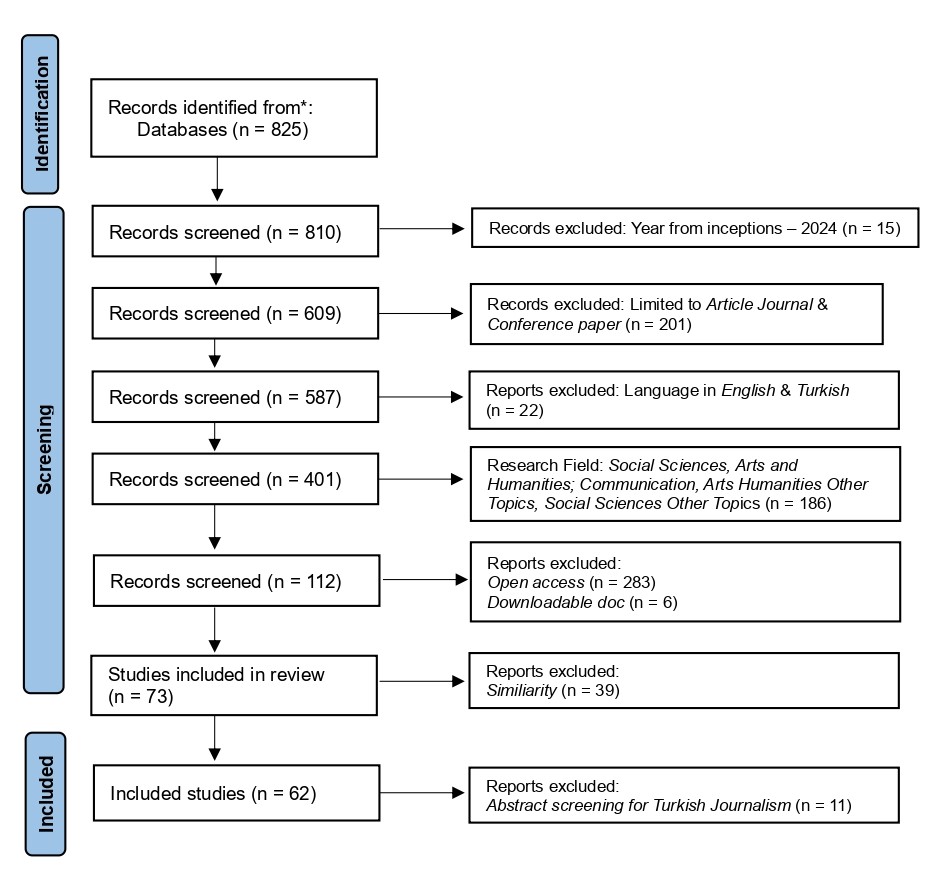
Figure 1. PRISMA 2020 flow diagram for new systematic reviews which included searches of databases
Data Validation
To ensure the reliability and accuracy of the data, two independent researchers conducted the screening and data extraction independently. Both researchers followed the same inclusion and exclusion criteria, ensuring that the selected studies were appropriate for inclusion in the review. The process began with each researcher independently screening the articles based on their titles, abstracts, and relevance to Turkish journalism. They recorded and tabulated their findings in Excel, including essential information such as article titles, authors, publication years, sources (journal titles), keywords, relevance to Turkish journalism, and categories.
After completing the initial screening, both researchers cross-checked their selections to ensure consistency in the selection of articles. When discrepancies arose, they discussed them and reached a consensus. If a disagreement could not be resolved, a third researcher was consulted to provide an independent assessment and ensure that the final article selection was methodologically consistent and minimally affected by researcher bias. Throughout the process, the Excel spreadsheet was continuously updated and refined to verify that all selected studies met the predefined criteria. This systematic validation process strengthened the reliability of data extraction and helped ensure that the final dataset accurately represented the current state of Turkish journalism research.
Findings
The results of this study on Turkish journalism are based on a comprehensive analysis of academic articles retrieved from two major scholarly databases: Scopus and Web of Science. A total of 62 articles were reviewed: 21 were indexed exclusively in Scopus, 21 exclusively in Web of Science, and 20 in both databases. This distribution indicates that the reviewed literature spans both databases, with a substantial degree of overlap between them. The following sections provide a detailed overview of the key findings, categorized by research methods, theoretical frameworks, and units of analysis, thereby illustrating the development of Turkish journalism research represented in the reviewed literature.
Year of Publications
This study examines the development of research on Turkish journalism as represented by the earliest publications included in the reviewed dataset. Contrary to initial expectations, the earliest study identified in the dataset was published in 2011 in an international journal and was authored by M. Freely of the University of Warwick in the United Kingdom. Within the reviewed literature, this publication marked the beginning of internationally indexed scholarly attention to Turkish media. Thereafter, as shown in Figure 2, the number of publications gradually increased, with two articles published in 2012 and three in 2013, indicating growing interest in the topic. However, publication output declined slightly in 2015, when only two articles were published. Beginning in 2017, research activity increased again, with four articles published that year, followed by three in 2018 and four in 2019. This general upward trend indicates increasing scholarly attention to Turkish journalism, particularly in relation to political, social, and technological developments affecting the media landscape.
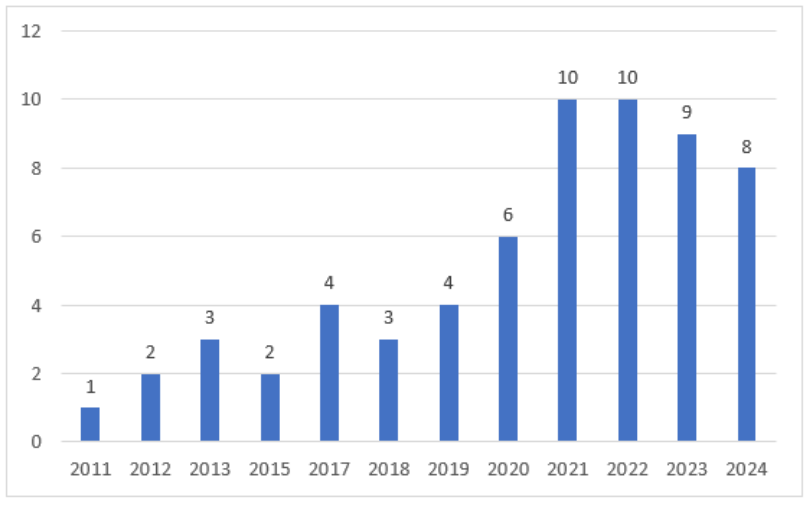
Figure 2. Distribution of Turkish journalism articles every year
Research activity reached its highest levels between 2020 and 2024. Ten articles were published in both 2021 and 2022, followed by nine in 2023 and eight in 2024. This concentration of publications reflects heightened academic interest in Turkish journalism amid continuing political, social, and technological change. Despite the global effects of the COVID-19 pandemic in 2020, six articles were published that year, although only one focused specifically on the pandemic.
Among the most frequently represented authors, M. Akser and B. Baybars made substantial contributions, with several of their articles published in 2021, 2023, and 2024. Their work often examined the relationship between media and politics in Türkiye. Despite their frequent presence, no individual author dominated the field. Other scholars, including B. Çelik and E. Budak, also made notable contributions, particularly in 2019 and 2022, addressing topics such as media technology and alternative journalism. These patterns indicate that, although some authors were more frequently represented, the literature encompassed diverse perspectives and research approaches.
Topic and Categories
Figure 3 illustrates that research on Turkish journalism encompasses a wide range of topics, with a dominant focus on Media Freedom and Censorship, which accounts for 23 (37.10%) of the 62 articles reviewed. This category examines the challenges facing Turkish media in the context of political interference, media capture, and government control. Key topics include the historical development of press freedom in Türkiye, the media’s role in shaping political narratives, and increasing government influence over media outlets. Articles addressing media strategies under contemporary political leadership in Türkiye, the Charlie Hebdo affair, and the Gezi Park resistance demonstrate how media freedom continues to be threatened by political pressure and various forms of state control. Studies also examine the broader implications of censorship, including the murder of journalist Hrant Dink, the use of disinformation campaigns, and the suppression of opposition coverage through media manipulation. These issues reflect the continuing struggle for media independence within an increasingly authoritarian environment.
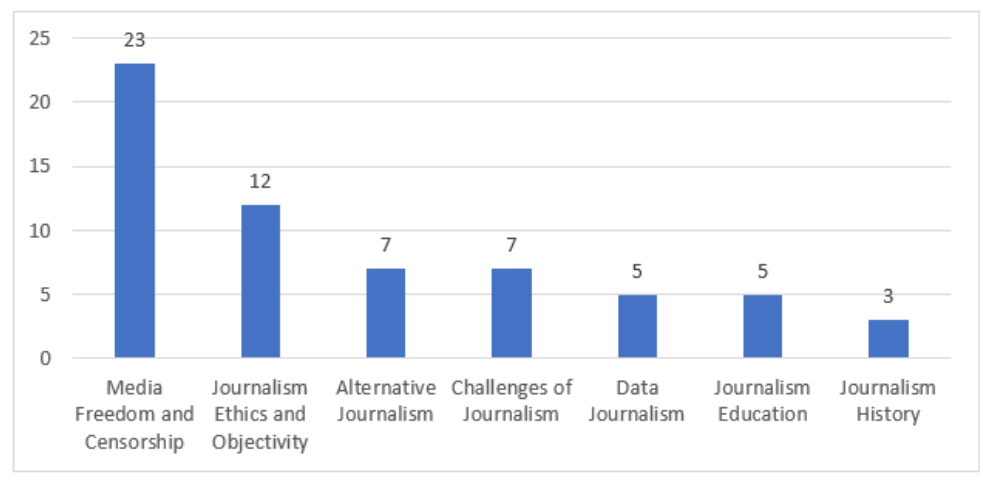
Figure 3. Topics discussed in journalism research in Turkey
Journalism Ethics and Objectivity, represented by 12 articles (19.35%), is another major area of focus in Turkish journalism research. This category examines the ethical challenges journalists face when reporting on sensitive topics, including gender-based violence, ethnic conflict, and political crises. Studies analyze how Turkish media at times reinforce traditional gender norms and nationalist perspectives, particularly in representations of gender-based violence and conflicts involving the PKK. Ethical dilemmas associated with reporting controversial issues—such as the publication of sensitive information concerning the PKK peace process or the media portrayal of femicide—constitute central themes. In addition, discussions of how media ethics is taught in communication faculties highlight the incorporation of ethical principles into journalism education. These studies provide a critical perspective on the balance between journalistic responsibility and the political pressures shaping reporting practices in Türkiye.
Other categories, including Alternative Journalism and Challenges of Journalism, each represented by seven articles (11.29%), as well as Data Journalism, represented by five articles (8.05%), also make substantial contributions to the field. Studies of Alternative Journalism examine how new media platforms, including podcasts, social media, and independent news networks such as BIA, challenge mainstream narratives and provide counterdiscourses, particularly during critical events such as the Gezi Park resistance and the Soma disaster. The Challenges of Journalism category addresses the precarious working conditions of freelance journalists in Türkiye, the effects of search engine optimization (SEO) practices, and the rise of clickbait journalism, highlighting how economic pressures and ethical dilemmas shape the profession. Data Journalism research examines the growth of data-driven news production in Türkiye and the challenges associated with it, including the need for stronger training in data visualization and the use of big data in investigative journalism.
In addition, Journalism Education, represented by five articles, and Journalism History, represented by three articles, offer insights into how journalism is taught in Türkiye and how the field has developed historically. Articles on Journalism Education analyze the structure of journalism curricula at Turkish universities and compare them with international standards, whereas studies of Journalism History examine the development of press freedom and the role of press workers during the early years of the Republic. Topics such as Yaşar Kemal’s ethnographic interviews and the history of press workers’ struggles during the Ottoman period further illuminate the historical foundations of Turkish journalism. Overall, this thematic diversity highlights the complex challenges facing Turkish journalism, ranging from media freedom and ethical practice to the emergence of alternative media and data journalism. The literature reflects both the field’s historical struggles and the contemporary transformation of Türkiye’s media landscape, providing a comprehensive overview of continuing efforts to preserve journalistic integrity and independence.
Country and University
Research on Turkish journalism is conducted by scholars from various countries, with the majority of publications originating from Türkiye (see Figure 4). Of the 62 articles reviewed, 35 (56.5%) were authored by researchers affiliated with institutions in Türkiye, including Akdeniz University and Marmara University, each of which contributed four articles, and Kadir Has University, which contributed three. The United Kingdom ranked second, with 13 articles (21%), primarily from Loughborough University, Ulster University, and the University of Oxford, each of which contributed between two and three articles. The United States contributed four articles (6.5%), with notable affiliations including the University of California and Texas Tech University. Other countries represented in the literature included Russia and Germany, with two articles each, and Canada, Belgium, Spain, Croatia, and Cyprus, with one article each.
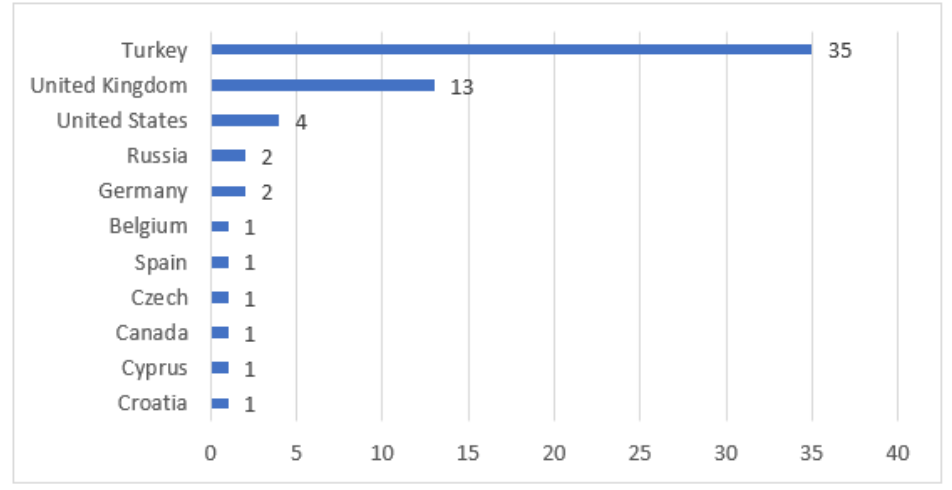
Figure 4. Country of authors who write about Turkish journalism
This distribution indicates substantial local academic engagement with Turkish journalism, as reflected in the strong representation of scholars affiliated with institutions in Türkiye. Contributions from international institutions, including Loughborough University and the University of California, also demonstrate broader scholarly interest in the development of Turkish media. It is important to note that country and university data were based solely on the first author’s affiliation to ensure a consistent approach to institutional and geographic classification.
The Theory
Table 1. Distribution of theories used in journalism research in Turkey
| Theories | Number of theories | Percentage (%) |
|---|---|---|
| Not explicitly mentioned | 40 | 64.52 |
| Critical Discourse Analysis by van Dijk (1980) | 2 | 3.23 |
| Framing Analysis by Entman (1993) | 2 | 3.23 |
| Populism by Laclau (2005); Networked Authoritarianism by MacKinnon (2011), Media Ecology by Scolari (2012); Citizen Media by Rodriguez (2001); Parrhesia by Foucault (2001); Alternative Media by Downing (2001); Authoritarian-populism by Stuart Hall (1985); Discourse Theory by Laclau and Mouffe (2001); Media Systems Theory by Hallin and Mancini (2004); Electoral Manipulation By Scheller (2013); Authoritarian Statism (Poulantzas, 2004); Feminist by Pateman (1995); Polarized Pluralist Model by Hallin and Mancini (2004); Vernacular Intellectual by Farred (2023); State of Exception by Agamben (2005); Affective Publics by Papacharissi (2015); Hegemonic Masculinity by Connell (1987, 1995); Framing by Goffman (1974); | 18 | 29.03 |
| Grand Total | 62 | 100 |
As shown in Table 1, research on Turkish journalism has drawn on a variety of theoretical frameworks, although 40 of the 62 articles did not explicitly identify a specific theory. These studies often relied on experimental methods or case studies to examine various phenomena in Turkish media without grounding their findings in a clearly defined theoretical framework. However, several articles explicitly identified and applied established theoretical frameworks. Notably, van Dijk’s (1980) critical discourse analysis (CDA) was cited in two studies, which focused on how media language shapes public opinion and power relations. Another prominent framework was Entman’s (1993) framing theory, referenced in two articles, which was used to examine how the media emphasize particular aspects of events and issues and thereby influence audience perceptions.
In addition, more recent and context-specific theories appeared in the literature. For example, MacKinnon’s (2011) theory of networked authoritarianism was cited in one article to explore how authoritarian regimes use digital tools to control information. Similarly, Laclau’s (2005) theory of populism and Hall’s (1985) concept of authoritarian populism were each applied in one article to examine the rise of populist narratives in the Turkish media landscape. The polarized pluralist model developed by Hallin and Mancini (2004), referenced in one study, provided a framework for understanding the interaction between media and politics in polarized societies. Collectively, these theories encompass both critical and positivist approaches and provide diverse perspectives on media practices in Türkiye, including media control, political manipulation, and the reinforcement of social and political ideologies.
Methods and Type of Data
Based on the data provided, the research methods used in studies of Turkish journalism vary considerably, although qualitative methods predominate: 46 of the 62 articles (74%) employed qualitative approaches. This predominance suggests that scholars in the field favor in-depth, descriptive analyses, which are often used to investigate the complexities of media practices, ethical issues, and political influences in Türkiye. In addition, 10 articles (approximately 16.1%) employed mixed-methods designs, combining qualitative and quantitative approaches to provide a more comprehensive understanding of the subject matter. By contrast, five studies (approximately 8.1%) used quantitative methods, relying on statistical analysis or numerical data to examine media trends or audience behavior, while only one article employed historical analysis.
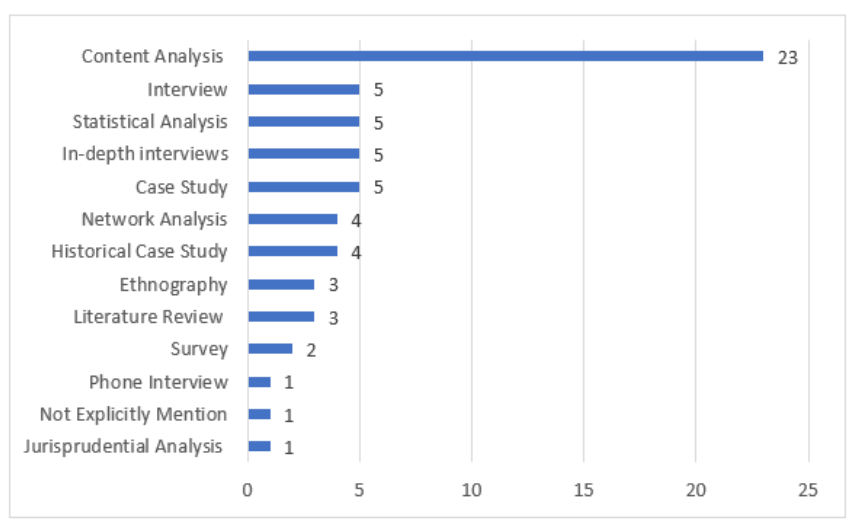
Figure 5. Types of methods used in journalism research in Turkey
With respect to specific data collection methods, Figure 5 shows that content analysis is the dominant method, used in 23 articles (approximately 37.1%). This method enables researchers to systematically examine media content and its framing by identifying patterns and themes in Turkish journalism. Other commonly used data collection techniques include interviews (5 articles, approximately 8.1%) and in-depth interviews (5 articles, approximately 8.1%), which enable researchers to elicit first-hand perspectives from journalists and media professionals. Case studies and historical case studies are also common, appearing in 5 and 4 articles (approximately 8.1% and 6.5%, respectively). These approaches focus on specific events or historical moments to better understand media practices and their impact. Other methods, including network analysis, ethnography, and literature reviews, are employed less frequently.
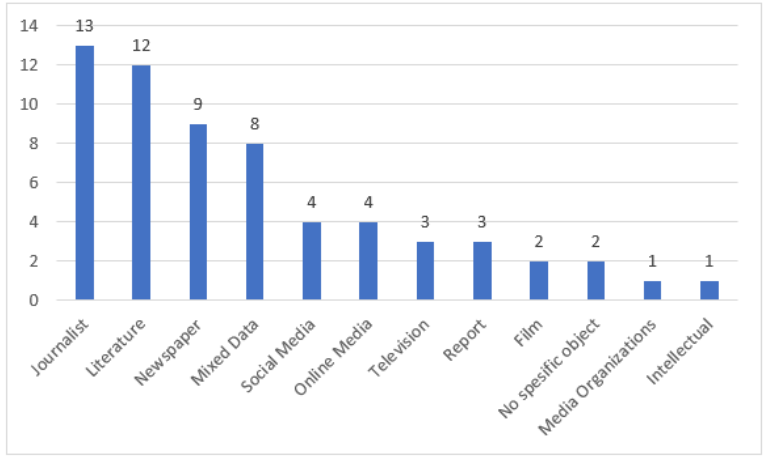
Figure 6. Subjects used in journalism research in Turkey
The objects of study in Turkish journalism research are diverse, with particular emphasis on various media forms and their roles in shaping public discourse (see Figure 6). Journalists constitute the most frequently studied category and are examined in 13 articles (approximately 21% of the total), underscoring strong scholarly interest in their experiences, working conditions, and ethical challenges in Turkey. Although content analysis is the most common data collection method, media texts would appear much more frequently if they were grouped into a single category. In the present categorization, however, newspapers, television, social media, and films are treated separately. As a result, journalists—who are typically studied through interviews—are more prominently represented than any individual media category. Newspapers are also a key focus, with nine articles (around 14.5%) examining how newspapers cover political, social, and cultural issues, often using content analysis to examine news framing in publications such as Hürriyet and Sabah. Social media and online media are also increasingly examined, with four articles devoted to each category (approximately 6.5% each). These studies focus on the role of digital platforms in news production and dissemination, especially during significant events such as the COVID-19 pandemic.
A substantial portion of the research also examines literature (12 articles, or 19.4%), including historical texts, intellectual works, and theoretical frameworks that shape media practices. The mixed-data category, typically associated with mixed-methods research, appears in 8 articles (approximately 12.9%) and reflects the integration of multiple data collection techniques, such as interviews combined with content analysis, statistical analysis, or network analysis. Such integration enables a more comprehensive understanding of complex media phenomena. Other objects of study include media organizations, film, and intellectuals, broadening the analysis of how media interact with society.
Discussion and conclusion
The body of research on journalism in Turkey examined in this study shows fluctuations in publication volume over time. During the initial period (2011–2014), the number of publications was relatively low, with only one to three articles published per year. This low publication volume suggests limited attention from both international and Turkish scholars to media dynamics in Turkey, despite the country's long journalistic tradition dating to the Ottoman Empire. Beginning in 2017, publication volume increased substantially, peaking in 2021 and 2022. This increase indicates growing scholarly attention to media conditions in Turkey. This trend may be linked to the increasingly authoritarian political trajectory under the current government, including heightened censorship and tighter media control. The rise in publication volume underscores growing scholarly interest in issues such as censorship and press freedom, which have become increasingly salient as restrictions on media freedom have intensified in Turkey (Kaya & Çakmur, 2010; Sözeri, 2013).
Among the topics examined, media freedom and censorship predominate. This thematic emphasis reflects the principal challenges confronting the media in Turkey, including state control and evolving forms of political intervention, most visibly through government influence exercised via formal policies and direct pressure on journalists and media outlets. Key topics such as media strategies within the Turkish media system (Akkus, 2023), the Gezi Park protests (Çoban & Ataman, 2017; Cosentino & Alikasifoglu, 2019), and the Charlie Hebdo incident (Eko & Hellmueller, 2020) illustrate how journalism functions within an increasingly authoritarian system. From a political economy of media perspective, the prominence of these topics indicates how media institutions are subordinated to political power through both regulatory and informal mechanisms, reinforcing previous findings that the media in Turkey serve as instruments of political narrative construction (Hardy, 2014; Mansell, 2004).
In addition to censorship, the literature examined in this study addresses journalistic ethics and objectivity. The findings indicate that Turkish journalists frequently face substantial ethical dilemmas, particularly when reporting on sensitive issues such as gender-based violence (Gürkan et al., 2024), the conflict involving the PKK (Arcan, 2013; Hawks & Smith, 2013), Syrian refugees (Kayali, 2024), and political crises (Iyigüngör, 2013). The dynamics described in these studies closely reflect the structural tensions identified by Mosco (2016), who argues that journalistic practice is profoundly shaped by power relations embedded in political and economic structures. Studies within this thematic category further demonstrate that Turkish media reinforce traditional gender norms and nationalist narratives (Gürkan et al., 2024), particularly in representations of violence against women and the conflict with the PKK. The tension between journalists' responsibility to provide balanced information and prevailing political pressure illustrates the difficulties journalists face when operating under stringent controls (Akser & Baybars-Hawks, 2012), and demonstrates that broader social and political forces continue to constrain editorial autonomy in Turkey.
The emergence of alternative journalism and data journalism also signals a shift in Turkish journalistic practices, although these areas account for a smaller proportion of the research. Social media, podcasts, and independent news platforms such as BIA have begun to attract scholarly attention because they challenge the dominant narratives controlled by the government and large media conglomerates (Sen, 2017). Despite the considerable growth potential of alternative news platforms, researchers also note that limited access to data, inadequate funding, and insufficient technical expertise among journalists pose major challenges (Öztürk, 2023). Data journalism is recognized as a means of advancing evidence-based reporting and transparency; however, studies identify difficulties in its implementation, particularly in the use of big data and appropriate data visualization techniques (Ozay & Bayrakcı, 2022; Trattner et al., 2022). The findings indicate that, although alternative platforms provide space for more diverse narratives, the mainstream media, which remain under government control, continue to dominate.
The majority of first authors included in this study are based in Turkey. Authors affiliated with institutions in the United Kingdom, the United States, Croatia, and Russia also make a substantial contribution and collectively account for about 43% of the sample. Nevertheless, many of these internationally affiliated authors are of Turkish descent or are directly connected to the local context. For example, Akçakır and Kayali, who are affiliated with institutions in the United States, and Çelik and Akser, who are affiliated with institutions in the United Kingdom, appear to have Turkish backgrounds, as suggested by their names. This pattern highlights the importance of academic mobility, as Turkish researchers abroad continue to play a crucial role in shaping the global understanding of Turkish journalism (Atabaş & Köse, 2024). At the same time, it presents a challenge for journalism research on Turkey, because broader participation by researchers from diverse international backgrounds could provide a more genuinely global perspective (Samiee & Athanassiou, 1998) and help mitigate locally rooted biases in interpretations of media phenomena in Turkey (Sue, 1999).
The examination of theories used in journalism research in Turkey reveals a tendency not to identify theoretical frameworks explicitly. This pattern reflects the predominance of empirical approaches, which emphasize direct observation and field experience over clearly articulated theoretical frameworks. Nevertheless, several established frameworks are used, including critical discourse analysis (CDA) and framing theory, although they appear in only a small number of studies. The data, however, do not clearly demonstrate whether CDA and framing theory—which are commonly used to critically examine repressive media policies—serve this function in journalism research on Turkey (Entman, 2010; van Dijk, 2017). In the studies reviewed, CDA is used to analyze Sabah's reporting on the COVID-19 pandemic (Akçakır et al., 2023), nationalism and the exclusion of critical information (Sarı, 2021), and cinematic representations of journalists' identities in Turkey (Arik & Akgün, 2019).
Similarly, framing theory is used to examine the framing of autism-related stories in Turkish print media (Yilmaz & Öney, 2021) and the coverage of Christianity and Islam in the British and Turkish national press (Topkev, 2025). Other theories, such as populism theory, are used to understand how media discourse in Turkey shapes ideological power dynamics, focusing on the conflict between military and civilian elites (Hatakka & Herkman, 2022). Theories explicitly aligned with the topics under investigation are also used to critique Turkey’s press-freedom policies. Examples include Stuart Hall’s (1985) concept of authoritarian populism (Çelik, 2020) and Scheller’s (2013) concept of electoral manipulation (Dudáš, 2024). This range demonstrates that journalism research in Turkey draws on theories spanning diverse analytical dimensions, including frameworks commonly used to critique government power and media policies governing the coverage of particular topics.
Journalism research in Turkey exhibits limited methodological diversity, primarily because qualitative methods dominate. This pattern indicates that such research largely adopts an exploratory orientation focused on journalists' subjective experiences and broader media dynamics. Qualitative methods, such as in‑depth interviews with journalists and content analysis of news coverage, enable researchers to examine in depth the ethical dilemmas and practical challenges journalists face when reporting on sensitive issues. This approach is particularly relevant for exploratory research in settings where press freedom is severely restricted, because quantitative methods may not provide sufficient insight into the individual experiences of journalists or the social conflicts that influence media narratives. By using in-depth interviews or case studies, researchers can better understand political dynamics and the variation in the information produced. The frequent absence of explicitly stated theoretical frameworks further suggests that researchers prioritize the collection of empirical evidence over connecting their findings to formal theory.
The quantitative and mixed-methods approaches identified in this review also have the potential to provide a more holistic view of media trends and reporting patterns in Turkey. Quantitative methods, such as statistical analyses of news articles or surveys of journalists, can produce broader and more systematically comparable data, allowing researchers to identify general trends in media coverage. For instance, conducting a survey of Turkish journalists to assess the impact of media ownership on news reporting could provide quantifiable data on how political or corporate pressures influence editorial choices. However, in the context of the Turkish media, quantitative methods are often limited in their capacity to examine highly polarized political dynamics and media practices. Mixed-methods designs, which combine quantitative analysis with in-depth interviews, may therefore be more effective in providing a comprehensive account of how the media operate within a politically controlled system. Mixed methods allow researchers to pair numerical data with narrative analysis, helping to overcome the limitations of relying on a single method. This approach is increasingly used to map the effects of digital technologies on the Turkish media, particularly changes in social media narratives and political influence over news production.
The dominance of empirical approaches and the limited use of explicitly articulated theories in Turkish journalism research can also be understood in relation to the broader political-economic conditions surrounding media and knowledge production. As Mosco (2009, 2016) suggests, communication practices and the scholarship associated with them are inseparable from relations of power, ownership, and labor that structure the media field itself. In highly politicized media environments, research agendas often gravitate toward descriptive, applied, and experience-based inquiry; this tendency has been linked to concentrated ownership and sustained political pressure on both media institutions and intellectual life (Entman, 1993; Hallin & Mancini, 2004). Under such conditions, comprehensive, grounded, and exploratory media research also faces funding constraints, as public resources are often directed toward politically safer fields of scientific inquiry. This context helps explain why interviews, case studies, and qualitative content analysis predominate and why theory frequently remains implicit, while structural constraints continue to limit the scope of critical inquiry.
Limitations and future recommendations
This study, while comprehensive in its mapping of Turkish journalism research, has several limitations. One major limitation is the narrow scope of the databases used. Although Scopus and Web of Science are reputable, relying exclusively on these databases may have excluded relevant research published through other platforms or in journals not indexed in either database. This may have limited the range of research considered in the review. Another limitation is that the study was restricted to peer-reviewed articles. Although this criterion ensured a degree of scholarly rigor, it may have excluded valuable insights from other sources, such as gray literature and institutional reports. Furthermore, the study's approach focused on providing a broad overview of the principal themes in Turkish journalism research. While this approach allowed the study to identify dominant trends in the field, it also prevented more specialized or niche topics from being examined in depth. Finally, the methodological approach used in this study may have introduced biases into the categorization of themes. Many studies could have been assigned to multiple themes, but this review prioritized the dominant theme in each study, which may have obscured some of the research's thematic complexity.
Future research should build on this study by expanding its scope beyond Scopus and Web of Science to include local Turkish journals, books, dissertations, and institutional reports, thereby providing a more comprehensive body of literature. Turkish-language journalism research is extensive and could provide important insights into the development of journalism in Turkey. Future studies should also focus on more specific subthemes and consider integrating multiple types of sources to capture local perspectives that may be underrepresented in or absent from English-language publications. Furthermore, it would be valuable to employ more specialized review methodologies, including scoping reviews, systematic literature reviews (SLRs), and bibliometric analyses, to examine narrower topics in Turkish journalism.
Authors’ Statements
Agreement with the Journal's Policies
All authors of this manuscript have been notified and agree to the journal's current policies as described on the publication's website.
Originality and Exclusivity of the Manuscript
All authors confirm that the manuscript is original, has not been published previously in whole or in part, and is not under consideration for publication elsewhere.
Authorship and Contribution (CRediT)
Fathul Qorib was responsible for study design, data collection, analysis, and manuscript drafting and revision. Mert Gürer provided guidance on study design, monitored data collection and analysis, and provided input on manuscript drafts. Both authors approved the final manuscript and are responsible for the work in its entirety.
Policy on Preprints and Previous Versions
Authors confirm that there is no preprint/working version.
Conflict of Interest
Authors declare that there are no financial or non-financial conflicts of interest that could have influenced the research or interpretation of the findings
Funding
This work has not been funded by any sponsor.
Use of Generative AI and Supporting Tools
There was no use of AI tools in the development of this work. However, Grammarly was used to refine the language and improve clarity.
Permissions for Use (Texts, Images, Maps, Illustrations)
No texts, images, maps, or illustrations requiring permission have been used in this work.
Acknowledgments and Contributions without Authorship
We would like to express our sincere gratitude to Kocaeli University, Turkey, for providing a conducive and supportive environment for research throughout this study.
Список литературы
Akcakir, G., Jiang, Y., Luo, J., & Noh, S. (2023). Validating a Mixed-Method Approach for Multilingual News Framing Analysis: A case study of COVID-19. Computational Communication Research, 5(2), 1–70. https://doi.org/10.5117/CCR2023.2.11.AKCA
Akkus, A. (2023). The Parable of Copycat Headlines Under Erdogan Regime in Turkey. Cogent Social Sciences, 9(2), 2243723. https://doi.org/10.1080/23311886.2023.2243723
Akser, M., & Baybars-Hawks, B. (2012). Media and Democracy in Turkey: Toward a Model of Neoliberal Media Autocracy. Middle East Journal Of Culture And Communication, 5(3), 302–321. https://doi.org/10.1163/18739865-00503011
Alver, F., & Sarısakaloğlu, A. (2023). Communication Science in Türkiye: How Communication Research and Education Developed Over the Years. Publizistik, 68(1), 89–108. https://doi.org/10.1007/s11616-022-00766-4
Arcan, H. E. (2013). Ethnic Conflicts and the Role of the Media: The Case of Turkish Media. Mediterranean Journal of Social Sciences, 4(10), 338–346. https://doi.org/10.5901/mjss.2013.v4n10p338
Arik, E., & Akgün, H. (2019). Türk Sinemasında Gazeteci Kimliğinin Temsili [The Representation of the Journalist Identity in Turkish Cinema]. Türkiye İletişim Araştırmaları Dergisi, (34), 196‑220. https://doi.org/10.17829/turcom.664219 (In Turkish).
Arsan, E. (2013). Killing Me Softly with His Words: Censorship and Self-Censorship from the Perspective of Turkish Journalists. Turkish Studies, 14(3), 447–462. https://doi.org/10.1080/14683849.2013.833017
Aşık, O. (2017). The Fall of the Public and the Moral Contestation in the Journalistic Culture of Turkey. Middle East Journal of Culture and Communication, 10(1), 69–85. https://doi.org/10.1163/18739865-01001005
Atabaş, H., & Köse, M. (2024). Unraveling Türkiye Alums’ Role as Agents of Everyday Diplomacy. International Journal of Educational Research, 128, 102470. https://doi.org/10.1016/j.ijer.2024.102470
Ataman, B., Çoban, B., & Erkmen, Ö. (2020). A Review on the Safety of Journalists in Turkey: A Victims’ Rights Perspective. In S. Jamil (Ed.), Advances in Media, Entertainment, and the Arts (pp. 148‑171). IGI Global. https://doi.org/10.4018/978-1-7998-1298-2.ch009
Baris, K. (2020). Turkey’s Digital News Landscape: Polarization, Social Media, and Emerging Trends. EDAM. https://edam.org.tr/en/cyber-governance-digital-democracy/turkey-s-digital-news-landscape-polarization-social-media-and-emerging-trends
Boell, S. K., & Cecez-Kecmanovic, D. (2015). On being ‘Systematic’ in Literature Reviews in IS. Journal of Information Technology, 30(2), 161–173. https://doi.org/10.1057/jit.2014.26
Boomgaarden, H. G., & Schmitt-Beck, R. (2019). The Media and Political Behavior. In H. G. Boomgaarden & R. Schmitt-Beck, Oxford Research Encyclopedia of Politics. Oxford University Press. https://doi.org/10.1093/acrefore/9780190228637.013.621
Caled, D., & Silva, M. J. (2022). Digital Media and Misinformation: An Outlook on Multidisciplinary Strategies Against Manipulation. Journal of Computational Social Science, 5(1), 123–159. https://doi.org/10.1007/s42001-021-00118-8
Çelik, B. (2020). Screening for Erdoğanism: Television, Post-Truth and Political Fear. European Journal of Communication, 35(4), 339–354. https://doi.org/10.1177/0267323120903680
Chadegani, A. A., Salehi, H., Yunus, M. M., Farhadi, H., Fooladi, M., Farhadi, M., & Ebrahim, N. A. (2013). A Comparison between Two Main Academic Literature Collections: Web of Science and Scopus Databases. Asian Social Science, 9(5), p18. https://doi.org/10.5539/ass.v9n5p18
Çoban, B., & Ataman, B. (2017). The Gezi Resistance and Activist Citizen Reporters. Communications, 42(1), 1–22. https://doi.org/10.1515/commun-2017-0004
Cosentino, G., & Alikasifoglu, B. (2019). Políticas de la posverdad en el Próximo Oriente: Los estudios de caso de Siria y Turquía [Post-truth Politics in the Middle East: Case Studies of Syria and Turkey]. Artnodes, (24), 91-100. https://doi.org/10.7238/a.v0i24.3284 (In Spanish).
Coskuntuncel, A. (2018). Privatization of Governance, Delegated Censorship, and Hegemony in the Digital Era: The case of Turkey. Journalism Studies, 19(5), 690–708. https://doi.org/10.1080/1461670X.2016.1197045
Dudáš, M. (2024). Electoral Manipulation Strategies in Turkey During the Akp Rule. Trames. Journal of the Humanities and Social Sciences, 28(4), 331–350. https://doi.org/10.3176/tr.2024.4.02
Eko, L., & Hellmueller, L. (2020). One Meta-Media Event, Two Forms of Censorship: The Charlie Hebdo Affair in the United Kingdom and Turkey. Global Media and Communication, 16(1), 75–101. https://doi.org/10.1177/1742766519899118
Entman, R. M. (1993). Framing: Toward Clarification of a Fractured Paradigm. Journal of Communication, 43(4), 51–58. https://doi.org/10.1111/j.1460-2466.1993.tb01304.x
Entman, R. M. (2010). Media Framing Biases and Political Power: Explaining Slant in News of Campaign 2008. Journalism, 11(4), 389–408. https://doi.org/10.1177/1464884910367587
Erkmen, Ö. (2024). Data Journalism: A Systematic Literature Review. Journalism Studies, 25(1), 58–79. https://doi.org/10.1080/1461670X.2023.2289885
Europe – Central Asia: Türkiye. (2025). Rsf.Org. https://rsf.org/en/country-türkiye
Fiedler, A., & Frère, M.-S. (2018). Press Freedom in the African Great Lakes Region: A Comparative Study of Rwanda, Burundi, and the Democratic Republic of Congo. In H. M. Mabweazara (Ed.), Newsmaking Cultures in Africa (pp. 119–143). Palgrave Macmillan UK. https://doi.org/10.1057/978-1-137-54109-3_6
Fingerman, S. (2006). Web of Science and Scopus: Current features and Capabilities. Issues in Science and Technology Librarianship, (48). https://doi.org/10.29173/istl2081
Gürkan, H., Echazarreta-Soler, C., Sarpkaya, Ö., Sayıklı, E. D., Özbıyık, S. Ş., & Özgör, D. (2024). Exploring Gender and Homicide: Insights from Turkish Media Professionals of Generations X, Y, and Z. Romanian Journal of Communication and Public Relations, 26(1), 7–24. https://doi.org/10.21018/rjcpr.2024.1.535
Guzel, M., & Gonden, M. (2022). Journalism Education in Turkey in the Spiral of Neoliberal Policies and Technological Transformation: Problems, Pursuits, and Suggestions. Journal of Qualitative Research in Education, 22(31). https://doi.org/10.14689/enad.31.1610
Hallin, D. C., & Mancini, P. (2004). Comparing Media Systems: Three Models of Media and Politics. Cambridge University Press.
Hardy, J. (2014). Critical Political Economy of the Media: An Introduction (1st ed.). Routledge. https://doi.org/10.4324/9780203136225
Hatakka, N., & Herkman, J. (2022). Hegemonic Meanings of Populism: Populism as a Signifier in Legacy Dailies of Six Countries 2000–2018. Media, Culture & Society, 44(8), 1523–1540. https://doi.org/10.1177/01634437221104680
Hawks, B. B., & Smith, A. G. (2013). Publishing Leaked Information as News: Sabotage or Journalistic Success? Mediterranean Journal of Social Sciences, 4(10), 271–277. https://doi.org/10.5901/mjss.2013.v4n10p271
Iyigüngör, V. (2013). Political System Discussions in Turkish Media. Mediterranean Journal of Social Sciences, 4(10), 204–208. https://doi.org/10.5901/mjss.2013.v4n10p204
Kaya, R., & Çakmur, B. (2010). Politics and the Mass Media in Turkey. Turkish Studies, 11(4), 521–537. https://doi.org/10.1080/14683849.2010.540112
Kayali, N. (2024). Managing Uncertain Times in Turkey: Refugee Healthcare Research during a Global Pandemic. International Journal of Middle East Studies, 56(1), 151–156. https://doi.org/10.1017/S0020743824000242
Kızılkaya, E., & Ütücü, B. (2021). ‘The New Mainstream’ is Rising (and It Seeks Support). Free Turkey Journalists. https://freeturkeyjournalists.ipi.media/turkey-digital-media-report/
Kurban, D., & Sözeri, C. (2011). Does Media Policy Promote Media Freedom and Independence? The Case of Turkey (Case Study Report Nos. FP7-SSH-2009-A no. 244365). Mediadem.
Maharani, E. (2024). The Fourth Estate Unbound: Examining Press Law and Ethics in the Digital Age in Indonesia. Indonesia Media Law Review, 3(1). https://doi.org/10.15294/imrev.v3i1.78901
Maniou, T. A. (2023). The Dynamics of Influence on Press Freedom in Different Media Systems: A Comparative Study. Journalism Practice, 17(9), 1937–1961. https://doi.org/10.1080/17512786.2022.2030246
Maniou, T. A., & Papadopoulou, L. (2024). Editorial: Press Freedom, Journalism Practice, and Professionalization in Times of Uncertainty. Frontiers in Communication, 9, 1524823. https://doi.org/10.3389/fcomm.2024.1524823
Mansell, R. (2004). Political Economy, Power and New Media. New Media & Society, 6(1), 96–105. https://doi.org/10.1177/1461444804039910
Meho, L. I., & Rogers, Y. (2008). Citation Counting, Citation Ranking, and H ‐Index of Human‐Computer Interaction Researchers: A Comparison of Scopus and Web of Science. Journal of the American Society for Information Science and Technology, 59(11), 1711–1726. https://doi.org/10.1002/asi.20874
Mosco, V. (2009). The Political Economy of Communication: A Living Tradition. Media Asia, 36(3), 146‑155. https://doi.org/10.1080/23776277.2009.12224389
Mosco, V. (2016). The Political Economy of Journalism. In J. A. D. Lopes, N. do N. Nogueira, & J. L. Dourado (Eds.), Economía política do jornalismo. Tendências, perspectivas e desenvolvimento regional [The Political Economy of Journalism: Trends, Perspectives, and Regional Development] (pp. 19–42). Gráfica Universitária da UFPI. (In Portuguese).
Mulrow, C. D. (1994). Systematic Reviews: Rationale for Systematic Reviews. BMJ, 309(6954), 597–599. https://doi.org/10.1136/bmj.309.6954.597
Norris, M., & Oppenheim, C. (2007). Comparing Alternatives to the Web of Science for Coverage of the Social Sciences’ Literature. Journal of Informetrics, 1(2), 161–169. https://doi.org/10.1016/j.joi.2006.12.001
Orłowska, A., Mazur, Z., & Łaguna, M. (2017). Systematyczny Przegląd Literatury: Na Czym Polega I Czym Różni Się Od Innych Przeglądów? [Systematic Literature Review: What Is It, and How Does It Differ from Other Reviews?] Ogrody Nauk i Sztuk, (7), 350–363. https://doi.org/10.15503/onis2017.350.363 (In Polish).
Ozay, S., & Bayrakcı, S. (2022). Data Journalism in Turkey: Developing a Scale and Measuring Journalists’ Skills. İnsan Ve Toplum, 12(4), 74–98.
Özdemir, H. (2023). Freedom of Thought and Expression: Censorship on Media in Turkey. In M. Okyayuz, J. Mao, L. G. Mpedi, & P. Herrmann (Eds.), Human Rights in a Changing World (pp. 291–323). Springer Fachmedien Wiesbaden. https://doi.org/10.1007/978-3-658-39533-9_11
Öztunc, M., & Pierre, M.-H. (2021). Analysis of the Obstacles to the Freedom and Independence of the Media in the World and Turkey. Turkish Online Journal of Educational Technology - TOJET, 20(1), 1–9.
Öztürk, H. (2023). Türkiye’de Veri Gazeteciliği: Uluslararası Platformlarla Veri Görselleştirme Odaklı Bir Karşılaştırma [Data Journalism in Turkey: A Comparison Focused on Data Visualization with International Platforms]. Türkiye İletişim Araştırmaları Dergisi, (44), 127–147. https://doi.org/10.17829/turcom.1195919 (In Turkish).
Page, M. J., McKenzie, J. E., Bossuyt, P. M., Boutron, I., Hoffmann, T. C., Mulrow, C. D., Shamseer, L., Tetzlaff, J. M., Akl, E. A., Brennan, S. E., Chou, R., Glanville, J., Grimshaw, J. M., Hróbjartsson, A., Lalu, M. M., Li, T., Loder, E. W., Mayo-Wilson, E., McDonald, S., … Moher, D. (2021). The PRISMA 2020 Statement: An Updated Guideline for Reporting Systematic Reviews. BMJ, 372, n71. https://doi.org/10.1136/bmj.n71
Powell, K. R., & Peterson, S. R. (2017). Coverage and Quality: A Comparison of Web of Science and Scopus Databases for Reporting Faculty Nursing Publication Metrics. Nursing Outlook, 65(5), 572–578. https://doi.org/10.1016/j.outlook.2017.03.004
Priyadarsini, I. S., & Ravindran, V. (2023). Systematic Literature Review. Indian Journal of Continuing Nursing Education, 24(2), 114–118. https://doi.org/10.4103/ijcn.ijcn_1_24
Pukallus, S., Bradley, L., Clarke, S., & Harrison, J. (2020). From Repression to Oppression: News Journalism in Turkey 2013–2018. Media, Culture & Society, 42(7–8), 1443–1460. https://doi.org/10.1177/0163443720916407
Richeri, G. (2011). The Media amid Enterprises, the Public, and the State: New Challenges for Research. In J. Wasko, G. Murdock, & H. Sousa (Eds.), The Handbook of Political Economy of Communications (1st ed., pp. 127–139). Wiley. https://doi.org/10.1002/9781444395402.ch6
Riesenberg, L. A., & Justice, E. M. (2014). Conducting a Successful Systematic Review of the Literature, Part 1. Nursing, 44(4), 13–17. https://doi.org/10.1097/01.NURSE.0000444728.68018.ac
Samiee, S., & Athanassiou, N. (1998). International Strategy Research. Journal of Business Research, 43(2), 79–96. https://doi.org/10.1016/S0148-2963(97)00184-7
Sari, E. (2021). Popüler Basında Kovid-19 Haberleri: Yeni Tip Koronavirüs Eski Tip Banal Milliyetçilik [COVID-19 News in the Popular Press: The Novel Coronavirus vs. Old-Fashioned, Trite Nationalism]. İlef Dergisi, 8(1), 63-108. https://doi.org/10.24955/ilef.798007 (In Turkish).
Sen, A. F. (2017). Alternative Journalism Education in Turkey: A Case Study of the ‘From School to Newsroom’ (OHO) Program. Palgrave Communications, 3(1), 17015. https://doi.org/10.1057/palcomms.2017.15
Simon, J. (2014). The New Censorship: Inside the Global Battle for Media Freedom. Columbia University Press. https://doi.org/10.7312/simo16064
Souissi, N., & Tikito, I. (2019). Meta-analysis of Systematic Literature Review Methods. International Journal of Modern Education and Computer Science, 11(2), 17–25. https://doi.org/10.5815/ijmecs.2019.02.03
Sözeri, C. (2013). The political economy of the media and its impact on freedom of expression in Turkey. In C. Rodríguez, A. Ávalos, H. Yılmaz, & A. I. Planet (Eds.), Turkey’s Democratization Process (pp. 391–404). Taylor and Francis.
Sue, S. (1999). Science, Ethnicity, and Bias: Where Have We Gone Wrong? American Psychologist, 54(12), 1070–1077. https://doi.org/10.1037/0003-066X.54.12.1070
Sümer, B., & Taş, O. (2020). The Regulation of Television Content in Turkey: From State Monopoly to Commercial Broadcasting and Beyond. In Y. Kaptan & E. Algan (Eds.), Television in Turkey (pp. 27–46). Springer International Publishing. https://doi.org/10.1007/978-3-030-46051-8_2
Syahriar, I., Bazarah, J., Khairunnisah, & P, D. P. H. (2024). New Media and Their Implications for the Press Law. Revista de Gestão Social e Ambiental, 18(6), e06297. https://doi.org/10.24857/rgsa.v18n6-112
Tokgöz, O. (2003). Türkiye’de İletişim Eğitimi: Elli Yıllık Bir Geçmişin Değerlendirilmesi [Communication Education in Turkey: An Assessment of Fifty Years of History]. Kültür ve İletişim, 6(1), 9-32. (In Turkish).
Topkev, A. (2025). A democratic approach to religion news: Newspaper coverage of Christianity and Islam in the UK and Turkey. The Communication Review, 28(2), 131–169. https://doi.org/10.1080/10714421.2024.2424060
Trattner, C., Jannach, D., Motta, E., Costera Meijer, I., Diakopoulos, N., Elahi, M., Opdahl, A. L., Tessem, B., Borch, N., Fjeld, M., Øvrelid, L., De Smedt, K., & Moe, H. (2022). Responsible Media Technology and AI: Challenges and Research Directions. AI and Ethics, 2(4), 585–594. https://doi.org/10.1007/s43681-021-00126-4
Uzun, R. (2007). Türkiye’de gazetecilik eğitimi [Journalism Education in Turkey]. İletişim Kuram ve Araştırma Dergisi, 25(1), 245–252. (In Turkish).
Van Dijk, T. A. (2017). Discourse and Power. Red Globe Press.
Werz, M., & Hoffman, M. (2013). Freedom of the Press and Expression in Turkey. The Center for American Progress. https://www.americanprogress.org/article/freedom-of-the-press-and-expression-in-turkey/
Yanardağoğlu, E. (2021). The Transformation of the Media System in Turkey: Citizenship, Communication, and Convergence. Springer International Publishing. https://doi.org/10.1007/978-3-030-83102-8
Yesil, B. (2014). Press Censorship in Turkey: Networks of State Power, Commercial Pressures, and Self-Censorship: Press Censorship in Turkey. Communication, Culture & Critique, 7(2), 154–173. https://doi.org/10.1111/cccr.12049
Yilmaz Altuntas, E., & Öney Doğanyiğit, S. (2021). Social Determinants of Autism Spectrum Disorder in the Print Media News: A Qualitative Framing Analysis of Coverage in National Newspapers in Turkey. Cogent Social Sciences, 7(1), 1947607. https://doi.org/10.1080/23311886.2021.1947607
Zhu, J., & Liu, W. (2020). A Tale of Two Databases: The Use of Web of Science and Scopus in Academic Papers. Scientometrics, 123(1), 321–335. https://doi.org/10.1007/s11192-020-03387-8
References
Akcakir, G., Jiang, Y., Luo, J., & Noh, S. (2023). Validating a Mixed-Method Approach for Multilingual News Framing Analysis: A case study of COVID-19. Computational Communication Research, 5(2), 1–70. https://doi.org/10.5117/CCR2023.2.11.AKCA
Akkus, A. (2023). The Parable of Copycat Headlines Under Erdogan Regime in Turkey. Cogent Social Sciences, 9(2), 2243723. https://doi.org/10.1080/23311886.2023.2243723
Akser, M., & Baybars-Hawks, B. (2012). Media and Democracy in Turkey: Toward a Model of Neoliberal Media Autocracy. Middle East Journal Of Culture And Communication, 5(3), 302–321. https://doi.org/10.1163/18739865-00503011
Alver, F., & Sarısakaloğlu, A. (2023). Communication Science in Türkiye: How Communication Research and Education Developed Over the Years. Publizistik, 68(1), 89–108. https://doi.org/10.1007/s11616-022-00766-4
Arcan, H. E. (2013). Ethnic Conflicts and the Role of the Media: The Case of Turkish Media. Mediterranean Journal of Social Sciences, 4(10), 338–346. https://doi.org/10.5901/mjss.2013.v4n10p338
Arik, E., & Akgün, H. (2019). Türk Sinemasında Gazeteci Kimliğinin Temsili [The Representation of the Journalist Identity in Turkish Cinema]. Türkiye İletişim Araştırmaları Dergisi, (34), 196‑220. https://doi.org/10.17829/turcom.664219 (In Turkish).
Arsan, E. (2013). Killing Me Softly with His Words: Censorship and Self-Censorship from the Perspective of Turkish Journalists. Turkish Studies, 14(3), 447–462. https://doi.org/10.1080/14683849.2013.833017
Aşık, O. (2017). The Fall of the Public and the Moral Contestation in the Journalistic Culture of Turkey. Middle East Journal of Culture and Communication, 10(1), 69–85. https://doi.org/10.1163/18739865-01001005
Atabaş, H., & Köse, M. (2024). Unraveling Türkiye Alums’ Role as Agents of Everyday Diplomacy. International Journal of Educational Research, 128, 102470. https://doi.org/10.1016/j.ijer.2024.102470
Ataman, B., Çoban, B., & Erkmen, Ö. (2020). A Review on the Safety of Journalists in Turkey: A Victims’ Rights Perspective. In S. Jamil (Ed.), Advances in Media, Entertainment, and the Arts (pp. 148‑171). IGI Global. https://doi.org/10.4018/978-1-7998-1298-2.ch009
Baris, K. (2020). Turkey’s Digital News Landscape: Polarization, Social Media, and Emerging Trends. EDAM. https://edam.org.tr/en/cyber-governance-digital-democracy/turkey-s-digital-news-landscape-polarization-social-media-and-emerging-trends
Boell, S. K., & Cecez-Kecmanovic, D. (2015). On being ‘Systematic’ in Literature Reviews in IS. Journal of Information Technology, 30(2), 161–173. https://doi.org/10.1057/jit.2014.26
Boomgaarden, H. G., & Schmitt-Beck, R. (2019). The Media and Political Behavior. In H. G. Boomgaarden & R. Schmitt-Beck, Oxford Research Encyclopedia of Politics. Oxford University Press. https://doi.org/10.1093/acrefore/9780190228637.013.621
Caled, D., & Silva, M. J. (2022). Digital Media and Misinformation: An Outlook on Multidisciplinary Strategies Against Manipulation. Journal of Computational Social Science, 5(1), 123–159. https://doi.org/10.1007/s42001-021-00118-8
Çelik, B. (2020). Screening for Erdoğanism: Television, Post-Truth and Political Fear. European Journal of Communication, 35(4), 339–354. https://doi.org/10.1177/0267323120903680
Chadegani, A. A., Salehi, H., Yunus, M. M., Farhadi, H., Fooladi, M., Farhadi, M., & Ebrahim, N. A. (2013). A Comparison between Two Main Academic Literature Collections: Web of Science and Scopus Databases. Asian Social Science, 9(5), p18. https://doi.org/10.5539/ass.v9n5p18
Çoban, B., & Ataman, B. (2017). The Gezi Resistance and Activist Citizen Reporters. Communications, 42(1), 1–22. https://doi.org/10.1515/commun-2017-0004
Cosentino, G., & Alikasifoglu, B. (2019). Políticas de la posverdad en el Próximo Oriente: Los estudios de caso de Siria y Turquía [Post-truth Politics in the Middle East: Case Studies of Syria and Turkey]. Artnodes, (24), 91-100. https://doi.org/10.7238/a.v0i24.3284 (In Spanish).
Coskuntuncel, A. (2018). Privatization of Governance, Delegated Censorship, and Hegemony in the Digital Era: The case of Turkey. Journalism Studies, 19(5), 690–708. https://doi.org/10.1080/1461670X.2016.1197045
Dudáš, M. (2024). Electoral Manipulation Strategies in Turkey During the Akp Rule. Trames. Journal of the Humanities and Social Sciences, 28(4), 331–350. https://doi.org/10.3176/tr.2024.4.02
Eko, L., & Hellmueller, L. (2020). One Meta-Media Event, Two Forms of Censorship: The Charlie Hebdo Affair in the United Kingdom and Turkey. Global Media and Communication, 16(1), 75–101. https://doi.org/10.1177/1742766519899118
Entman, R. M. (1993). Framing: Toward Clarification of a Fractured Paradigm. Journal of Communication, 43(4), 51–58. https://doi.org/10.1111/j.1460-2466.1993.tb01304.x
Entman, R. M. (2010). Media Framing Biases and Political Power: Explaining Slant in News of Campaign 2008. Journalism, 11(4), 389–408. https://doi.org/10.1177/1464884910367587
Erkmen, Ö. (2024). Data Journalism: A Systematic Literature Review. Journalism Studies, 25(1), 58–79. https://doi.org/10.1080/1461670X.2023.2289885
Europe – Central Asia: Türkiye. (2025). Rsf.Org. https://rsf.org/en/country-türkiye
Fiedler, A., & Frère, M.-S. (2018). Press Freedom in the African Great Lakes Region: A Comparative Study of Rwanda, Burundi, and the Democratic Republic of Congo. In H. M. Mabweazara (Ed.), Newsmaking Cultures in Africa (pp. 119–143). Palgrave Macmillan UK. https://doi.org/10.1057/978-1-137-54109-3_6
Fingerman, S. (2006). Web of Science and Scopus: Current features and Capabilities. Issues in Science and Technology Librarianship, (48). https://doi.org/10.29173/istl2081
Gürkan, H., Echazarreta-Soler, C., Sarpkaya, Ö., Sayıklı, E. D., Özbıyık, S. Ş., & Özgör, D. (2024). Exploring Gender and Homicide: Insights from Turkish Media Professionals of Generations X, Y, and Z. Romanian Journal of Communication and Public Relations, 26(1), 7–24. https://doi.org/10.21018/rjcpr.2024.1.535
Guzel, M., & Gonden, M. (2022). Journalism Education in Turkey in the Spiral of Neoliberal Policies and Technological Transformation: Problems, Pursuits, and Suggestions. Journal of Qualitative Research in Education, 22(31). https://doi.org/10.14689/enad.31.1610
Hallin, D. C., & Mancini, P. (2004). Comparing Media Systems: Three Models of Media and Politics. Cambridge University Press.
Hardy, J. (2014). Critical Political Economy of the Media: An Introduction (1st ed.). Routledge. https://doi.org/10.4324/9780203136225
Hatakka, N., & Herkman, J. (2022). Hegemonic Meanings of Populism: Populism as a Signifier in Legacy Dailies of Six Countries 2000–2018. Media, Culture & Society, 44(8), 1523–1540. https://doi.org/10.1177/01634437221104680
Hawks, B. B., & Smith, A. G. (2013). Publishing Leaked Information as News: Sabotage or Journalistic Success? Mediterranean Journal of Social Sciences, 4(10), 271–277. https://doi.org/10.5901/mjss.2013.v4n10p271
Iyigüngör, V. (2013). Political System Discussions in Turkish Media. Mediterranean Journal of Social Sciences, 4(10), 204–208. https://doi.org/10.5901/mjss.2013.v4n10p204
Kaya, R., & Çakmur, B. (2010). Politics and the Mass Media in Turkey. Turkish Studies, 11(4), 521–537. https://doi.org/10.1080/14683849.2010.540112
Kayali, N. (2024). Managing Uncertain Times in Turkey: Refugee Healthcare Research during a Global Pandemic. International Journal of Middle East Studies, 56(1), 151–156. https://doi.org/10.1017/S0020743824000242
Kızılkaya, E., & Ütücü, B. (2021). ‘The New Mainstream’ is Rising (and It Seeks Support). Free Turkey Journalists. https://freeturkeyjournalists.ipi.media/turkey-digital-media-report/
Kurban, D., & Sözeri, C. (2011). Does Media Policy Promote Media Freedom and Independence? The Case of Turkey (Case Study Report Nos. FP7-SSH-2009-A no. 244365). Mediadem.
Maharani, E. (2024). The Fourth Estate Unbound: Examining Press Law and Ethics in the Digital Age in Indonesia. Indonesia Media Law Review, 3(1). https://doi.org/10.15294/imrev.v3i1.78901
Maniou, T. A. (2023). The Dynamics of Influence on Press Freedom in Different Media Systems: A Comparative Study. Journalism Practice, 17(9), 1937–1961. https://doi.org/10.1080/17512786.2022.2030246
Maniou, T. A., & Papadopoulou, L. (2024). Editorial: Press Freedom, Journalism Practice, and Professionalization in Times of Uncertainty. Frontiers in Communication, 9, 1524823. https://doi.org/10.3389/fcomm.2024.1524823
Mansell, R. (2004). Political Economy, Power and New Media. New Media & Society, 6(1), 96–105. https://doi.org/10.1177/1461444804039910
Meho, L. I., & Rogers, Y. (2008). Citation Counting, Citation Ranking, and H ‐Index of Human‐Computer Interaction Researchers: A Comparison of Scopus and Web of Science. Journal of the American Society for Information Science and Technology, 59(11), 1711–1726. https://doi.org/10.1002/asi.20874
Mosco, V. (2009). The Political Economy of Communication: A Living Tradition. Media Asia, 36(3), 146‑155. https://doi.org/10.1080/23776277.2009.12224389
Mosco, V. (2016). The Political Economy of Journalism. In J. A. D. Lopes, N. do N. Nogueira, & J. L. Dourado (Eds.), Economía política do jornalismo. Tendências, perspectivas e desenvolvimento regional [The Political Economy of Journalism: Trends, Perspectives, and Regional Development] (pp. 19–42). Gráfica Universitária da UFPI. (In Portuguese).
Mulrow, C. D. (1994). Systematic Reviews: Rationale for Systematic Reviews. BMJ, 309(6954), 597–599. https://doi.org/10.1136/bmj.309.6954.597
Norris, M., & Oppenheim, C. (2007). Comparing Alternatives to the Web of Science for Coverage of the Social Sciences’ Literature. Journal of Informetrics, 1(2), 161–169. https://doi.org/10.1016/j.joi.2006.12.001
Orłowska, A., Mazur, Z., & Łaguna, M. (2017). Systematyczny Przegląd Literatury: Na Czym Polega I Czym Różni Się Od Innych Przeglądów? [Systematic Literature Review: What Is It, and How Does It Differ from Other Reviews?] Ogrody Nauk i Sztuk, (7), 350–363. https://doi.org/10.15503/onis2017.350.363 (In Polish).
Ozay, S., & Bayrakcı, S. (2022). Data Journalism in Turkey: Developing a Scale and Measuring Journalists’ Skills. İnsan Ve Toplum, 12(4), 74–98.
Özdemir, H. (2023). Freedom of Thought and Expression: Censorship on Media in Turkey. In M. Okyayuz, J. Mao, L. G. Mpedi, & P. Herrmann (Eds.), Human Rights in a Changing World (pp. 291–323). Springer Fachmedien Wiesbaden. https://doi.org/10.1007/978-3-658-39533-9_11
Öztunc, M., & Pierre, M.-H. (2021). Analysis of the Obstacles to the Freedom and Independence of the Media in the World and Turkey. Turkish Online Journal of Educational Technology - TOJET, 20(1), 1–9.
Öztürk, H. (2023). Türkiye’de Veri Gazeteciliği: Uluslararası Platformlarla Veri Görselleştirme Odaklı Bir Karşılaştırma [Data Journalism in Turkey: A Comparison Focused on Data Visualization with International Platforms]. Türkiye İletişim Araştırmaları Dergisi, (44), 127–147. https://doi.org/10.17829/turcom.1195919 (In Turkish).
Page, M. J., McKenzie, J. E., Bossuyt, P. M., Boutron, I., Hoffmann, T. C., Mulrow, C. D., Shamseer, L., Tetzlaff, J. M., Akl, E. A., Brennan, S. E., Chou, R., Glanville, J., Grimshaw, J. M., Hróbjartsson, A., Lalu, M. M., Li, T., Loder, E. W., Mayo-Wilson, E., McDonald, S., … Moher, D. (2021). The PRISMA 2020 Statement: An Updated Guideline for Reporting Systematic Reviews. BMJ, 372, n71. https://doi.org/10.1136/bmj.n71
Powell, K. R., & Peterson, S. R. (2017). Coverage and Quality: A Comparison of Web of Science and Scopus Databases for Reporting Faculty Nursing Publication Metrics. Nursing Outlook, 65(5), 572–578. https://doi.org/10.1016/j.outlook.2017.03.004
Priyadarsini, I. S., & Ravindran, V. (2023). Systematic Literature Review. Indian Journal of Continuing Nursing Education, 24(2), 114–118. https://doi.org/10.4103/ijcn.ijcn_1_24
Pukallus, S., Bradley, L., Clarke, S., & Harrison, J. (2020). From Repression to Oppression: News Journalism in Turkey 2013–2018. Media, Culture & Society, 42(7–8), 1443–1460. https://doi.org/10.1177/0163443720916407
Richeri, G. (2011). The Media amid Enterprises, the Public, and the State: New Challenges for Research. In J. Wasko, G. Murdock, & H. Sousa (Eds.), The Handbook of Political Economy of Communications (1st ed., pp. 127–139). Wiley. https://doi.org/10.1002/9781444395402.ch6
Riesenberg, L. A., & Justice, E. M. (2014). Conducting a Successful Systematic Review of the Literature, Part 1. Nursing, 44(4), 13–17. https://doi.org/10.1097/01.NURSE.0000444728.68018.ac
Samiee, S., & Athanassiou, N. (1998). International Strategy Research. Journal of Business Research, 43(2), 79–96. https://doi.org/10.1016/S0148-2963(97)00184-7
Sari, E. (2021). Popüler Basında Kovid-19 Haberleri: Yeni Tip Koronavirüs Eski Tip Banal Milliyetçilik [COVID-19 News in the Popular Press: The Novel Coronavirus vs. Old-Fashioned, Trite Nationalism]. İlef Dergisi, 8(1), 63-108. https://doi.org/10.24955/ilef.798007 (In Turkish).
Sen, A. F. (2017). Alternative Journalism Education in Turkey: A Case Study of the ‘From School to Newsroom’ (OHO) Program. Palgrave Communications, 3(1), 17015. https://doi.org/10.1057/palcomms.2017.15
Simon, J. (2014). The New Censorship: Inside the Global Battle for Media Freedom. Columbia University Press. https://doi.org/10.7312/simo16064
Souissi, N., & Tikito, I. (2019). Meta-analysis of Systematic Literature Review Methods. International Journal of Modern Education and Computer Science, 11(2), 17–25. https://doi.org/10.5815/ijmecs.2019.02.03
Sözeri, C. (2013). The political economy of the media and its impact on freedom of expression in Turkey. In C. Rodríguez, A. Ávalos, H. Yılmaz, & A. I. Planet (Eds.), Turkey’s Democratization Process (pp. 391–404). Taylor and Francis.
Sue, S. (1999). Science, Ethnicity, and Bias: Where Have We Gone Wrong? American Psychologist, 54(12), 1070–1077. https://doi.org/10.1037/0003-066X.54.12.1070
Sümer, B., & Taş, O. (2020). The Regulation of Television Content in Turkey: From State Monopoly to Commercial Broadcasting and Beyond. In Y. Kaptan & E. Algan (Eds.), Television in Turkey (pp. 27–46). Springer International Publishing. https://doi.org/10.1007/978-3-030-46051-8_2
Syahriar, I., Bazarah, J., Khairunnisah, & P, D. P. H. (2024). New Media and Their Implications for the Press Law. Revista de Gestão Social e Ambiental, 18(6), e06297. https://doi.org/10.24857/rgsa.v18n6-112
Tokgöz, O. (2003). Türkiye’de İletişim Eğitimi: Elli Yıllık Bir Geçmişin Değerlendirilmesi [Communication Education in Turkey: An Assessment of Fifty Years of History]. Kültür ve İletişim, 6(1), 9-32. (In Turkish).
Topkev, A. (2025). A democratic approach to religion news: Newspaper coverage of Christianity and Islam in the UK and Turkey. The Communication Review, 28(2), 131–169. https://doi.org/10.1080/10714421.2024.2424060
Trattner, C., Jannach, D., Motta, E., Costera Meijer, I., Diakopoulos, N., Elahi, M., Opdahl, A. L., Tessem, B., Borch, N., Fjeld, M., Øvrelid, L., De Smedt, K., & Moe, H. (2022). Responsible Media Technology and AI: Challenges and Research Directions. AI and Ethics, 2(4), 585–594. https://doi.org/10.1007/s43681-021-00126-4
Uzun, R. (2007). Türkiye’de gazetecilik eğitimi [Journalism Education in Turkey]. İletişim Kuram ve Araştırma Dergisi, 25(1), 245–252. (In Turkish).
Van Dijk, T. A. (2017). Discourse and Power. Red Globe Press.
Werz, M., & Hoffman, M. (2013). Freedom of the Press and Expression in Turkey. The Center for American Progress. https://www.americanprogress.org/article/freedom-of-the-press-and-expression-in-turkey/
Yanardağoğlu, E. (2021). The Transformation of the Media System in Turkey: Citizenship, Communication, and Convergence. Springer International Publishing. https://doi.org/10.1007/978-3-030-83102-8
Yesil, B. (2014). Press Censorship in Turkey: Networks of State Power, Commercial Pressures, and Self-Censorship: Press Censorship in Turkey. Communication, Culture & Critique, 7(2), 154–173. https://doi.org/10.1111/cccr.12049
Yilmaz Altuntas, E., & Öney Doğanyiğit, S. (2021). Social Determinants of Autism Spectrum Disorder in the Print Media News: A Qualitative Framing Analysis of Coverage in National Newspapers in Turkey. Cogent Social Sciences, 7(1), 1947607. https://doi.org/10.1080/23311886.2021.1947607
Zhu, J., & Liu, W. (2020). A Tale of Two Databases: The Use of Web of Science and Scopus in Academic Papers. Scientometrics, 123(1), 321–335. https://doi.org/10.1007/s11192-020-03387-8